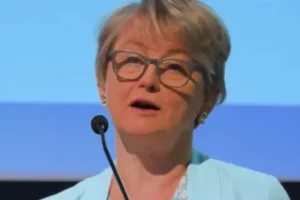
The Nursing and Midwifery Council (NMC) has formally announced the appointment of Chris Dzikiti as the new Director of Professional Practice, a pivotal leadership role tasked with overseeing the regulatory body’s standards for education, post-registration, and professional conduct. Mr. Dzikiti, a registered mental health nurse with a distinguished career in both clinical practice and healthcare regulation, joins the NMC at a juncture where the nursing and midwifery professions face unprecedented challenges regarding workforce retention, educational quality, and public trust. His appointment is seen as a strategic move to reinforce the NMC’s commitment to high-quality education and to ensure that professional standards evolve in tandem with the rapidly changing landscape of the United Kingdom’s healthcare system.
Prior to joining the NMC, Mr. Dzikiti served in several high-level positions, most notably within the Care Quality Commission (CQC), where he held the role of Deputy Director of Operations. His tenure at the CQC was marked by a focus on mental health services and the implementation of rigorous inspection frameworks designed to safeguard patient welfare. By bringing a mental health nursing perspective to the executive level of the NMC, the regulator aims to address specific complexities within this sector, which has historically faced unique pressures regarding staffing levels and the acuity of patient needs.
The Role of the Director of Professional Practice
The Director of Professional Practice is one of the most influential positions within the NMC’s executive structure. The remit involves the development and maintenance of the "Code"—the professional standards that all 800,000-plus nurses, midwives, and nursing associates on the UK register must uphold. Furthermore, the role oversees the "Standards for Education and Training," which dictate how the next generation of healthcare professionals is prepared for the workforce.
Under Mr. Dzikiti’s leadership, the directorate will focus on several key pillars:
- Educational Reform: Overseeing the implementation of updated standards for pre-registration nursing and midwifery programs.
- Professional Development: Enhancing the revalidation process to ensure it remains a meaningful tool for continuous improvement rather than a mere administrative exercise.
- Practice Standards: Refining the guidance provided to professionals on complex issues such as digital health, social media use, and end-of-life care.
- Stakeholder Engagement: Strengthening the relationship between the regulator and the front-line workforce to ensure that standards are practical, achievable, and supportive of professional growth.
Strategic Context and Chronology of NMC Evolution
The appointment comes as the NMC continues to navigate its 2020–2025 strategy, which emphasizes being a "more visible, better informed, and more proactive" regulator. Over the past decade, the NMC has undergone a significant transformation, moving away from a purely reactive disciplinary body toward a more supportive organization that seeks to prevent harm before it occurs.
In 2018, the NMC launched its new "Future Nurse" standards, which significantly raised the bar for the clinical skills required of newly qualified nurses. This was followed in 2019 by new standards for midwives. The transition to these standards has been a multi-year process, complicated by the global COVID-19 pandemic, which forced a temporary reliance on emergency education standards and clinical placements.
As the healthcare sector enters 2026, the focus has shifted toward the "Post-Registration Standards" and the regulation of advanced practice. There is an ongoing national debate regarding whether the NMC should formally regulate advanced nurse practitioners to ensure consistency in care. Mr. Dzikiti will be at the forefront of these discussions, balancing the need for professional autonomy with the necessity of public protection.
Supporting Data: The Nursing Landscape in 2026
The environment into which Mr. Dzikiti steps is characterized by significant statistical pressure. According to recent workforce data, the NHS continues to grapple with a vacancy rate of approximately 10% across nursing roles. While the number of individuals on the NMC register has reached record highs, the "leaky bucket" phenomenon remains a concern, with high numbers of professionals leaving the register due to burnout, retirement, or cost-of-living pressures.
Data from the 2024–2025 NMC Annual Report indicated that:
- The total number of nurses, midwives, and nursing associates on the register exceeded 815,000.
- International recruitment accounted for nearly half of all new registrations, highlighting a heavy reliance on overseas talent.
- Approximately 25% of professionals leaving the register cited "stress" and "poor workplace culture" as their primary reasons for departure.
Furthermore, mental health nursing—Mr. Dzikiti’s primary field—has seen a disproportionate struggle. Vacancy rates in mental health trusts are often 2-3% higher than in general acute trusts. By appointing a mental health specialist to this director-level role, the NMC signals a dedicated effort to understand and mitigate the specific regulatory burdens that may contribute to attrition in this vital sector.
Official Responses and Stakeholder Reactions
The appointment has been met with broad approval from across the healthcare sector. Andrea Sutcliffe, the Chief Executive and Registrar of the NMC, expressed confidence in the new director’s ability to drive meaningful change. "Chris brings a wealth of experience in regulation and a deep-seated passion for the nursing profession. His background in mental health is particularly valuable as we look to ensure our standards are inclusive and reflective of the diverse environments in which our professionals work," she stated in a formal release.
The Royal College of Nursing (RCN) also welcomed the move, albeit with a call for the NMC to do more to support students. A spokesperson for the RCN noted: "The appointment of a senior nurse to this role is essential. We look forward to working with Mr. Dzikiti to address the ‘placement crisis’ in nursing education. Our students need high-quality, mentored hours in clinical settings, and the NMC must ensure that the standards we set are supported by adequate funding and resources on the ground."
Similarly, UNISON, the UK’s largest health union, emphasized the need for the regulator to focus on the wellbeing of the workforce. "Regulation should not be a stick to beat nurses with. It should be a framework that allows them to practice safely. We hope the new Director of Professional Practice will prioritize a culture of learning over a culture of blame," a union representative commented.
Analysis of Implications: Education and Practice Standards
One of the most pressing items on Mr. Dzikiti’s agenda will be the oversight of "Practice Assessment Document" (PAD) consistency across the UK. Currently, nursing students often face varying expectations depending on their university and geographical location. Standardizing the educational experience is seen as a key factor in reducing the high dropout rates seen in some undergraduate nursing programs.
Another critical area is the "Standards for Student Supervision and Assessment" (SSSA). Introduced in 2018, these standards moved away from the traditional "mentor" model to a tripartite system of practice supervisors, practice assessors, and academic assessors. While the model was designed to provide more objective grading, some clinical areas have struggled with the administrative burden of the new roles. Mr. Dzikiti will likely oversee a review of how these standards are functioning in high-pressure environments like Emergency Departments and Intensive Care Units.
The appointment also has implications for the NMC’s "Fitness to Practise" (FtP) caseload. While the Director of Professional Practice does not directly manage the adjudication of cases, the clarity and robustness of the professional standards they set are the foundation upon which FtP decisions are made. By improving the clarity of what "good practice" looks like, the NMC aims to reduce the number of referrals that do not meet the threshold for regulatory action, thereby easing the backlog of cases that has plagued the organization for several years.
Future Outlook and Broader Impact
Looking toward the end of the decade, the NMC’s focus will increasingly turn toward the integration of artificial intelligence and digital health technologies into nursing practice. The "Professional Practice" directorate will be responsible for defining the ethical boundaries and competency requirements for nurses using AI-driven diagnostic tools and remote monitoring systems.
Mr. Dzikiti’s role will also involve navigating the complexities of post-Brexit regulation. As the UK continues to diverge from EU-wide recognition of professional qualifications, the NMC must maintain a delicate balance: keeping the UK register open to global talent while ensuring that the standards of internationally educated nurses are equivalent to those trained domestically.
In conclusion, the appointment of Chris Dzikiti as Director of Professional Practice represents a strategic reinforcement of the NMC’s leadership team. His dual expertise in mental health nursing and high-level regulation positions him to tackle the multifaceted challenges of 2026 and beyond. For the hundreds of thousands of professionals on the register, the success of his tenure will be measured by whether the NMC can transform from a distant regulatory body into a proactive partner in professional excellence. As the healthcare landscape continues to shift, the standards driven by this office will remain the bedrock of safety and quality for patients across the United Kingdom.