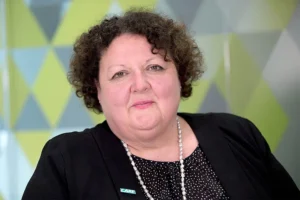
Alice Conroy, a dedicated registered nurse within the National Health Service (NHS), has announced her participation in the upcoming London Marathon, a move driven by a profound personal history with oncology and a professional commitment to public health. Having witnessed the devastating impact of cancer firsthand through the loss of five family members, Ms. Conroy is channeling her grief into a rigorous 26.2-mile challenge to raise vital funds for cancer prevention research. This initiative comes at a critical time for the UK healthcare system, as the emphasis shifts increasingly toward preventative medicine to alleviate the long-term burden on diagnostic and treatment services.
The London Marathon, scheduled for April 2026, serves as one of the world’s premier fundraising platforms, and for healthcare professionals like Ms. Conroy, it represents an opportunity to bridge the gap between clinical practice and charitable advocacy. Her story highlights the unique intersection of personal tragedy and professional duty, illustrating how those on the front lines of patient care are often the most passionate advocates for systemic change and medical advancement.
A Legacy of Loss: The Motivation Behind the Miles
The catalyst for Ms. Conroy’s marathon bid is a series of personal tragedies that have spanned generations of her family. The loss of five relatives to various forms of cancer has not only shaped her personal life but has also deeply influenced her approach to nursing. In the clinical setting, nurses are often the primary point of contact for families navigating the complexities of a cancer diagnosis. For Ms. Conroy, the experience of being both a provider and a grieving family member has provided a dual perspective on the necessity of early intervention.
Cancer remains one of the leading causes of morbidity and mortality in the United Kingdom. While advancements in treatments such as immunotherapy and precision medicine have significantly improved survival rates for many, the emotional and physical toll on families remains immense. By focusing her fundraising efforts specifically on prevention research, Ms. Conroy is targeting the "root cause" of the crisis. Prevention research investigates how lifestyle factors, genetic predispositions, and environmental exposures contribute to the onset of the disease, seeking to stop cancer before it requires the intensive interventions she administers in her daily work.
The State of Cancer Prevention in the United Kingdom
To understand the significance of Ms. Conroy’s marathon run, one must look at the broader landscape of cancer statistics in the UK. According to data from Cancer Research UK and the NHS, approximately one in two people in the UK will be diagnosed with some form of cancer during their lifetime. However, experts estimate that around 40% of cancer cases are preventable through lifestyle changes and early screening.
The research funded by initiatives like the London Marathon focuses on several key pillars of prevention:
- Genomic Screening: Identifying individuals with high-risk genetic markers (such as BRCA1/2) before cancer develops.
- Epidemiological Studies: Understanding the link between ultra-processed foods, sedentary lifestyles, and specific cancer types.
- Vaccination Programs: Expanding the reach of vaccines like the HPV jab, which has already shown a dramatic reduction in cervical cancer rates.
- Early Detection Technologies: Developing "liquid biopsies" and AI-driven imaging that can spot cellular changes years before traditional symptoms appear.
Ms. Conroy’s choice to support prevention research is a strategic one. In an era where the NHS faces significant backlogs and resource constraints, preventing a single case of cancer is far more cost-effective and humane than treating an advanced stage of the disease.
Balancing the Front Line and the Finish Line: The Training Regimen
The logistical challenge of training for a marathon while working as an NHS nurse cannot be overstated. Nursing is a physically demanding profession characterized by long shifts, often exceeding 12 hours, and high levels of emotional stress. Ms. Conroy’s training schedule requires a disciplined approach to time management, often involving long-distance runs after night shifts or during brief windows of recovery between blocks of clinical duty.
Colleagues at her Trust have noted that her commitment to the race has become a point of inspiration within the ward. "Seeing a member of the team dedicate their limited free time to such a monumental cause boosts morale for everyone," noted one senior nursing sister. "It reminds us why we do what we do. We aren’t just treating symptoms; we are part of a larger community fighting for a future where these diseases are less prevalent."
The physical preparation for the London Marathon involves a gradual build-up of mileage, reaching a peak of 18 to 22 miles in a single session approximately three weeks before the event. For a healthcare worker, this training also serves as a form of "practicing what you preach," as regular physical activity is one of the primary recommendations for reducing cancer risk.
The London Marathon: A Global Platform for Change
The London Marathon is not merely a sporting event; it is a cornerstone of the UK’s charitable economy. Since its inception in 1981, the race has raised over £1 billion for various causes. In 2024 alone, the event set a world record for a one-day annual fundraising event, surpassing £67 million.
For the 2026 edition, the focus on health-related charities is expected to reach an all-time high. The event provides participants like Ms. Conroy with a massive audience, allowing them to share their stories and educate the public on health risks. The route itself, which winds from Blackheath and Greenwich through the heart of London to The Mall, is lined with hundreds of thousands of spectators, many of whom are also survivors or family members of those lost to cancer.
Chronology of the Marathon Mission
The journey from the initial decision to the race day follows a structured timeline that mirrors the dedication required in clinical practice:
- September 2025: Alice Conroy officially secures a "charity place" in the 2026 London Marathon, committing to a significant fundraising target.
- October – December 2025: The "Base Phase" of training begins, focusing on cardiovascular health and strength training to prevent injury. Fundraising efforts launch via social media and community events.
- January 2026: The "Build Phase" starts. Weekly mileage increases. Ms. Conroy begins integrating specific nutritional plans designed to fuel long shifts and long runs simultaneously.
- March 2026: The "Peak Phase." The longest training runs are completed. This period often coincides with the highest levels of public engagement and donations.
- April 2026: The "Taper." Mileage is reduced to allow the body to recover in anticipation of the 26.2-mile effort.
- Race Day (April 2026): The event takes place, culminating in the crossing of the finish line in front of Buckingham Palace.
Implications for Nursing and Public Health Advocacy
Ms. Conroy’s endeavor highlights the evolving role of the nurse in the 21st century. Beyond the traditional confines of the hospital ward, nurses are increasingly seen as public health advocates and community leaders. By participating in high-profile events like the London Marathon, nurses can influence public policy and philanthropic priorities.
Professional bodies, including the Royal College of Nursing (RCN), have long advocated for increased investment in the nursing workforce to allow for more focus on health promotion. When a nurse like Ms. Conroy takes it upon herself to raise funds for research, it underscores a gap in state funding that the charitable sector must fill. It also serves as a powerful reminder of the human element behind the statistics; every data point in a cancer research paper represents a family like the Conroys.
Furthermore, the funds raised by Ms. Conroy will contribute to the next generation of screening tools. Experts suggest that by the 2030s, routine blood tests could identify the earliest signs of more than 50 types of cancer. The speed at which these technologies move from the lab to the NHS clinic depends heavily on the type of research funding that marathon runners provide.
Conclusion: A Race Toward a Cancer-Free Future
As Alice Conroy prepares for the starting line in Greenwich, her mission serves as a beacon of resilience. The loss of five family members is a burden that few could carry, yet she has transformed that weight into the momentum needed to traverse 26.2 miles of London’s streets. Her efforts will not only contribute to the scientific understanding of cancer prevention but will also provide hope to the thousands of patients she and her colleagues treat every year.
The intersection of her professional expertise and her personal history creates a narrative that resonates far beyond the nursing community. It is a narrative of proactive change, suggesting that while we cannot change the tragedies of the past, we can run toward a future where fewer families have to endure the same losses. In the grand scheme of medical history, the London Marathon is more than a race; for Alice Conroy, it is a vital step toward the eradication of cancer through the power of prevention.