
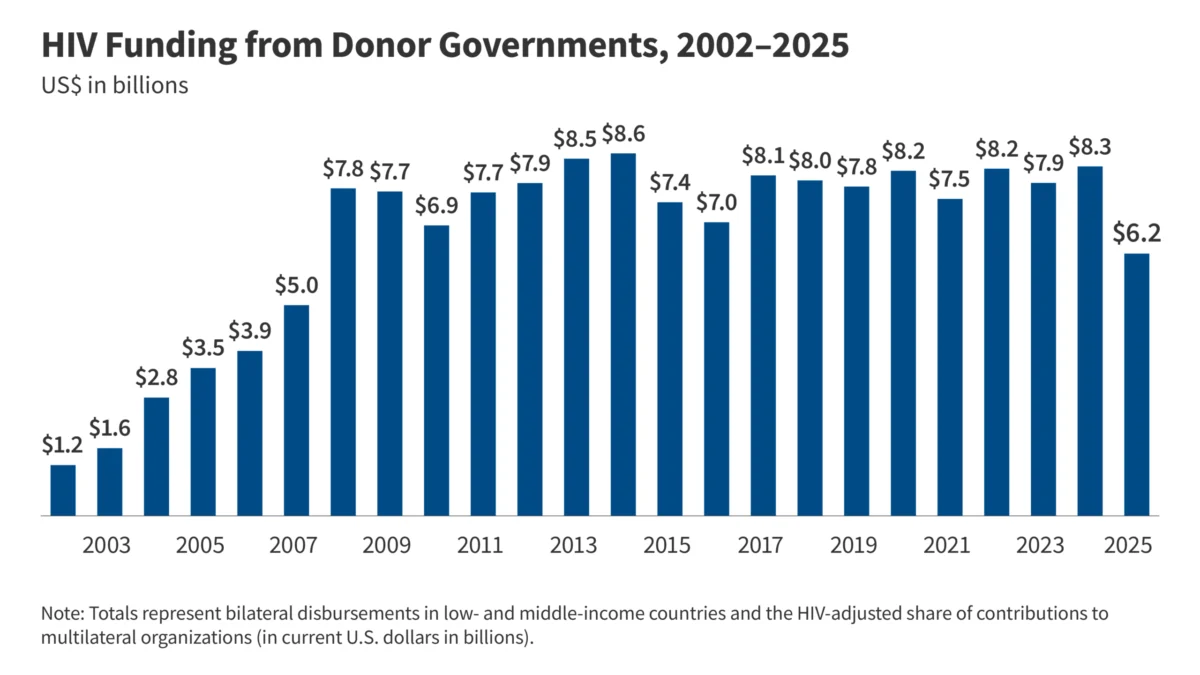
GENEVA/WASHINGTON D.C. — In a development that has sent shockwaves through the global health community, international donor funding for HIV programs in low- and middle-income countries (LMICs) experienced its most significant collapse in history during 2025. According to a landmark report released jointly by KFF (Kaiser Family Foundation) and UNAIDS, total funding has retreated to levels not seen since 2007, effectively erasing nearly two decades of financial progress in the fight against the epidemic.
n
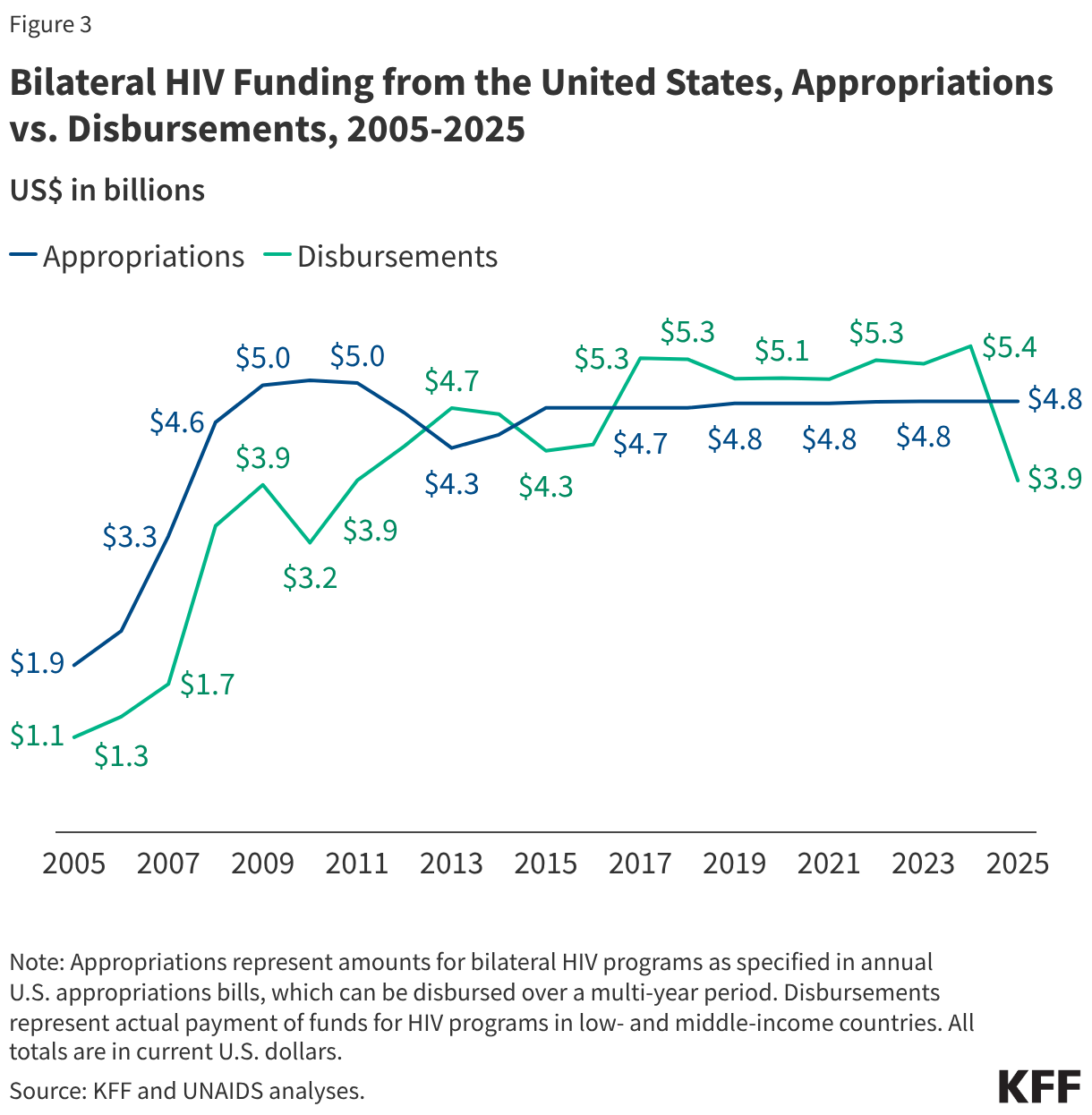
The report, Donor Government Funding for HIV in Low- and Middle-Income Countries in 2025, reveals that disbursements fell to $6.2 billion in 2025, a staggering 25% decrease from the $8.3 billion recorded just one year prior. This $2.1 billion shortfall is primarily attributed to a fundamental shift in United States foreign policy, which has seen the world’s largest donor drastically scale back its international health commitments.
n
Main Facts: The 2025 Funding Cliff
n
The 2025 data paints a stark picture of a global response in retreat. While the international community has long aimed to end AIDS as a public health threat by 2030, the financial architecture supporting that goal is fracturing.
n
The Scale of the Decline
n
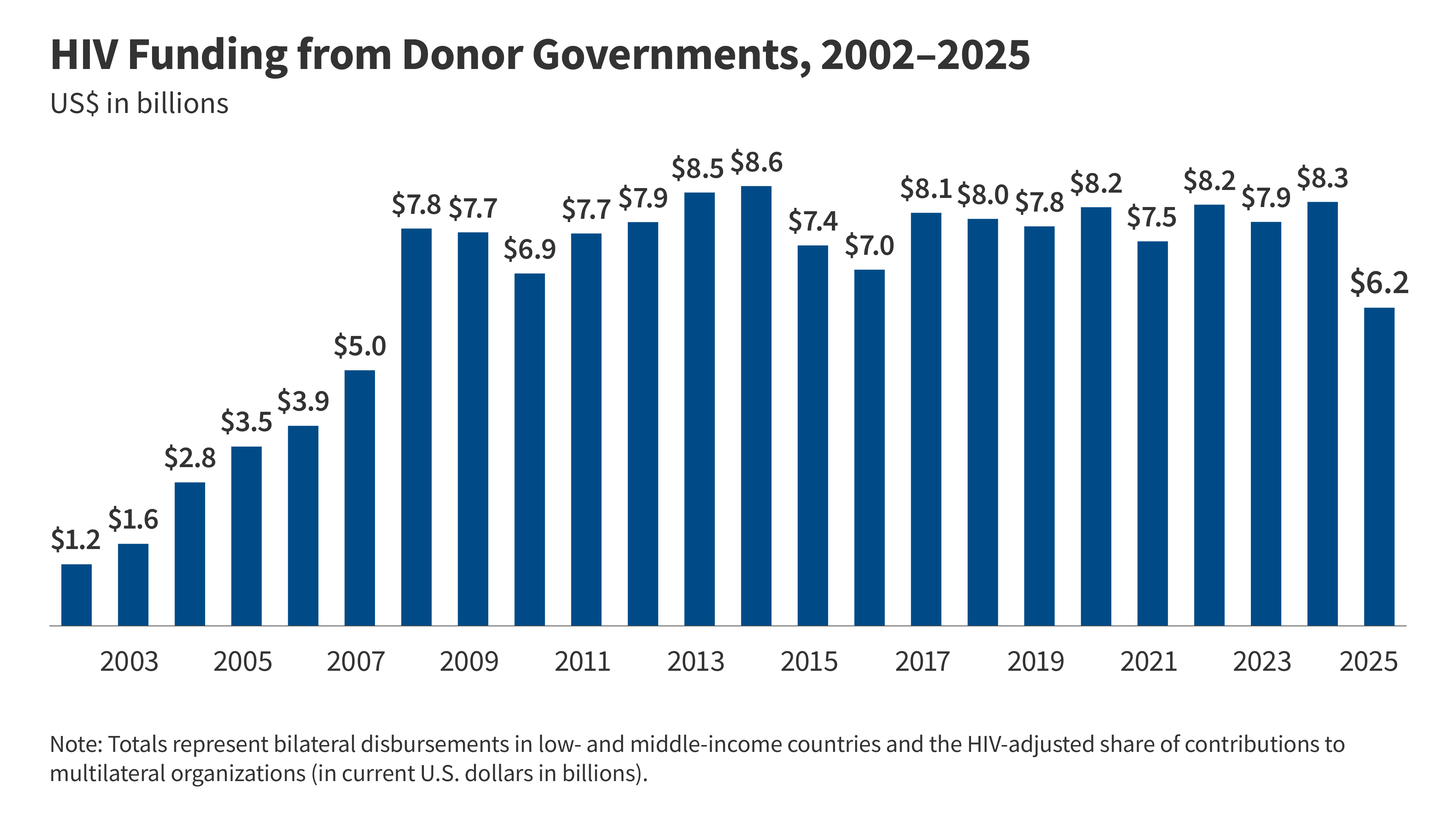
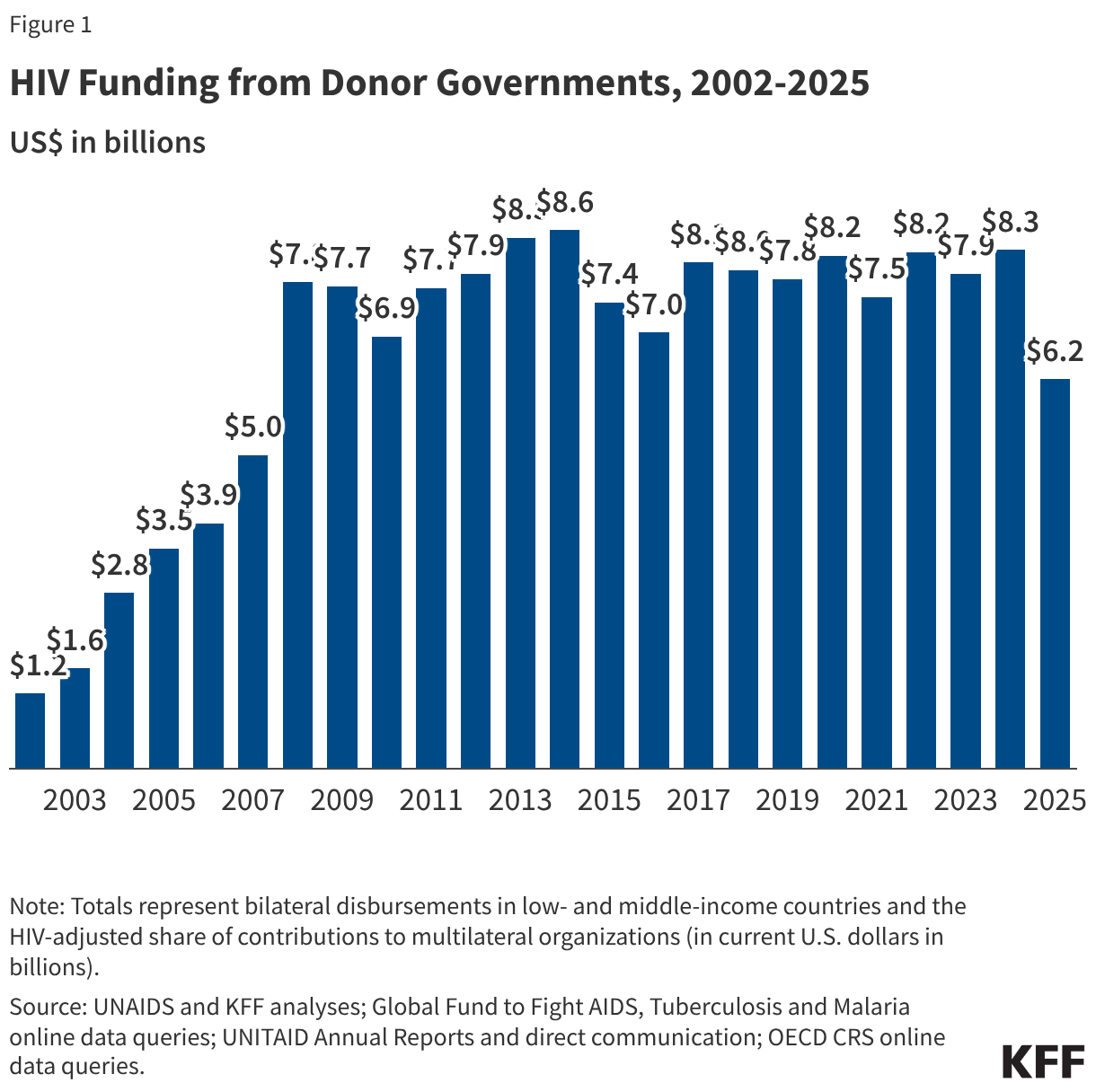
The $6.2 billion total represents the lowest funding level in 18 years. To put this in perspective, in 2008—the height of the global expansion of HIV treatment—funding stood at roughly the same level. The 25% year-over-year drop is the largest single-year decline since tracking began more than 20 years ago.
n
The U.S. Factor
n
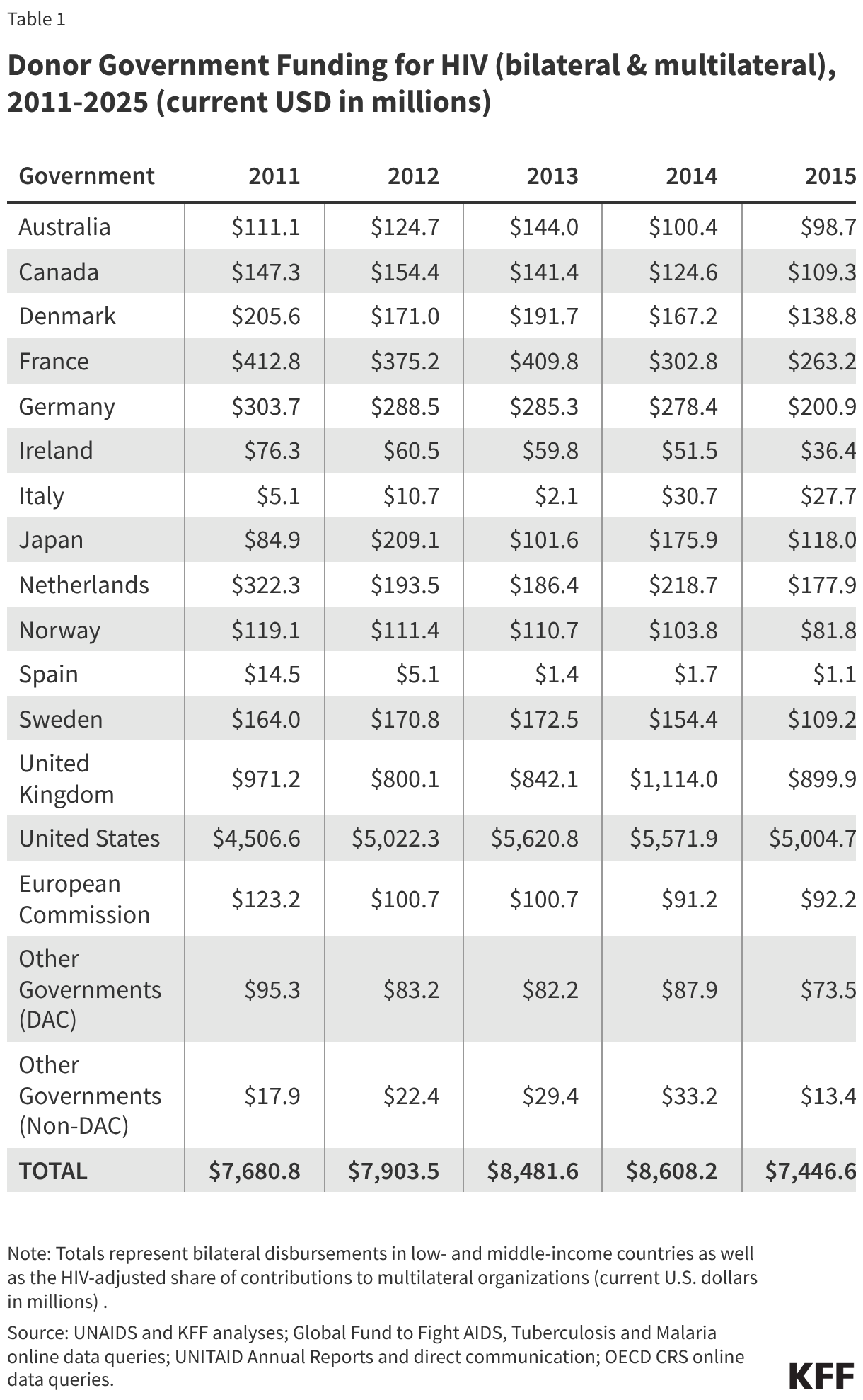
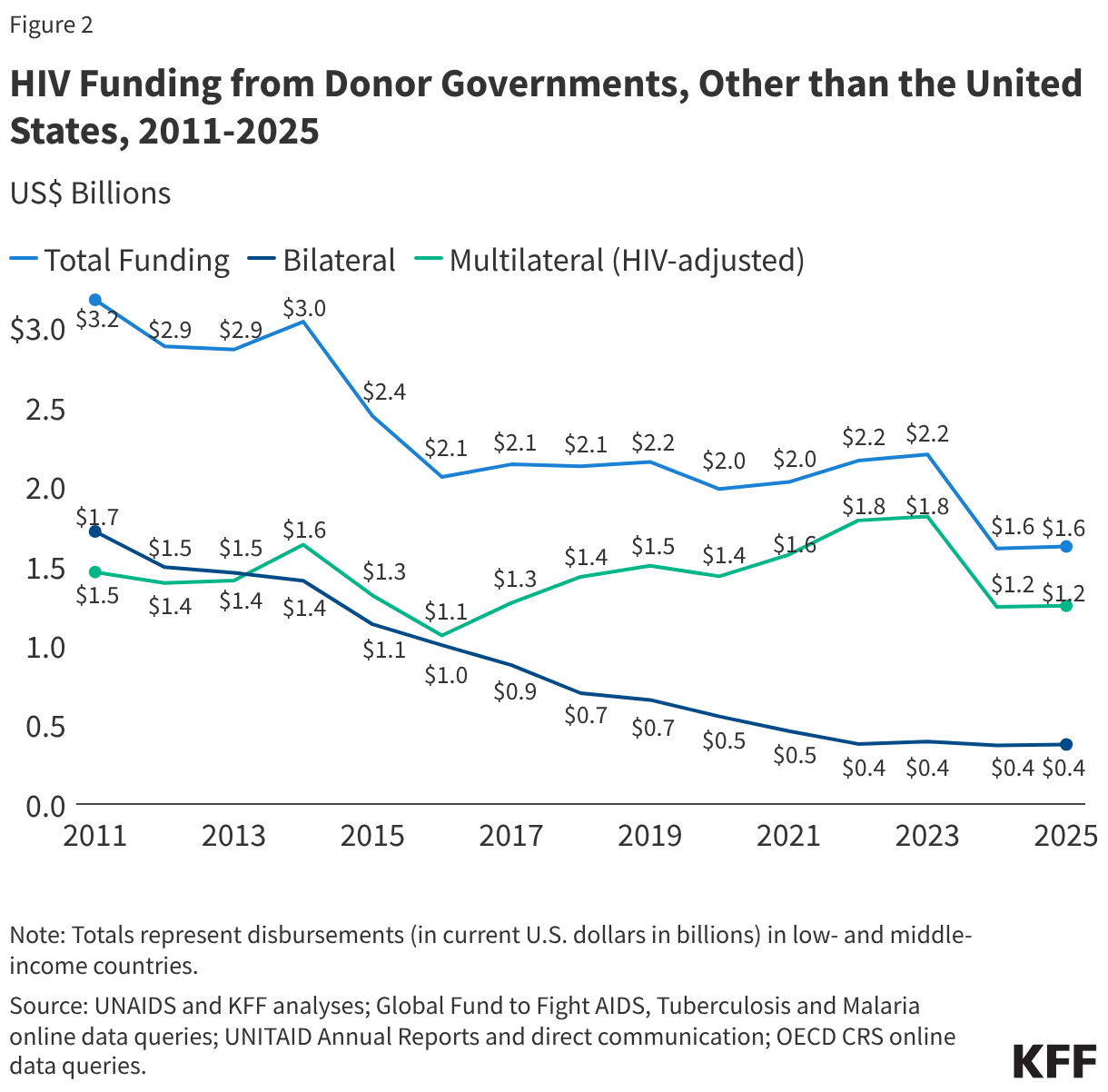
The United States remains the largest single donor, accounting for 74% ($4.6 billion) of all donor government funding. However, it is also the sole driver of the 2025 decline. While aggregate funding from all other donor governments remained flat at approximately $1.6 billion, U.S. disbursements plummeted. This reduction is tied to the implementation of the "America First Global Health Strategy," which included the elimination of the U.S. Agency for International Development (USAID) and the freezing of numerous bilateral projects.
n
Multilateral Erasure
n
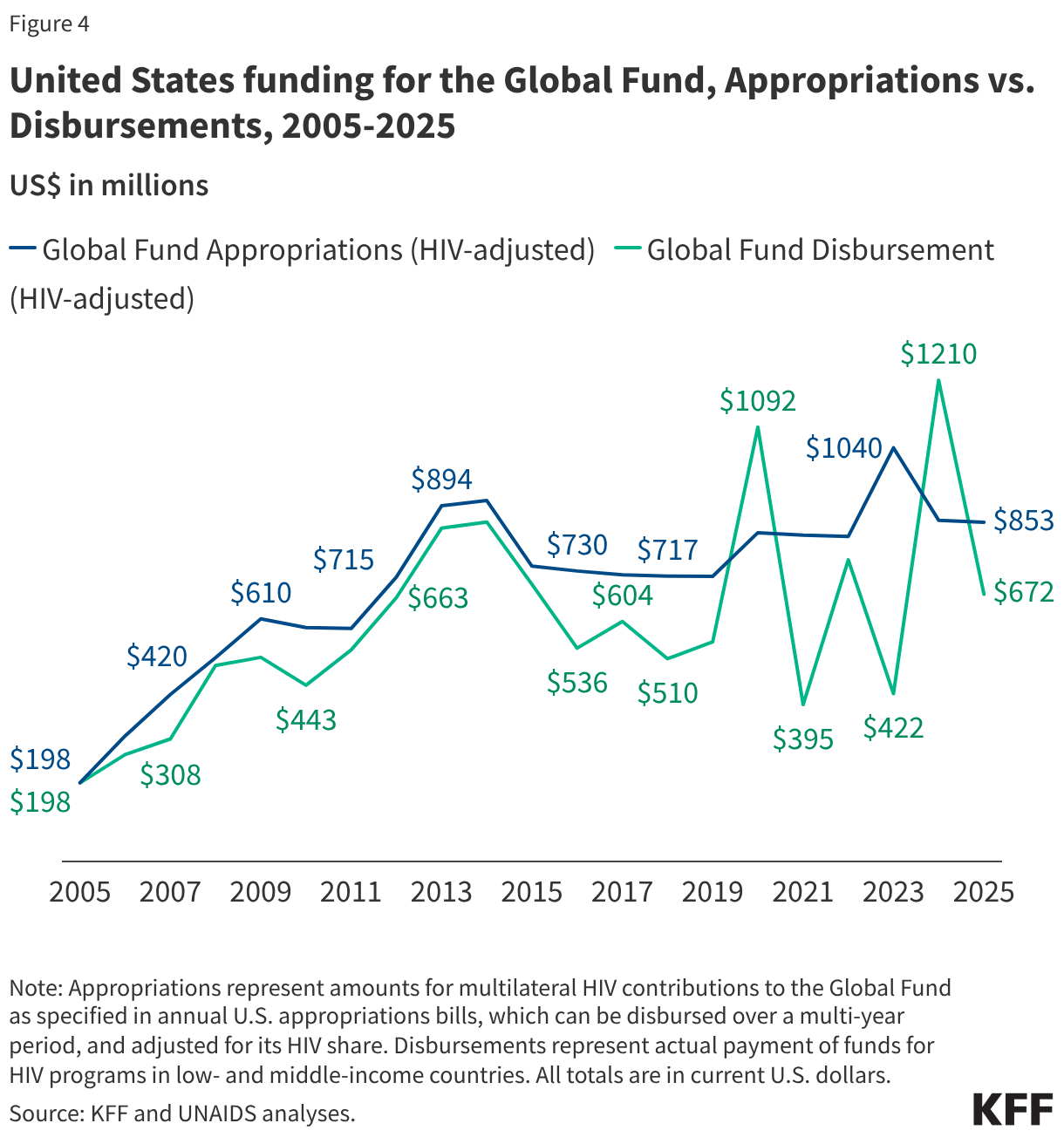
The impact was not limited to direct country-to-country aid. Multilateral organizations—the backbone of the global HIV response—saw a 23% reduction in donor support. Most notably, the United States eliminated its support for UNAIDS entirely in 2025, a move that followed a $50 million contribution in 2024. Contributions to the Global Fund to Fight AIDS, Tuberculosis and Malaria also saw a sharp decline of $470 million.
n
Chronology: From Mobilization to Retrenchment (2002–2025)
n
To understand the gravity of the 2025 report, one must look at the trajectory of the global HIV response over the last quarter-century.
n
- n
- 2002–2008: The Era of Rapid Scale-Up. Following the UN General Assembly Special Session on HIV/AIDS and the creation of the Global Fund and PEPFAR (The U.S. President’s Emergency Plan for AIDS Relief), funding surged from less than $2 billion to over $5 billion.
- 2009–2020: The Plateau. Funding levels largely stabilized, hovering between $7.5 billion and $8 billion. During this period, domestic funding from LMICs began to rise, but donor support remained the critical catalyst for treatment access.
- 2021–2024: Stability Amidst Crisis. Despite the COVID-19 pandemic, donor governments maintained HIV funding at roughly $8 billion, though concerns about "donor fatigue" began to surface in policy circles.
- 2025: The Great Retreat. The implementation of the America First Global Health Strategy marked a definitive break from the bipartisan consensus that had sustained HIV funding for two decades. The elimination of USAID and the cancellation of long-term projects led to the current $2.1 billion disbursement gap.
n
n
n
n
n
Supporting Data: A Disaggregated Look at the Numbers
n
The KFF/UNAIDS analysis provides a granular view of how different nations and organizations have responded to the shifting fiscal landscape.
n
Bilateral vs. Multilateral Channels
n
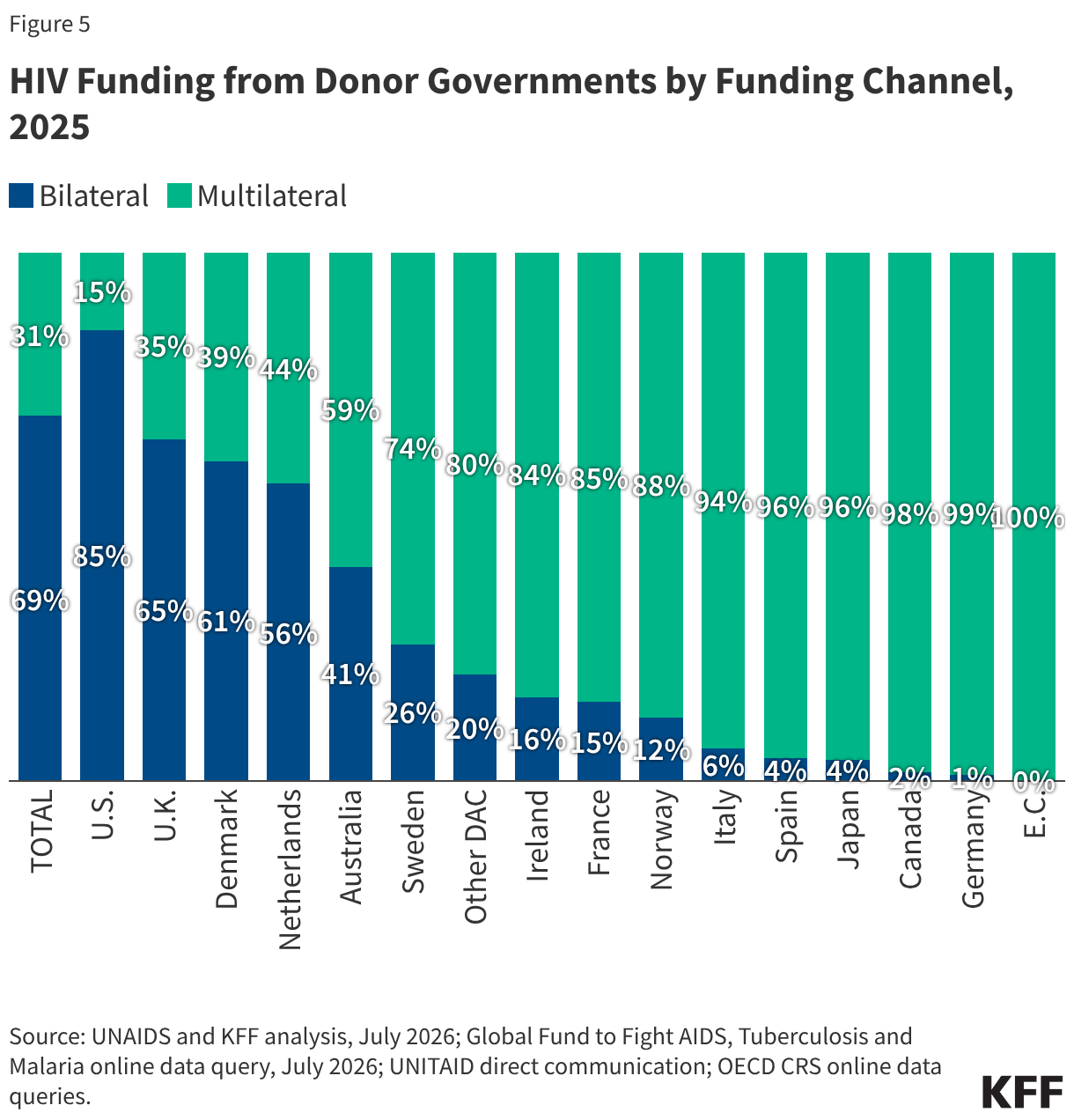
In 2025, bilateral disbursements—funding sent directly to recipient regions—totaled $4.3 billion, down from $5.8 billion in 2024. The U.S. accounted for nearly the entire decline, with its bilateral output falling by 28%.
n
Conversely, other major donors showed resilience but lacked the scale to offset U.S. cuts:
n
- n
- France: $280 million (4% of global total)
- United Kingdom: $213 million (3% of global total)
- Japan: $202 million (3% of global total)
- Germany: $200 million (3% of global total)
n
n
n
n
n
While Australia, Canada, Norway, and Spain saw slight increases in their bilateral contributions, these were marginal in the face of the overarching U.S. withdrawal.
The "Fair Share" Metric
The report also evaluates donors based on their economic size (funding per $1 million of GDP). While the U.S. provides the most raw cash, it does not always lead in relative terms. When adjusting for the size of their economies, countries like the Netherlands and Scandinavia frequently outpace larger G7 nations in their commitment to global health. However, in 2025, even these "fair share" leaders could not fill the void left by the U.S. pivot.
The Global Fund and Unitaid
The Global Fund remains the primary multilateral vehicle for HIV assistance. In 2025, it received $1.8 billion in HIV-specific donor funding, a 21% drop from 2024. Unitaid funding remained flat at $57 million. The report notes that U.S. policy requires its contributions to not exceed 33% of total Global Fund receipts; as other donors’ funding remained stagnant, the U.S. "matching" potential was naturally capped, further depressing the total.
Official Responses and Policy Drivers
The primary catalyst for this fiscal downturn is the America First Global Health Strategy. This policy shift represents a move away from the traditional model of sustained international development toward a "transition" model, where recipient countries are expected to assume full financial responsibility for their health systems on an accelerated timeline.
The U.S. Administration’s Stance
Official documents from the U.S. State Department suggest that the scale-down is a deliberate attempt to reduce foreign "dependency." The strategy projects an additional $7.3 billion decline in U.S. HIV funding over the next five years. While the U.S. Congress has continued to appropriate (set aside) funds at relatively steady levels, the Executive Branch’s decision to freeze or cancel projects has prevented that money from being disbursed (actually spent).
UNAIDS and KFF Warnings
"We are at a precarious moment," stated representatives from UNAIDS during the report’s launch. "The decline in 2025 is not just a statistical fluctuation; it is a withdrawal of the life support that millions of people depend on for daily antiretroviral therapy."
KFF analysts noted that the total resource availability from all sources (including domestic LMIC funding) fell by 18% to $17.6 billion. This is far short of the estimated $29 billion needed annually by 2025 to meet global targets for ending the epidemic.
Implications: The Human and Systemic Cost
The sudden withdrawal of $2.1 billion in annual funding carries profound implications for global stability and public health.
1. Treatment Disruptions and Drug Resistance
The most immediate risk is the interruption of antiretroviral therapy (ART). When funding for clinics and supply chains is pulled, patients may face "stock-outs." Inconsistent access to HIV medication leads to viral rebound and the development of drug-resistant HIV strains, which are significantly more expensive and difficult to treat.
2. The Collapse of Health Infrastructure
Because HIV funding—particularly through USAID and PEPFAR—often supported the broader health workforce (nurses, community health workers, and laboratories), these cuts threaten to destabilize entire health systems. The elimination of USAID leaves a vacuum in technical expertise and oversight that many LMICs are not yet equipped to fill.
3. A Widening Resource Gap
The "Ending AIDS by 2030" goal was predicated on a steady increase in resources. With donor funding now at 2007 levels, the gap between "resources available" and "resources needed" has become a chasm. Without a major course correction, the 2030 targets are effectively out of reach.
4. Geopolitical Shifts
As the U.S. retreats, a geopolitical vacuum is emerging in sub-Saharan Africa and Southeast Asia. The report suggests that the "America First" approach may diminish U.S. influence in these regions, potentially allowing other global powers to step in, though none have yet shown a willingness to match the previous scale of HIV-specific health aid.
Conclusion
The 2025 KFF/UNAIDS report serves as a stark warning that the gains of the last two decades are fragile. The historic decline in funding marks the end of an era of global health solidarity and the beginning of an uncertain period of "nationalized" health responses. For the millions living with HIV in low-income nations, the $2.1 billion drop is more than a budget adjustment—it is a direct threat to the progress made in the longest-running battle in modern public health history.

