
In the vast stretches of rural America, the distance between a mother in labor and a delivery room is growing longer. What was once a localized concern has evolved into a national public health crisis, as hundreds of rural hospitals shutter their obstetrics units, leaving millions of women in "maternity care deserts."
n
A comprehensive analysis of 2023 federal data and upcoming legislative shifts reveals a precarious landscape for maternal health. As the United States grapples with some of the highest maternal mortality rates among developed nations, the intersection of rural hospital insolvency and impending Medicaid cuts threatens to widen the gap between urban and rural health outcomes.
n
Main Facts: The Current State of Rural Obstetrics
n
The reality of rural healthcare in 2023 is defined by a stark lack of proximity. According to the latest data, approximately half of all rural hospitals in the United States no longer offer obstetrics services. This has left nearly 50% of all rural counties without a single hospital capable of providing inpatient maternity care.
n
The burden of this crisis falls disproportionately on Medicaid enrollees. Medicaid is the foundational pillar of rural maternal health, financing nearly half of all births in rural communities and covering approximately one in four rural women of reproductive age.
n
Key findings from the most recent data note include:
n
- n
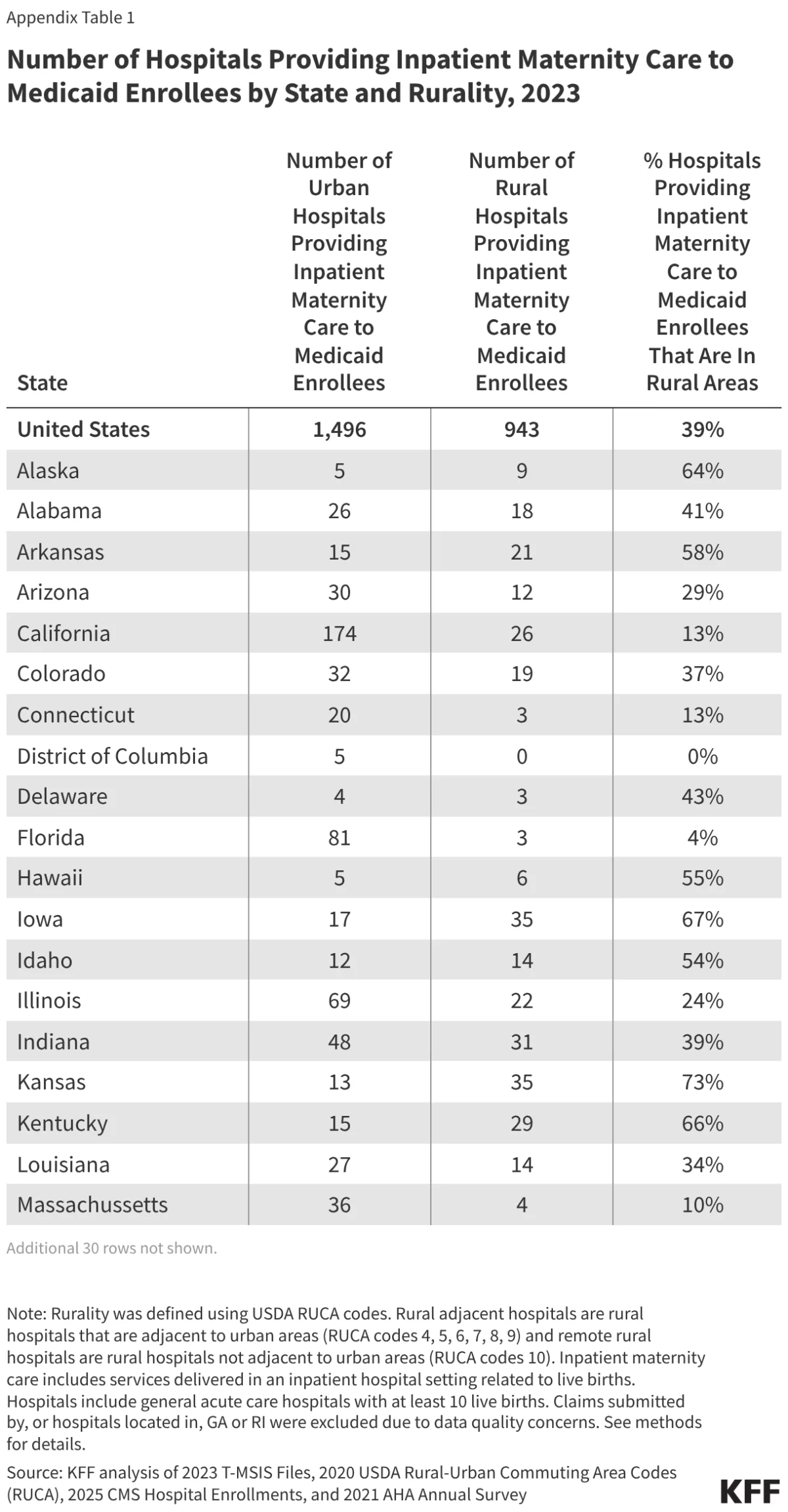
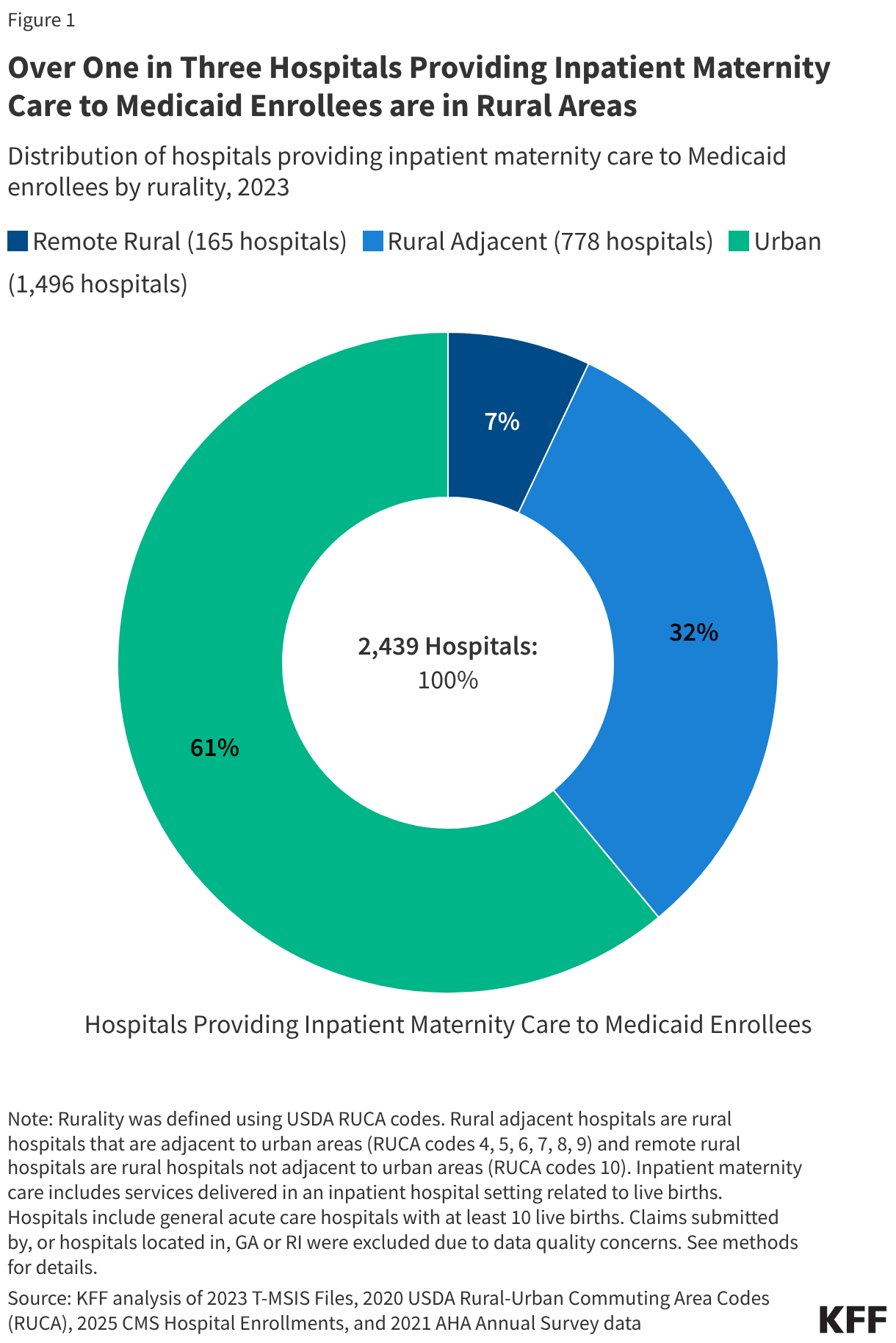
- The Rural Share: In 2023, 943 rural hospitals provided inpatient maternity care to Medicaid enrollees, representing 39% of all such hospitals nationally.
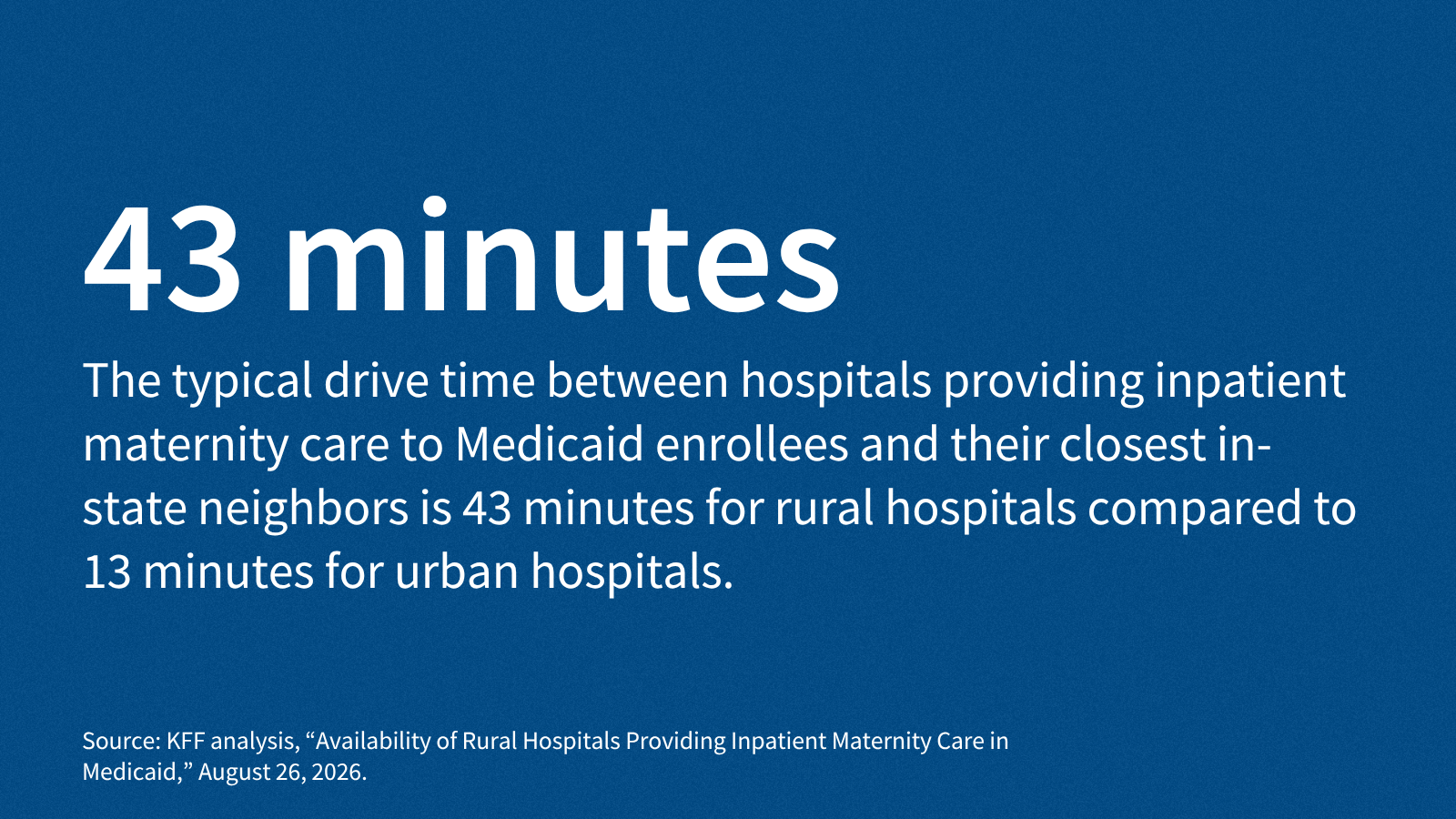
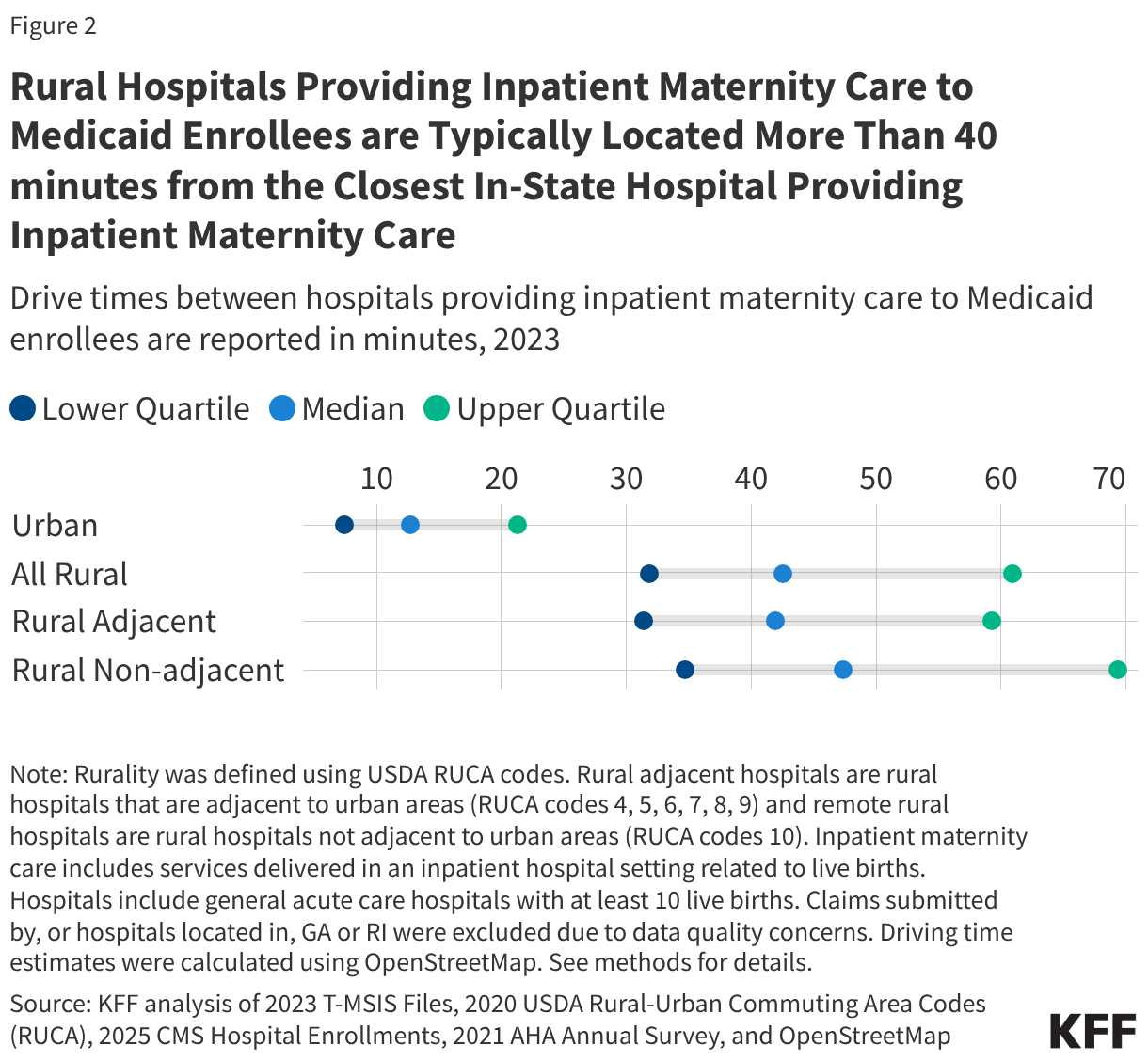
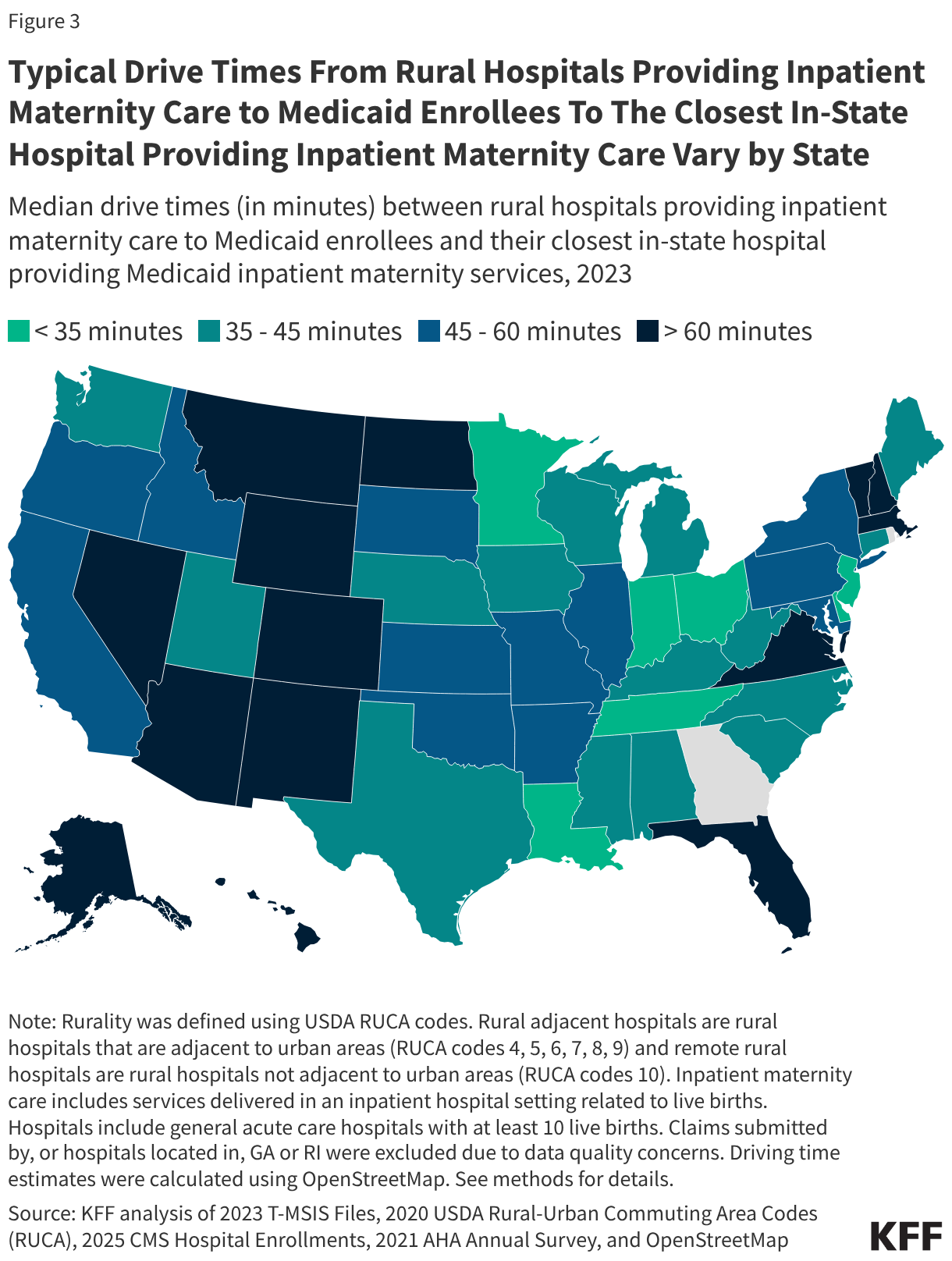
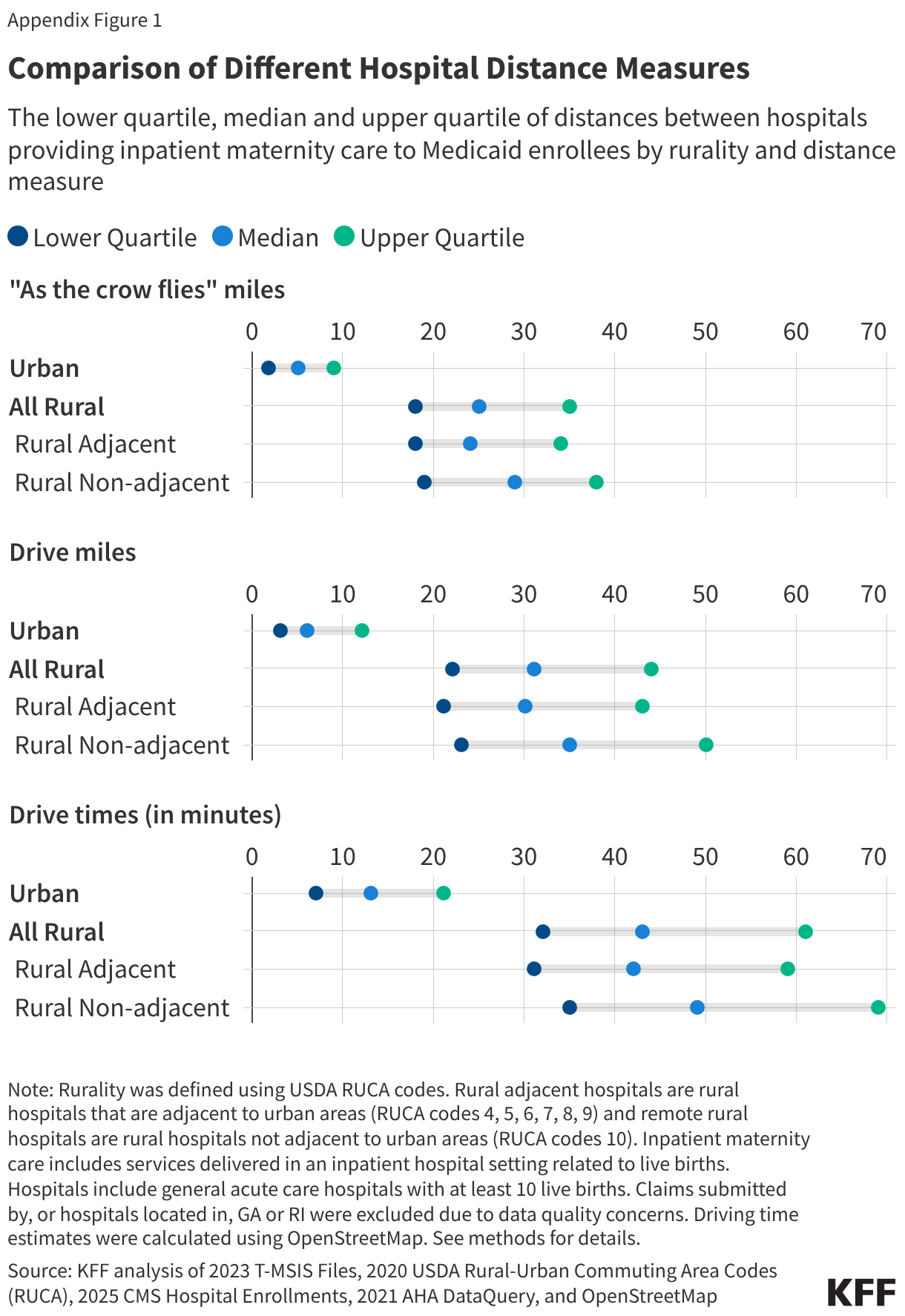
- The 43-Minute Gap: The typical drive time for a rural patient to reach the nearest in-state hospital with an obstetrics unit is 43 minutes—more than triple the 13-minute average for urban residents.
- Extreme Isolation: For one in four rural hospitals, the nearest alternative for maternity care is at least an hour’s drive away.
- Geographic Disparity: States like Alaska, Nevada, and North Dakota face the longest typical drive times, often exceeding an hour, while states like New Jersey and Ohio maintain tighter networks.
n
n
n
n
n
Chronology: The Decadel-Long Erosion of Rural Care
n
The current crisis did not emerge in a vacuum; it is the result of a slow-motion collapse of rural healthcare infrastructure over the last decade.
n
2014–2022: The Prelude of ClosuresnOver the past ten years, hundreds of rural hospitals have been forced to close their obstetrics units. The primary drivers were a combination of declining birth rates in rural areas, difficulty in recruiting specialized providers (OB-GYNs and labor/delivery nurses), and low reimbursement rates from Medicaid. During this period, many states attempted to stabilize these units by increasing Medicaid payments, but these efforts often functioned as "band-aids" on deep structural wounds.
n
2023: The Status QuonBy 2023, the landscape had fractured. Only 165 hospitals categorized as "remote rural"—those not adjacent to urban centers—remained in operation to provide Medicaid maternity services. The remaining 778 rural hospitals offering these services were "rural adjacent," meaning they were closer to urban hubs but still served isolated populations.
n
2025: The Legislative PivotnThe passage of the 2025 reconciliation law marks a significant turning point. The law introduces substantial cuts to Medicaid through changes in hospital supplemental payments and revised enrollment criteria. While the law includes a $50 billion "Rural Health Fund" distributed over ten years, analysts warn that this temporary measure may not offset the long-term impact of the structural Medicaid reductions.
n
Supporting Data: Mapping the Distance to Care
n
The impact of hospital closures is best measured by the "Drive Time" metric, which accounts for traffic patterns and road infrastructure that simple "as the crow flies" distance ignores.
n
The Urban-Rural Divide
n
The disparity in access is quantified by a 30-minute differential between urban and rural residents. While an urban mother is typically 13 minutes from a delivery room, the 43-minute rural average represents a critical window in emergency situations, such as placental abruption or preeclampsia.
n
The Regional Breakdown
n
The geographic distribution of maternity care is highly unequal. In 14 states, the typical drive time from one rural hospital to the next closest in-state neighbor is an hour or more.
n
- n
- The Most At-Risk: Alaska, Nevada, and North Dakota. In these states, the closure of a single rural unit can leave an entire region without viable options, forcing patients to travel across state lines—a process that is administratively difficult for Medicaid enrollees.
- The Best Positioned: New Jersey, Louisiana, and Ohio. These states benefit from higher hospital density, though even here, rural pockets remain vulnerable.
n
n
The Medicaid Factor
The data indicates that rural hospitals providing maternity care are uniquely reliant on Medicaid. Because these hospitals operate on lower financial margins than their urban counterparts, they are hypersensitive to changes in federal and state funding. The T-MSIS (Transformed Medicaid Statistical Information System) data shows that even hospitals currently "active" often handle a low volume of births, making them prime candidates for future unit closures if revenues drop further.
Official Responses and Institutional Analysis
Government and non-partisan oversight bodies have expressed mounting concern over these trends. The Government Accountability Office (GAO) has identified two primary obstacles to maintaining rural obstetrics: the recruitment of providers and the inadequacy of Medicaid reimbursement.
The GAO Perspective
The GAO notes that the "vicious cycle" of rural healthcare—where low volumes lead to reduced funding, which in turn makes it harder to attract doctors—is accelerating. They emphasize that without specialized intervention, the market alone cannot sustain maternity services in low-population areas.
The Legislative Strategy
Proponents of the 2025 reconciliation law point to the $50 billion rural health fund as a historic investment. They argue that by consolidating certain services and providing a decade of transitional funding, the healthcare system can become more efficient. However, health policy experts at organizations like KFF (Kaiser Family Foundation) counter that the fund is not exclusively directed toward hospitals and is temporary in nature. They suggest that the long-term reduction in Medicaid revenue will likely outweigh the short-term benefits of the fund.
State-Level Initiatives
In response to federal shifts, several states have begun exploring "State Directed Payments" to bolster rural hospitals. However, new federal limits on these payments are expected to take effect, potentially curbing the ability of states to provide the very lifelines these hospitals require.
Implications: The High Cost of Distance
The thinning of the rural maternity care network carries profound implications for the health of American families and the stability of the healthcare system.
1. Clinical Outcomes
Research consistently links increased travel distance to maternity care with negative health outcomes. When hospitals close, rates of low birthweight and premature births tend to rise. Most critically, the risk of maternal mortality increases when emergency interventions are delayed by an hour-long ambulance ride.
2. The "Cross-Border" Challenge
While some rural residents live near state lines, seeking care in a neighboring state is often a bureaucratic nightmare for Medicaid enrollees. States have specific processes for enrolling and paying out-of-state providers, which can lead to billing disputes or outright denials of care, further isolating mothers in border regions.
3. Economic Stability of Rural Communities
A hospital’s obstetrics unit is often a cornerstone of its financial health and its appeal to young families. When a town loses its ability to deliver babies, it often sees a subsequent decline in pediatric services and a general exodus of young professionals, leading to further economic stagnation.
4. The Provider Shortage
As units close, the remaining rural OB-GYNs face higher workloads and increased burnout. This accelerates the "brain drain" from rural areas, as specialists move to urban centers where they have more support and better facilities, leaving the remaining rural units even more understaffed.
Conclusion
The data provided by the 2023 T-MSIS files and the projected impacts of the 2025 reconciliation law paint a sobering picture of the future of rural birth in America. As drive times increase and financial margins shrink, the "safety net" provided by Medicaid is being stretched to its breaking point. Without a concerted effort to align reimbursement rates with the actual cost of rural care and a sustainable strategy for provider retention, the 43-minute gap may soon become the new, dangerous standard for millions of American mothers.

