
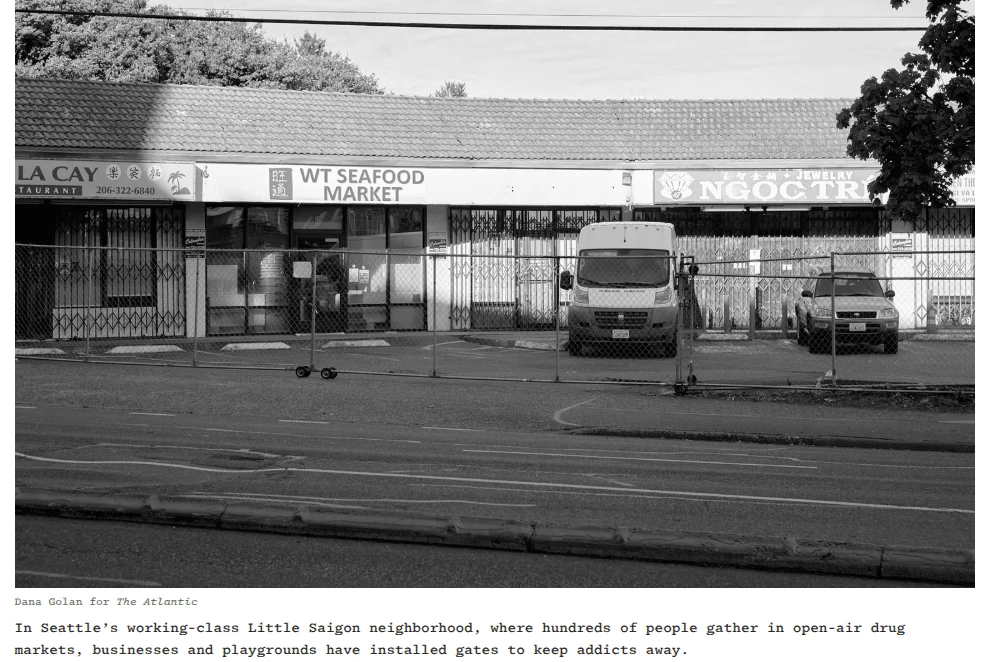
The national conversation surrounding substance use disorder has reached a volatile crossroads. As American cities grapple with the visible realities of homelessness and public drug use, a fierce ideological battle is being waged in the pages of major publications and the halls of government. At the center of this conflict is "harm reduction"—a public health strategy that prioritizes keeping people alive and reducing the negative consequences of drug use over immediate abstinence and criminalization.
n
In July 2026, The Atlantic published a high-profile feature by Michael Powell titled "The Cities That Said Yes To Drugs." The article leveled a scathing critique against harm reduction policies in cities like Seattle, Burlington, and Vancouver, suggesting these initiatives have fostered a "zombie apocalypse." However, a closer examination of public health data, recent mortality trends, and successful case studies like Baltimore suggests that the narrative of "failed harm reduction" may be a dangerous oversimplification that ignores the root causes of the crisis.
n
Main Facts: Challenging the "Zombie" Narrative
n
The primary contention of critics like Powell is that harm reduction policies—such as the distribution of clean syringes, smoking kits, and the decriminalization of small amounts of drugs—have directly led to the spike in overdose deaths and the degradation of urban centers. Public health experts, however, point to a different set of facts.
n
First, the rise in overdose deaths is a national phenomenon that transcends local policy. Data indicates that overdose rates climbed just as sharply in "zero-tolerance" jurisdictions as they did in cities with robust harm reduction frameworks. The common denominator is not the availability of clean needles, but the total saturation of the illicit market with fentanyl and its analogs.
n
Second, the "smoking kits" often derided by critics are based on established clinical science. In cities like Seattle, health departments have moved toward providing equipment for smoking drugs as a specific intervention to move users away from intravenous injection. This "step-down" approach significantly reduces the risk of blood-borne pathogens like HIV and Hepatitis C, as well as lethal skin infections and endocarditis.
n
Finally, the success of these programs is often measured by what doesn’t happen—overdoses that were reversed by Narcan (naloxone) and infections that were prevented. While the optics of poverty in public parks are distressing, advocates argue that these are symptoms of a housing and mental health crisis rather than a failure of addiction medicine.
n
Chronology: From Prescription Pads to Fentanyl Floods
n
To understand the current state of the crisis, one must trace the timeline of the American opioid epidemic, which has evolved through three distinct, overlapping waves.
n
The First Wave (1990s–2010): The crisis began with the aggressive over-prescription of opioid painkillers, most notably OxyContin. Millions of Americans became legally addicted to opioids through the healthcare system. When the federal government and state regulators finally cracked down on "pill mills" and over-prescribing, they did so without providing a sufficient safety net for those already dependent.
n
The Second Wave (2010–2015): As prescription pills became scarce and expensive, those with dependency turned to heroin. This period saw a steady rise in injection-related illnesses and a shift in the demographics of addiction, moving more heavily into suburban and rural areas.
n
The Third Wave (2015–Present): The introduction of illicitly manufactured fentanyl changed the landscape entirely. Because fentanyl is 50 to 100 times more potent than morphine, the margin for error is non-existent. By 2021, overdose deaths in the U.S. peaked at over 100,000 annually.
n
The Policy Pivot (2021–2026): In response to the staggering death toll, several cities began implementing more aggressive harm reduction strategies. However, by 2024, a political backlash began to form. Critics pointed to the "visibility" of the crisis—tents in parks and open-air drug use—as proof of failure. By 2026, despite data showing that overdose deaths were finally beginning to decline in several proactive regions, the media narrative shifted toward "recriminalization."
n
Supporting Data: The Baltimore Miracle and the Dilaudid Myth
n
While critics focus on the aesthetic decline of city centers, the raw data tells a more hopeful story in regions that have doubled down on treatment and tolerance.
n
The Maryland Success Story
n
Maryland, and specifically Baltimore, provides a powerful counter-narrative to the claim that harm reduction causes death. Once known as the "overdose capital" of the country, Maryland saw a historic 26% decrease in overdose deaths in 2025. By early 2026, the state reached a 10-year low in drug-related fatalities. This represents a 53% decrease from the state’s 2021 peak.
n
Notably, fentanyl-related deaths in Maryland dropped by 31% during this period. This decline coincided with the expansion of programs like the Charm City Care Connection (CCCC), which reoriented its entire focus around the needs of people who use drugs, providing not just medical kits but laundry, showers, and onsite medical treatment.
n
The Safe Supply Debate
n
A major point of contention in Powell’s Atlantic piece was the distribution of hydromorphone (Dilaudid) pills, which he claimed "expanded the circle of the addicted." However, data from British Columbia—the epicenter of the "safe supply" experiment—contradicts this. According to the B.C. coroner, hydromorphone is detected in only 3% to 5% of unregulated toxic drug deaths. The overwhelming driver of mortality remains fentanyl, not the pharmaceutical alternatives provided by clinics to keep users away from the toxic street supply.
n
Injection vs. Smoking
n
A 2023 study from Seattle published in Drug and Alcohol Dependence Reports found that providing access to safer smoking equipment led to a significant reduction in injection frequency among users. By shifting the method of consumption, public health officials are able to mitigate the most expensive and debilitating medical complications of addiction, keeping individuals healthy enough to eventually engage in recovery.
n
Official Responses: A Divided Leadership
n
The response to the current crisis is split between local practitioners and shifting federal priorities.
n
The Local Perspective:nBurlington Mayor Emma Mulvaney-Stanuck has been at the center of this debate. When questioned about the presence of addicts in public spaces, she has consistently advocated for more infrastructure, not less. She argues that the solution to "open-air markets" is the creation of supervised injection centers—facilities that provide a controlled, indoor environment for drug use where medical staff can intervene in the event of an overdose and offer immediate pathways to Medication-Assisted Treatment (MAT).
n
The Federal Shift:nAt the federal level, the landscape is more precarious. The Substance Abuse and Mental Health Services Administration (SAMHSA) has been instrumental in funding the widespread distribution of naloxone. However, under the leadership of Secretary of Health Robert F. Kennedy, Jr., there have been concerns regarding the gutting of these services in favor of unproven or purely abstinence-based models. Public health officials warn that withdrawing support for harm reduction now, just as the "curve is bending," could lead to a catastrophic resurgence in deaths.
n
The Johns Hopkins Evaluation:nThe Center for Mental Health and Addiction Policy at Johns Hopkins University recently spotlighted the Charm City Care Connection as a gold standard. Their report highlighted a crucial statistic: through the Harm Reduction Specialist program, 50% of the organization’s employees are former clients. This "peer-led" model achieved a 100% staff retention rate in 2024, proving that harm reduction is not just about "giving out pipes," but about building a community that facilitates long-term stability.
Implications: The Housing-First Imperative
The "zombie apocalypse" narrative popularized by recent media reports often conflates two distinct issues: substance use disorder and the housing crisis.
The failure to complete addiction treatment is significantly higher among individuals who lack stable housing. When cities like Juneau, Alaska, integrated "housing-first" models with addiction services, they saw a marked improvement in both public order and individual recovery outcomes. The implication is clear: harm reduction can keep a person alive, but housing and social support are what allow them to recover.
Furthermore, the criminalization of the "homeless drug addict" has historically failed to reduce drug supply or demand. Instead, it creates a "revolving door" of incarceration that costs taxpayers significantly more than supportive housing and clinical treatment.
As the U.S. moves further into 2026, the choice facing policymakers is between the "optics of order" and the "evidence of health." If the country moves away from harm reduction based on the discomfort of seeing poverty in public spaces, it risks abandoning the very tools that have finally begun to lower the death toll. The "cities that said yes to drugs" may actually be the cities that finally started saying yes to saving lives.
References and Data Sources:
- Maryland Governor’s Office: 2025 Overdose Statistics Report.
- British Columbia Coroners Service: Toxic Drug Death Update (2023-2024).
- Johns Hopkins University: Community Spotlight on Charm City Care Connection (July 2026).
- Drug and Alcohol Dependence Reports: Seattle Smoking Equipment Study (May 2023).
- Seven Days VT: Investigation into Burlington Public Safety Incidents (2026).

