
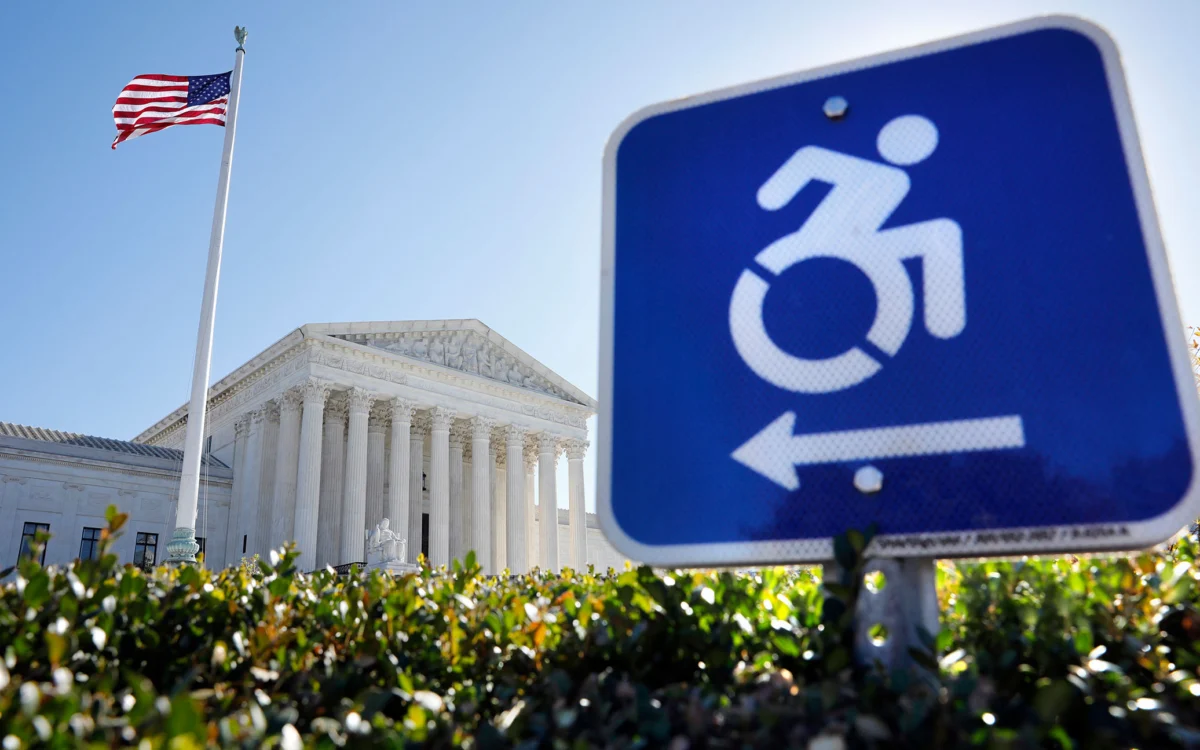
The U.S. Supreme Court is poised to delve into a contentious case next week, St. Mary Catholic Parish v. Roy, a legal battle that advocates warn could profoundly reshape the landscape of disability rights in America. At its core, the dispute pits religious freedom against anti-discrimination principles, but its potential ramifications extend far beyond the immediate parties, threatening to undermine decades of progress in ensuring equal opportunity for individuals with disabilities.
n
The high court will hear oral arguments in a case brought by the Archdiocese of Denver, several Catholic schools, and parents in Colorado. They are challenging specific requirements within Colorado’s publicly funded universal preschool program, arguing that the state’s non-discrimination mandates infringe upon their First Amendment right to religious exercise. While the initial grievance focused on protections for LGBTQ+ families, the schools’ legal strategy has inadvertently brought disability rights into the crosshairs, leading to widespread concern among disability advocacy organizations.
n
Main Facts: The Core of St. Mary Catholic Parish v. Roy
n
The crux of St. Mary Catholic Parish v. Roy revolves around the conditions attached to public funding for private religious institutions participating in state-sponsored programs. Colorado’s Universal Preschool (UPK) program, designed to expand access to early childhood education across the state, allows religious schools to participate and receive public funds. However, a crucial stipulation of participation is an agreement not to discriminate against families based on a range of factors, including race, sexual orientation, gender identity, and disability.
n
The petitioners, representing the Catholic schools, contend that the requirement to provide equal protection to LGBTQ+ families violates their sincerely held religious beliefs. Their argument hinges on the premise that their faith traditions do not affirm same-sex marriage or gender identity transitions, and thus, forcing them to adhere to these non-discrimination clauses constitutes an infringement on their religious freedom.
n
What elevates this case to a matter of critical concern for disability advocates is the schools’ specific line of argumentation regarding the state’s supposed "flexibility" in enforcing its non-discrimination rules. To bolster their claim that the Colorado Department of Early Childhood (CDEC) selectively applies its mandates, the Catholic schools pointed to an exemption within the UPK program’s algorithm. This exemption prioritizes matching students with disabilities to schools that can provide the services outlined in their Individualized Education Programs (IEPs).
n
In their petition to the Supreme Court, the Catholic schools stated: "The (Colorado Department of Early Childhood) consistently treats the mandate not as a strict obligation, but as a flexible provision that allows it to take into consideration all kinds of other important interests (e.g., helping kids with disabilities and prioritizing historically discriminated against communities), while nevertheless refusing to accommodate sincere religious exercise." This assertion fundamentally reframes accommodations for students with disabilities – measures legally mandated to ensure equal access – as "preferential treatment," thereby equating them with discriminatory practices based on religious objections.
n
The overarching constitutional question the Supreme Court must address is whether states possess the authority to impose such anti-discrimination requirements on private religious schools that accept public money, or whether these stipulations unduly infringe upon the First Amendment rights of those religious institutions. The Court’s decision will inevitably draw a new line in the sand concerning the complex interplay between religious liberty, government funding, and civil rights.
n
Chronology: Tracing the Path to the High Court
n
The journey of St. Mary Catholic Parish v. Roy to the nation’s highest court reflects an ongoing national debate regarding the boundaries of religious freedom and the scope of anti-discrimination protections in publicly funded programs.
n
The Genesis of Colorado’s UPK Program
n
Colorado’s Universal Preschool Program was established with the ambitious goal of providing at least 15 hours per week of free preschool to every four-year-old in the state, and 10 hours for eligible three-year-olds, regardless of family income. The program, funded by a voter-approved ballot initiative, Proposition EE, in 2020, aimed to significantly expand access to early childhood education, promote school readiness, and address educational inequities. It represented a substantial commitment by the state to invest in its youngest citizens, recognizing the critical importance of early learning for long-term success. The program officially launched in the fall of 2023.
n
The Non-Discrimination Mandate
n
From its inception, the UPK program incorporated robust non-discrimination provisions. These clauses were designed to ensure that public funds, collected from all taxpayers, would benefit all eligible families and children equally, without regard to protected characteristics. Participating providers, whether public or private, secular or religious, were required to agree not to discriminate based on race, ethnicity, religion, national origin, sex, sexual orientation, gender identity, disability, or other protected classes. For the state, these provisions were fundamental to the program’s equity goals and its commitment to serving the diverse population of Colorado.
n
The Archdiocese’s Challenge
n
Shortly after the program’s implementation, the Archdiocese of Denver, joined by Catholic schools and parents, filed a lawsuit challenging these non-discrimination requirements. Their primary contention, raised in lower courts, centered on the provisions related to sexual orientation and gender identity. The petitioners argued that adhering to these specific non-discrimination mandates would compel them to violate their deeply held religious beliefs regarding marriage and gender, thereby infringing on their First Amendment rights to free exercise of religion. They sought an exemption from these requirements while still participating in and receiving funds from the UPK program.
n
The Introduction of Disability Rights into the Argument
n
As the case progressed through the legal system, the Catholic schools strategically introduced the issue of disability accommodations into their arguments. They highlighted the CDEC’s policy of prioritizing the matching of students with disabilities to schools equipped to implement their Individualized Education Programs (IEPs). This policy, a cornerstone of federal and state disability law, ensures that children with special needs receive the tailored support necessary for them to access education. The schools seized upon this, arguing that if the state could show "flexibility" in its non-discrimination mandate to accommodate students with disabilities – which they implicitly framed as a form of preferential treatment – then it should similarly accommodate their religious objections. This move dramatically broadened the scope of the case, shifting it from a pure religious freedom versus LGBTQ+ rights conflict to one that now directly implicates the foundational principles of disability law.
n
Supreme Court’s Decision to Grant Certiorari
n
The Supreme Court’s decision to grant certiorari signals the profound legal and societal importance of St. Mary Catholic Parish v. Roy. By agreeing to hear the case, the Court acknowledges the significant constitutional questions it raises concerning religious liberty, the state’s power to regulate entities receiving public funds, and the very definition of discrimination and equality in the context of disability. The Court’s involvement ensures that its ruling will set a precedent with national implications, impacting similar programs and debates across the country.
n
Supporting Data: The Landscape of Disability Law and Public Funding
n
To fully grasp the stakes in St. Mary Catholic Parish v. Roy, it is essential to understand the legal framework that underpins disability rights and the established principles governing public funding for private entities.
n
Understanding Disability Rights in Education
n
The United States has a robust, albeit often challenged, legal framework designed to ensure equal educational opportunities for students with disabilities.
n
- n
- Individuals with Disabilities Education Act (IDEA): This landmark federal law guarantees a Free Appropriate Public Education (FAPE) to eligible children with disabilities nationwide. IDEA mandates that schools develop individualized education programs (IEPs) for these students, outlining specific educational goals, services, and accommodations tailored to their unique needs. Key principles of IDEA include educating children in the "least restrictive environment" alongside their non-disabled peers whenever possible, and ensuring parental involvement in decision-making. These provisions are not meant to give students with disabilities an advantage, but rather to level the playing field, providing the necessary supports to allow them to access and benefit from education on par with their peers.
- Americans with Disabilities Act (ADA): Passed in 1990, the ADA is a comprehensive civil rights law that prohibits discrimination based on disability in all areas of public life, including jobs, schools, transportation, and all public and private places that are open to the general public. It requires reasonable accommodations for individuals with disabilities and accessibility standards in public and commercial facilities. The ADA reinforces the principle that individuals with disabilities have a right to full participation in society.
- Rehabilitation Act of 1973 (Section 504): This federal law prohibits discrimination on the basis of disability in programs and activities, public or private, that receive federal financial assistance. Section 504 requires schools to provide eligible students with disabilities appropriate accommodations and services to ensure they have an equal opportunity to participate in and benefit from the school’s programs.
n
n
n
n
Collectively, these laws establish that accommodations, special education, and accessible infrastructure are not "preferential treatment" but legally mandated measures necessary to achieve true equality for individuals with disabilities. They address systemic barriers and individual needs to ensure access, not to confer an unfair advantage.
The Role of Public Funds in Private Institutions
A well-established legal principle dictates that when private entities choose to accept public funds, they typically become subject to certain conditions and regulations imposed by the funding body. This principle is not new or unique to Colorado’s UPK program. For instance, private universities receiving federal funds must comply with Title IX, which prohibits sex-based discrimination. Similarly, organizations accepting government grants for social services are often required to adhere to anti-discrimination clauses.
The state’s interest in setting such conditions is multifaceted: it ensures accountability for taxpayer money, promotes public policy goals (such as non-discrimination and equitable access), and guarantees that publicly funded programs serve the broadest possible public without erecting discriminatory barriers. The question in St. Mary is whether religious freedom provides an absolute exemption from these otherwise standard conditions, even when public funds are involved.
The Scale of Colorado’s UPK Program
Colorado’s UPK program is a significant undertaking, serving a substantial number of children and involving a diverse array of providers. In its inaugural year, the program aimed to serve tens of thousands of four-year-olds and eligible three-year-olds across the state. It relies on a mixed delivery system, partnering with public schools, Head Start programs, community-based child care centers, and, crucially, private and religious preschools. The program’s budget runs into the hundreds of millions of dollars annually, underscoring the state’s significant investment and its interest in ensuring the program’s benefits are universally accessible.
Previous Cases on Religious Freedom vs. Anti-Discrimination
The Supreme Court has frequently grappled with the tension between religious freedom and anti-discrimination laws. Cases like Masterpiece Cakeshop v. Colorado Civil Rights Commission (2018) and Fulton v. City of Philadelphia (2021) have explored the extent to which religious objections can justify exemptions from anti-discrimination requirements, particularly concerning LGBTQ+ individuals. However, St. Mary Catholic Parish v. Roy introduces a novel and highly concerning dimension by explicitly drawing disability accommodations into the debate, suggesting that ensuring equal opportunity for one group could be deemed "discrimination" against another. This unique framing has elevated the case to a new level of concern for civil rights advocates.
Official Responses: Voices For and Against
The impending Supreme Court arguments have elicited strong reactions from all sides, highlighting the deeply held beliefs and significant legal principles at stake.
Arguments from the Archdiocese of Denver and Catholic Schools
The petitioners, led by the Archdiocese of Denver, firmly maintain that their First Amendment right to the free exercise of religion is being unconstitutionally infringed by Colorado’s UPK program. They argue that requiring them to affirm or facilitate practices that conflict with their religious doctrines – specifically regarding LGBTQ+ families – forces them to choose between their faith and participating in a public benefit program. They do not seek to deny services to any child but rather to operate their schools in accordance with their religious tenets without penalty.
Their contention that the CDEC selectively enforces its non-discrimination rules is central to their case. By citing the IEP preference for students with disabilities, they aim to demonstrate what they perceive as the state’s inconsistency. They argue that if the state can make exceptions or provide special considerations for certain groups (like students with disabilities), it should also be flexible enough to accommodate sincerely held religious beliefs. This argument, however, fundamentally misunderstands the nature of disability accommodations.
Colorado Department of Early Childhood’s Stance (and the State’s Perspective)
While the Colorado Department of Early Childhood is not directly named as the respondent in the Supreme Court filing (which is typical for cases challenging state laws), the state of Colorado is vigorously defending its UPK program and its non-discrimination clauses. The state’s position is that it has a compelling interest in ensuring that public funds are utilized in a manner that benefits all its citizens equally. The conditions attached to the UPK program are standard, constitutionally permissible requirements for any entity, religious or secular, that chooses to participate in and receive funding from a state-sponsored program.
The state argues that allowing religious exemptions from anti-discrimination policies would undermine the very purpose of a universal program: to provide equitable access to all eligible children, regardless of their family’s background or identity. Furthermore, they would likely contend that disability accommodations, far from being "preferential treatment," are legally mandated equalizers designed to remove barriers and ensure access, not to create special privileges.
Disability Rights Advocates’ Urgent Warning
Disability rights organizations have sounded a powerful alarm, warning that a ruling in favor of the Catholic schools could unravel decades of legal precedent and progress. Peter Talkington, a staff attorney at the Disability Rights Education and Defense Fund (DREDF), articulated this concern directly: "The law guarantees people with disabilities things like special education, reasonable accommodations and accessible infrastructure in order to guarantee us an equal opportunity to participate in all aspects of society which people without disabilities automatically enjoy. If the Supreme Court agrees with the Catholic schools, disability rights like special education, reasonable accommodations and accessible infrastructure can be challenged as ‘discrimination’ against people without disabilities, erasing decades of disability progress.”
This sentiment is echoed by Shira Wakschlag, senior executive officer for legal advocacy and general counsel at The Arc of the United States. She emphasizes the fundamental principle of disability law: “Disability laws recognize that students with disabilities may need accommodations or services that other students don’t. A student who uses a wheelchair may need a lift to board a school bus that other students can enter using stairs. Another student may need assistive technology, specialized instruction or related services. Providing those supports allows students with disabilities to access the same educational opportunities as their peers. Treating those measures as preferential treatment would misunderstand a basic principle of disability law.”
DREDF and 12 other prominent disability advocacy organizations have jointly filed an amicus brief (friend of the court brief) urging the Supreme Court to reject the Catholic schools’ argument. Their brief unequivocally states that the IEP preference within the universal preschool program "merely ensures conformity with" the Individuals with Disabilities Education Act (IDEA) and Colorado’s legitimate interest in providing equal opportunity for all children. They argue that mischaracterizing necessary accommodations as discriminatory would fundamentally distort disability law and create a dangerous precedent.
Broader Civil Rights and LGBTQ+ Advocacy Groups
While the original article focuses on disability rights, it’s crucial to note that numerous other civil rights and LGBTQ+ advocacy organizations are also closely watching this case and have likely filed their own amicus briefs. For groups like the ACLU, Lambda Legal, and the Human Rights Campaign, the case represents another front in the ongoing battle to protect LGBTQ+ individuals from discrimination, particularly when public funds are involved. They would argue that religious freedom should not be used as a license to discriminate against any protected class and that government-funded programs must serve all members of the public equitably.
Implications: A Decision with Far-Reaching Consequences
The Supreme Court’s decision in St. Mary Catholic Parish v. Roy is not merely about preschool in Colorado; it carries profound implications that could ripple across various sectors of society and redefine fundamental aspects of American law and civil rights.
Impact on Disability Rights
The most immediate and alarming consequence, as articulated by disability advocates, is the potential for a radical redefinition of "discrimination." If the Supreme Court were to side with the Catholic schools and accept their premise that disability accommodations constitute "preferential treatment" or "discrimination" against those without disabilities, it would create a dangerous legal precedent. Such a ruling could:
- Undermine Core Disability Laws: Laws like IDEA, ADA, and Section 504 could be challenged as discriminatory, potentially weakening or even dismantling mandates for special education, reasonable accommodations, and accessible infrastructure.
- Erode Equal Opportunity: The fundamental principle that accommodations are necessary equalizers, not special favors, would be jeopardized. This could lead to a rollback of inclusive practices in education, employment, and public services.
- Increase Legal Challenges: A ruling in favor of the schools could open the floodgates for challenges to existing disability protections, forcing advocates to continually defend established rights.
- Harm Inclusion: Ultimately, such an outcome could severely hinder the integration and full participation of people with disabilities in all aspects of society, reversing decades of hard-won progress towards a more equitable and accessible world.
Impact on Religious Freedom and State Authority
A ruling in favor of the Catholic schools could significantly expand the scope of religious exemptions from generally applicable anti-discrimination laws, particularly for religious organizations receiving public funds. This could:
- Limit State Power: States might find their ability to set conditions on the use of public money curtailed, potentially restricting their capacity to ensure that taxpayer funds are used in a non-discriminatory manner.
- Create a Patchwork of Rights: Depending on the religious affiliation of a service provider, individuals might find their rights and protections varying widely, leading to inconsistent access to public services.
- Exacerbate Tensions: The decision could intensify the ongoing societal debate about the appropriate balance between religious liberty and civil rights, potentially leading to more conflicts between faith-based organizations and anti-discrimination statutes.
Impact on Universal Preschool and Other Public Programs
The ramifications could extend to the design and implementation of other publicly funded programs:
- Chilling Effect on Universal Programs: States might be hesitant to establish universal programs or attach comprehensive anti-discrimination clauses if they fear legal challenges based on religious exemptions.
- Reduced Participation/Access: If religious providers are granted exemptions, it could create a two-tiered system where certain services are inaccessible to specific groups, or it could lead to reduced participation by religious schools if they are forced to choose between public funding and their religious tenets.
- Precedent for Other Services: The ruling could set a precedent for other critical public services beyond preschool, such as healthcare, housing, and social services, where religious providers might seek similar exemptions from non-discrimination requirements while accepting government funds.
The Future of Anti-Discrimination Law
At its broadest, St. Mary Catholic Parish v. Roy touches upon fundamental questions about the nature of anti-discrimination law itself. It asks whether the protection of one group’s rights (religious freedom) can supersede the protection of others’ rights (disability, LGBTQ+), particularly when public resources are involved. The Court’s decision will offer significant insight into its current interpretation of the First Amendment and its willingness to balance competing constitutional values.
A decision in the case is not expected until next year, leaving disability advocates, civil rights organizations, and religious institutions in suspense. The outcome will undoubtedly shape the legal landscape for years to come, influencing how states design public programs, how religious organizations interact with government funding, and, most critically, the extent to which all Americans can expect equal opportunity and protection under the law.
Read more stories like this one. Sign up for Disability Scoop’s free email newsletter to get the latest developmental disability news sent straight to your inbox.

