
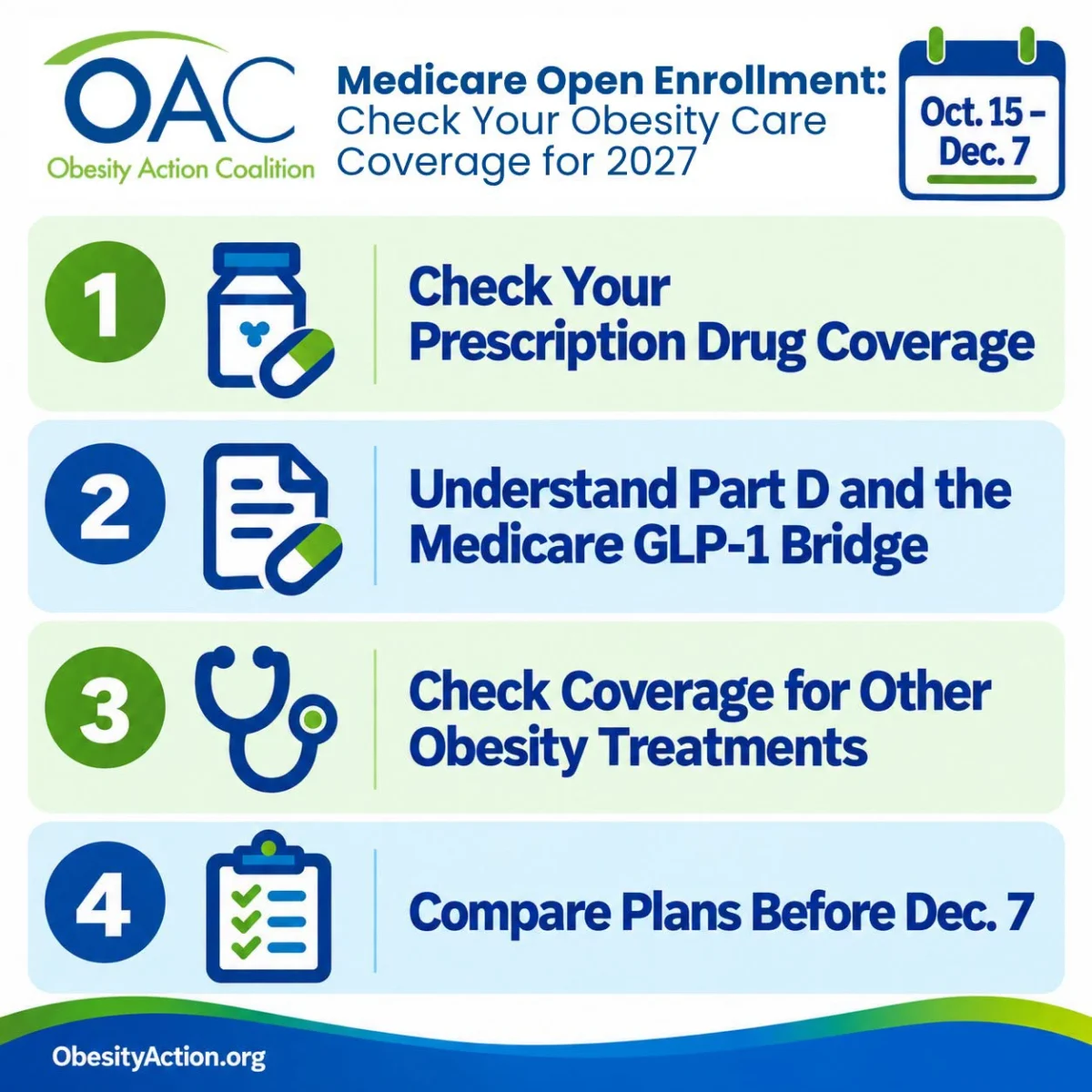
The annual Medicare Open Enrollment period, running from October 15 through December 7, has long been a routine fixture for American seniors and individuals with disabilities. However, as the healthcare landscape shifts toward more sophisticated treatments for chronic metabolic conditions, the 2027 enrollment cycle represents a pivotal moment. For the millions of Medicare beneficiaries living with obesity, this window is no longer just about adjusting premiums; it is a high-stakes navigation of a rapidly evolving pharmaceutical and regulatory environment.
n
With the introduction of the Medicare GLP-1 Bridge program and the expansion of Part D coverage for weight-related comorbidities, beneficiaries face a complex set of choices. This year, the stakes include not only monthly premiums but also access to life-altering medications that have historically been financially out of reach for those on fixed incomes.
n
n
Main Facts: The 2027 Medicare Landscape
n
The core of the 2027 Open Enrollment revolves around the intersection of traditional Medicare benefits and the burgeoning field of glucagon-like peptide-1 (GLP-1) receptor agonists. While Medicare has historically been prohibited by law from covering medications used specifically for weight loss under the Medicare Modernization Act of 2003, the boundaries are blurring as these drugs receive FDA approval for a variety of other life-threatening conditions.
n
The GLP-1 Bridge Program
n
The most significant development for the 2027 plan year is the continuation and integration of the Medicare GLP-1 Bridge. Launched on July 1, 2026, this temporary initiative was designed to fill the coverage gap for eligible beneficiaries living with obesity. Under this program, participants can access specific GLP-1 medications for a flat $50 monthly copay. This program acts as a "bridge" while broader legislative and policy shifts regarding obesity medication coverage are debated and implemented.
n
Part D Coverage for Comorbidities
n
While the Bridge program targets obesity specifically, Medicare Part D plans have expanded their formularies to cover GLP-1 medications when prescribed for other FDA-approved indications. These include:
n
- n
- Type 2 Diabetes: The long-standing primary indication for many GLP-1s.
- Cardiovascular Risk Reduction: For patients with established cardiovascular disease and obesity or overweight.
- Obstructive Sleep Apnea (OSA): Moderate to severe cases.
- Metabolic Dysfunction-Associated Steatohepatitis (MASH): Formerly known as NASH.
n
n
n
n
n
The $2,000 Out-of-Pocket Cap
n
A major structural change for 2027 is the full implementation of the out-of-pocket spending cap established by the Inflation Reduction Act. Beneficiaries will see their annual out-of-pocket costs for covered Part D drugs capped at $2,000. This is particularly relevant for those taking high-cost GLP-1s for non-obesity indications, as it provides a predictable ceiling for annual medical expenses.
n
n
Chronology: The Evolution of Obesity Coverage in Medicare
n
To understand the urgency of the 2027 enrollment period, one must look at the timeline of how Medicare has treated obesity.
n
- n
- 2003: The Medicare Modernization Act (MMA). Congress explicitly prohibited Medicare Part D from covering "agents when used for anorexia, weight loss, or weight gain." This created a decade-long barrier for obesity treatment.
- 2011: Intensive Behavioral Therapy (IBT). Medicare began covering IBT for obesity, consisting of screening and counseling in primary care settings, though uptake remained low due to strict provider requirements.
- Early 2020s: The GLP-1 Revolution. The FDA began approving drugs like semaglutide and tirzepatide for chronic weight management, leading to a surge in demand and a clash with the 2003 MMA prohibition.
- March 2024: The Cardiovascular Pivot. CMS issued guidance stating that Part D plans could cover GLP-1s if they are FDA-approved for an "additional health benefit" (such as reducing heart attack risk) even if the patient also has obesity.
- July 1, 2026: Launch of the Medicare GLP-1 Bridge. A temporary program was established to provide a $50 copay option for obesity-specific prescriptions, bypassing the Part D prohibition for a select group of eligible beneficiaries.
- October 15 – December 7, 2026: The Current Enrollment Window. Beneficiaries must now decide between traditional Part D coverage, Medicare Advantage (MA-PD) plans, and the Bridge program for their 2027 healthcare needs.
n
n
n
n
n
n
n
n
Supporting Data: Costs, Eligibility, and Plan Comparisons
The financial implications of choosing the wrong plan during this window can be profound. Data from the Obesity Action Coalition (OAC) and CMS highlight the variables beneficiaries must calculate.
Bridge Eligibility vs. Part D Eligibility
The "Bridge" is not a Part D plan; it is a separate program that requires the participant to already have a Part D or Medicare Advantage (MA-PD) plan.
- If a GLP-1 is prescribed for Obesity only: The Bridge is the primary path, provided the beneficiary meets the clinical criteria.
- If a GLP-1 is prescribed for T2D, CV Risk, or OSA: The Bridge is not available. The patient must use their Part D plan.
The Cost of Misalignment
Without the Bridge or specific Part D coverage, the list price for GLP-1 medications can exceed $1,000 per month. For a senior on a fixed income, the difference between a $50 Bridge copay and a 25-33% coinsurance rate on a high-tier Part D drug is the difference between treatment adherence and abandonment.
The Medicare Prescription Payment Plan
Introduced as part of recent reforms, this "smoothing" option allows beneficiaries to spread their out-of-pocket costs over the entire year. Instead of paying a large sum at the pharmacy counter in January (before hitting the $2,000 cap), the costs are divided into monthly installments. This is a critical tool for those managing the high costs of metabolic health medications.
Official Responses and Expert Guidance
Health advocates and government agencies are urging beneficiaries to look beyond the "name brand" of their current plans.
The Obesity Action Coalition (OAC) Perspective
The OAC has been at the forefront of advocating for the "Treat and Reduce Obesity Act" (TROA) and the implementation of the Bridge program. Their official guidance emphasizes that "coverage is not static." The OAC warns that pharmacy networks and formularies change annually. A plan that covered a specific GLP-1 in 2026 might move it to a higher tier or require more stringent Prior Authorization (PA) in 2027.
The OAC has released a "Medicare Open Enrollment Checklist" specifically for obesity care, urging patients to ask:
- Is my specific medication on the 2027 formulary?
- What are the "utilization management" requirements (e.g., Step Therapy)?
- Does the plan’s network include my preferred metabolic specialist?
CMS and Medicare.gov Recommendations
Centers for Medicare & Medicaid Services (CMS) officials recommend that every beneficiary use the "Medicare Plan Finder" tool. By inputting specific drug names and dosages, the tool can provide an estimated annual cost that includes premiums, deductibles, and copays. For 2027, CMS has updated the tool to better reflect the $2,000 out-of-pocket cap, providing more transparency for high-cost drug users.
Implications: The Future of Metabolic Health and Policy
The 2027 enrollment period is a microcosm of a larger shift in American healthcare: the recognition of obesity as a chronic, treatable disease rather than a lifestyle choice.
The Shift to Holistic Care
The implications of this year’s choices extend beyond the pharmacy counter. Obesity care in 2027 is increasingly holistic. Medicare Advantage plans, in particular, are competing for members by offering supplemental benefits that may include:
- Subsidized gym memberships (SilverSneakers).
- Nutrition counseling beyond the primary care setting.
- Access to metabolic and bariatric surgery centers of excellence.
Beneficiaries must weigh these "extra" benefits against the potentially more restrictive provider networks often found in Medicare Advantage plans. For those requiring bariatric surgery or specialized IBT, ensuring their surgeons and dietitians are "in-network" for 2027 is paramount.
Economic and Legislative Pressures
The success and utilization of the Medicare GLP-1 Bridge will likely serve as data for future legislative efforts. If the program shows significant health improvements and long-term cost savings (by reducing hospitalizations for heart failure or diabetes complications), it could provide the necessary evidence for Congress to permanently repeal the 2003 prohibition on weight loss drug coverage.
Equity in Access
The availability of "Extra Help"—a program for people with limited income and resources—remains a cornerstone of Medicare equity. In 2027, the expansion of Extra Help means more people will qualify for $0 premiums and lower drug copays. For the underserved populations disproportionately affected by obesity, these "Extra Help" provisions, combined with the GLP-1 Bridge, represent a major step toward closing the health equity gap.
Conclusion: A Call to Action Before December 7
The 2027 Medicare Open Enrollment period is characterized by unprecedented opportunity and significant complexity. With the December 7 deadline approaching, the message from health experts is clear: Complacency is a financial and clinical risk.
Beneficiaries are encouraged to:
- Review the Annual Notice of Change (ANOC): This document, sent by current plans, outlines changes in coverage, costs, and networks for the coming year.
- Verify GLP-1 Indications: Work with healthcare providers to ensure the diagnosis on record matches the coverage requirements (e.g., ensuring a diagnosis of OSA is documented for those seeking Part D coverage for that indication).
- Utilize the Bridge Navigator: For those seeking the $50 copay through the Bridge program, using the OAC’s Navigator tool can confirm eligibility before committing to a plan.
As obesity treatment moves into a new era of medical management, the 2027 enrollment cycle is the gatekeeper. By taking the time to compare plans, understand the Bridge program, and calculate the benefits of the $2,000 out-of-pocket cap, Medicare beneficiaries can ensure they are not only covered but are positioned to achieve their best possible health outcomes in the year ahead.

