
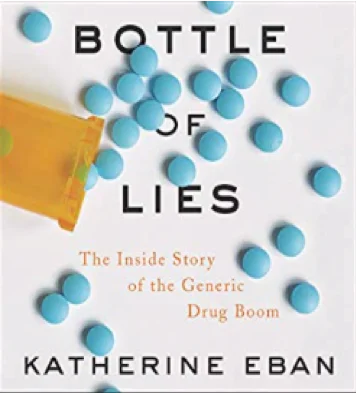
Washington D.C. – A recent reflection from Lisa Morrise, shared within the patient advocacy community, brings into sharp focus the alarming revelations contained within Katherine Eban’s investigative masterpiece, Bottle of Lies – The Inside Story of the Generic Drug Boom. Morrise’s poignant review underscores a widespread and deeply concerning issue: the frightening lack of effective oversight and integrity permeating the global generic medicine supply chain. What reads like a gripping thriller, Eban’s meticulously researched exposé has not only captivated readers but has also reignited critical conversations about the safety and efficacy of the medications millions rely on daily, prompting patients, providers, and regulators alike to scrutinize the very foundations of pharmaceutical trust.
n
Morrise’s personal connection to the issue – acknowledging that her own family has likely been impacted by poor quality generics – adds a powerful human dimension to Eban’s investigative journalism. Her commendation of patient advocacy’s role in addressing some of these issues, coupled with her stark reminder that "much remains to be done, especially for patients that live outside of the United States," serves as both a testament to progress and a clarion call for continued vigilance. The simple yet profound advice she offers – "If you are taking a generic medicine and it is not as effective as the name brand, talk to your provider" – encapsulates the direct, patient-centric action that can emerge from such critical awareness. This article delves deeper into the multifaceted issues raised by Bottle of Lies, exploring the genesis of the generic drug phenomenon, the systemic failures it exposed, the global implications for patient safety, and the ongoing efforts to restore integrity to a vital industry.
n
Unveiling the "Bottle of Lies": A Critical Look at Generic Drug Safety
n
Katherine Eban’s Bottle of Lies is not merely a book; it is a meticulously reported indictment of systemic failures within the generic pharmaceutical industry. Published in 2019, the book quickly garnered attention for its unflinching portrayal of how the global race for cheaper drugs inadvertently compromised the very quality and efficacy they were meant to replicate. Eban, an award-winning investigative journalist, spent years piecing together a narrative of fraud, data manipulation, and regulatory neglect that stretches from clandestine manufacturing plants in India and China to the pharmacies of America and beyond.
n
The Genesis of a Global Concern
n
The generic drug industry emerged from a noble and necessary premise: to make essential medicines affordable and accessible to a broader population. Following the expiration of patent protections for brand-name drugs, generic manufacturers could produce bioequivalent versions, driving down costs significantly. This model was embraced globally, particularly in countries like the United States, where the FDA’s Abbreviated New Drug Application (ANDA) process allowed for expedited approval based on proof of bioequivalence rather than entirely new clinical trials. The economic incentives were immense, leading to an explosion in generic drug production and a global supply chain heavily reliant on overseas manufacturing.
n
However, as Eban meticulously details, this rapid expansion, coupled with an often-strained regulatory apparatus, created fertile ground for corners to be cut. The promise of affordability began to overshadow the imperative of quality, leading to a perilous situation where the integrity of the drugs themselves became questionable. The very foundation of trust in these cost-effective alternatives started to erode under the weight of widespread misconduct.
n
Eban’s Explosive Exposé
n
Eban’s investigation centers on the stories of whistleblowers, former employees, and tenacious FDA investigators who uncovered a shocking pattern of malfeasance. Her narrative focuses heavily on the practices of major generic drug manufacturers, particularly those operating out of India, which has become a significant hub for global pharmaceutical production. The core of the problem, as depicted, is not simply isolated incidents of error but a pervasive culture of deception:
n
- n
- Data Manipulation: Perhaps the most egregious revelation is the systemic falsification of data. Companies were found to be fabricating test results, altering manufacturing records, and even disposing of "bad" batches of drugs only to pretend they never existed, all to pass regulatory inspections and meet quality standards on paper.
- Substandard Manufacturing: Beyond data fraud, the book details instances of filthy facilities, contaminated equipment, and inadequate quality control measures, leading to drugs that were either less effective, contained impurities, or failed to dissolve properly, rendering them therapeutically inert.
- Regulatory Blind Spots: Eban highlights how the FDA, overwhelmed by the sheer volume of foreign manufacturing sites and hampered by limited resources and travel restrictions, struggled to conduct thorough and frequent inspections. This created a loophole that unscrupulous manufacturers exploited, often preparing for inspections with "show laboratories" or "clean rooms" while their actual production remained compromised.
n
n
n
n
The cumulative effect of these practices, Eban argues, has been a silent crisis, where patients unknowingly consumed drugs that were not performing as expected, leading to prolonged illnesses, ineffective treatments, and, in some cases, potentially serious health consequences.
n
The Human Cost: A Patient’s Perspective
n
Lisa Morrise’s candid admission that her family has "likely been impacted by poor quality generics" resonates deeply with the core message of Bottle of Lies. Her statement is not just a personal anecdote but a reflection of a widespread anxiety that many patients and healthcare providers now share. The insidious nature of the problem lies in its subtlety: a generic drug that is only 80% effective, or that degrades faster than it should, may not cause an immediate, acute adverse event. Instead, it leads to a slow, debilitating failure of treatment, leaving patients to suffer longer, often without understanding why their medication isn’t working.
n
This uncertainty erodes trust – trust in the healthcare system, trust in pharmaceutical companies, and trust in the very medications prescribed to heal. Morrise’s call for patients to "talk to your provider" if a generic isn’t as effective as the name brand is a critical piece of advice, empowering individuals to become active participants in their own care and to voice concerns that might otherwise be dismissed. It underscores the vital role of patient advocacy in bringing these often-invisible failures to light.
n
A Troubling Chronology: The Evolution of Generic Drug Oversight Failures
n
The trajectory of the generic drug industry, from its hopeful beginnings to its current state of scrutiny, is marked by a series of regulatory challenges and ethical compromises. Understanding this chronology is crucial to grasping the systemic nature of the problems Eban exposes.
n
The Promise of Affordability and Access
n
The modern era of generic drugs truly began in the United States with the passage of the Drug Price Competition and Patent Term Restoration Act of 1984, commonly known as the Hatch-Waxman Act. This landmark legislation streamlined the process for approving generic drugs, dramatically increasing their availability and fostering competition. The rationale was sound: reduce healthcare costs, improve patient access to life-saving medications, and incentivize innovation in brand-name drug development.
n
For decades, this system largely functioned as intended, saving billions of dollars for healthcare systems and patients. The initial focus was primarily on domestic manufacturing and a relatively smaller pool of generic products. However, as pharmaceutical patents continued to expire and globalization took hold, the generic drug market exploded, with production shifting increasingly to countries with lower labor costs and less stringent environmental regulations.
n
Cracks in the Regulatory Foundation
n
The rapid globalization of pharmaceutical manufacturing, particularly starting in the late 1990s and accelerating in the 2000s, exposed significant cracks in the regulatory foundation. Regulatory bodies like the FDA, designed primarily for a domestic industry, struggled to adapt to a complex, international supply chain.
n
- n
- Resource Limitations: The sheer number of overseas facilities meant that regulatory agencies lacked the personnel and funding to conduct frequent, unannounced, and thorough inspections. Inspections of foreign sites were often less frequent than domestic ones, and manufacturers often received ample notice, allowing them to prepare and conceal deficiencies.
- Cultural and Legal Barriers: Navigating different legal systems, languages, and cultural norms in countries like India and China proved challenging. Enforcement actions were often complicated, and follow-up on corrective actions could be slow.
- Focus on Documentation Over Reality: The regulatory process often relied heavily on submitted documentation and audits, which, as Eban reveals, could be easily falsified. The emphasis on paperwork over direct observation of manufacturing practices created an environment ripe for deception.
- The "Race to the Bottom": Intense price competition among generic manufacturers, driven by purchasing power from pharmacy benefit managers and government programs, created immense pressure to cut costs. This economic incentive often translated into compromising quality control, using cheaper raw materials, and neglecting facility maintenance.
n
n
n
These factors converged to create a situation where manufacturers could operate with a degree of impunity, confident that their deceptive practices might go undetected by an overstretched and geographically distant regulatory body.
Whistleblowers and Investigative Journalism: Shifting the Tides
Crucially, it was not solely regulatory action that brought these issues to light. The chronology of exposure is heavily indebted to the courage of whistleblowers – often former employees of generic drug companies – who risked their careers and reputations to reveal the truth. These individuals provided internal documents, shared firsthand accounts of fraud, and guided investigators to the hidden realities of manufacturing plants.
Eban’s work, along with that of other investigative journalists and researchers, played a pivotal role in synthesizing these disparate pieces of information into a coherent and compelling narrative. By giving voice to the whistleblowers and meticulously documenting the evidence, Bottle of Lies transformed isolated incidents into a systemic problem, compelling a broader public and regulatory response. This investigative journalism served as a critical catalyst, pushing for a reckoning that the existing oversight mechanisms had largely failed to achieve on their own.
The Anatomy of Deception: Supporting Data and Systemic Weaknesses
While the original article is a review, Eban’s book provides a wealth of "supporting data" in the form of documented cases, internal emails, audit reports, and whistleblower testimonies. This section elaborates on the nature of these revelations, illustrating the systemic weaknesses that allowed deception to flourish.
Data Integrity and Manufacturing Malpractice
At the heart of the "Bottle of Lies" exposé lies the pervasive issue of data integrity. Generic drug manufacturers are required to demonstrate that their products meet stringent quality standards and are bioequivalent to their brand-name counterparts. This involves rigorous testing throughout the manufacturing process, from raw materials to finished products. Eban’s book details numerous instances where these data were compromised:
- Batch Record Falsification: Records indicating failed tests or out-of-specification results were routinely altered or destroyed. "Good" results were sometimes copied and pasted from previous, successful batches.
- "Re-testing to Pass": If a batch failed an initial quality test, instead of investigating the root cause and potentially discarding the batch, some companies would simply re-test the sample repeatedly until a "passing" result was obtained, often by cherry-picking samples or manipulating testing parameters.
- "Shadow Labs" and "Show Labs": Some facilities maintained separate, pristine laboratories solely for the purpose of FDA inspections, while the actual, often substandard, testing was conducted in hidden or neglected areas. Raw data, if incriminating, was often kept off-site or destroyed before inspections.
- Impurities and Contamination: The lack of genuine quality control led to drugs containing unknown impurities, foreign particles, or incorrect dosages. These issues were then masked by fabricated data, presenting a clean bill of health for products that were far from it.
These practices were not isolated to a few rogue employees but were often described as company-wide policies, driven by pressure from management to meet production targets and maintain profitability.
The Global Supply Chain’s Vulnerabilities
The globalized nature of the generic drug supply chain further exacerbated these vulnerabilities. A single pill can involve raw materials from one country, active pharmaceutical ingredients (APIs) manufactured in another, and final formulation and packaging in a third.
- Lack of Traceability: Tracing the origin and quality of every component across multiple international borders becomes incredibly complex, making it difficult to pinpoint the source of a defect or contamination.
- Disparate Standards: While major regulatory bodies aim for harmonization, differences in enforcement priorities, resources, and even legal frameworks across countries can create weak links in the chain. Manufacturers might exploit jurisdictions with less rigorous oversight.
- Economic Disparities: The economic incentives for countries like India and China to become global pharmaceutical manufacturing hubs are immense. This can sometimes create political pressure to protect local industries, potentially slowing down or diluting regulatory enforcement actions.
Eban’s narrative highlights how this intricate web of global production, while offering cost benefits, also introduced layers of complexity that made genuine oversight exceedingly difficult.
Economic Pressures and Ethical Lapses
The intense competition in the generic drug market, particularly in countries like the U.S. where generics account for over 90% of prescriptions, drives prices down significantly. While beneficial for consumers, this relentless downward pressure on pricing can inadvertently foster an environment where ethical lapses become more tempting.
- Cost-Cutting Measures: Companies under extreme financial pressure may be tempted to cut corners on quality control, invest less in facility upgrades, or use cheaper, potentially lower-quality raw materials.
- Profit Incentives: The potential for massive profits from high-volume generic drugs can outweigh the perceived risks of regulatory non-compliance, especially if the chances of detection are low and penalties are not sufficiently deterrent.
- Corporate Culture: Eban suggests that in some companies, a culture emerged where deceiving regulators was not just tolerated but actively encouraged, with employees feeling pressured to meet unrealistic production and quality targets through fraudulent means.
These economic and cultural factors created a fertile ground for the systematic deception that Bottle of Lies so vividly describes, impacting millions of patients worldwide.
Official Responses and Regulatory Reckoning
The revelations from Bottle of Lies and other investigations have not gone unnoticed by regulatory bodies and governments. While progress has been made, the journey towards comprehensive reform is ongoing and fraught with challenges.
FDA’s Evolving Stance and Enforcement Actions
The U.S. Food and Drug Administration (FDA), responsible for ensuring the safety and efficacy of drugs sold in the U.S., has acknowledged the challenges posed by the global generic drug supply chain.
- Increased Inspections: In response to heightened scrutiny, the FDA has committed to increasing the number and frequency of inspections at foreign manufacturing sites, often employing more unannounced visits. They have also aimed to harmonize their inspection standards globally.
- Data Integrity Focus: The FDA has placed a significant emphasis on data integrity, issuing guidance documents and increasing scrutiny of raw data during inspections. They have also invested in forensic tools and training for inspectors to detect data manipulation.
- Warning Letters and Import Alerts: The agency has issued numerous warning letters to companies found to be non-compliant and has placed many foreign manufacturing facilities on import alert, effectively banning their products from entering the U.S. market until deficiencies are rectified.
- Whistleblower Protections: Efforts have been made to strengthen whistleblower protections and encourage employees within the industry to come forward with information about wrongdoing.
- Generic Drug User Fee Amendments (GDUFA): GDUFA programs, enacted in 2012, provide the FDA with additional resources funded by the generic drug industry, specifically earmarked for improving the review of generic drug applications and inspections of manufacturing facilities.
Despite these efforts, the sheer scale of the global industry and the inherent difficulties of overseas enforcement mean that the FDA’s task remains monumental. Critics argue that enforcement can still be slow and that penalties may not always be sufficient to deter large corporations.
International Collaboration and Disparities
The problem of generic drug quality is inherently global, necessitating international collaboration among regulatory bodies.
- Harmonization Efforts: Organizations like the International Council for Harmonisation of Technical Requirements for Pharmaceuticals for Human Use (ICH) aim to standardize regulatory requirements globally, making it harder for manufacturers to exploit differences between jurisdictions.
- Information Sharing: Increased information sharing between agencies like the FDA, the European Medicines Agency (EMA), and other national regulators is crucial for identifying problematic manufacturers and coordinating enforcement actions.
- Disparities in Developing Nations: As Lisa Morrise highlighted, "much remains to be done, especially for patients that live outside of the United States." Many developing countries lack the resources, infrastructure, and regulatory expertise to conduct thorough oversight of their own domestic and imported generic drug supplies. This creates a two-tiered system where patients in less regulated markets may be at even greater risk of receiving substandard medications. The World Health Organization (WHO) plays a critical role in capacity building and pre-qualification programs, but the gap remains substantial.
The Role of Legislation and Policy Reform
Beyond regulatory enforcement, legislative and policy reforms are continuously being debated and implemented to strengthen the generic drug supply chain.
- Supply Chain Resilience: Recent global events, such as the COVID-19 pandemic, have highlighted the fragility of relying on a limited number of overseas manufacturers. Policies are now exploring incentives for diversifying supply chains and increasing domestic production of essential medicines.
- Transparency Requirements: Calls for greater transparency in the pharmaceutical supply chain, allowing consumers and healthcare providers to better understand where their drugs are sourced and manufactured, are growing louder.
- Enhanced Penalties: Discussions around increasing fines and criminal penalties for corporate executives involved in pharmaceutical fraud aim to create a stronger deterrent effect.
These legislative efforts reflect a growing recognition that the integrity of the generic drug supply is not just a regulatory issue but a matter of national and global public health security.
Far-Reaching Implications: Patient Safety, Public Trust, and Global Health
The revelations in Bottle of Lies have profound implications that extend far beyond the immediate concerns of drug quality. They touch upon patient safety, public trust in institutions, and the very fabric of global health.
Eroding Patient Confidence
Perhaps the most damaging long-term consequence of widespread generic drug fraud is the erosion of patient confidence. When patients cannot be sure that the medication they are taking is effective and safe, it undermines their willingness to adhere to treatment regimens. This skepticism can lead to:
- Treatment Failure: Patients may prematurely discontinue generic medications, or fail to achieve desired therapeutic outcomes, leading to prolonged illness, increased suffering, and potentially more severe health complications.
- Increased Healthcare Costs: Ineffective generic drugs can lead to more doctor visits, additional diagnostic tests, and the need for more expensive brand-name alternatives, paradoxically increasing healthcare expenditures.
- Mistrust in the System: The feeling of being deceived by pharmaceutical companies and, by extension, the regulatory bodies meant to protect them, can foster a general mistrust in the healthcare system, making it harder to implement public health initiatives.
Lisa Morrise’s advice to "talk to your provider" is an essential step in rebuilding this trust, empowering patients to voice their concerns and seek clarification.
The Imperative for Vigilance and Advocacy
The ongoing battle for generic drug integrity highlights the critical role of vigilance and advocacy from multiple stakeholders.
- Healthcare Providers: Physicians, pharmacists, and nurses are on the front lines, often the first to observe when a generic drug is not performing as expected. Their awareness of these issues and willingness to report adverse events or suspected quality issues are paramount.
- Patient Advocacy Groups: Organizations like the one Lisa Morrise is associated with (CAPS Book Club context suggests a patient advocacy leaning) are vital in amplifying patient voices, educating the public, and lobbying for stronger regulations and enforcement. Their ability to translate complex regulatory issues into relatable patient experiences drives public and political will for change.
- Whistleblowers: Protecting and encouraging whistleblowers remains crucial. Their insider knowledge is often the most direct path to uncovering deeply entrenched fraudulent practices.
- Investigative Journalism: The role of journalists like Katherine Eban in uncovering and communicating these complex truths to the public is indispensable for maintaining transparency and accountability.
A Call to Action for Patients and Providers
The ultimate message derived from Bottle of Lies and reinforced by patient experiences like Lisa Morrise’s is a call to continuous action.
- For Patients: Be informed consumers. Ask questions about your medications, their origins, and any perceived differences in efficacy between generic and brand-name versions. Do not hesitate to report concerns to your healthcare provider.
- For Providers: Maintain a high index of suspicion for generic drug quality issues. Engage in shared decision-making with patients, discussing potential concerns and alternatives. Report suspected quality problems to regulatory agencies.
- For Regulators and Policymakers: Continue to strengthen oversight, particularly for foreign manufacturing sites. Invest in advanced detection technologies and forensic analysis. Foster international collaboration and address disparities in regulatory enforcement globally. Prioritize data integrity and impose stringent penalties for fraud.
Conclusion: A Continuous Quest for Integrity
Katherine Eban’s Bottle of Lies serves as a powerful and enduring reminder that the pursuit of affordability in healthcare must never come at the expense of safety and efficacy. Lisa Morrise’s reflection underscores the deeply personal impact of these systemic failures, translating abstract regulatory concerns into tangible worries for families worldwide. While patient advocacy and regulatory reforms have begun to address some of the issues, the global generic drug supply chain remains a complex ecosystem requiring constant vigilance.
The integrity of our medicines is not a luxury but a fundamental right. As the world continues to rely heavily on generic drugs for accessible healthcare, the lessons learned from this exposé must guide a continuous quest for transparency, accountability, and unwavering commitment to patient well-being, ensuring that the promise of affordable medicine is never again overshadowed by a bottle of lies. The conversation sparked by Eban’s work, and echoed by concerned voices like Morrise’s, is far from over, reminding us that the pursuit of safer, more effective healthcare is an ongoing journey that demands collective engagement.

