
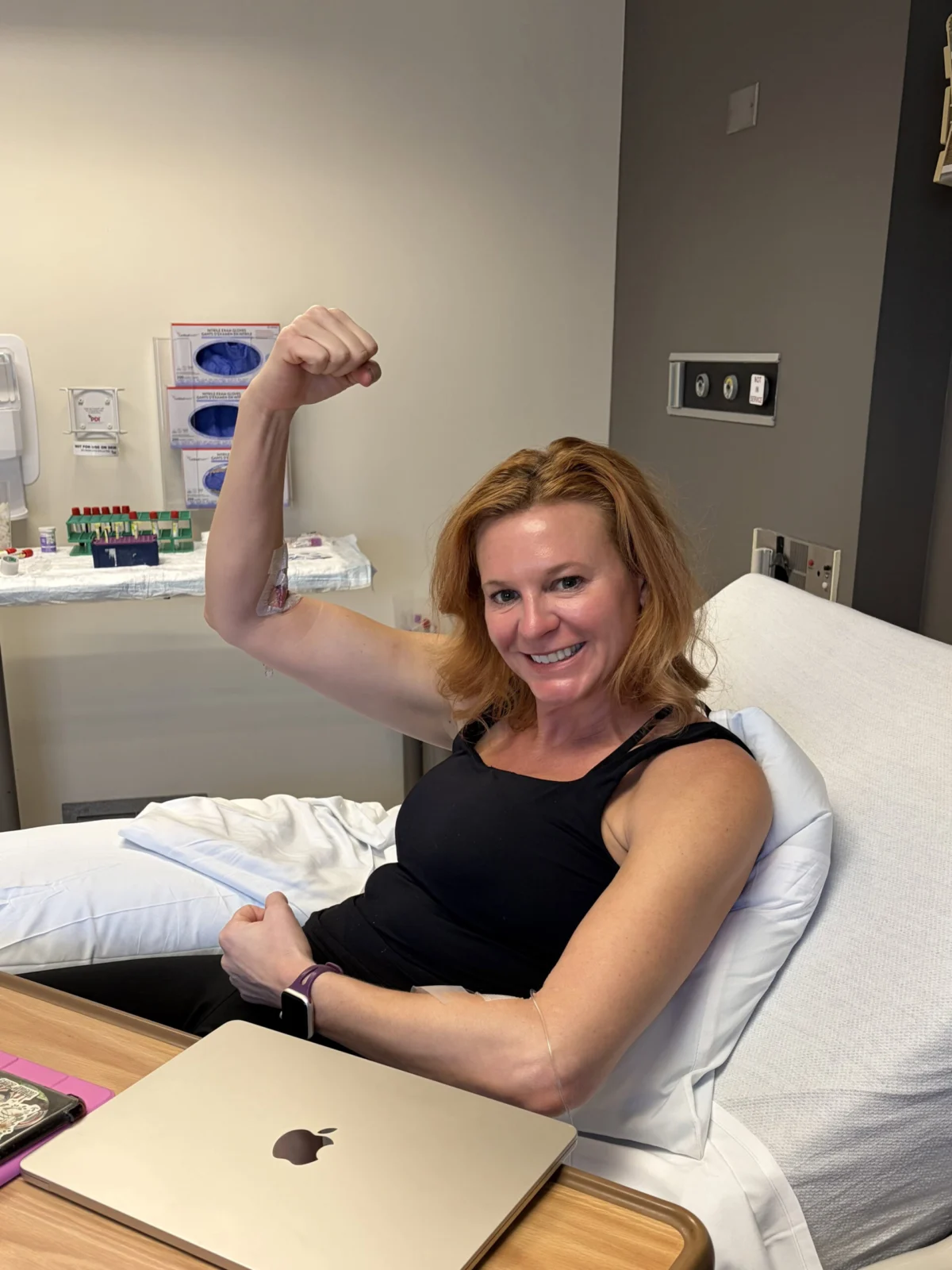
By Sandy Vogt, Ph.D. (Enriched and Expanded by [Your Publication Name] Staff)
n
The landscape of Type 1 Diabetes (T1D) management is undergoing a seismic shift. For decades, the primary focus of T1D care was management: the constant, vigilant monitoring of blood glucose levels and the exogenous administration of insulin. However, as we observe National Diabetes Awareness Month, the conversation is shifting from management to transformation. At the heart of this evolution lies the clinical trial—a rigorous, scientific bridge that connects laboratory breakthroughs with real-world patient care.
n
Clinical trials are more than just research studies; they are the essential mechanism through which scientists and clinicians determine if a new therapy, drug, or medical device is both safe and effective for human use. Without these trials, the most promising discoveries in the world would remain trapped in petri dishes. Today, organizations like Breakthrough T1D are highlighting the individuals—the researchers, the medical staff, and most importantly, the participants—who are accelerating the journey toward a world without T1D.
n
Main Facts: The Essential Role of Clinical Research in T1D
n
Type 1 Diabetes is an autoimmune disease in which the body’s immune system attacks and destroys the insulin-producing beta cells in the pancreas. Currently, there is no known cure, and those living with the condition must rely on life-long insulin therapy. The goal of modern clinical research is to break this cycle through disease-modifying therapies, advanced technologies, and biological cures.
n
All medical treatments must undergo a stringent regulatory process before they can be prescribed by doctors. This process is designed to ensure that the benefits of a new intervention outweigh its risks. In the United States, the Food and Drug Administration (FDA) requires exhaustive data from clinical trials to grant approval.
n
The current T1D research pipeline is more robust than ever. It includes:
n
- n
- Immunotherapies: Aimed at slowing or stopping the autoimmune attack on beta cells.
- Cell Therapies: Focused on replacing destroyed beta cells with new ones, often derived from stem cells or animal sources (xenotransplantation).
- Advanced Technologies: Such as the "artificial pancreas" or automated insulin delivery (AID) systems.
n
n
n
n
The success of these innovations hinges on the participation of the T1D community. As Breakthrough T1D emphasizes, "Clinical trials would not be possible without people." This ecosystem includes a global network of study teams—doctors, nurses, biostatisticians, and pharmacists—and the courageous volunteers who step forward to test the unknown.
n
Chronology: The Evolution of the T1D Pipeline
n
To understand where we are going, we must look at how far we have come. The history of T1D research is a timeline of incremental victories that have paved the way for today’s high-stakes clinical trials.
n
The Era of Insulin and Basic Management (1921–1990s)
n
Following the discovery of insulin in 1921, the focus remained on refining the hormone’s delivery and purity. For nearly 70 years, the "gold standard" was simply keeping patients alive. It wasn’t until the landmark Diabetes Control and Complications Trial (DCCT) in the 1980s and 90s that clinical research proved that intensive blood glucose control could significantly reduce the risk of long-term complications like retinopathy and kidney disease.
n
The Technological Revolution (2000s–2015)
n
The turn of the millennium saw the rise of Continuous Glucose Monitors (CGMs) and more sophisticated insulin pumps. Clinical trials during this era focused on the integration of these devices. The "pipeline" began to include software and algorithms, leading to the first generation of closed-loop systems.
n
The Biological Frontier (2016–Present)
n
In the last decade, the focus has shifted toward biology. "Looking back twenty years, it’s really quite amazing how much knowledge we’ve accumulated and how many new approaches are being evaluated," notes Remi Creusot, Ph.D., a Breakthrough T1D-funded researcher.
n
Today’s chronology is marked by the successful testing of therapies like teplizumab—the first drug approved to delay the onset of T1D—and the ongoing trials for islet cell transplantation. We are now in a phase where "functional cures"—treatments that allow the body to produce its own insulin again, even if the underlying disease remains—are being tested in humans.
n
Supporting Data: Examining Current Breakthrough Trials
n
The effectiveness of the clinical trial model is best illustrated by the specific studies currently making headlines. These trials represent the cutting edge of regenerative medicine and immunology.
n
The Tegoprubart and Islet Transplant Study
n
One of the most promising areas of research involves islet cell transplantation. However, the body’s natural tendency is to reject foreign cells. Traditionally, this required heavy immunosuppression, which carries significant side effects.
n
The trial for Eledon’s tegoprubart, coupled with islet cell transplants, is testing a new way to prevent rejection. Tegoprubart is an investigational antibody designed to block the CD40L pathway, a key player in the immune response.
n
- n
- The Data: Early results from participants have been highly encouraging. Piotr Witkowski, M.D., Ph.D., a transplant surgeon at the University of Chicago and Principal Investigator for the trial, reports that patients are "nicely surprised" by the lack of side effects and are enjoying life without the need for external insulin.
n
Manufactured Islet Cell Therapy (Zimislecel)
A major hurdle in cell therapy is the scarcity of donor organs. Vertex Pharmaceuticals is addressing this through the development of zimislecel (VX-880), a stem-cell-derived, fully differentiated insulin-producing islet cell therapy.
- The Data: In clinical trials, participants receiving these manufactured cells have shown significant improvements in glucose control and, in some cases, total insulin independence. This trial proves that we can "manufacture" a solution to the donor shortage.
Porcine-Derived Therapy (OPF-310)
Another innovative approach is the use of porcine (pig) islet cells. The OPF-310 trial explores the safety and efficacy of these cells, which are modified to be compatible with the human immune system. Memunat Ogunmefun, MPH, BDS, a Clinical Research Coordinator on the trial, emphasizes that this research is about "exploring therapies that could potentially change how we treat type 1 diabetes" by providing a nearly limitless supply of insulin-producing cells.
Official Responses: Voices from the Frontlines
The success of these trials is often measured in data points, but the human testimony provides the context of their true impact. For National Diabetes Awareness Month, leaders and participants are speaking out about the importance of this work.
The Participant Perspective
For Katie Beth Hand, a participant in the tegoprubart trial, the decision to join was rooted in a desire for progress. "Participation in clinical trials is essential because that is the only way we are ever going to make progress on these next steps," she says. "We are getting closer and closer to a cure that’s available for everyone."
Patti Columbe, who participated in the Vertex zimislecel trial, views her involvement as a civic duty to the T1D community. "Clinical trials have to happen. We can’t get a cure without them, so somebody has to step up. I am lucky enough that I can step up—and I’m so glad to."
The Clinical Perspective
Medical professionals highlight the unique bond formed during these studies. Dr. Klara Klein, Principal Investigator for the CATT1 clinical trial at the University of North Carolina, notes the altruism of the community. "The T1D community is incredibly generous with their time and motivated to help advance care—not just for themselves, but for the type 1 diabetes community and future generations."
The Educational Infrastructure
Recognizing that the prospect of a clinical trial can be daunting, Breakthrough T1D has established a network of volunteers to bridge the information gap. Thomas Danne, M.D., Ph.D., Chief Medical Officer International, explains: "A peer who has been through it carries a credibility that no brochure or no clinician ever will." These volunteers help demystify the process, explaining the risks and rewards in a language patients understand.
Implications: A New Paradigm for T1D Care
The implications of current clinical trials extend far beyond the individual participants. We are witnessing the beginning of a shift in how chronic diseases are managed globally.
1. From Maintenance to Modification
The most profound implication is the transition from "managing" symptoms to "modifying" the disease. If therapies like tegoprubart or stem-cell-derived islets become standard care, the daily burden of T1D—the thousands of decisions regarding carbohydrates, exercise, and insulin—could be eliminated for millions.
2. A Legacy of Research
Alecia Wesner, a Participant Advisory Council member, points out that today’s treatments are the result of yesterday’s volunteers. "The treatments that preserved my vision were possible because others had volunteered for research for years, even decades, before me," she says. This creates a "pay-it-forward" cycle of medical advancement.
3. Democratization of Access
As trials prove successful, the next challenge will be ensuring these high-tech cures are accessible to all, regardless of socioeconomic status. The data gathered in current trials regarding cost-effectiveness and long-term outcomes will be vital in convincing insurers and governments to cover these revolutionary treatments.
4. The "Call to Action"
For those living with T1D or their loved ones, the message this November is clear: the path to a cure is paved by participation. Breakthrough T1D offers a clinical trials matching tool that allows individuals to find studies they may be eligible for in as little as 60 seconds.
By participating in a trial, individuals gain early access to cutting-edge technology and play a direct role in the scientific history of their condition. As the T1D community moves forward, the synergy between dedicated researchers and courageous participants remains the most powerful tool in the arsenal to end Type 1 Diabetes once and for all.
About the Author: Sandy Vogt, Ph.D., is a researcher and advocate dedicated to translating complex medical science into actionable information for the T1D community. Her work focuses on the intersection of immunology and patient-centric care.

