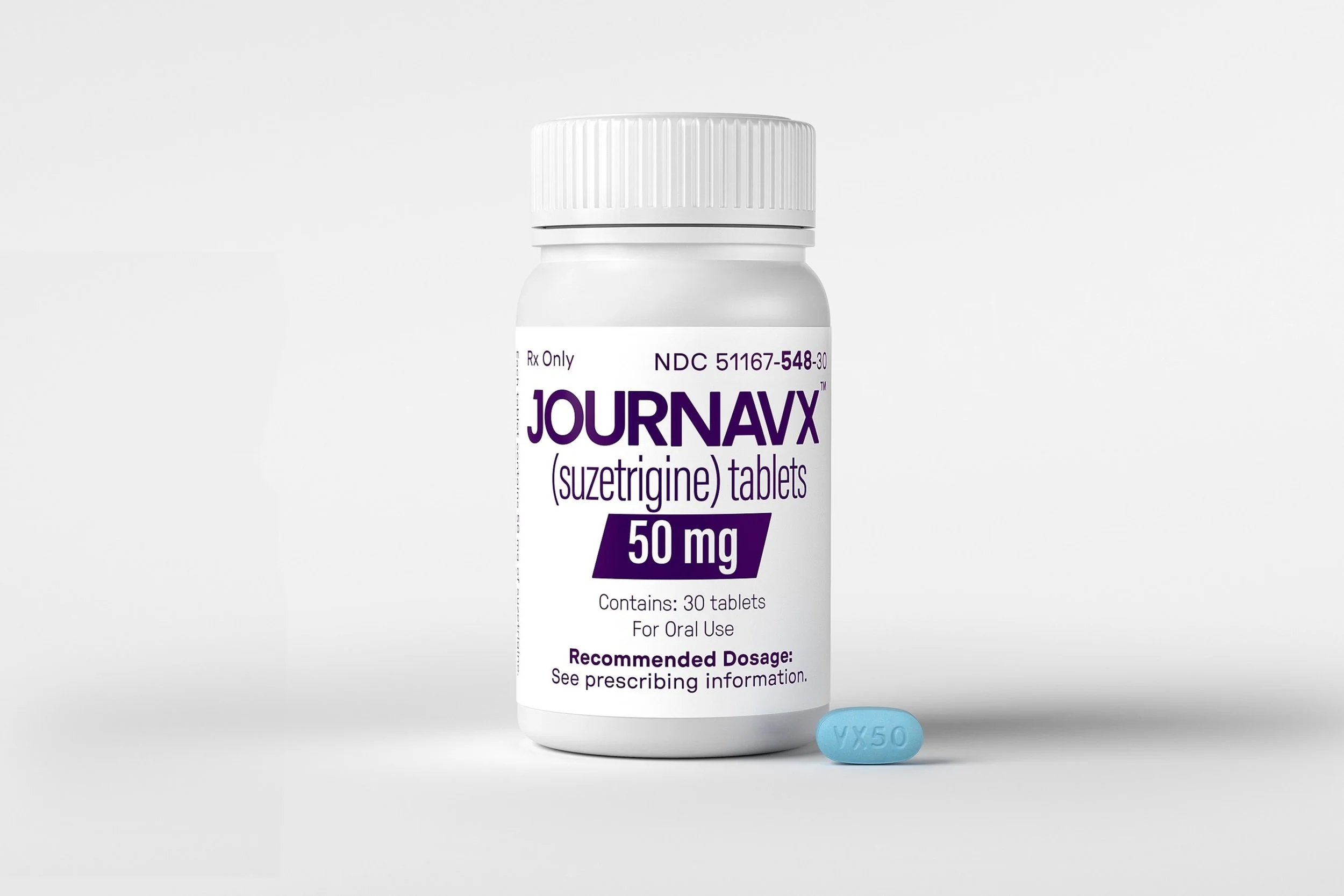
A novel non-opioid pain medication, Suzetrigine, marketed under the brand name Journavx, has been observed to be prescribed off-label for chronic pain conditions at a significantly higher rate than opioids, despite its initial approval solely for acute, short-term pain relief. This trend, emerging just 15 months after its Food and Drug Administration (FDA) approval in January 2025, highlights the persistent challenges in pain management and the urgent demand for non-addictive alternatives to opioids, even when a new drug’s efficacy for unapproved uses remains questionable.
A New Hope for Acute Pain: The Advent of Journavx
Journavx, developed by Vertex Pharmaceuticals, was hailed as a significant advancement in pain management upon its FDA approval. It represented the first new medication for acute pain in over two decades, offering a novel mechanism of action. Unlike traditional opioids that act on the central nervous system, Journavx functions by blocking pain signals in the peripheral nervous system. This distinct pathway was expected to circumvent the "liking" effects associated with opioids, thereby reducing the risks of dependence and addiction—a critical concern in the wake of the ongoing opioid crisis. Its primary intended applications were post-operative pain and emergency trauma care, scenarios where short-term, potent pain relief is crucial.
Rapid Off-Label Adoption: A Deep Dive into Prescribing Patterns
However, recent data published in Epic Research, covering the period from February 2025 to April 2026, reveals a rapid and widespread off-label adoption of Journavx for chronic pain. Researchers analyzed health records of over 3.6 million U.S. adults who received new prescriptions for either Journavx or an opioid. The findings were stark: chronic pain accounted for a substantial 33% of all Journavx prescriptions. In contrast, opioids were prescribed for chronic pain in only 6.7% of cases during the same period, underscoring a pronounced shift in prescribing behavior for the new non-opioid.
The study further elucidated the contexts in which these medications were predominantly prescribed. Opioid prescriptions largely aligned with their approved and traditional uses, with 48.8% for post-surgical pain and 19.8% for other acute pain conditions, collectively forming over two-thirds of opioid use. Journavx, conversely, saw only 10.2% of its prescriptions for surgery and 31.8% for acute pain, indicating a divergence from its approved indications. The research concluded, "Suzetrigine adoption has been concentrated in specialties that manage chronic and surgical pain longitudinally rather than in the acute-care settings where opioids are most commonly initiated." This suggests that healthcare providers dealing with long-term patient care are actively seeking and utilizing Journavx as a non-opioid option, even without specific chronic pain indications.
Demographic Shifts in Prescribing
The Epic Research study also identified demographic differences between patients receiving Journavx and those prescribed opioids. Patients receiving Journavx were frequently older and more likely to be female. Specifically, 43% of Journavx recipients were 65 or older, compared to 31.4% of opioid recipients. This demographic skew could reflect a greater caution among prescribers regarding opioid use in older populations, who may be more susceptible to adverse effects, or an active search for non-addictive alternatives for chronic conditions prevalent in this age group. Women, who often report higher rates of chronic pain, may also be more proactively seeking or being offered non-opioid options.
The Landscape of Off-Label Prescribing: Legality and Ethical Considerations
Off-label prescribing, while perfectly legal and sometimes medically appropriate, presents a complex ethical and clinical landscape. It involves prescribing an FDA-approved drug for a condition, dosage, or patient population not explicitly covered by its official approval. While physicians have the autonomy to prescribe drugs based on their clinical judgment and the best interest of their patients, the crucial caveat is the lack of rigorous clinical trial data for these off-label uses. The FDA approval process is exhaustive, requiring extensive Phase 1, 2, and 3 clinical trials to establish a drug’s safety and efficacy for specific indications. When a drug is used off-label, these trials simply do not exist, leaving a gap in evidence regarding effectiveness, optimal dosing, and long-term side effects for the unapproved condition.
Efficacy Concerns: Journavx as a "Mild Pain Reliever at Best"
The clinical trial data available for Journavx further complicates its widespread off-label use for chronic pain. Even for its approved acute pain indication, results from Phase 3 clinical studies for acute pain following minimally invasive surgeries suggested that Journavx was no more effective than a low-dose combination of hydrocodone and acetaminophen, commonly known as Vicodin. This comparison raises questions about its overall efficacy profile, even within its approved acute pain context.
More concerning for its off-label use in chronic pain, a Phase 2 study investigating Journavx for chronic back and hip pain caused by lumbosacral radiculopathy yielded particularly lackluster results. In this study, Journavx was found to be essentially no better than a placebo in providing relief. These findings, suggesting Journavx is a "mild pain reliever, at best," for acute or chronic pain, cast a shadow over its current high rate of off-label prescription for chronic conditions. Physicians and patients alike, desperate for alternatives, may be turning to Journavx with an expectation of relief that is not supported by existing scientific evidence.
Economic Implications: The High Cost of Unproven Efficacy
The financial implications of Journavx’s off-label use are substantial. Vertex Pharmaceuticals has priced Journavx at a wholesale cost of $15.50 for a 50mg pill. For acute pain, typically requiring twice-daily dosing, a one-week supply amounts to approximately $420. This cost stands in stark contrast to a supply of 100 Vicodin tablets, which costs about $142. When considering its off-label use for chronic pain, which would necessitate continuous, long-term dosing, the monthly and annual costs for patients and healthcare systems could be astronomical, especially for a medication whose efficacy for chronic conditions is comparable to a placebo.
Furthermore, Journavx is currently available only in an oral formulation. This limits its utility in many post-surgical pain settings where intravenous or injectable analgesics are often preferred for rapid onset and controlled delivery. This restriction further highlights the incongruity between its approved acute indications and its current prescribing patterns.
Stakeholder Perspectives: Navigating the Complexities
The observed prescribing patterns and efficacy concerns provoke various reactions from key stakeholders in the healthcare ecosystem:
-
Vertex Pharmaceuticals: While likely pleased with the rapid adoption of Journavx, Vertex Pharmaceuticals would typically emphasize that the drug is approved only for acute pain. They would highlight their ongoing commitment to research and development, possibly hinting at future trials for other indications, but would caution against off-label use without supporting data. Their focus would remain on the approved indications and the drug’s safety profile in those contexts. They might also underscore the unmet need for non-opioid options that drives physician behavior.
-
Food and Drug Administration (FDA): The FDA generally acknowledges the legality of off-label prescribing but stresses the importance of evidence-based medicine. They would reiterate that a drug’s approval signifies its safety and efficacy for specific indications, supported by rigorous trials. The agency would likely emphasize the need for continued post-market surveillance for all approved drugs, monitoring for adverse events, and encouraging further research into potential new indications. They would also caution against relying on anecdotal evidence over robust clinical data.
-
Pain Management Specialists and Medical Community: Many pain specialists are caught between the urgent need to reduce opioid prescriptions and the limited arsenal of effective non-opioid alternatives for chronic pain. They might express a sense of frustration, explaining that off-label prescribing often stems from a desperate attempt to provide relief to patients suffering from debilitating chronic conditions when approved options are either ineffective, carry significant risks (like opioids), or are otherwise unsuitable. They would likely advocate for more pharmaceutical research into genuinely effective non-opioid treatments for chronic pain, acknowledging the current limitations of drugs like Journavx. The data highlights a "trial and error" approach born out of necessity.
-
Patient Advocacy Groups: Organizations representing chronic pain patients would likely voice both hope and concern. The hope stems from the development of any new non-opioid option, given the stigma and challenges associated with opioid use. However, the concern would revolve around the potential for ineffective treatment, the significant financial burden of a costly drug with questionable efficacy for chronic pain, and the emotional toll of trying multiple treatments that ultimately fail to provide relief. They would advocate for transparent information about drug efficacy and access to affordable, evidence-based care.
-
Insurance Providers and Payers: These entities would likely express significant apprehension regarding the cost-effectiveness of Journavx’s off-label use, especially given the mild efficacy profile for chronic pain. They might implement stricter prior authorization requirements for Journavx prescriptions, particularly for chronic conditions, demanding robust justification from prescribers. The high price point for a medication with unproven long-term efficacy for chronic conditions would be a major point of contention, potentially leading to coverage denials or increased out-of-pocket costs for patients.
Broader Implications and the Future of Pain Management
The case of Journavx underscores several critical implications for patient care, pharmaceutical development, and regulatory oversight.
-
Patient Safety and Efficacy: The primary concern remains patient safety and the provision of effective care. Prescribing a drug off-label without sufficient evidence of efficacy for that condition can lead to suboptimal outcomes, prolonged suffering, and exposure to potential side effects without commensurate benefit. Patients may incur significant costs for treatments that offer little to no relief, diverting resources from potentially more effective interventions.
-
Pharmaceutical Innovation and Research Incentives: The rapid off-label adoption of Journavx for chronic pain, despite its limited efficacy for this use, raises questions about incentives for pharmaceutical companies. While developing a drug for chronic pain is complex and costly, the existing market demand might lead companies to prioritize initial acute pain indications for faster approval, potentially deferring or neglecting comprehensive chronic pain trials. This could inadvertently perpetuate the cycle of off-label use and the proliferation of less-than-optimal treatments.
-
Regulatory Challenges: While off-label prescribing is legal, the FDA and other regulatory bodies face the ongoing challenge of monitoring and responding to widespread patterns that emerge post-market. The balance between physician autonomy and evidence-based medicine is delicate. This situation may prompt further discussions on how to better incentivize and conduct post-market studies for new indications, or how to provide clearer guidance to prescribers when off-label use becomes prevalent.
-
The Persistent Need for Non-Opioid Solutions: Ultimately, the phenomenon surrounding Journavx is a symptom of a larger, systemic problem: the profound and enduring unmet need for safe, effective, and non-addictive treatments for chronic pain. The opioid crisis has created immense pressure to find alternatives, and in the absence of truly robust options, healthcare providers and patients are resorting to drugs with limited evidence. This highlights the critical importance of continued, rigorous research into novel pain pathways and therapeutic targets to develop medications that genuinely address the complex nature of chronic pain.
In conclusion, while Journavx was approved with the promise of a new era in acute pain management, its current trajectory into widespread off-label use for chronic pain, despite questionable efficacy and high cost, reflects the deep complexities and urgent needs within the broader pain management landscape. This trend serves as a potent reminder of the challenges faced by patients and healthcare providers alike in navigating an environment where the demand for non-opioid solutions often outpaces the development of truly effective, evidence-based treatments. The unfolding story of Journavx will undoubtedly continue to inform discussions on drug development, prescribing practices, and the future of pain relief.