
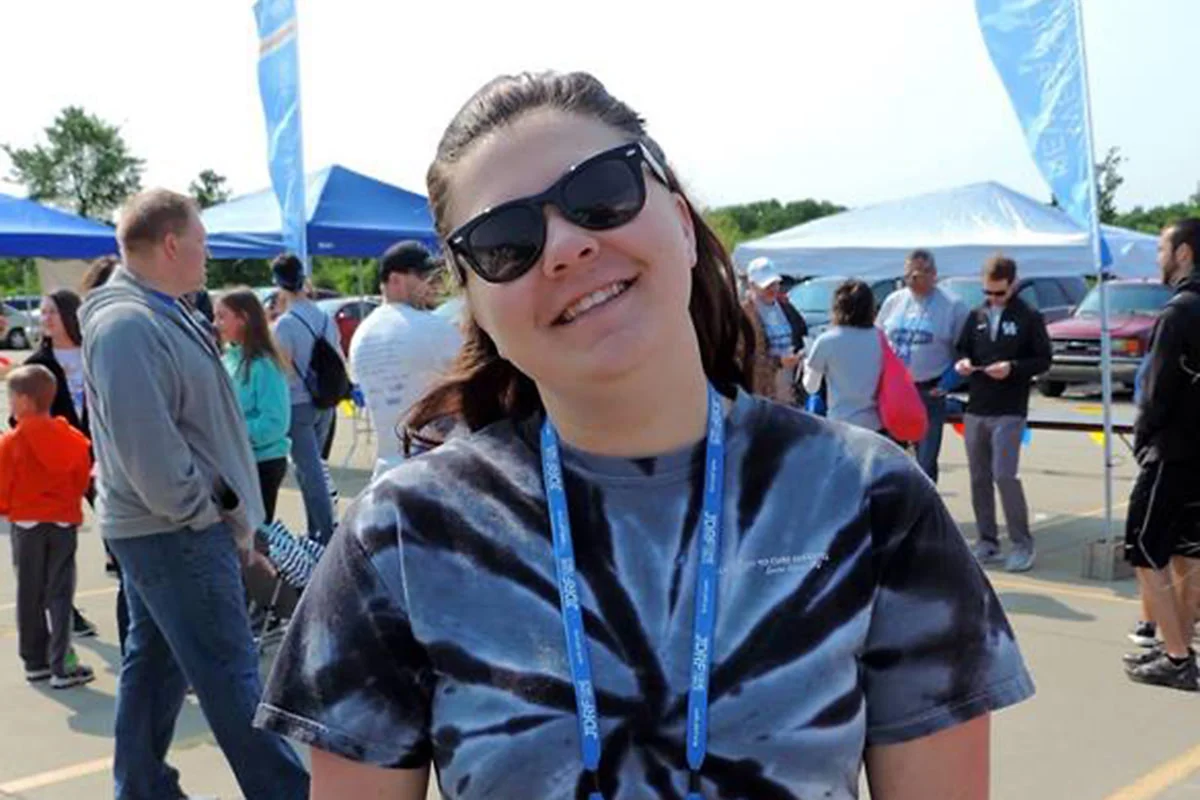
Type 1 Diabetes (T1D) is often described as a full-time job for which the patient never applied and from which they can never retire. For Jessie Stover, the Development Manager at Breakthrough T1D’s Indiana Chapter, this "job" began when she was just a toddler. Today, Stover serves as a bridge between the clinical reality of the disease and the philanthropic efforts required to fund a cure. Her life story—spanning from a landmark clinical trial at age four to her current role as a community leader—offers a profound look at the evolution of diabetes care over the last three decades.
n
Stover, an Evansville native now residing in Indianapolis, manages the very programs that once supported her family. Her journey is not merely one of survival, but of transformation, illustrating how the psychological burden of chronic illness is as significant as the physiological one.
n
A Chronological History: From Diagnosis to Professional Leadership
n
The trajectory of Jessie Stover’s life was permanently altered at the age of two. While her family had a documented history of autoimmune disorders, T1D was an unknown entity. Her diagnosis necessitated an immediate and radical restructuring of the Stover household’s daily operations.
n
The 1990s: The Early Years and the Sudden Onset of T1D
n
In the early years following her diagnosis, the management of Stover’s condition fell squarely on her "village"—a dedicated network consisting of her parents, grandparents, and school staff. Management in this era was tactile and manual. It involved kitchen scales to weigh every gram of carbohydrates, sugar-free alternatives like Kool-Aid, and a ubiquitous container of gummy bears designated for treating hypoglycemia (low blood sugar).

n
For a young child, the clinical requirements of T1D were often frightening. Stover recalls the visceral fear of insulin injections, a common trauma for pediatric patients that frequently led to her physically running away from her parents when it was time for a dose.
n
The Clinical Trial: A Pioneer in Pediatric Insulin Pump Therapy
n
A pivotal moment occurred during an appointment with her endocrinologist in Indianapolis. Stover was referred to a clinical trial (specifically exploring trial NCT00727220) designed to determine if very young children could safely and effectively use insulin pumps. At the time, pump therapy was primarily reserved for adults or older adolescents.
n
By age four, Stover became a pioneer in pediatric diabetes technology. The transition from multiple daily injections to an insulin pump was transformative. The use of numbing creams for site insertions eliminated the physical pain of needles, while the pump itself allowed for more precise, automated dosing. This not only improved Stover’s glycemic control but also provided immense psychological relief to her primary caregiver, her mother. Stover has remained on pump therapy for the nearly three decades since.
n
The Adolescent Crucible: Navigating Mental Health and Autonomy
n
The most significant challenge, however, was not the technology, but the transition to self-management during her teenage years. As Stover grew, the responsibility for her T1D shifted from her parents to herself. This period was marked by "diabetes burnout"—a state of physical and emotional exhaustion caused by the relentless demands of the disease.

n
Stover describes this phase as a "cold realization" that the condition was permanent. The pressure to maintain "perfect" blood sugar levels to avoid future complications created a high-stress environment. It was a metaphor shared by her care team that finally provided clarity: "Being a teenager is hard enough. Adding T1D into the mix is like trying to stop a volcano from erupting!"
n
This validation allowed Stover to grieve her diagnosis and acknowledge the anger and fatigue she felt. By setting boundaries with her family and prioritizing her mental health, she moved from a state of forced compliance to one of empowered management.
n
Adulthood and the Challenge of Comorbidity
n
Following her college graduation, Stover faced a secondary autoimmune challenge: a diagnosis of Celiac disease. In the T1D community, this is a common occurrence, as the genetic markers for both conditions often overlap. However, having already mastered the resilience required for T1D, Stover approached this new dietary restriction with a sense of "grace," finding the management of a second condition easier to navigate because of the mental fortitude she had built over the years.
n
Supporting Data: The Evolving Landscape of T1D Management
n
Stover’s life reflects broader trends in the medical and psychological treatment of Type 1 Diabetes. Understanding the data behind her experience provides context for why her advocacy is so critical.

n
The Prevalence of T1D and Comorbidities
n
Type 1 Diabetes is an autoimmune reaction where the body’s immune system attacks the insulin-producing beta cells in the pancreas. According to the CDC, approximately 1.4 million Americans live with T1D.
n
- n
- Celiac Link: Research indicates that between 5% and 10% of individuals with T1D also develop Celiac disease, compared to about 1% of the general population. This dual diagnosis requires a rigorous gluten-free diet, which Stover has turned into a personal craft, specializing in gluten-free baking.
- Clinical Trials: The trial Stover participated in at age four is part of a long history of research funded by organizations like Breakthrough T1D. Such trials have moved the needle from manual injections to Automated Insulin Delivery (AID) systems.
n
n
n
The Technological Shift
n
The introduction of Continuous Glucose Monitors (CGMs) has been the most significant advancement in T1D care since the discovery of insulin in 1921.
n
- n
- Real-time Data: CGMs provide glucose readings every five minutes, allowing patients to see trends rather than just single data points.
- Anxiety Management: For patients like Stover, who experience anxiety regarding hypoglycemia, CGMs offer a safety net. By setting her "low" alarm at 100 mg/dL (higher than the clinical low of 70 mg/dL), Stover utilizes technology to mitigate medical trauma and maintain peace of mind.
n
n
Official Responses: The Role of Breakthrough T1D and Community Engagement
As the Development Manager for Breakthrough T1D’s Indiana Chapter, Stover is now the professional face of the organization that supported her childhood. Breakthrough T1D (formerly JDRF) is the leading global organization funding T1D research.
The Indiana Chapter and the Holiday World Walk
One of Stover’s primary responsibilities is the organization of the Breakthrough T1D Walk. Her connection to this event is deeply personal; she began as a participant in a "tiny but mighty" walk in Southern Indiana started by a small group of parents. Today, she organizes the Holiday World Walk in Indiana, one of the chapter’s flagship fundraising and community-building events.

Youth Ambassador Programs
Stover’s journey also highlights the importance of the Youth Ambassador program. By engaging children and teens in advocacy early on, the organization helps them find community and purpose. Stover notes that "Breakthrough T1D has been a part of my life almost as much as T1D has," emphasizing that the organization provides a social framework that clinical medicine cannot.
Implications and Advocacy: Redefining the "Invisible" Illness
The broader implications of Jessie Stover’s story lie in her philosophy of "taking up space." For decades, T1D was treated as an invisible illness—something to be managed privately and quietly. Stover is part of a new generation of advocates who argue that visibility is a prerequisite for better care and mental health.
Breaking the Silence on Mental Health
Stover’s advocacy places a heavy emphasis on "chronic illness fatigue" and "medical trauma." By speaking openly about the "bad days," she challenges the societal pressure on patients to appear "normal" or "healthy." Her message to the community is clear: the immune system is at fault, not the patient. This shift from guilt to grace is essential for long-term survival and quality of life.
The Power of Community and Validation
The rise of social media and online "Diabestie" communities has revolutionized how patients interact. Stover encourages patients to "bedazzle" their medical devices and celebrate their "diaversaries" (the anniversary of their diagnosis). These acts of reclamation turn medical necessity into a badge of resilience.

Conclusion: The Path Forward
Jessie Stover’s transition from a four-year-old clinical trial participant to a leader in the T1D community serves as a testament to the progress made in diabetes care. However, her story also serves as a reminder that the work is unfinished. While technology has made the disease easier to manage, it remains a relentless burden.
Through her work at Breakthrough T1D, Stover continues to advocate for a world where the "volcano" of T1D is finally extinguished. Until then, her life stands as a blueprint for how to live with grace, compassion, and an unwavering commitment to the community. As she aptly puts it: "T1D is only invisible if you let it be."

