
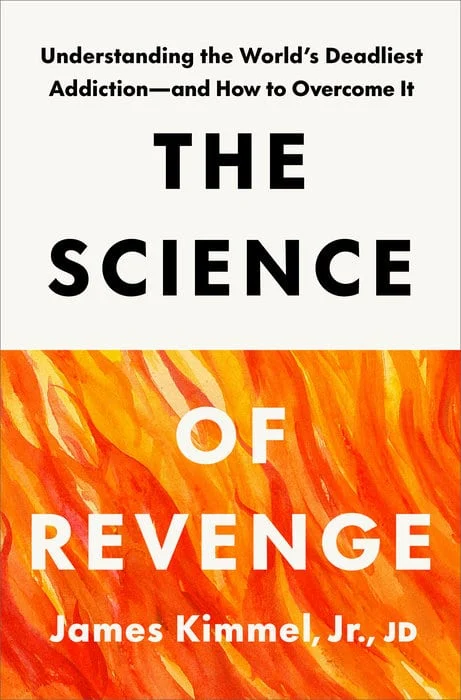
In the landscape of modern psychiatry and behavioral science, the definition of "addiction" has undergone a radical transformation. Once limited to the ingestion of exogenous substances like alcohol or narcotics, the term now encompasses a range of compulsive behaviors—from gambling to digital consumption—that hijack the brain’s reward systems. However, a pioneering theory emerging from the intersection of law and psychiatry suggests a more ancient and pervasive addiction may be at the heart of human conflict: the addiction to revenge.
n
James Kimmel, Jr., JD, an assistant clinical professor of psychiatry at the Yale School of Medicine and a graduate of the University of Pennsylvania Carey Law School, has spent years investigating why the pursuit of justice so often fails to provide the psychological closure it promises. His findings, detailed in his seminal work The Science of Revenge and recently discussed in depth on the podcast No Small Endeavor, propose that compulsive revenge-seeking is not merely a moral failing or a personality flaw, but a biological addiction fueled by the same neural pathways as cocaine or opioid dependency.
n
Main Facts: The Concept of Revenge Addiction
n
The core of Kimmel’s research lies in the "Unified Theory of Addiction," which posits that addiction is less about the chemical properties of a specific substance and more about the brain’s attempt to displace intolerable psychological pain or stress. In the case of revenge, the "drug" is the fantasy or act of retaliating against a perceived wrongdoer.
n
Kimmel identifies a specific cycle: a grievance or injury activates the brain’s pain network—the same regions that register physical trauma. To mitigate this pain, the brain seeks a "hit" of dopamine. This is achieved through the visualization of retribution. When an individual ruminates on "getting even," the brain’s reward circuitry, specifically the ventral striatum, is activated. This provides a temporary euphoria that masks the underlying pain of shame, humiliation, or loss.
n
However, like any addictive substance, the relief is fleeting. Once the dopamine spike dissipates, the original psychological pain returns, often with greater intensity, leading the individual to seek more potent or frequent "doses" of revenge. This cycle explains why legal victories or personal retaliations rarely end the cycle of violence or animosity; instead, they often serve to reinforce the craving for further retribution.
n
Chronology: From the Courtroom to the Yale School of Medicine
n
The development of this theory was not instantaneous but resulted from Kimmel’s unique career trajectory. His journey began in the high-stakes world of litigation. As an attorney, Kimmel observed that his clients were frequently driven by an insatiable desire to "make the other side pay," a motivation that often transcended financial logic or practical resolution.
n
The Legal Catalyst:nKimmel realized that the legal profession, particularly litigation, often functions as a "grievance management" system. Lawyers are hired to facilitate legalized forms of revenge. In his interviews, Kimmel notes that while the law aims for "justice," the psychological reality for the participants is often a desperate search for emotional relief through the suffering of others.
n
The Psychiatric Shift:nRealizing that "justice" (in the legal sense) did not stop the pain of his clients, Kimmel transitioned into the study of psychiatry. He sought to understand why a person who "won" their court case often felt just as miserable, if not more so, than when the process began. This led him to the Yale School of Medicine, where he began bridge-building between the mechanics of the law and the mechanics of the human brain.
n
The Discovery of the Neurobiological Link:nBy 2024 and into 2026, Kimmel’s work gained significant traction as brain-imaging technology provided empirical support for his observations. He began to map the "grievance-to-revenge" pipeline, showing that the brain does not distinguish between the pain of a broken leg and the pain of a broken heart or a bruised ego. Both are processed as threats to survival, triggering the same biological imperatives to "fix" the pain.
n
Supporting Data: The Neuroscience of the Grievance
n
To understand revenge as an addiction, one must look at the data regarding how the brain processes social rejection and injustice.
n
1. The Pain Network
n
Studies using Functional Magnetic Resonance Imaging (fMRI) have shown that social exclusion and unfair treatment activate the anterior cingulate cortex (ACC). This is the same region that processes the emotional distress associated with physical pain. When someone is "wronged," their brain is essentially screaming that it is under attack.
n
2. The Dopamine Reward Circuitry
n
When an individual begins to plot revenge, the brain shifts from the ACC to the reward centers. The anticipation of retaliation triggers a release of dopamine. This is the "high" of revenge. Kimmel points out that this is identical to the neurological response seen in gambling addicts when they are about to place a bet or drug addicts when they see their substance of choice.
n
3. The Displacement Mechanism
n
The Unified Theory of Addiction, supported by Kimmel and other researchers, suggests that the brain uses these dopamine hits to "displace" the pain signals. If the brain is flooded with the pleasure of a revenge fantasy, it cannot simultaneously focus on the agony of humiliation. This makes revenge a powerful, albeit destructive, tool for stress management.
n
4. The Tolerance and Withdrawal Phase
n
Kimmel’s research indicates that "revenge addicts" develop a tolerance. A small act of retaliation eventually fails to provide the same relief, requiring more extreme fantasies or actions to achieve the same dopamine spike. Conversely, when a person is prevented from seeking revenge, they may experience "withdrawal"—intense irritability, anxiety, and an obsessive fixation on the grievance.
n
Official Responses and Clinical Perspectives
n
The psychiatric community has begun to take Kimmel’s findings seriously, particularly in the context of "Post-Traumatic Embitterment Disorder" (PTED) and chronic anger management.
n
While the Diagnostic and Statistical Manual of Mental Disorders (DSM-5) does not yet officially list "Revenge Addiction" as a standalone diagnosis, many clinicians are adopting Kimmel’s framework to treat patients who are "stuck" in cycles of trauma. The response from the legal community has been more complex. Some legal scholars argue that acknowledging the addictive nature of revenge could lead to a more "therapeutic jurisprudence," where the law focuses on healing rather than just adjudication.
n
In his interview on No Small Endeavor, Kimmel emphasizes that the legal system often acts as an enabler. By providing a structured environment for conflict, the law can inadvertently facilitate the addiction, allowing individuals to "use" the legal process to feed their need for retribution without ever addressing the underlying psychological trauma.
n
Implications: Forgiveness as a Physiological Intervention
n
If revenge is an addiction, what is the cure? Kimmel’s most provocative claim is that the solution is not more "justice," but forgiveness. However, he defines forgiveness not in religious or moral terms, but as a biological "wonder drug."
The "Wonder Drug" of Forgiveness
Kimmel argues that forgiveness is the only mechanism that actually "shuts down" the pain network. While revenge masks the pain with a temporary dopamine hit, forgiveness—the act of consciously dropping the grievance—stops the brain from sending the pain signals in the first place.
The Implications for Society:
- Violence Prevention: If we treat revenge as an addiction, we can approach community violence (such as gang warfare or domestic disputes) with the same protocols used for public health crises. Interventions would focus on "detoxing" individuals from their grievances.
- Legal Reform: The legal system could incorporate "Restorative Justice" models that prioritize the emotional de-escalation of the parties involved, rather than just the determination of guilt and the imposition of punishment.
- Mental Health Treatment: Therapists can use Kimmel’s model to help patients realize that their ruminations are a form of self-medication. By identifying the "hit" they get from their anger, patients can begin to seek healthier ways to manage their psychological pain.
Conclusion: The Euphoria of Letting Go
The research of James Kimmel, Jr. challenges the fundamental human instinct to strike back. By framing revenge as a neurobiological addiction, he provides a scientific basis for the ancient wisdom that "holding onto anger is like drinking poison and waiting for the other person to die."
As the Unified Theory of Addiction gains ground, the focus shifts from the object of the addiction to the source of the pain. Whether it is a substance, a behavior, or a decade-old grudge, the underlying mechanism remains the same: an attempt to displace suffering. In this light, forgiveness is not a sign of weakness or a concession to an enemy; it is a sophisticated physiological strategy for self-preservation. It is the only way to break the cycle of addiction and truly stop the pain.
This report was compiled based on the findings of James Kimmel, Jr., JD, and his 2026 publications and interviews regarding the neurobiology of revenge.

