
WASHINGTON D.C. — A comprehensive series of longitudinal studies and polling data released by KFF (Kaiser Family Foundation) reveals a seismic shift in how the American public consumes, processes, and trusts health information. As the nation moves through the mid-2020s, the traditional pillars of public health—the CDC, the FDA, and federal health officials—face a deepening crisis of confidence, increasingly overshadowed by partisan identity, social media influencers, and the burgeoning use of Artificial Intelligence.
n
While the patient-provider relationship remains the final stronghold of medical authority, the surrounding landscape is one of fragmentation. The data suggests that for a significant portion of the population, political affiliation is now a more potent predictor of health belief than scientific consensus.
n
Main Facts: The Hierarchy of Trust in a Divided Nation
n
The KFF findings establish a clear hierarchy of trust that begins at the local level and erodes as it moves toward federal oversight. Doctors and personal healthcare providers remain the most trusted sources of health information across every demographic, including age, race, and political affiliation. A large majority of adults express at least a "fair amount" of trust in their own clinicians to provide reliable guidance.
n
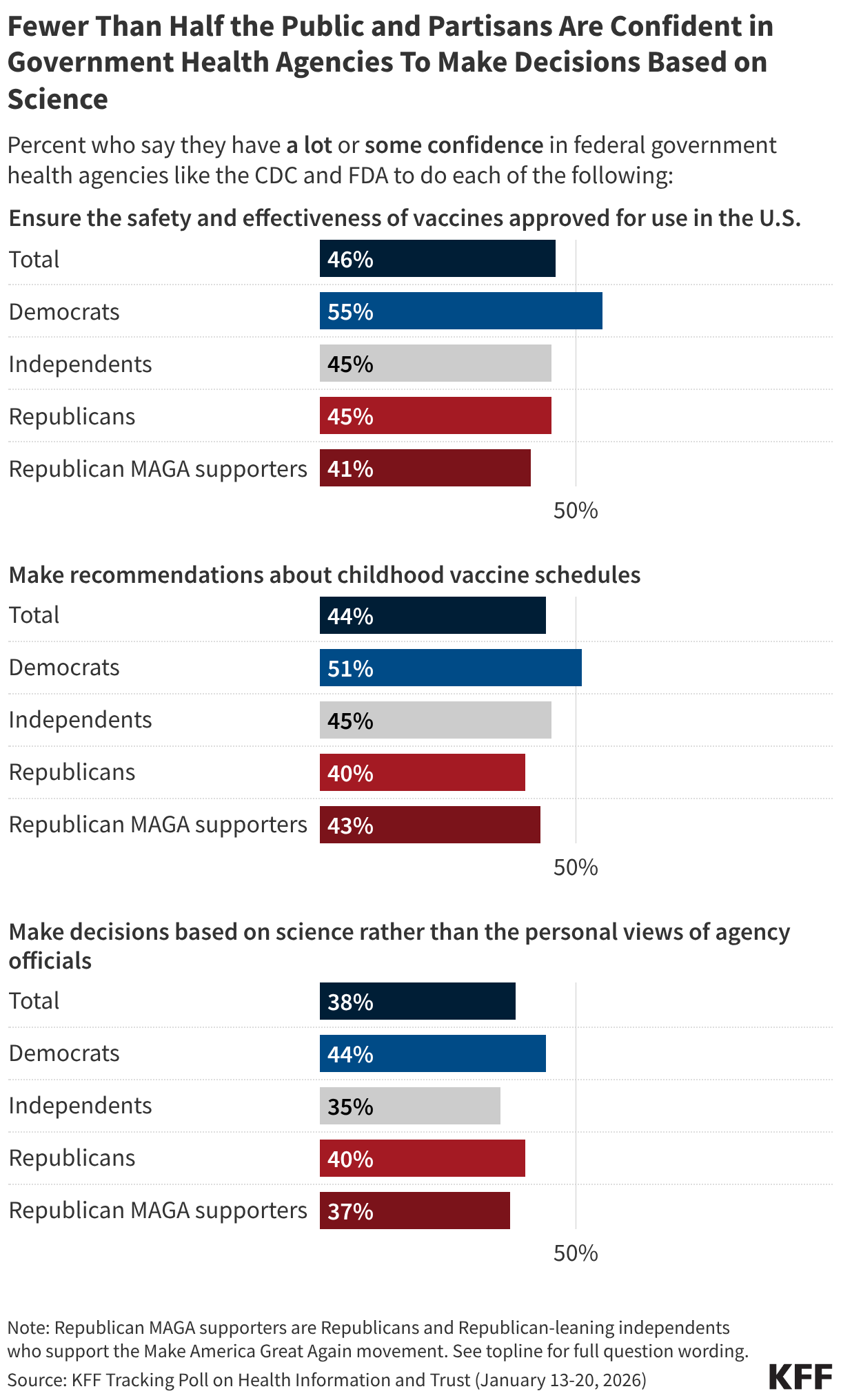
However, this trust does not extend to the institutions that govern medical practice. Trust in the Centers for Disease Control and Prevention (CDC) and the Food and Drug Administration (FDA) is now split down the middle. Only half of the American public expresses confidence in these agencies. The divide is even more pronounced for political figures; fewer than half of adults trust President Trump or Health and Human Services (HHS) Secretary Robert F. Kennedy Jr. for reliable health information.
n
The defining characteristic of this new era is the "partisan lens." Among Republicans—particularly those identifying with the MAGA (Make America Great Again) movement—trust in Secretary Kennedy and President Trump is high, reaching seven in ten. Conversely, three in ten or fewer Democrats and Independents share this confidence. This polarization has created two distinct "realities" regarding health safety, where the perceived reliability of a vaccine or a health recommendation depends largely on the political identity of the messenger.
n
Chronology: From Pandemic Unity to Institutional Fragmentation
n
The current state of health trust is the result of a decade-long erosion that accelerated sharply between 2020 and 2026.
n
- n
- 2020-2021: The Pandemic Peak: At the onset of the COVID-19 pandemic, the CDC enjoyed high levels of bipartisan trust. Most Americans looked to federal agencies for guidance on a novel threat. However, as the pandemic progressed, trust began to decline amid debates over mandates, school closures, and vaccine efficacy.
- 2022-2024: The Widening Gap: Republican trust in federal health agencies saw a precipitous drop during this period. Skepticism toward the COVID-19 vaccine began to bleed into skepticism toward routine childhood immunizations.
- 2025: The Political Realignment: Following the reelection of Donald Trump and the subsequent appointment of Robert F. Kennedy Jr. as HHS Secretary, the trust landscape shifted again. The "MAHA" (Make America Healthy Again) movement gained traction, bringing alternative health perspectives into the federal fold.
- 2026: The New Normal: By early 2026, KFF tracking polls indicated that Democratic trust in the CDC had also begun to decline significantly, reacting to the change in leadership and the perceived politicization of the agency. Today, the public is essentially bifurcated, with institutional trust fluctuating based on which party holds the levers of power.
n
n
n
n
n
Supporting Data: The Rise of AI, Social Media, and the "Malleable Middle"
n
The KFF data provides a granular look at how Americans are bypassing traditional channels to manage their health.
n
The Access Gap and the Turn to AI
n
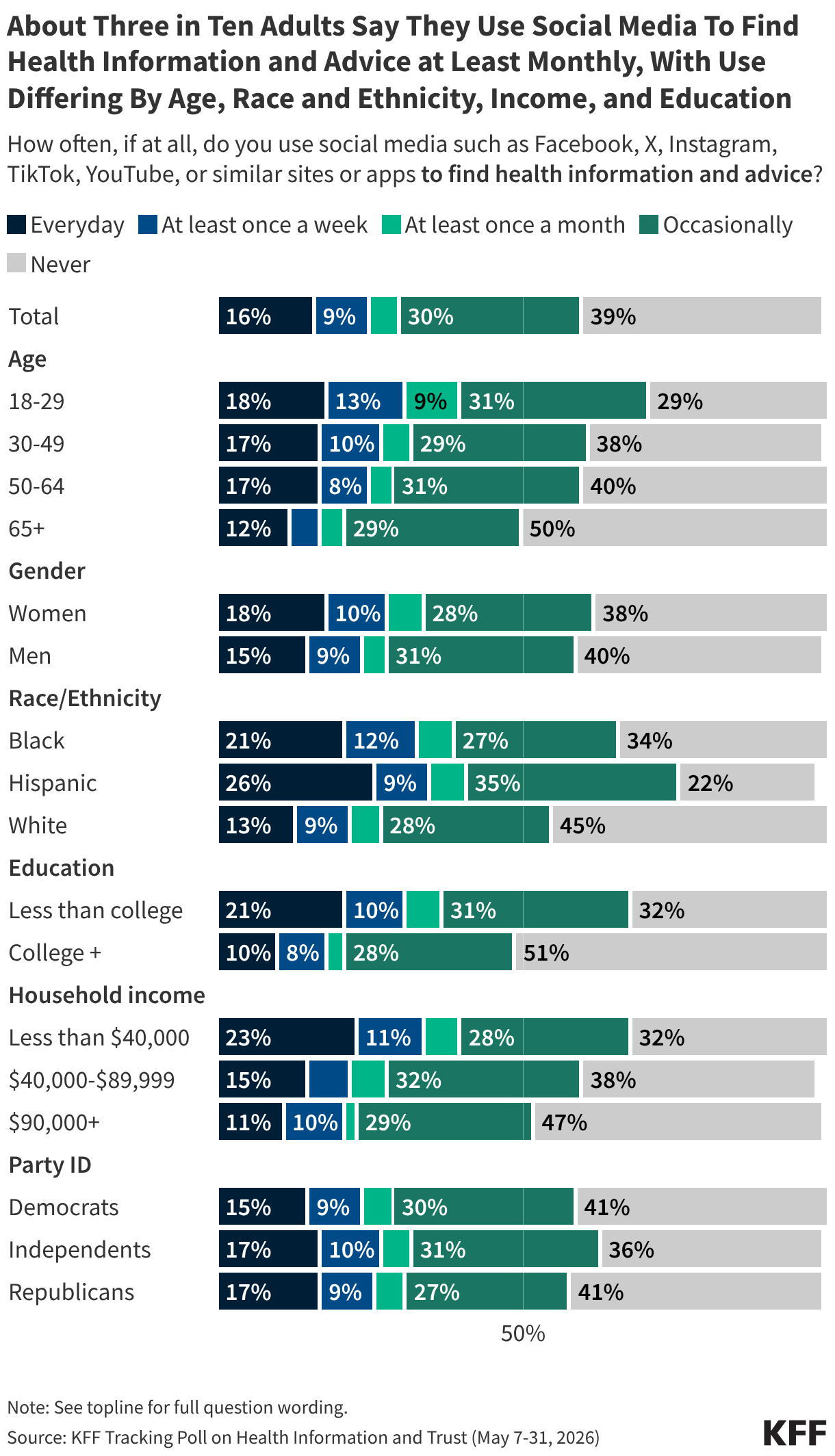
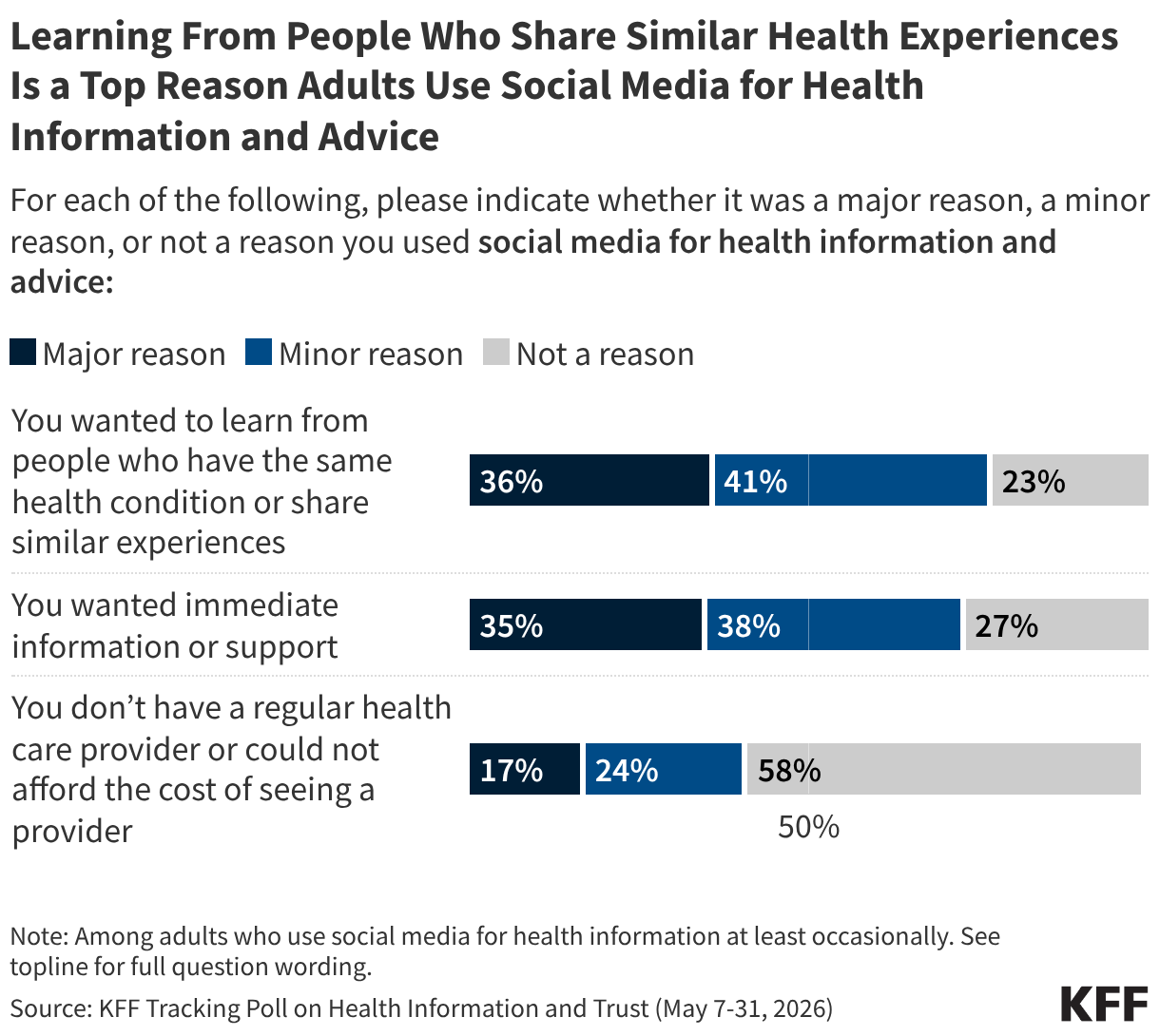
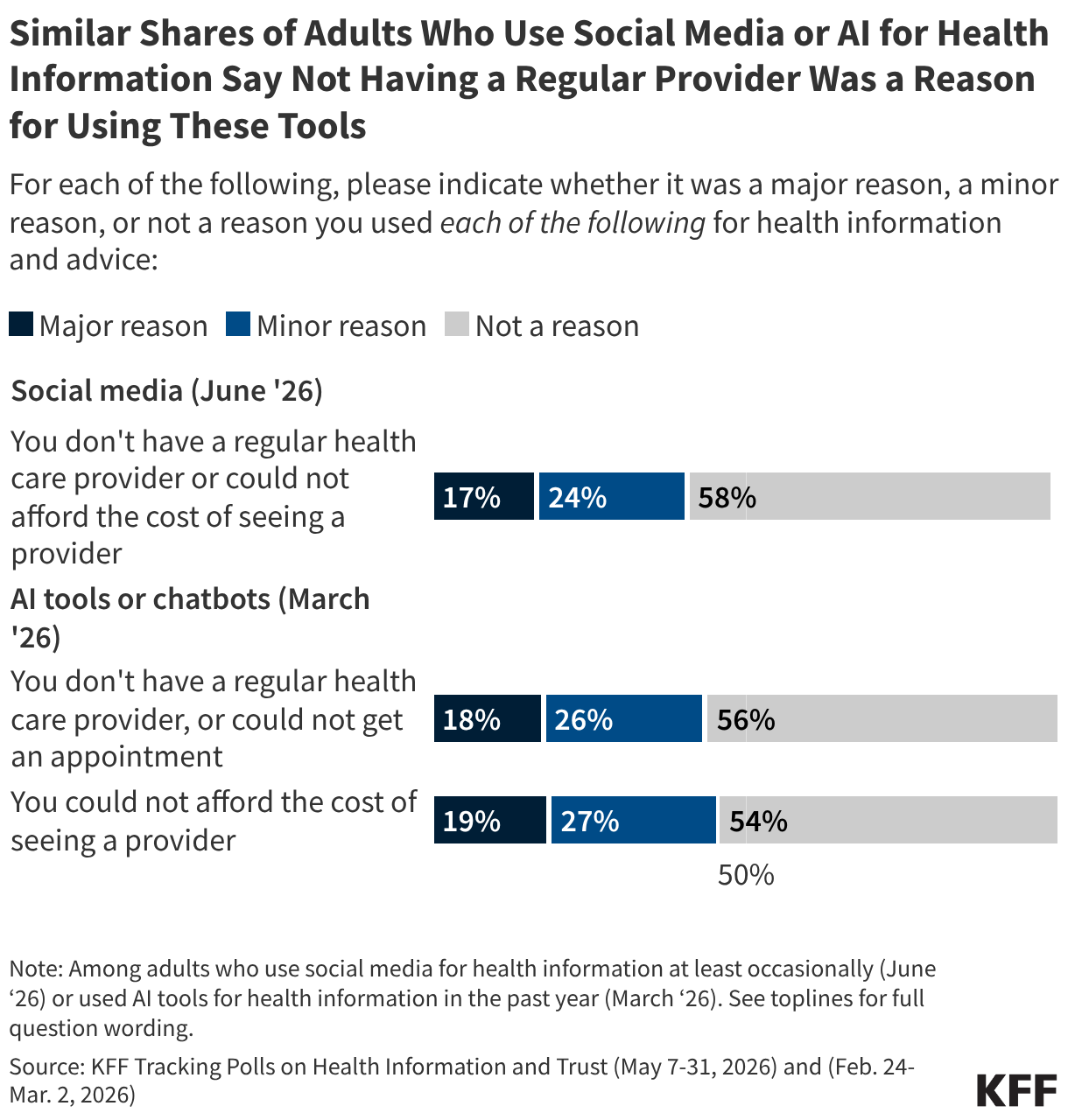
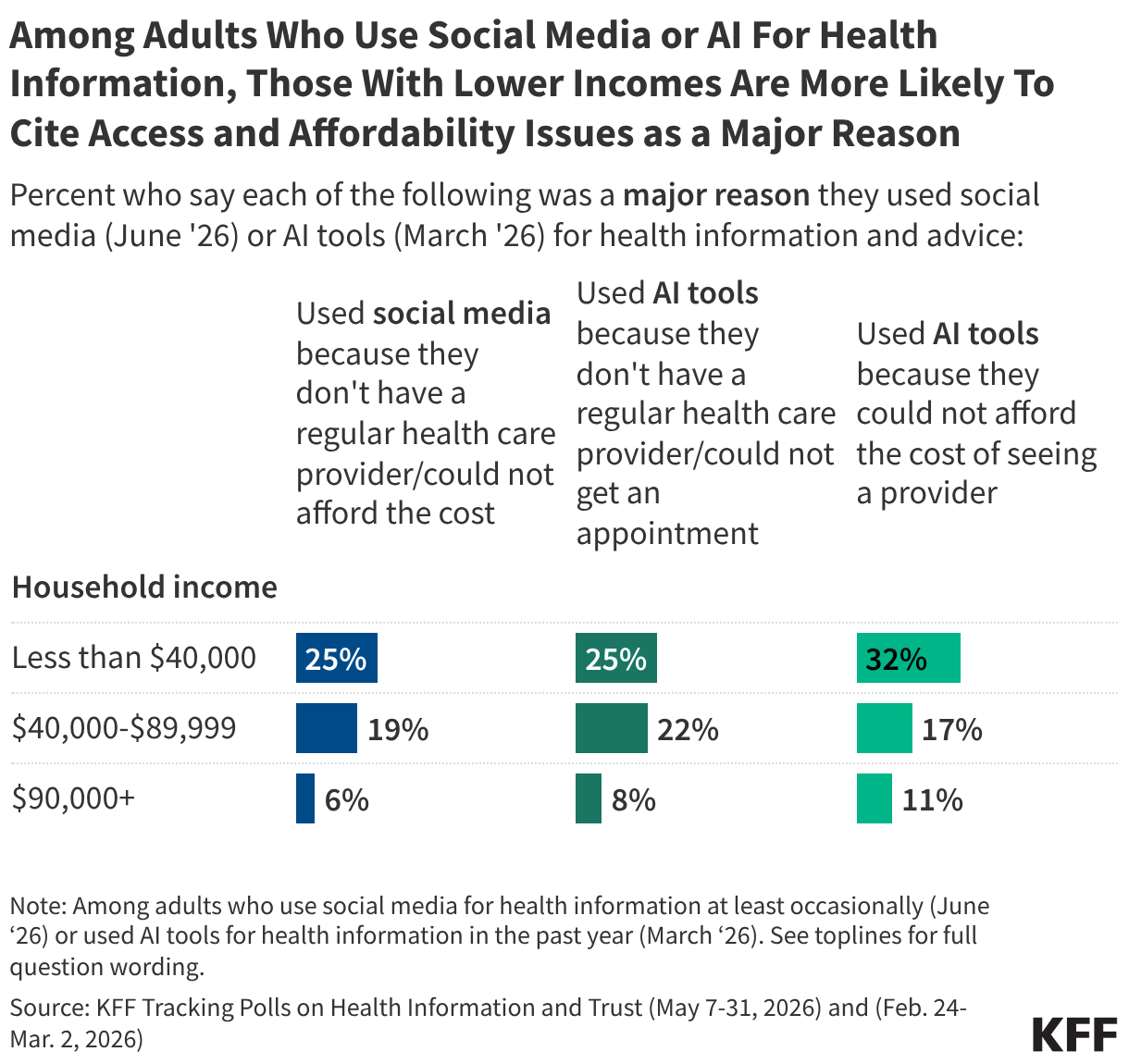
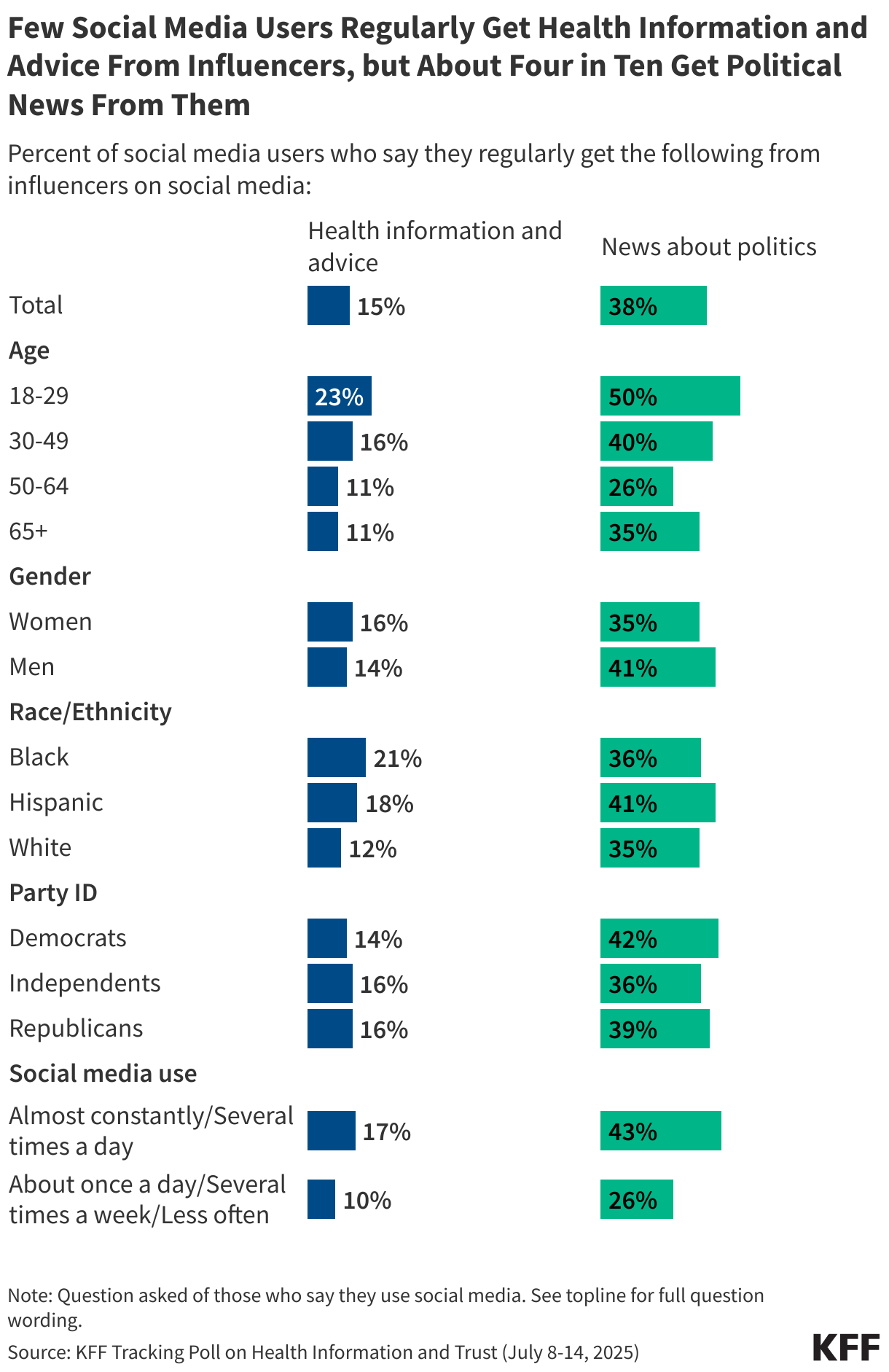
Approximately 32% of the public now reports using AI chatbots for health advice, a figure that rivals social media. This trend is driven by more than just tech-curiosity; it is fueled by systemic failures in the healthcare system. One in five AI users—and a similar share of social media users—cite the inability to access or afford traditional healthcare as a major reason for turning to these tools. This "access gap" is most pronounced among lower-income, Black, and Hispanic adults, who are more likely to seek mental health advice from AI or influencers because they lack a regular provider.
n
The "Malleable Middle" and Misinformation
n
One of the most striking revelations in the KFF research is the existence of the "malleable middle." While social media is often blamed for radicalizing the public, the data shows that relatively few people are "certain" that false claims are true. Instead, at least half of the public resides in a state of uncertainty, labeling false or unproven claims—such as the link between Tylenol and autism or the idea that the MMR vaccine causes autism—as "probably true" or "probably false."
n
This uncertainty represents both a risk and an opportunity. While these individuals are susceptible to misinformation, they are also open to accurate information if delivered by a trusted source, such as a pediatrician or a local doctor.
n
News Consumption and Trust
n
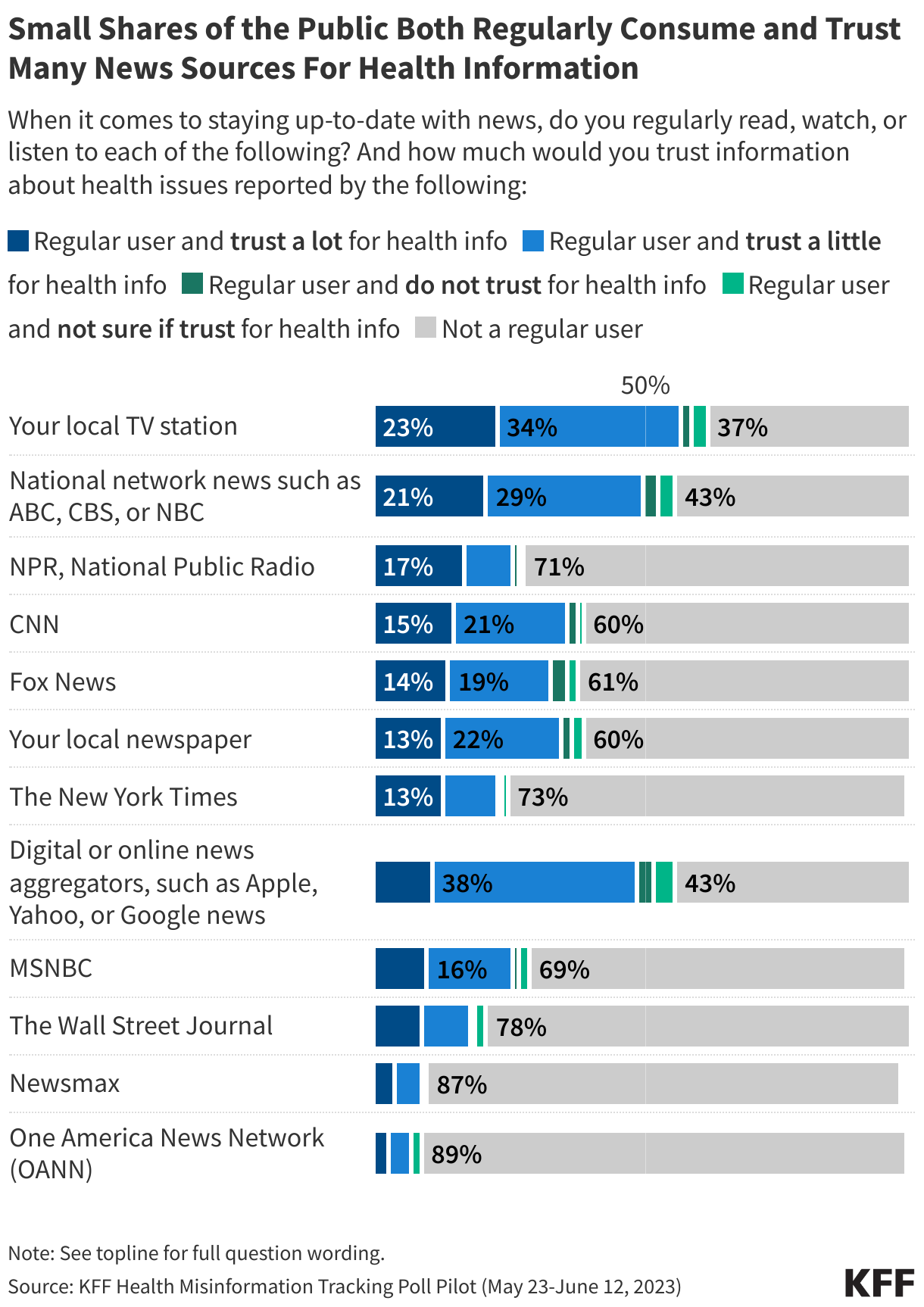
The media landscape reflects this fragmentation. Local television news remains the most trusted media source for health information, with 23% of adults saying they watch and trust it "a lot." National network news follows closely at 21%. In contrast, digital news aggregators, social media influencers, and partisan cable news outlets have much smaller "high-trust" audiences, often limited to specific ideological niches.
n
Official Responses and Public Figures: The Kennedy and Trump Factor
n
The role of public officials in shaping health discourse has never been more contentious. Secretary Robert F. Kennedy Jr. occupies a unique space in the public consciousness. Among parents who support the MAHA and MAGA movements, Kennedy garners significant trust regarding vaccine information. However, even among these supporters, a larger share still trusts their child’s pediatrician more than the HHS Secretary.
n
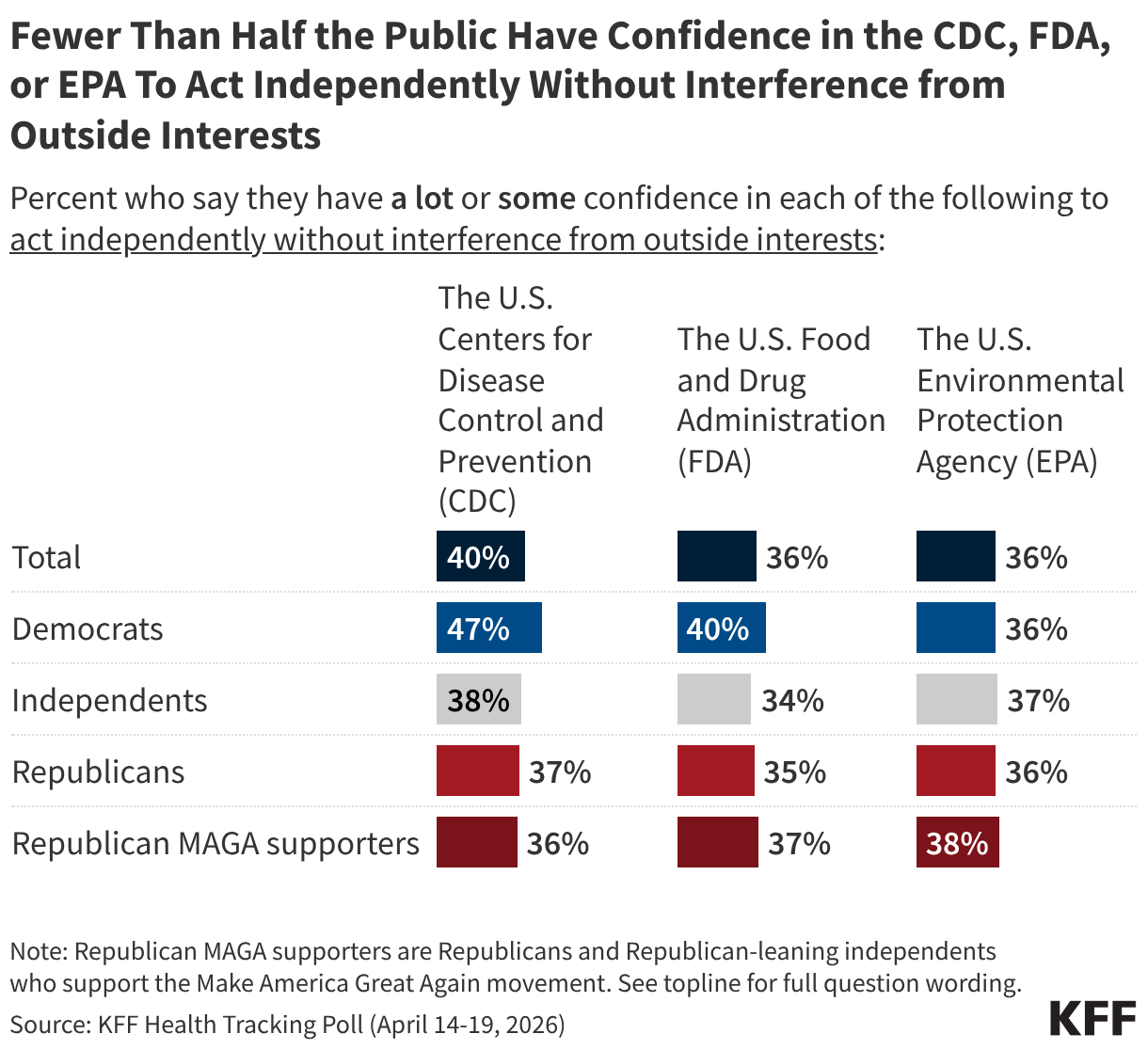
Federal agencies like the CDC, FDA, and EPA are currently struggling to project an image of independence. Less than half of the public believes these agencies act without interference from outside interests or political pressure. This perception of "captured" agencies has made it difficult for officials to issue guidance that is accepted by the public at large. For example, fewer than half of Americans across the political spectrum have confidence in the CDC to make decisions based purely on science rather than political expediency.
n
In response to these trends, some health officials have emphasized the need to "depoliticize" health messaging, though the KFF data suggests that once health issues become linked to partisan identity, they are difficult to untangle.
n
Implications: Public Health in an Era of Individualized Truth
n
The erosion of institutional trust and the rise of decentralized information sources have profound implications for the future of American public health.
n
1. The Threat to Herd Immunity
While confidence in routine vaccines like polio and MMR remains relatively high, the skepticism surrounding COVID-19 and flu vaccines is beginning to spill over. Parents who report skipping or delaying routine vaccines are twice as likely to believe false claims about vaccine safety. If the "malleable middle" continues to lean toward skepticism, the U.S. could face the resurgence of preventable diseases, as evidenced by recent localized measles outbreaks.
2. The Democratization—and Danger—of AI
The reliance on AI for health advice is a double-edged sword. For those priced out of the healthcare market, AI provides a low-cost entry point for health literacy. However, without medical oversight, users may delay necessary care or follow inaccurate advice generated by "hallucinating" algorithms. The fact that uninsured and minority populations are the most frequent users of AI for mental health highlights a critical failure in the national safety net.
3. The Need for a "Provider-First" Strategy
Because doctors remain the only universally trusted source, public health campaigns may need to shift away from national "top-down" messaging and toward "bottom-up" support for local clinicians. Equipping GPs and pediatricians with the tools to navigate the "malleable middle" may be more effective than national ad campaigns or press releases from federal agencies.
4. The Permanence of the Partisan Divide
The KFF data suggests that the partisan divide in health trust is not a temporary anomaly but a structural feature of the 2020s. Public health officials must now operate in an environment where the same set of facts will be interpreted differently based on the audience’s political leanings. Navigating this landscape requires a sophisticated understanding of information channels—recognizing that a MAGA supporter may require a different communication strategy than a college-educated Democrat, even if the medical advice is identical.
As the nation looks toward the late 2020s, the KFF polling serves as a stark reminder: in the absence of institutional trust, the public will find other ways to answer their health questions—whether through a political leader, a social media influencer, or an AI chatbot. The challenge for the medical establishment is not just to provide the right answers, but to become a source the public is willing to believe.

