
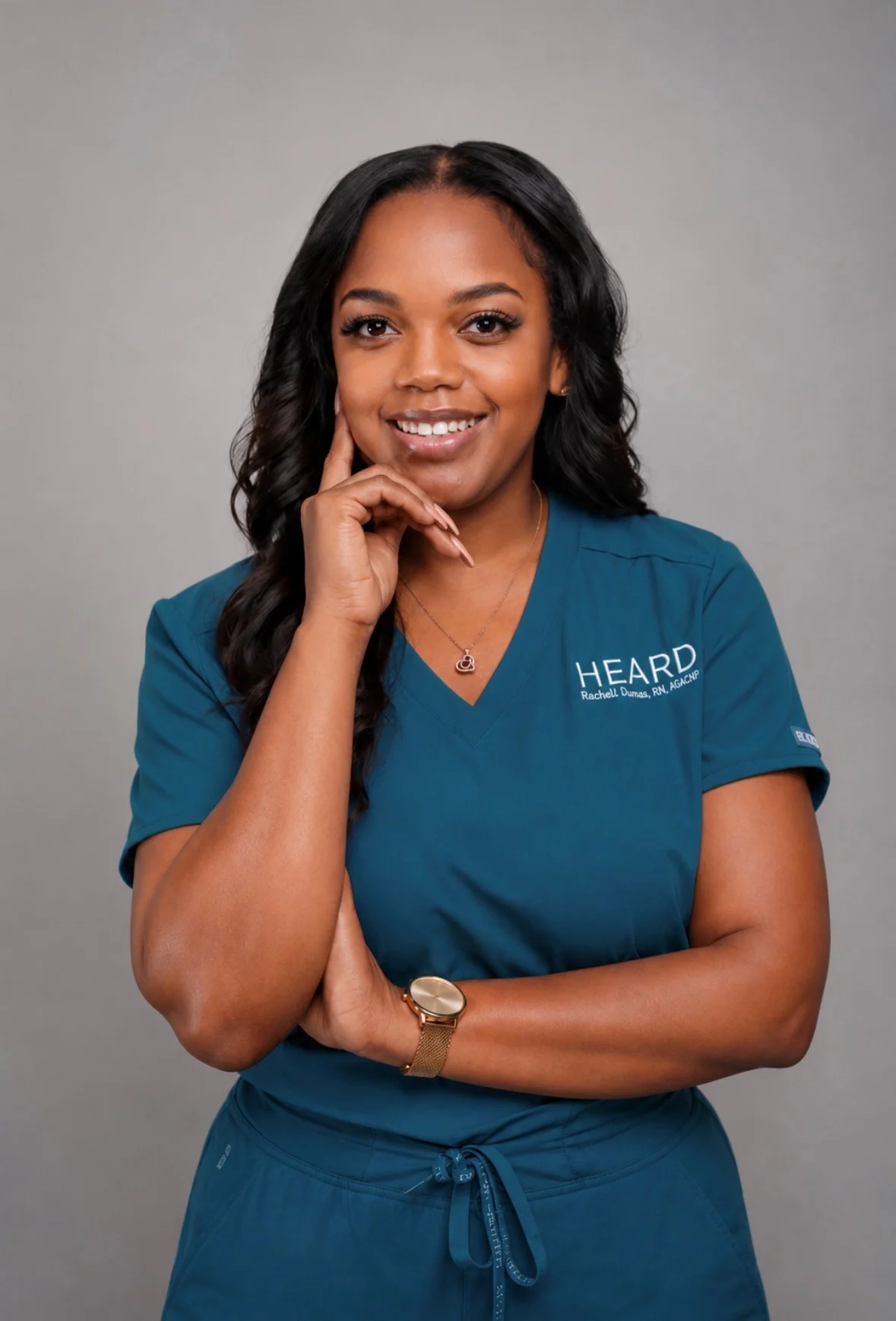
Main Facts: The Genesis of HEARD and the Vision of Rachell Dumas
n
In an era where healthcare technology often focuses on administrative efficiency or diagnostic imaging, Rachell Dumas, a registered nurse and tech entrepreneur, has identified a more fundamental gap: the human voice. Dumas is the Founder and CEO of HEARD, an AI-powered patient advocacy platform designed to bridge the communication chasm between patients, caregivers, and healthcare systems.
n
The platform is not merely a digital tool; it is a response to a systemic failure in patient safety. HEARD leverages artificial intelligence to facilitate real-time communication, ensuring that patient concerns are not only documented but addressed before they escalate into preventable medical errors.
n
Dumas’s transition from a bedside clinician to a healthcare innovator was born out of a harrowing personal journey. Despite her extensive background in critical care, surgery, and nursing informatics, Dumas found herself a victim of the very system she served. After enduring nine pregnancy losses and a life-threatening misdiagnosis of idiopathic intracranial hypertension—which necessitated two invasive brain surgeries—she realized that if a trained medical professional could be ignored by the system, the average patient stood little chance.
n
Today, HEARD stands at the intersection of clinical expertise and advanced technology. By providing a platform for real-time feedback and sentiment analysis, HEARD aims to transform the "patient experience" from a retrospective survey into a proactive safety mechanism.
n
Chronology: A Journey Through Loss, Misdiagnosis, and Innovation
n
The trajectory of Rachell Dumas’s career and the eventual founding of HEARD is a narrative of resilience and professional evolution.
n
The Clinical Foundation
n
Rachell Dumas began her career in the trenches of the American healthcare system. As a Registered Nurse (RN), she specialized in high-stakes environments, including critical care and surgery. This period provided her with an intimate understanding of clinical workflows, the pressures of bedside nursing, and the complexities of case management. Later, her move into nursing informatics allowed her to see the potential for data and technology to streamline care, though she noted a persistent lack of patient-centered design in most hospital software.
n
The Personal Crisis (The Catalyst)
n
The mid-point of Dumas’s career was defined by a series of personal medical traumas. Over several years, she navigated the devastating experience of nine pregnancy losses. During this time, she encountered the phenomenon often referred to as "medical gaslighting," where patient-reported symptoms are dismissed or minimized by providers.
n
Her health crisis culminated in a diagnosis of idiopathic intracranial hypertension—a condition characterized by high pressure around the brain. However, the path to this diagnosis was fraught with delays and errors. The eventual necessity for two brain surgeries served as a wake-up call. Dumas realized that her clinical knowledge was her only shield, yet even that was nearly insufficient against a system that prioritized protocol over the patient’s lived experience.
n
The Birth of HEARD
n
In the aftermath of her recovery, Dumas recognized a market and moral imperative for a platform that could "hear" patients in real-time. She founded HEARD with the mission of ensuring that no patient’s concerns would go unheard.
n
By 2023 and 2024, Dumas had emerged as a prominent voice in the health-tech space. Her story gained national attention, leading to features by the American Nurses Association (ANA) and Women’s Health. She became a sought-after speaker at events like Atlanta Tech Week, where she highlighted the intersection of AI, patient safety, and advocacy.
n
Supporting Data: The High Cost of Silence in Healthcare
n
The mission of HEARD is supported by a staggering array of data regarding patient safety and the economic impact of medical errors in the United States.
n
The Prevalence of Medical Errors
n
According to a landmark study by Johns Hopkins Medicine, medical errors are estimated to be the third leading cause of death in the United States, accounting for more than 250,000 deaths annually. A significant portion of these errors stems from communication breakdowns. The Joint Commission, which accredits U.S. healthcare organizations, has frequently cited "communication failure" as a primary root cause for sentinel events—unintended incidents resulting in death or serious physical injury.
n
The Diagnostic Error Crisis
n
Dumas’s personal experience with misdiagnosis reflects a broader trend. Research published in BMJ Quality & Safety suggests that approximately 12 million adults in the U.S. are misdiagnosed every year in outpatient settings. Half of these errors have the potential to cause severe harm.
n
The Maternal Health Gap
n
Dumas’s history of pregnancy loss aligns with a growing national focus on maternal mortality and morbidity. The CDC reports that over 80% of pregnancy-related deaths in the U.S. are preventable. Advocacy and early intervention—the core tenets of the HEARD platform—are cited by experts as critical components in reducing these statistics, particularly for women of color who face disproportionately higher rates of maternal mortality.
n
The Rise of AI in Patient Experience
n
The global AI in healthcare market is projected to grow from $14.6 billion in 2023 to $102.7 billion by 2028. However, while much of this investment goes toward drug discovery and imaging, there is an increasing demand for "Natural Language Processing" (NLP) tools that can analyze patient sentiment. HEARD occupies this niche, turning qualitative patient feedback into actionable quantitative data for hospital administrators.
n
Official Responses and Industry Recognition
n
The healthcare industry has begun to take notice of Dumas’s work, acknowledging that the traditional methods of measuring patient satisfaction are no longer sufficient.
n
The American Nurses Association (ANA)
n
The ANA has highlighted Dumas’s journey as an example of "nursing entrepreneurship." Professional nursing organizations have increasingly advocated for nurses to take the lead in tech innovation, as their frontline experience provides a unique perspective on system inefficiencies that engineers might overlook.
n
Women’s Health and Advocacy Groups
Mainstream health publications have focused on the "advocacy" aspect of Dumas’s work. By sharing her story of brain surgery and pregnancy loss, she has become a figurehead for the "patient-led" movement in medicine. Her presence at Atlanta Tech Week underscored a shift in the venture capital world: a growing interest in "FemTech" and platforms that address the specific systemic biases faced by women in clinical settings.
Healthcare Systems and Employers
While specific hospital partnerships are often proprietary, the general response from healthcare leadership toward AI-powered advocacy has been one of cautious optimism. Hospital systems are under increasing pressure from the Centers for Medicare & Medicaid Services (CMS) to improve HCAHPS (Hospital Consumer Assessment of Healthcare Providers and Systems) scores. Platforms like HEARD offer a way to address issues before they reflect poorly on these high-stakes surveys.
Implications: The Future of AI-Driven Patient Advocacy
The emergence of HEARD and the leadership of Rachell Dumas signal a paradigm shift in how the medical industry views the patient’s voice. The implications of this technology reach into several sectors of society.
1. From Retrospective to Proactive Care
Currently, most patient feedback is collected via surveys sent weeks after a hospital discharge. This "autopsy" approach to patient experience does nothing to help the patient currently in the bed. HEARD’s real-time AI capabilities imply a future where a patient’s distress can be flagged to a charge nurse or a patient advocate within minutes, potentially stopping a medical error before it occurs.
2. Reducing Clinician Burnout
One of the primary drivers of nursing burnout is the frustration of being unable to provide quality care due to administrative hurdles and poor communication. By streamlining the way patient concerns are routed, HEARD could theoretically reduce the cognitive load on bedside nurses, allowing them to focus on clinical interventions rather than navigating bureaucratic communication silos.
3. Addressing Health Equity
AI, if trained correctly, has the potential to mitigate human bias. In healthcare, "implicit bias" often leads to the dismissal of pain or symptoms in certain demographics. An AI platform that objectively flags escalating patient concerns could serve as an equalizer, ensuring that every patient’s "voice" triggers the same level of institutional response regardless of their background.
4. The "Nurse-Entrepreneur" Model
Rachell Dumas represents a new wave of "nurse-entrepreneurs." Her success suggests that the next generation of healthcare solutions will not come from Silicon Valley outsiders, but from those who have spent years on the hospital floor. This shift ensures that technology is built to solve actual clinical problems rather than just maximizing billing cycles.
5. Legal and Insurance Ramifications
As platforms like HEARD become more prevalent, the standard of care may evolve. If a real-time advocacy platform flags a concern and it is ignored, the legal implications for healthcare systems could be significant. Conversely, for insurance providers and employers, such platforms represent a way to reduce the massive costs associated with complications and prolonged hospital stays resulting from preventable errors.
Conclusion
Rachell Dumas’s story is a powerful testament to the idea that personal pain can be the fuel for systemic progress. By combining her clinical expertise as a nurse with the power of artificial intelligence, she is not just building a company; she is building a safety net. As HEARD continues to scale, it carries the potential to move the needle on patient safety, ensuring that the next person facing a medical crisis is not just seen, but truly heard.

