
As the 2025-2026 school year commences, the United States faces a public health crossroads that experts have feared for nearly a decade. New data reveals a compounding crisis: routine childhood vaccination rates are plummeting to historic lows while non-medical exemptions reach unprecedented highs. This shift, accelerated by the COVID-19 pandemic and cemented by a radical transformation in federal health policy, has left the nation’s "herd immunity" fractured, leading to the largest measles outbreaks the country has seen in over thirty years.
n
The following report examines the current state of pediatric immunization, the chronological shifts in policy that led to this moment, the data defining the crisis, and the long-term implications for American public health.
n
Main Facts: A Nation at Risk
n
The fundamental pillars of American public health—the belief in the safety of routine vaccinations and the adherence to federal health guidelines—are undergoing a systemic unraveling. The core facts of the 2025-2026 landscape are as follows:
n
- n
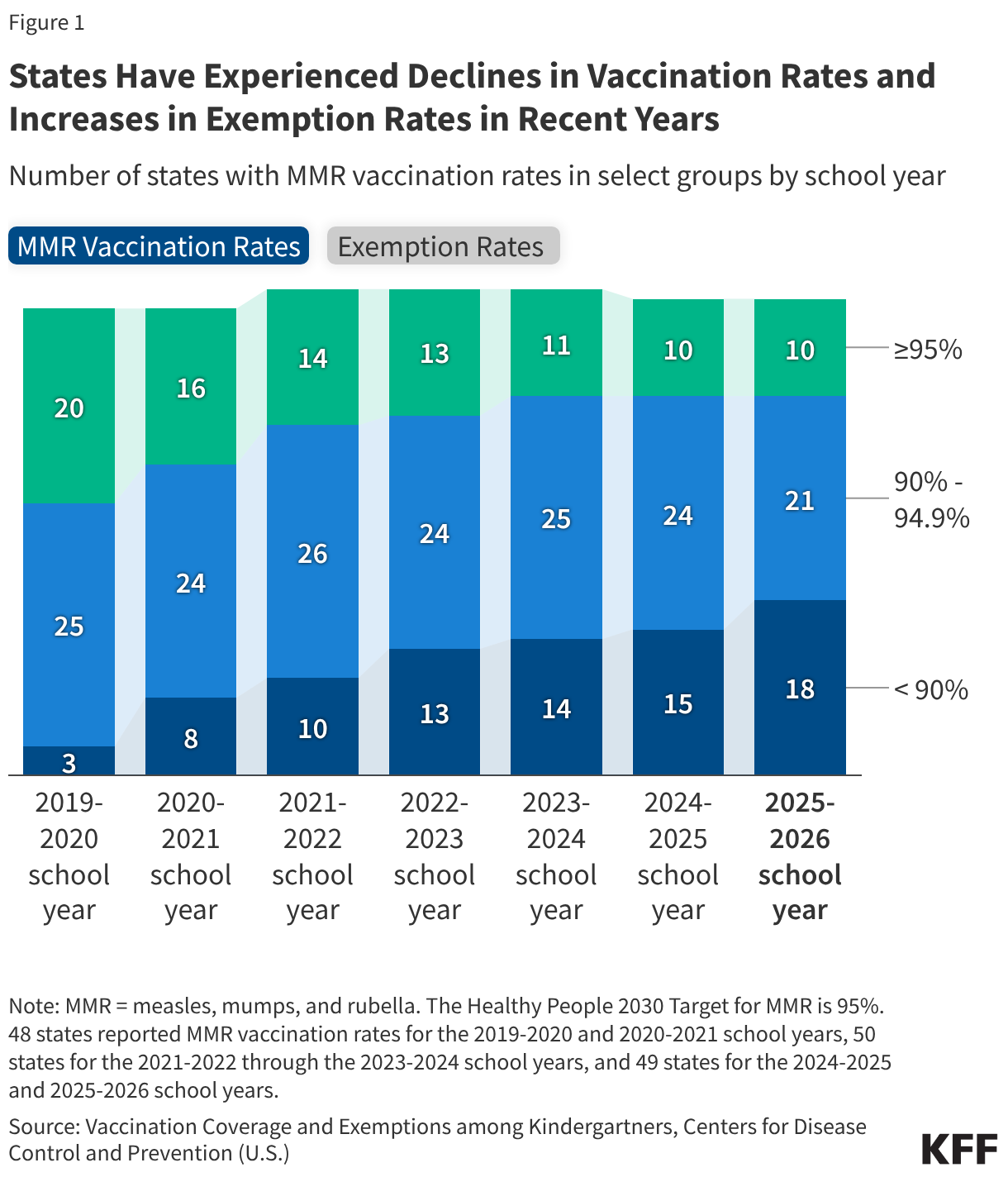
- Vaccination Decline: National coverage for Measles, Mumps, and Rubella (MMR) has fallen to 92.4%, significantly below the 95% threshold required to prevent community transmission.
- Exemption Surge: The national exemption rate for kindergartners has hit 4.2%, the highest ever recorded. This is driven almost entirely by non-medical (religious or personal belief) exemptions.
- Outbreak Resurgence: In 2026, the U.S. reported more measles cases than in any year since 1991. Large-scale outbreaks are currently being managed in South Carolina, Utah, Pennsylvania, Texas, and Virginia.
- Policy Fragmentation: Under the direction of Department of Health and Human Services (HHS) Secretary Robert F. Kennedy Jr. and the Trump administration, the federal government has moved away from traditional vaccine mandates and reporting requirements, leading a majority of states to abandon CDC-aligned benchmarks.
n
n
n
n
n
Chronology: From Stability to Skepticism (2019–2026)
n
To understand the current crisis, one must look at the timeline of the last seven years, which saw a rapid erosion of public trust and policy consistency.
n
2019–2020: The Pre-Pandemic Baseline
n
Before the onset of COVID-19, childhood vaccination rates were stable. Approximately 95% of kindergartners were up to date on MMR, DTaP (diphtheria, tetanus, and acellular pertussis), and polio vaccines. This 95% figure was more than a statistic; it was the "gold standard" for herd immunity that kept measles officially "eliminated" from the U.S. since 2000.
n
2021–2023: The Pandemic Disruption and Politicization
n
The COVID-19 pandemic caused immediate logistical hurdles for routine pediatric visits. However, as the pandemic progressed, the discourse surrounding the COVID-19 vaccine began to "spill over" into routine childhood immunizations. Public health measures became deeply partisan, and skepticism regarding mRNA technology was frequently conflated with long-standing, proven vaccines like the MMR shot. During this window, trust in the CDC began to decline among specific demographic and political cohorts.
n
2024–2025: The Policy Pivot
n
Following the 2024 election, the Trump administration signaled a departure from decades of federal vaccine advocacy. The appointment of Robert F. Kennedy Jr. as HHS Secretary marked a turning point. Federal vaccine recommendations were repeatedly challenged or modified, and Medicaid vaccine reporting requirements—a key tool for tracking coverage among low-income populations—were dropped. By early 2025, several states began to formally decouple their school entry requirements from federal Advisory Committee on Immunization Practices (ACIP) guidelines.
n
2026: The Current Crisis
n
As of late 2026, the cumulative effect of these shifts has manifested in widespread outbreaks. The U.S. is currently struggling to maintain its "measles-free" status as domestic transmission chains persist for longer than 12 months in multiple jurisdictions.
n
Supporting Data: The Statistical Breakdown of the Decline
n
The data provided by the CDC and state health departments paints a grim picture of a nation losing its collective defense against preventable diseases.
n
The 95% Threshold
n
Public health experts emphasize that for a virus as contagious as measles (which has an $R_0$ value of 12 to 18), 95% of the population must be immune to prevent an outbreak.
n
- n
- In the 2025-2026 school year, only 92.4% of kindergartners received the MMR and polio vaccines.
- The DTaP vaccination rate is even lower, sitting at 92.0%.
- This leaves approximately 280,000 children unprotected as they enter the school system this year.
n
n
n
n
State-Level Volatility
The national average masks deep geographic vulnerabilities.
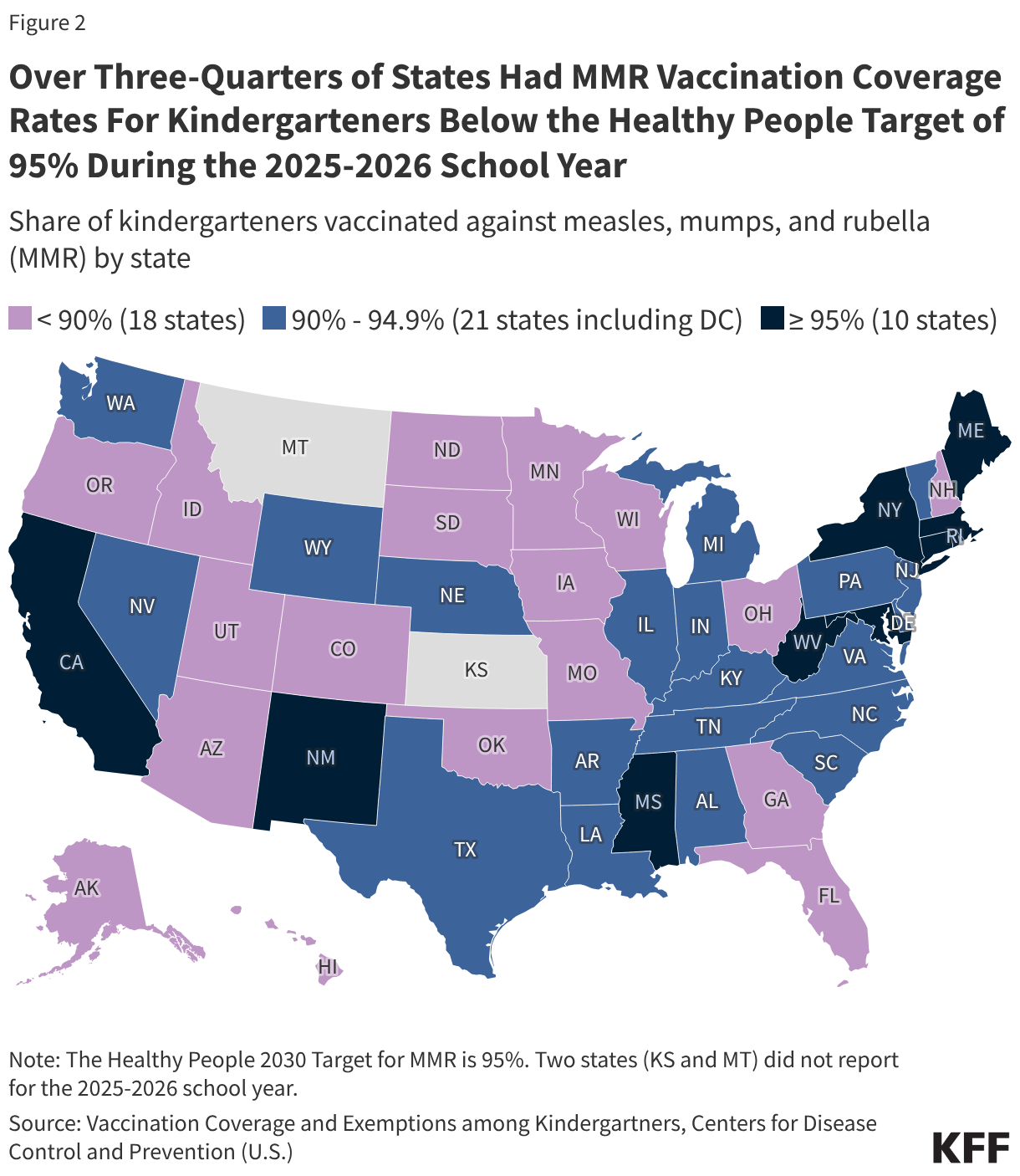
- Idaho currently reports the lowest MMR coverage in the nation at 75.2%, a level that suggests the virus could spread virtually unchecked through local school districts.
- Conversely, West Virginia, which maintains some of the nation’s strictest vaccination laws, remains a leader with 98.9% coverage.
- 39 states now fall below the 95% target, up from only 28 states prior to the pandemic. Even more concerning, 18 states have dropped below the 90% threshold.
The Rise of Non-Medical Exemptions
The increase in children not being vaccinated is not due to medical contraindications (which have actually declined from 0.3% to 0.2%). It is driven by a surge in "philosophical" or "religious" exemptions.
- The total exemption rate rose from 2.5% in 2019 to 4.2% today.
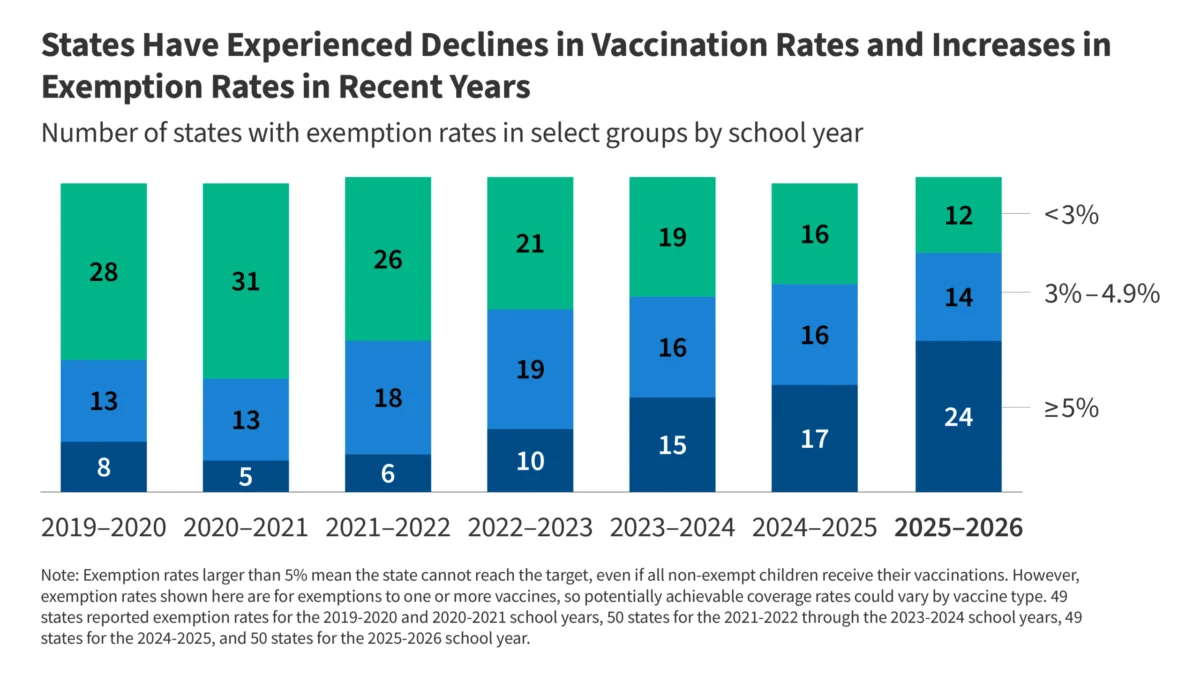
- In 24 states, the exemption rate now exceeds 5%. This is a critical tipping point; if more than 5% of a population is exempt, it is mathematically impossible to reach the 95% herd immunity goal, even if every other child in the state is vaccinated.
Official Responses: A Shift in Governance
The response from government officials has been split along ideological and jurisdictional lines, creating a fragmented landscape for parents and school administrators.
Federal De-regulation
HHS Secretary Kennedy has defended the administration’s policy shifts as a move toward "informed consent" and "medical freedom." By dropping Medicaid reporting requirements, the administration argues it is reducing the bureaucratic burden on states and providers. Critics, however, argue that this "data blackout" makes it impossible for public health officials to identify and intervene in emerging "hotspots" of unvaccinated populations.
State-Level Autonomy
With the federal government stepping back, states have become the primary battleground for vaccine policy. Most states have now announced they are no longer using federal recommendations as their primary benchmark.
- New Hampshire recently moved to make the Hepatitis B vaccine no longer a requirement for school entry.
- Florida health officials have frequently issued guidance that contradicts CDC recommendations, particularly regarding the timing and necessity of certain boosters.
The Public Health Counter-Response
Traditional public health advocates, including the American Academy of Pediatrics (AAP), have expressed "grave concern" over these trends. In various statements, they have warned that the current trajectory will lead to the return of diseases that were once considered relics of the past, such as polio and rubella, which can cause lifelong disability or fetal death.
Implications: The Long-Term Consequences
The current trends suggest that the United States is entering a new era of "endemic" childhood diseases that were previously under control. The implications of this shift are profound and multi-faceted.
1. The Loss of Elimination Status
The U.S. was declared measles-free in 2000. To maintain this status, the country must prove that any outbreak is the result of an "importation" from abroad and that domestic transmission does not last longer than a year. With 2026 seeing the highest case counts in decades and persistent transmission in several states, the U.S. is on the verge of losing this prestigious and protective status. Losing elimination status would likely lead to international travel advisories against the U.S. and a massive increase in public health spending to contain routine cases.
2. Economic and Healthcare Strain
Measles outbreaks are expensive. A single case in a community requires hundreds of hours of contact tracing by health departments. When outbreaks occur in schools, it leads to mass quarantines, forcing parents to miss work and schools to shift to remote learning. Furthermore, the clinical cost of treating measles—which can lead to pneumonia and encephalitis—will place additional strain on a healthcare system already struggling with staffing shortages.
3. The "Information Gap" and Public Confusion
The departure of states from federal guidelines has created a "patchwork" of requirements. A family moving from West Virginia to Idaho, for example, faces vastly different expectations and safety profiles for their children’s classrooms. This confusion often drives further skepticism, as parents receive conflicting messages from their state capital and federal health agencies.
4. Risk to the Vulnerable
The rise in exemptions doesn’t just affect the children of vaccine-skeptical parents. It poses a direct threat to children who cannot be vaccinated for medical reasons, such as those undergoing chemotherapy or those with primary immunodeficiency disorders. These children rely on the "shield" of their vaccinated peers. As that shield thins, the public school system becomes a dangerous environment for the most vulnerable students.
Conclusion
The 2025-2026 school year serves as a stark warning. The convergence of pandemic-era skepticism, partisan policy-making, and the removal of federal oversight has created a environment where preventable diseases can once again flourish. While the rhetoric of "medical freedom" has gained political traction, the biological reality of viral transmission remains unchanged. Without a concerted effort to restore trust in routine immunizations and a return to data-driven policy, the U.S. may find itself fighting 19th-century battles in a 21st-century world.

