
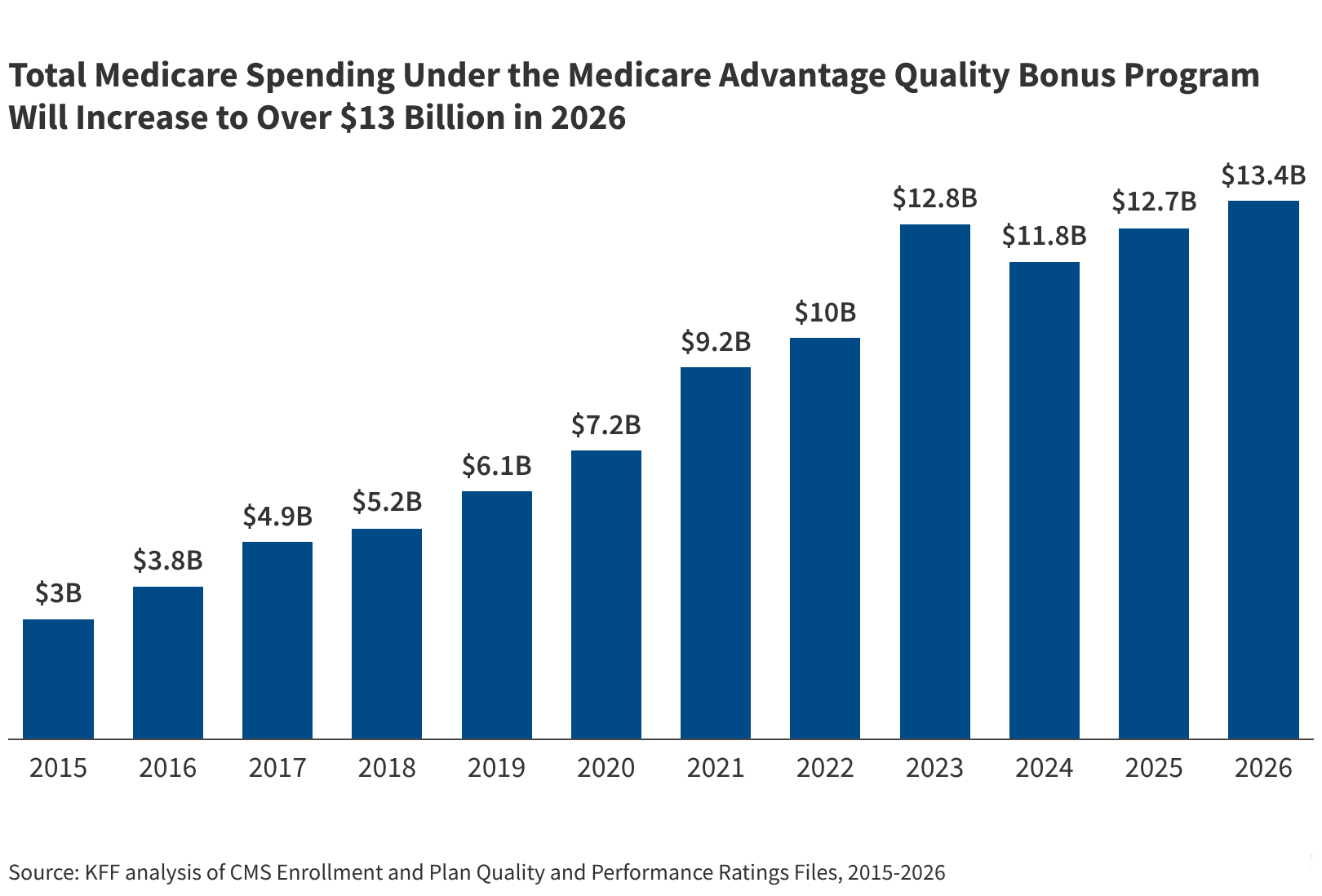
The Medicare Advantage (MA) Quality Bonus Program (QBP), once a relatively modest component of the Affordable Care Act (ACA), has transformed into a central—and increasingly controversial—pillar of federal healthcare spending. As of 2026, federal expenditures on these quality-based incentives are projected to reach at least $13.4 billion, reflecting a massive expansion in both enrollment and the financial stakes for private insurers. While the program was designed to incentivize high-quality care and help consumers navigate their options, it now faces intense scrutiny from fiscal watchdogs, legal challenges from major carriers, and calls for fundamental reform.
n
Main Facts: A Fiscal and Operational Overview
n
The Medicare Advantage Quality Bonus Program operates on a five-star rating system. Plans that achieve a rating of 4 stars or higher receive a "benchmark increase"—essentially a higher cap on what the federal government is willing to pay per enrollee. These additional funds are intended to be passed down to beneficiaries in the form of supplemental benefits, such as dental, vision, hearing, or reduced Part B premiums.
n
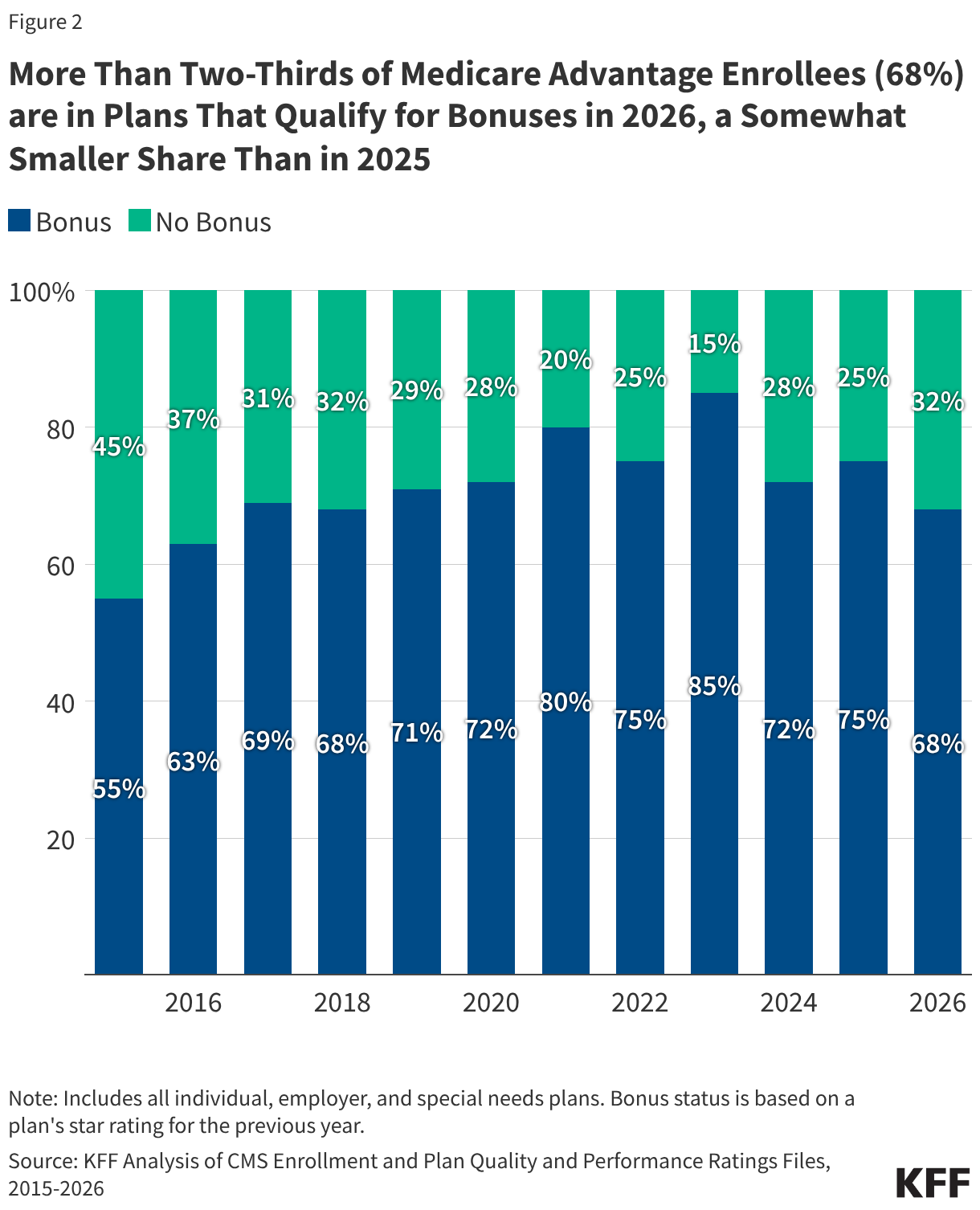
However, the scale of the program has outpaced initial projections. In 2026, approximately 24 million people—68% of all Medicare Advantage enrollees—are in plans that qualify for these bonuses. While this is a slight dip from the 75% seen in 2025 (due to more stringent "cut point" calculations by the Centers for Medicare & Medicaid Services), the overall trend is one of explosive growth. Since 2015, spending on the QBP has more than quadrupled, rising from $3.0 billion to the current $13.4 billion.
n
This spending represents roughly 2.3% of the total $574 billion in projected payments to Medicare Advantage plans for 2026. Experts note that these figures are likely a "lower bound" estimate. Because the QBP interacts with "coding intensity"—the practice where plans document more diagnoses to increase risk-adjusted payments—the actual federal outlay could be significantly higher. The Medicare Payment Advisory Commission (MedPAC) suggests the true cost of risk-adjusted benchmark increases could reach $16 billion in 2026 alone.
n
Chronology: From Incentive to Institutionalized Spending
n
The trajectory of the QBP reveals a program that has become deeply embedded in the business models of private insurers.
n
- n
- 2010–2012: The ACA establishes the QBP to move Medicare toward "value-based" care. Initial phases include a nationwide demonstration project that expands the availability of bonuses.
- 2015: The program is fully implemented. Spending sits at $3 billion, with 55% of enrollees in bonus-qualifying plans.
- 2018: The Congressional Budget Office (CBO) releases a report suggesting that eliminating the QBP could save the federal government nearly $100 billion over a decade. At this time, enrollment is significantly lower than current levels.
- 2020–2023: Enrollment in MA surges, surpassing 50% of the total Medicare population. Spending on bonuses climbs toward the $10 billion mark.
- 2024–2025: CMS begins adjusting "cut points"—the specific scores needed to earn stars—and removing certain administrative measures that no longer differentiate high-quality plans. This leads to a temporary reduction in the share of plans achieving 4+ stars.
- 2026–2027: Legal battles come to the forefront. Following a successful lawsuit by Clover Health, CMS is forced to recalculate 2026 star ratings for all plans. This recalculation is projected to add $600 million to 2027 spending as more plans are retroactively pushed into the bonus threshold.
n
n
n
n
n
n
n
Supporting Data: Corporate Winners and Plan Disparities
n
The distribution of quality bonuses is far from uniform, revealing significant disparities between different types of plans and parent organizations.
n
The Corporate Leaderboard
n
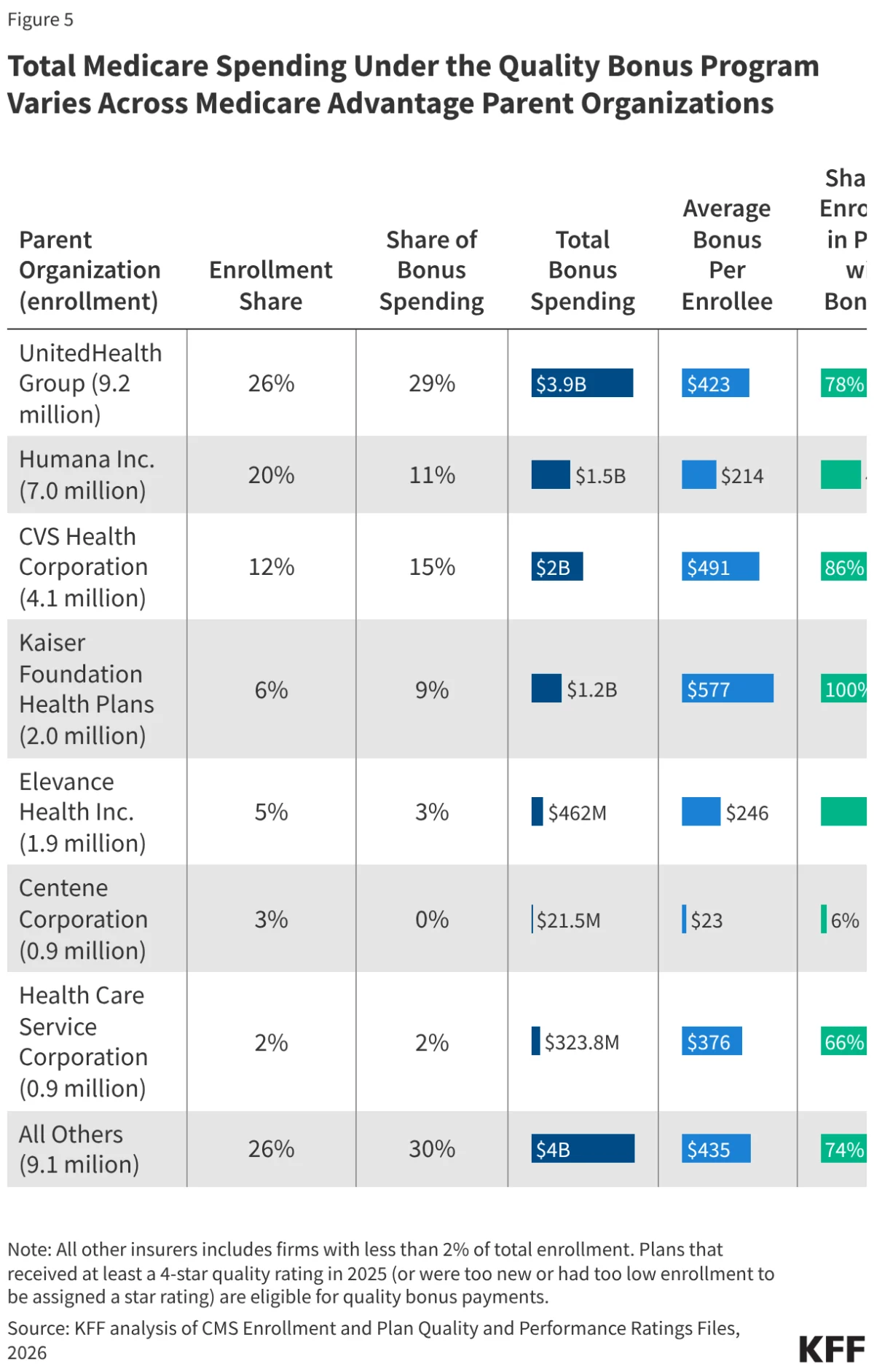
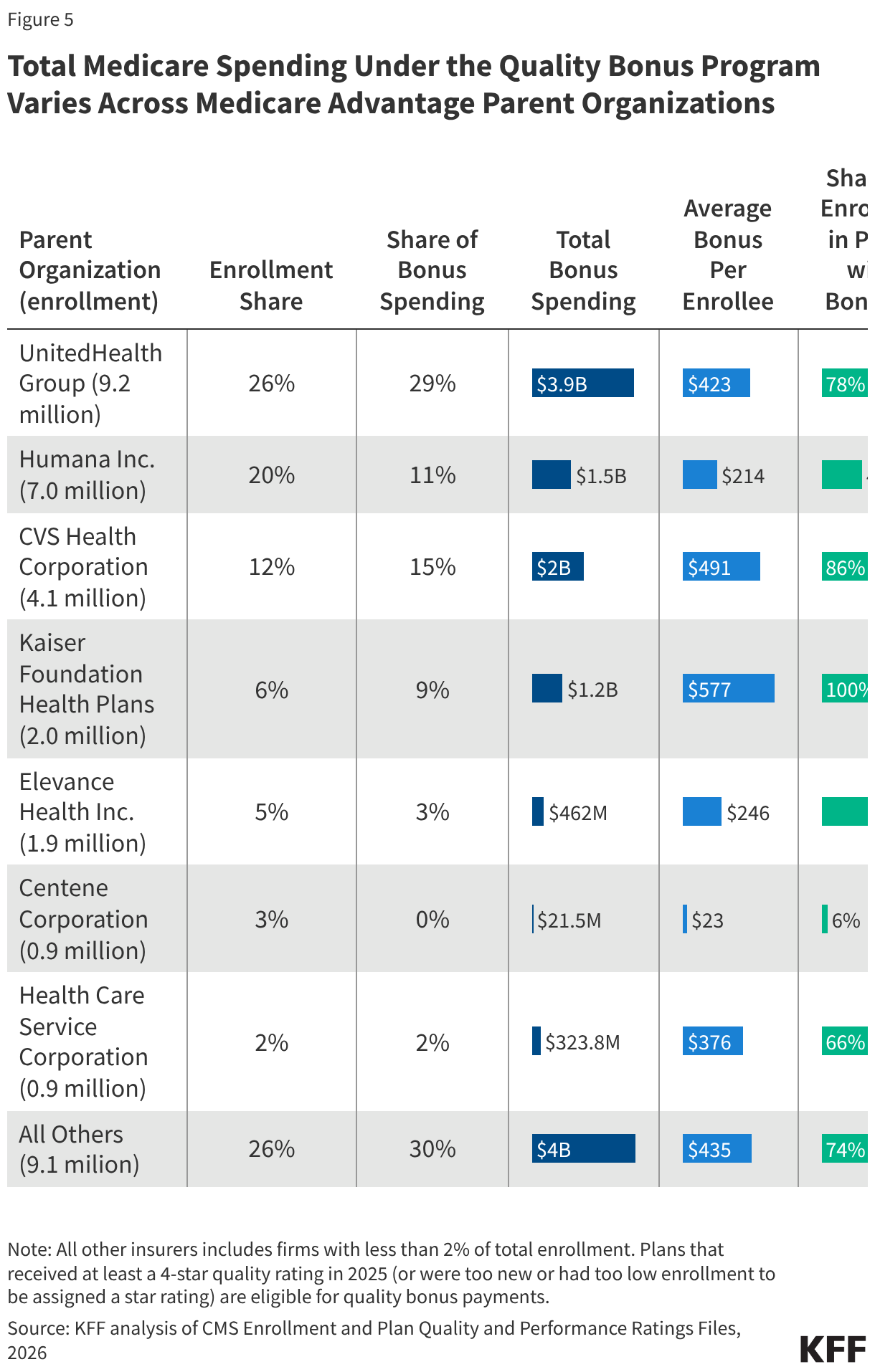
UnitedHealth Group remains the primary beneficiary of the QBP. Enrolling 26% of all MA participants, the company is expected to capture 29% of the total bonus spending, amounting to $3.9 billion in 2026. In contrast, Humana Inc., the second-largest player, saw its bonus share plummet to $1.5 billion after a major contract dropped from 4.5 to 3.5 stars. This single rating shift resulted in a multi-billion dollar swing in potential revenue, underscoring why insurers are increasingly turning to the courts to challenge CMS’s math.
n
Kaiser Foundation Health Plans represents the "gold standard" in star ratings, with 100% of its 2 million enrollees in plans receiving 4 stars or more, resulting in an average payment increase of $577 per person. On the other end of the spectrum, Centene Corporation sees a bonus of only $23 per enrollee, as only 6% of its members are in qualifying plans.
n
Employer vs. Individual Plans
n
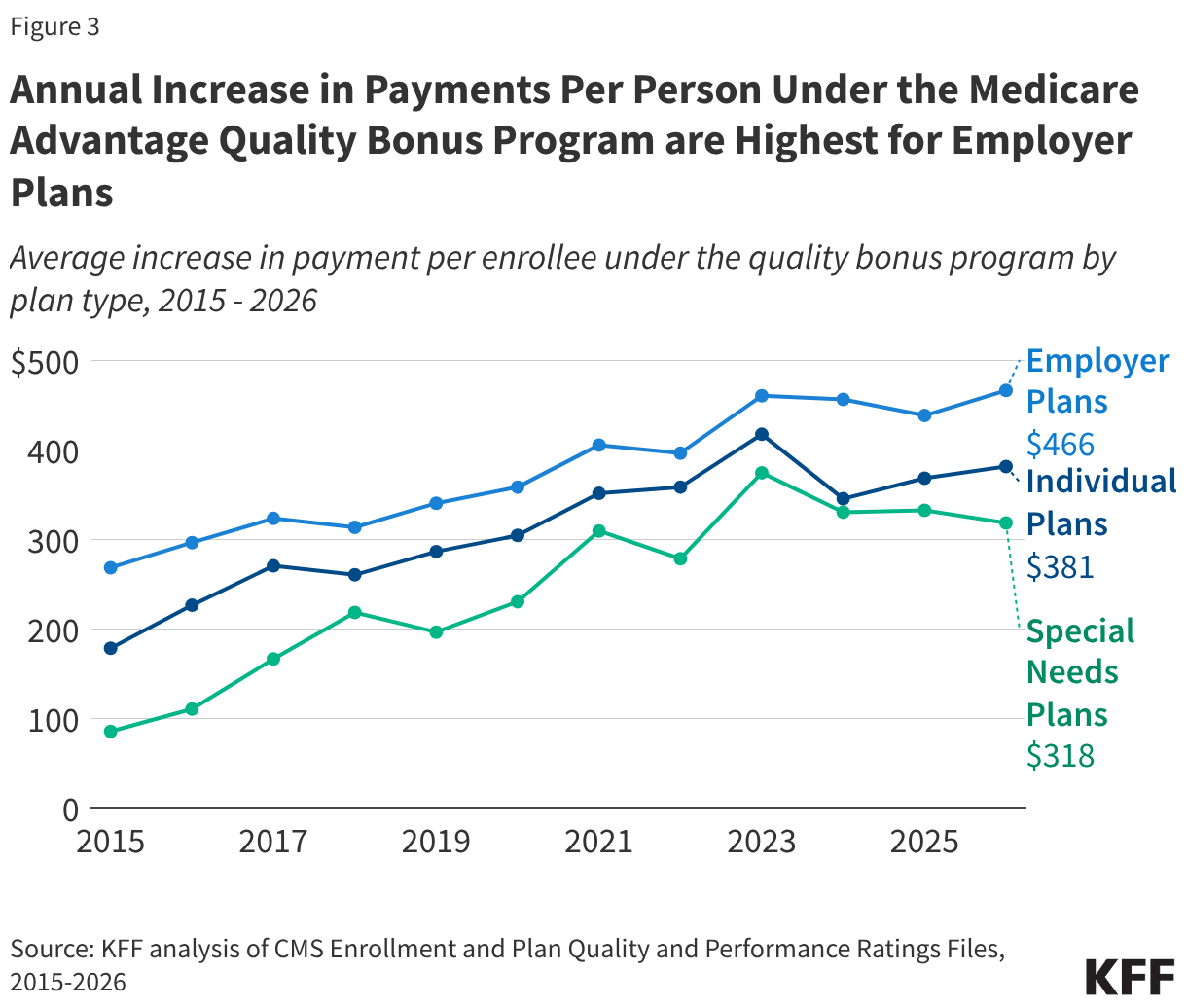
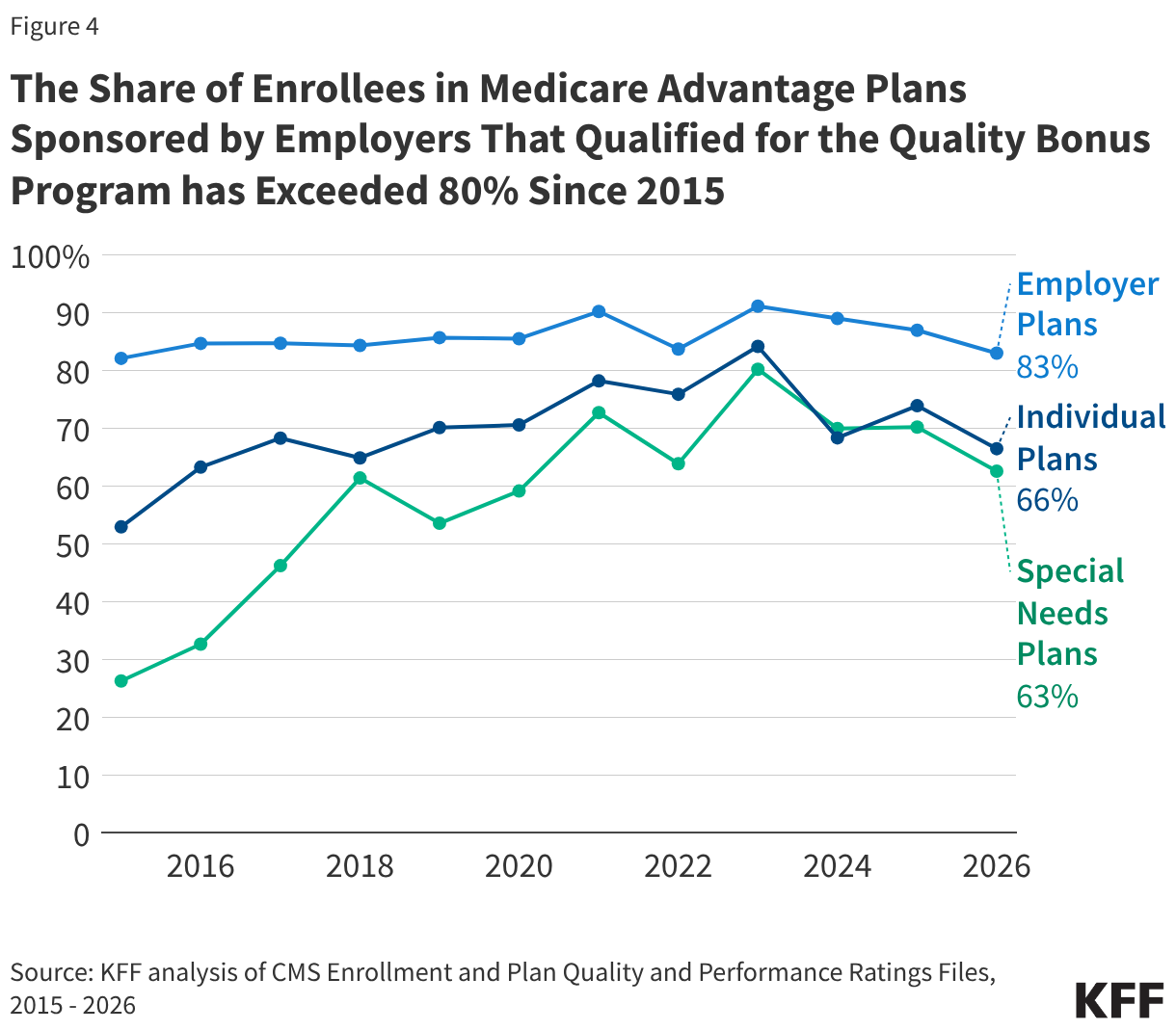
Employer- and union-sponsored MA plans (Group MA) consistently outperform individual plans in the star rating system. In 2026, the average per-person bonus for employer plans is $466, compared to $381 for individual plans and $318 for Special Needs Plans (SNPs). Since 2015, the share of enrollees in employer-sponsored plans qualifying for bonuses has never dropped below 80%. This raises questions about whether these plans are inherently higher quality or if they serve a healthier, more affluent retiree population that is easier to manage.
n
The Impact of "Double Bonus" Counties
n
A technical but vital aspect of the QBP is the "double bonus" provision. In certain urban counties with low traditional Medicare spending but high MA enrollment, plans that earn 4 stars receive a 10-percentage-point benchmark increase instead of the standard 5. This geographical quirk significantly inflates spending in specific markets without necessarily reflecting a higher tier of clinical care.
n
Official Responses and Critiques
n
The QBP is currently caught in a crossfire between federal regulators, independent commissions, and the insurance lobby.
n
The CMS Position:nThe Centers for Medicare & Medicaid Services maintains that the star rating system is an essential tool for transparency. Recently, CMS finalized changes to remove administrative measures that were seen as "clutter," focusing instead on clinical outcomes. CMS officials argue that while these changes may increase spending by $18.6 billion over the next decade (as plans adapt and scores rise), they provide a more meaningful differentiation of quality.
n
The MedPAC Critique:nMedPAC has been a vocal critic of the current structure. In reports to Congress, the commission has argued that the system uses too many measures (roughly 40) and fails to account for social risk factors. A primary concern is that ratings are reported at the "contract" level rather than the "plan" level. A single contract can cover multiple plans across different states; thus, a high rating in one region can mask poor performance in another, misleading consumers.
The Industry Response:
Insurers argue that the QBP is vital for funding the "extras" that make Medicare Advantage popular. When CMS adjusted the methodology for the 2025 star ratings, the industry reacted with a wave of litigation. Companies like Humana and Clover Health have challenged the "cut point" logic, arguing that CMS’s changes were arbitrary and capricious. The recent court-ordered recalculation for 2027 payments is seen as a major victory for the industry, though CMS has already filed an appeal.
Implications: Fiscal Sustainability and the Future of Benefits
The rapid growth of the QBP has profound implications for the future of the Medicare Trust Fund. As the U.S. faces growing fiscal pressure, the $13.4 billion annual price tag of the bonus program is becoming a target for budget hawks.
1. Fiscal Pressure and Overpayment
If the QBP were eliminated or significantly capped, the savings could exceed $100 billion over a decade. Critics argue that the program exacerbates "favorable selection"—the tendency for MA plans to attract healthier-than-average seniors—and "coding intensity." Together, these factors are estimated to add $76 billion to Medicare spending in 2026. The QBP acts as a multiplier on these costs; when a plan’s benchmark is higher due to a bonus, every risk-adjusted dollar is worth more.
2. The Benefit Cliff
There is a direct correlation between quality bonuses and the supplemental benefits enrollees enjoy. If the QBP were reformed or reduced, insurers would likely respond by increasing premiums, raising out-of-pocket maximums, or cutting dental and vision coverage. This creates a political dilemma: reforming a fiscally "leaky" program could result in millions of seniors losing popular benefits right before an election cycle.
3. The Quality Paradox
Perhaps the most concerning implication is whether the program actually improves health. Because star ratings incorporate customer service and administrative ease alongside clinical outcomes (like flu shots or cancer screenings), a plan can achieve a 4-star rating through excellent "back-office" performance even if its clinical outcomes are average. Furthermore, the lower ratings for Special Needs Plans (SNPs)—which serve the most vulnerable, dual-eligible populations—suggest that the QBP may be inadvertently penalizing plans that take on the most challenging patients.
Conclusion
The Medicare Advantage Quality Bonus Program stands at a crossroads. While it has succeeded in making "star ratings" a household term for seniors, its multi-billion dollar cost and susceptibility to corporate litigation have raised alarms. As CMS moves toward the 2027 payment year with recalculated ratings and $600 million in additional obligations, the debate over whether the QBP is a driver of quality or merely a vehicle for overpayment will only intensify. For the 35 million Americans in Medicare Advantage, the outcome of this debate will determine not just the "stars" on their plan, but the actual value of the care they receive.

