
Introduction: Beyond "Not Risk-Free" – A Nuanced Public Health Debate
n
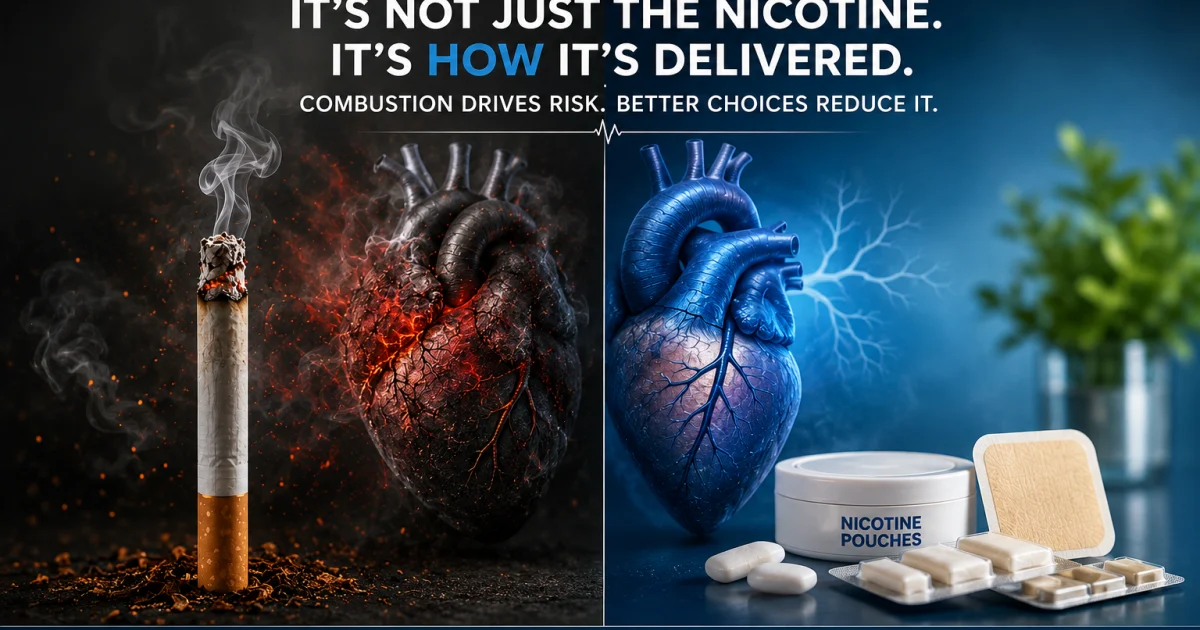
The pervasive message from public health authorities has long been that no nicotine product is risk-free. This blanket statement, while factually correct, often overshadows a critical nuance in the ongoing debate surrounding nicotine consumption: the vastly different levels of harm associated with various delivery methods. From traditional cigarettes and burgeoning e-cigarettes to modern nicotine pouches, medicinal patches, and chewing gum, the cardiovascular risk profile is not monolithic. Instead, it forms a complex continuum, shaped not solely by the presence of nicotine itself, but crucially by the method of its delivery, with the burning of tobacco emerging as the most significant determinant of severe cardiovascular harm.
n
As smoking rates decline in many populations and the global nicotine market diversifies at an unprecedented pace, a more granular understanding of these risks is paramount for effective public health strategies. The recent authorization of new nicotine pouches by the U.S. Food and Drug Administration (FDA), which noted significantly lower levels of harmful constituents compared to other oral and smokeless tobacco products, underscores the growing need to differentiate between these evolving options. This article delves into the scientific evidence, drawing from a pivotal study in Nature Reviews Cardiology, to illuminate the "hierarchy of harm" associated with nicotine-containing products, focusing specifically on their cardiovascular implications.
n
The Endothelium: Nicotine’s Primary Battleground
n
To comprehend the cardiovascular impact of nicotine, it is essential to understand the role of the endothelium. This delicate, single-cell layer lining the interior of our arteries is a critical regulator of cardiovascular health. It orchestrates the widening and narrowing of blood vessels, manages inflammation, controls blood clotting, and plays a pivotal role in the development of atherosclerosis, the buildup of plaque in arteries.
n
A key player in endothelial function is nitric oxide (NO). This molecule acts as a vasodilator, relaxing the smooth muscles surrounding arteries, thereby promoting blood flow and maintaining healthy blood pressure. NO also acts as an anti-inflammatory agent, preventing unwanted cell adhesion and inhibiting platelet activation – crucial steps in preventing blood clots. When endothelial function deteriorates, these protective mechanisms falter, leaving the cardiovascular system vulnerable. This decline in endothelial function serves as a validated marker of compromised cardiovascular health.
n
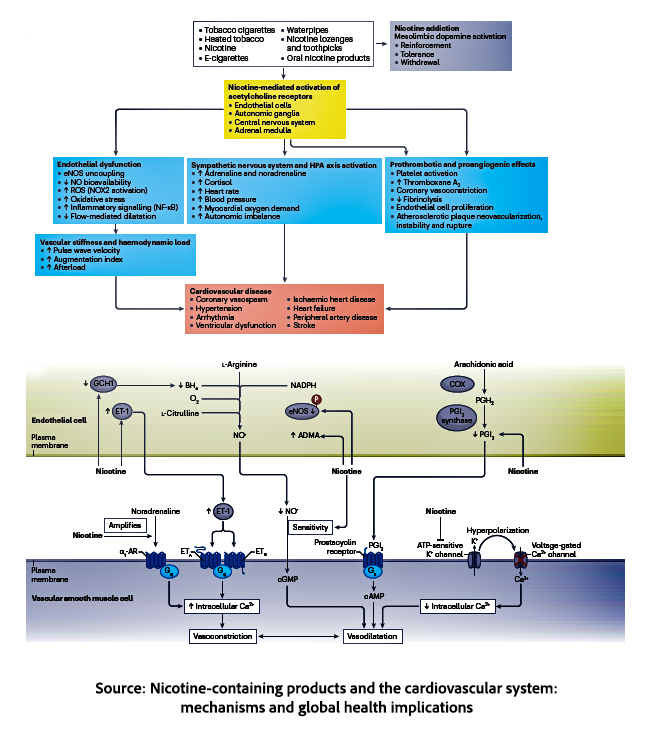
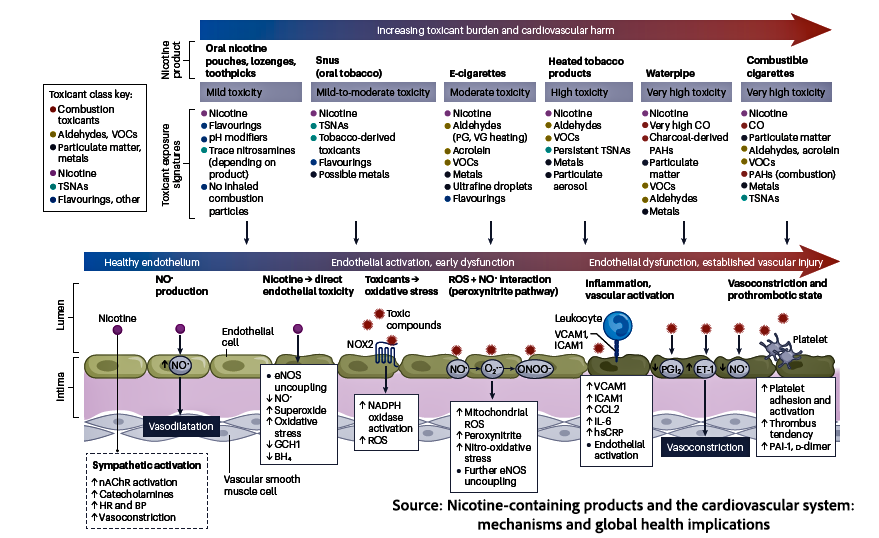
Nicotine exerts its influence on this vital system through several mechanisms. It can directly trigger oxidative stress, an imbalance between free radicals and antioxidants in the body. This oxidative stress damages the endothelial cells, reducing their ability to produce NO and increasing inflammation. Furthermore, repeated exposure to nicotine can lead to a dose-dependent accumulation of oxidative stress and NO depletion, resulting in sustained endothelial dysfunction. While endothelial dysfunction is a strong indicator of vascular injury, it is crucial to note that it is not, in isolation, definitive proof of a particular exposure directly causing major cardiovascular events like heart attacks or strokes. However, it represents a significant step on the pathway to such events.
n
Nicotine’s Acute Cardiovascular Response: A System Under Strain
n
The immediate physiological response to nicotine intake provides a clearer picture of its impact on the cardiovascular system. Upon entering the bloodstream, nicotine triggers a cascade of reactions:
n
- n
- Increased Heart Rate and Blood Pressure: Nicotine stimulates the sympathetic nervous system, leading to a surge in heart rate and a constriction of blood vessels. This dual action results in an elevated blood pressure, forcing the heart to work harder.
- Increased Cardiac Workload: As the heart pumps against higher resistance and at a faster pace, its overall workload increases significantly.
- Coronary Artery Constriction: Simultaneously, the coronary arteries, responsible for supplying oxygenated blood to the heart muscle itself, constrict. This narrowing occurs precisely when the heart’s demand for oxygen is highest due to the increased workload, creating a precarious imbalance.
- Promotion of Oxidative Stress and Inflammation: The sympathetic nervous system activation also fuels oxidative stress throughout the body, contributing to vascular inflammation. This inflammation further compromises the integrity and function of the arterial walls.
- Direct Vascular Effects: Nicotine can also directly interact with the arterial wall. It promotes the release of vasoconstricting molecules like endothelin-1, while simultaneously reducing the production of protective vasodilators such as prostacyclin. This shift in the delicate balance of vasoactive substances leads to stiffer, more constricted vessels, creating an environment more conducive to clot formation.
n
n
n
n
n
n
These acute physiological responses, while transient, lay the groundwork for more chronic and severe cardiovascular issues with repeated and prolonged exposure.
n
The Crucial Differentiator: Delivery Method and its Toxicological Load
n
The central argument for a "hierarchy of harm" lies in the understanding that the cardiovascular risk posed by nicotine products is not solely dictated by the presence of nicotine but by the entire cocktail of substances delivered alongside it. The Nature Reviews Cardiology study highlights that the key distinction among nicotine products is not simply whether they contain nicotine, but what else their delivery systems expose users to.
n
The Apex of Harm: Combustible Tobacco Products
n
At the pinnacle of the cardiovascular harm continuum reside combustible tobacco products, most notably conventional cigarettes and waterpipes. The high-temperature combustion process inherent in these products is the primary culprit. It generates a complex and highly toxic mixture of thousands of chemical compounds, including carcinogens, irritants, and cardiovascular toxins, in addition to nicotine.
n
This toxic brew profoundly impacts endothelial function, leading to severe and sustained dysfunction. The sheer volume and variety of toxicants released during combustion overwhelm the body’s defense mechanisms, initiating widespread inflammation, oxidative stress, and arterial stiffening. Consequently, combustible tobacco products are associated with the highest cardiovascular risks, contributing significantly to heart attacks, strokes, and other related diseases.
n
The Intermediate Tiers: Heated and Aerosol-Based Products
n
Moving down the hierarchy, we encounter heated and aerosol-based tobacco products, such as e-cigarettes and heated-tobacco products (HTPs). The fundamental difference here is the avoidance of high-temperature combustion. By heating, rather than burning, tobacco or e-liquids, these products significantly reduce the exposure to many of the toxicants generated by combustion.
n
However, it is crucial to understand that their aerosols are not chemically inert. They can still contain various harmful constituents, including:
n
- n
- Degradation Products: Components within the e-liquids or tobacco can degrade into harmful substances when heated.
- Ultrafine Particles/Droplets: The aerosols themselves consist of extremely small particles or droplets that can penetrate deep into the lungs and potentially enter the bloodstream, contributing to inflammation and oxidative stress.
- Flavoring-Related Compounds: Many e-liquids contain flavorings, some of which have been shown to cause cellular damage and inflammation when inhaled.
n
n
n
While the toxicological load is considerably lower than that of combustible products, these aerosols can still trigger endothelial dysfunction and contribute to cardiovascular risk. The precise long-term cardiovascular impact of these products is still an active area of research, but the current evidence strongly suggests they pose a lower risk than smoking.
The Lower End: Oral Nicotine Products and Medicinal Nicotine
At the lowest end of the cardiovascular harm continuum are oral nicotine products, including modern nicotine pouches, snus, and medicinal nicotine replacement therapies (NRTs) like patches and gum. These products generally bypass combustion and inhalation altogether, significantly minimizing exposure to respiratory irritants and combustion-derived toxicants.
However, even these products are not entirely without risk. The hierarchy within this category also presents distinctions:
- Tobacco-Containing Oral Products: Products like traditional snus, which contain tobacco, may still harbor tobacco-specific nitrosamines (TSNAs), a class of potent carcinogens. While these are generally found in lower concentrations than in smoked tobacco, they represent a potential source of exposure to harmful chemicals.
- Tobacco-Free Nicotine Formulations: Modern nicotine pouches and many e-liquids are tobacco-free. These formulations eliminate the risk associated with TSNAs and other tobacco-specific toxicants.
- Nicotine’s Intrinsic Effects: Crucially, even in the absence of combustion or other toxicants, nicotine itself remains a factor. As previously discussed, nicotine is an independent driver of endothelial dysfunction. It alters vascular function, increases cardiovascular workload, and, depending on the dose and duration of exposure, can contribute to vascular injury and elevated cardiovascular risk.
Medicinal NRTs, while delivering nicotine, are typically used for short-term cessation efforts under medical guidance. Their primary purpose is to alleviate withdrawal symptoms, and their usage patterns are generally more controlled than those of recreational nicotine products. Nonetheless, the inherent cardiovascular effects of nicotine remain a consideration.
The Dose Dilemma: Quantifying Nicotine Exposure is a Challenge
The principle that "the dose makes the poison" is highly relevant to understanding nicotine’s harm. However, accurately quantifying the actual nicotine dose absorbed by individuals from different products is surprisingly challenging. This complexity arises from variations in "smoking topography" or "product topography"—the patterns of use.
- Puffing Frequency and Depth: How often and how deeply an individual inhales from a cigarette, e-cigarette, or waterpipe significantly influences the amount of nicotine and other substances absorbed.
- Inhalation Volume: The total volume of smoke or aerosol inhaled during a session is another critical variable.
- Device and Product Variability: For e-cigarettes, the vast array of devices, varying nicotine concentrations in e-liquids, and different heating elements create immense variability in aerosol composition and nicotine delivery.
- Session Duration: Longer sessions, as often seen with waterpipe use, can lead to higher overall exposure.
- Absorption Rates: For oral products, the rate at which nicotine is absorbed through the oral mucosa can vary depending on factors like saliva production and product formulation.
Consequently, product labels providing nicotine content do not perfectly predict the actual nicotine exposure an individual will experience. This variability complicates direct comparisons of harm and necessitates a nuanced approach to risk assessment.
A Visualizing the Hierarchy: Combustion as the Key Culprit
The distinction between different nicotine product categories and their associated cardiovascular risks can be visualized. The hierarchy of harm is fundamentally determined by three interconnected factors:
- Delivery Method: How nicotine is introduced into the body.
- Accompanying Toxicants: The other harmful chemicals present in the product or generated during its use.
- Combustion: The presence or absence of high-temperature burning of tobacco.
When comparing the chemical constituents of cigarette smoke with e-cigarette aerosol, a stark difference emerges. For many harmful carbonyls, nitrosamines, volatile organic compounds, and other toxicants, reported concentrations are significantly lower in e-cigarette aerosol. This observation supports the critical conclusion that avoiding combustion can substantially reduce exposure to a wide array of toxic chemicals.
However, it is important to reiterate that this reduction in toxicant exposure does not equate to complete safety. E-cigarette aerosols, while less harmful than cigarette smoke, still contain compounds that can negatively impact vascular health. The exact magnitude of long-term cardiovascular risk associated with vaping remains an area of ongoing scientific inquiry.
Official Responses and Public Health Implications
The evolving landscape of nicotine products has prompted various responses from regulatory bodies and public health organizations. The FDA’s recent authorization of new nicotine pouches, noting their lower constituent levels compared to other oral and smokeless tobacco products, exemplifies a growing recognition of the differential harm posed by these products. This authorization suggests a move towards a more nuanced regulatory approach that acknowledges harm reduction potential.
Leading cardiovascular organizations and public health bodies worldwide emphasize that no nicotine product is risk-free. This message, while important for discouraging initiation, can inadvertently obscure the significant risk reduction achieved by individuals who transition from smoking to less harmful alternatives. The Nature Reviews Cardiology study and others like it provide the scientific foundation for a more refined public health message that acknowledges a continuum of risk.
Implications for Public Health and Harm Reduction
The concept of a "hierarchy of harm" has profound implications for public health policy and individual decision-making:
- Informed Consumer Choices: Understanding that not all nicotine products carry the same cardiovascular risk empowers individuals to make more informed choices, particularly those who are unable or unwilling to quit nicotine entirely.
- Harm Reduction Strategies: The evidence strongly supports harm reduction strategies that encourage smokers to switch to non-combustible nicotine products. Even though residual nicotine-related vascular effects may remain, the risk reductions associated with complete switching are clinically significant for both cardiovascular and non-cardiovascular outcomes.
- Targeted Interventions: Public health campaigns can be more effectively tailored to address the specific risks associated with different product categories, rather than employing a one-size-fits-all approach.
- Regulatory Frameworks: Regulatory bodies can use this evidence to develop more targeted regulations that incentivize the development and adoption of lower-risk nicotine products while restricting the marketing and availability of the most harmful ones.
Conclusion: A Continuum of Risk, Not a Dichotomy of Safety
The scientific evidence is increasingly clear: nicotine itself is not benign. It exerts physiological effects that can compromise vascular health and increase cardiovascular workload. However, the delivery system for nicotine plays an enormously significant role in determining the overall cardiovascular risk. Combustion introduces a substantial toxic burden that is largely absent in non-combustible alternatives.
Therefore, it is imperative to move beyond the simplistic dichotomy of "safe" versus "unsafe" when discussing nicotine products. Instead, public health discourse and policy should embrace the concept of a continuum of risk. Nicotine pouches, patches, gum, and vaping devices should not be equated with combustible cigarettes, nor should they be confused with complete abstinence.
For individuals struggling to quit nicotine, transitioning from smoking to less harmful alternatives represents a meaningful pathway to significant health gains. While these alternatives may still carry some residual risks, the evidence points not to a choice between absolute safety and extreme danger, but to a spectrum of harm. Navigating this spectrum effectively, informed by robust scientific understanding, is crucial for advancing public health and mitigating the devastating impact of nicotine-related diseases.
Source:
Nicotine-containing products and the cardiovascular system: mechanisms and global health implications. Nature Reviews Cardiology. DOI: 10.1038/s41569-026-01331-6

