
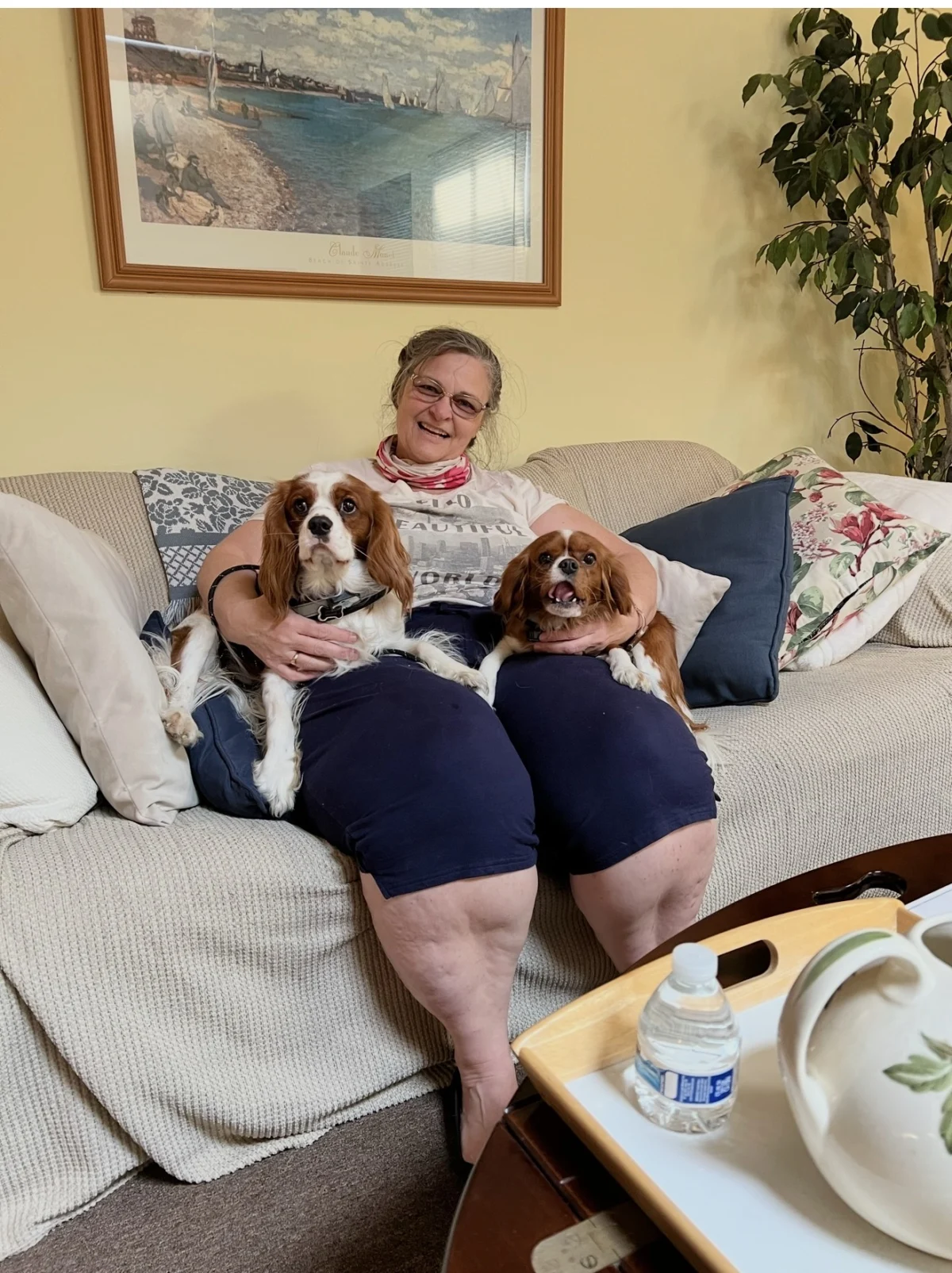
For decades, the narrative surrounding obesity was one of personal failure—a simple equation of calories in versus calories out. However, for patients like Meladee Noble, a member of the Obesity Action Coalition (OAC), the reality has been a grueling, multi-decade battle against biology, bureaucracy, and a healthcare system that has often been slow to recognize obesity as a chronic disease.
n
Today, Noble stands as a testament to the efficacy of modern medical intervention, having transformed her health and achieved a BMI of 21.3. Yet, her journey from a peak weight of over 380 pounds to her current state was not merely a matter of finding the right medication; it was a saga of navigating insurance denials, policy shifts, and the high-stakes world of pharmaceutical access. Her story highlights a critical inflection point in American healthcare: the struggle to bridge the gap between breakthrough medical science and equitable patient access.
n
Main Facts: A Transformation Defined by Persistence
n
Meladee Noble’s story is one of dramatic physical transformation underpinned by a persistent struggle for medical recognition. Standing 5-foot-8, Noble’s journey involved the following key milestones and facts:
n
- n
- Peak Weight and Initial Intervention: At her heaviest, Noble weighed 382.5 pounds, leading her to undergo gastric bypass surgery in 1997.
- The Weight Regain Cycle: Despite an initial loss of 160 pounds, Noble experienced the common biological phenomenon of weight regain, eventually reaching 302.5 pounds with a BMI of 46.
- The GLP-1 Breakthrough: Noble eventually found success through GLP-1 (glucagon-like peptide-1) receptor agonists, specifically semaglutide (Wegovy/Ozempic) and tirzepatide (Zepbound).
- The Result: Through consistent treatment, Noble reached a healthy weight of 140 pounds, resolving several obesity-related comorbidities.
- The Barrier: The primary obstacle was not the medication’s efficacy, but the "access gauntlet"—a series of insurance hurdles, including the loss of coverage through major Pharmacy Benefit Managers (PBMs) like CareMark and the complexities of Medicare regulations.
n
n
n
n
n
n
Noble’s experience reflects a broader national crisis. While the FDA has approved highly effective treatments for obesity, the "utilization management" tactics employed by insurers—such as prior authorizations and the exclusion of weight-loss drugs from formularies—have created a "haves and have-nots" scenario in public health.
n
Chronology: Decades of Trial, Error, and Advocacy
n
To understand the current state of obesity care, one must look at the timeline of Noble’s treatment, which mirrors the evolution of bariatric science over the last quarter-century.
n
1997–2021: The Limitations of Surgery and Lifestyle
n
In 1997, gastric bypass was considered the "gold standard" for morbid obesity. Noble underwent the procedure at 382.5 pounds. While the surgery successfully altered her metabolic set point for a time, she eventually plateaued at 220 pounds. Over the following two decades, the chronic nature of obesity asserted itself. By the early 2020s, her weight had climbed back to 302.5 pounds. This period was marked by "yo-yo" dieting through commercial and medically supervised programs that offered temporary relief but failed to address the underlying hormonal drivers of her condition.
n
2022: The Telehealth and Out-of-Pocket Era
n
As GLP-1 medications began gaining mainstream attention for obesity, Noble sought treatment from her primary care provider. However, her local clinic was not yet equipped or willing to prescribe these medications for weight management. Driven by the necessity to improve her health, Noble turned to telehealth and sourced Ozempic from Canada, paying out-of-pocket. This stage represents a common trend where patients, desperate for effective care, bypass traditional domestic channels due to cost and gatekeeping.
n
2023–2024: The Insurance Rollercoaster
n
In late 2023, Noble transitioned to an online weight-loss program that successfully secured prior authorization for Wegovy. Her monthly costs plummeted to $25. However, this stability was short-lived. A clerical error in the renewal paperwork led to a sudden denial of coverage. Subsequently, she was prescribed Zepbound, which was covered until a major policy shift occurred.
n
2025: The CareMark Cliff and the Medicare Bridge
n
As of 2025, changes within CareMark—one of the nation’s largest PBMs—resulted in the loss of coverage for her treatment. Noble was forced to return to cash payments via LillyDirect to maintain her health gains. This led her to the Medicare GLP-1 Bridge Program, a complex regulatory pathway designed to provide access to these medications for patients with specific secondary conditions (such as cardiovascular risk) who are covered under Medicare.
n
Supporting Data: The Biological and Economic Reality of Obesity
n
The medical community increasingly recognizes that obesity is not a behavioral choice but a complex, relapsing chronic disease. Supporting data explains why patients like Noble struggle with weight regain and why continuous medication is often necessary.
n
The Biological "Set Point"
n
Clinical studies, including those published in the New England Journal of Medicine, demonstrate that when an individual loses a significant amount of weight, the body responds by decreasing satiety hormones (like leptin) and increasing hunger hormones (like ghrelin). This biological "pull" makes long-term maintenance through willpower alone nearly impossible for those with severe obesity. GLP-1 medications work by mimicking natural hormones that signal fullness to the brain and slow gastric emptying, effectively "leveling the playing field."
n
The Efficacy of GLP-1s vs. Traditional Methods
n
Data from the STEP (Semaglutide Treatment Effect in People with obesity) clinical trials showed that participants using semaglutide lost an average of 15% of their body weight, compared to 2.4% in the placebo group. Tirzepatide (Zepbound) has shown even more dramatic results, with average weight loss exceeding 20% in the SURMOUNT trials.
n
The Cost of Non-Treatment
n
While GLP-1 medications are expensive (often retailing for $1,000+ per month without insurance), the economic burden of untreated obesity is higher. According to the CDC, the medical costs of obesity in the U.S. were nearly $173 billion in 2019. Patients with obesity spend approximately $1,861 more per year on healthcare than those at a healthy weight. By preventing diabetes, heart disease, and joint replacements, these medications represent a potential long-term saving for the healthcare system.
Official Responses: Navigating the "Bridge" and Policy Barriers
The response from regulatory bodies and advocacy groups has been a mix of incremental progress and continued frustration.
The CMS and Medicare GLP-1 Bridge
The Centers for Medicare & Medicaid Services (CMS) historically prohibited the coverage of "weight loss" drugs under Medicare Part D, a rule dating back to the 2003 Medicare Modernization Act. However, in 2024, CMS issued new guidance allowing coverage of medications like Wegovy if they are prescribed for a "medically accepted indication" that is FDA-approved—specifically to reduce the risk of heart attacks and strokes in patients with obesity and established cardiovascular disease.
Meladee Noble’s experience with the "Medicare Bridge" highlights the friction in this system. Even with the policy change, she had to manually print CMS guidelines, highlight relevant sections, and act as her own advocate between her doctor and the pharmacist to ensure the prior authorization was processed correctly.
Advocacy from the Obesity Action Coalition (OAC)
The OAC has been at the forefront of the fight for the Treat and Reduce Obesity Act (TROA), a bipartisan bill aimed at expanding Medicare coverage to include comprehensive obesity treatments. The OAC emphasizes that the current "Bridge" is only a partial solution, as it leaves out millions of patients who have obesity but do not yet have a secondary cardiovascular diagnosis.
Implications: The "GLP-1 Lifer" and the Future of Public Health
Noble’s self-description as a "GLP-1 lifer" carries significant implications for how society and the insurance industry view obesity treatment.
Shifting the Paradigm to Chronic Management
If obesity is a chronic disease, it requires chronic management, much like hypertension or type 2 diabetes. The expectation that a patient should "wean off" the medication once they reach a goal weight is increasingly viewed by obesity specialists as medically unsound. When Noble reached her goal weight of 140 pounds, her disease did not disappear; it was simply being successfully managed. The implication for insurers is a shift from short-term "weight loss" costs to long-term "health maintenance" investments.
The Threat of the "Coverage Gap"
The frequent changes in PBM formularies (as seen with the 2025 CareMark changes) create a dangerous instability for patients. When a patient is forced to stop a GLP-1 medication abruptly due to cost or coverage loss, the metabolic rebound can be rapid, leading to the return of comorbidities and a decrease in mental health. Noble’s story serves as a warning that medical breakthroughs are only as effective as the systems that deliver them.
The Need for Legislative Reform
The reliance on "bridges" and "workarounds" is unsustainable. For patients to avoid the "decades of searching" that Noble endured, federal legislation like TROA is essential. Until obesity medications are treated with the same formulary parity as other life-saving drugs, the healthcare system will continue to pay for the complications of obesity rather than the cure.
Conclusion: A Call for Simplified Access
Meladee Noble’s journey from 382.5 pounds to 140 pounds is a triumph of modern medicine, but it is also a critique of a fragmented healthcare system. Her hope—that one day patients won’t have to navigate "denials and complicated approval processes"—is a sentiment shared by millions.
As healthcare policy continues to evolve, the focus must shift from "if" obesity should be treated to "how" we can make that treatment accessible. Resources like the OAC’s Medicare GLP-1 Bridge Resource Hub are vital stopgaps, but the ultimate goal remains a healthcare environment where the path to health is not an obstacle course, but a clear and supported highway.

