
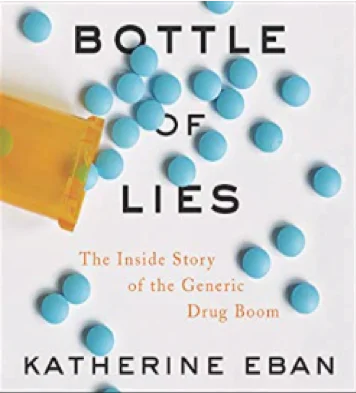
A groundbreaking investigation by Katherine Eban, "Bottle of Lies: The Inside Story of the Generic Drug Boom," has peeled back the veneer of affordability in generic pharmaceuticals, revealing a disturbing landscape of compromised quality, regulatory failures, and profound implications for global patient safety. As highlighted by patient advocate Lisa Morrise, the book serves as a chilling "true to life thriller" that exposes a "frightening lack of effective oversight and integrity" within a system critical to public health worldwide.
n
Main Facts: Unveiling the Generic Drug Crisis
n
The modern healthcare landscape is inextricably linked to generic drugs, which account for the vast majority of prescriptions filled globally, offering an affordable alternative to costly brand-name medications. However, beneath this essential economic advantage lies a complex and often opaque supply chain, a subject meticulously investigated by investigative journalist Katherine Eban in her seminal work, "Bottle of Lies."
n
Eban’s book, published in 2019, systematically exposes how many of the world’s generic drug manufacturers, particularly those operating outside of stringent Western regulatory oversight, have engaged in widespread data fabrication, deceptive manufacturing practices, and outright fraud to gain regulatory approval and market access. The core revelation is that a significant portion of the generic drugs consumed by patients globally may not meet the safety and efficacy standards they are presumed to uphold, potentially rendering treatments ineffective or, in some cases, harmful.
n
Lisa Morrise, whose personal review resonates deeply with the book’s message, underscores the visceral impact of these revelations. "My family has likely been impacted by poor quality generics," she states, echoing a sentiment shared by countless patients who have experienced puzzling treatment failures after switching from brand-name drugs to their generic counterparts. Morrise particularly applauds the role of patient advocacy in initiating change but cautions that "much remains to be done, especially for patients that live outside of the United States." Her advice for patients—"If you are taking a generic medicine and it is not as effective as the name brand, talk to your provider"—serves as a crucial call to vigilance in an environment where trust has been profoundly eroded.
n
The book details how a globalized pharmaceutical industry, driven by intense price competition, has created an environment ripe for cutting corners. Manufacturers, often based in countries with less robust regulatory frameworks, have exploited loopholes, intimidated whistleblowers, and systematically misled international inspectors. The consequences range from inert medications that fail to treat chronic conditions to drugs containing impurities that could pose serious health risks. "Bottle of Lies" is not merely a critique; it is a meticulously researched expose, drawing on thousands of pages of internal company documents, regulatory reports, and candid interviews with whistleblowers, inspectors, and industry insiders. It paints a stark picture of a system where the pursuit of profit has, in too many instances, overshadowed the fundamental commitment to patient well-being.
n
Chronology: The Evolution of a Global Health Challenge
n
The story of the generic drug crisis is rooted in the legislative and economic shifts of the late 20th century, which inadvertently laid the groundwork for the current challenges.
n
The Generic Drug Boom and Its Promise (1984-Early 2000s)
n
The modern era of generic drugs began in the United States with the passage of the Drug Price Competition and Patent Term Restoration Act of 1984, commonly known as the Hatch-Waxman Act. This landmark legislation streamlined the approval process for generic drugs, allowing manufacturers to bring cheaper versions of off-patent brand-name drugs to market without repeating extensive clinical trials, provided they could demonstrate "bioequivalence." The promise was immense: increased access to affordable medicine, reduced healthcare costs, and enhanced competition. This model was subsequently adopted or mirrored by many other nations, leading to a global proliferation of generic manufacturers, particularly in countries like India and China, which offered lower manufacturing costs. By the early 2000s, generics had become the backbone of pharmaceutical care in many developed nations.
n
Early Warning Signs and Whistleblowers (Late 1990s-Mid 2000s)
n
As the generic drug market expanded, so too did the complexity of its global supply chain. Active Pharmaceutical Ingredients (APIs), the core components of drugs, began to be sourced from an increasingly diverse and geographically dispersed network of suppliers. Simultaneously, early murmurs of concern began to surface. Whistleblowers within generic manufacturing facilities, often at great personal risk, started to report systematic manipulation of data, falsification of quality control records, and egregious violations of Good Manufacturing Practices (GMP). These early warnings, however, often struggled to gain traction with regulatory bodies like the U.S. Food and Drug Administration (FDA), which, at the time, lacked the resources and international reach to effectively monitor overseas facilities.
n
The Ranbaxy Scandal: A Turning Point (2006-2013)
n
The most prominent and widely reported scandal, meticulously detailed in "Bottle of Lies," involved the Indian pharmaceutical giant Ranbaxy Laboratories. Beginning around 2006, a former Ranbaxy executive, Dinesh Thakur, became a pivotal whistleblower, providing the FDA with overwhelming evidence of data fraud, including falsified drug stability tests and bioequivalence studies. Eban’s book meticulously traces how Ranbaxy systematically fabricated data to gain approval for dozens of generic drugs destined for the U.S. market. The FDA’s investigation into Ranbaxy dragged on for years, hindered by the company’s deceptive tactics and the agency’s own limitations in conducting thorough overseas inspections. Ultimately, in 2013, Ranbaxy pleaded guilty to felony charges related to manufacturing and distributing adulterated drugs and agreed to pay a record $500 million in fines, marking a significant, albeit delayed, victory for regulatory enforcement and whistleblowers.
n
Post-Ranbaxy Revelations and Systemic Issues (2013-Present)
n
The Ranbaxy case was not an isolated incident but rather a harbinger of a broader, systemic problem. Following the Ranbaxy settlement, the FDA, along with other international regulators like the European Medicines Agency (EMA), intensified their scrutiny of overseas manufacturing facilities. This led to a cascade of import bans, warning letters, and facility closures affecting numerous other generic drug manufacturers in India, China, and elsewhere. Companies like Wockhardt, Sun Pharma, and Dr. Reddy’s Laboratories also faced severe regulatory actions due to similar data integrity issues and manufacturing deficiencies. These ongoing investigations revealed that the problems were deeply embedded within the industry, driven by intense cost pressures and a perceived lack of immediate accountability in some jurisdictions. Katherine Eban’s "Bottle of Lies" synthesized these disparate events, drawing a comprehensive picture of the underlying systemic vulnerabilities and the urgent need for reform.
n
Supporting Data: Evidence of a Troubling Trend
n
The revelations in "Bottle of Lies" are not anecdotal but are supported by a substantial body of evidence, including regulatory reports, scientific studies, and expert analysis that collectively paint a concerning picture of the generic drug supply chain.
n
The Scale of Generic Drug Use
n
Generics represent an overwhelming majority of prescriptions. In the United States, generic drugs account for approximately 90% of all prescriptions filled, yet only about 25% of the total drug spending. This high utilization rate underscores the critical importance of their quality. Globally, the reliance on generics is even higher in many developing nations, where they form the backbone of public health programs and access to essential medicines. The sheer volume of generic drugs in circulation means that even a small percentage of substandard products can have a massive public health impact.
n
Data Integrity Failures
n
A recurring theme in Eban’s book and subsequent regulatory actions is the pervasive issue of data integrity. This involves the falsification, alteration, or deletion of crucial manufacturing and quality control data.
n
- n
- Case Example (Ranbaxy): Investigations revealed that Ranbaxy employees systematically fabricated data for stability testing (to show drugs would remain potent over time) and bioequivalence studies (to prove a generic drug works the same as its brand-name counterpart). They even backdated documents and created "shadow labs" to produce fake data for auditors.
- Global Reach: The problem extends beyond Ranbaxy. The FDA has issued numerous warning letters to other manufacturers citing "unreliable data," "missing data," and "data manipulation" as major violations. Many of these facilities are located in India and China, which supply a significant portion of the world’s APIs and finished generic drugs.
- Consequences: Without reliable data, regulators cannot genuinely assess the safety and efficacy of a drug. Patients might receive drugs that are sub-potent (too weak), super-potent (too strong), or contain harmful impurities.
n
n
n
n
Manufacturing Deficiencies and Impurities
n
Beyond data fraud, "Bottle of Lies" also highlights widespread manufacturing deficiencies.
n
- Poor GMP: Inspections have uncovered unsanitary conditions, cross-contamination, inadequate equipment maintenance, and a lack of proper process controls in many facilities. These issues directly impact drug quality and purity.
- NDMA Contamination: A significant recent example, though not directly covered by Eban’s 2019 book, is the contamination of several generic drugs (e.g., valsartan, ranitidine, metformin) with N-nitrosodimethylamine (NDMA) and other nitrosamine impurities, known probable human carcinogens. This global recall crisis, starting in 2018, exposed further vulnerabilities in the API supply chain and the manufacturing processes, emphasizing the challenges in monitoring impurities across complex global networks. While the root causes are still being fully understood, it highlights the constant vigilance required for safety and the potential for manufacturing flaws to introduce harmful substances.
Adverse Event Reports and Patient Experiences
While directly linking individual adverse events to specific substandard generic drugs is challenging, reports from healthcare providers and patients often provide anecdotal evidence. Lisa Morrise’s personal account, where her family was "likely impacted by poor quality generics," is a powerful example. Patients switching to generics have reported:
- Loss of Efficacy: Medications failing to control chronic conditions (e.g., seizures, thyroid disorders, depression) after a switch to a generic version.
- New Side Effects: Unexplained adverse reactions not experienced with the brand-name drug.
- Inconsistent Effects: Variable potency from batch to batch, leading to unpredictable therapeutic outcomes.
These experiences, while difficult to quantify systematically, align with the potential consequences of the manufacturing and data integrity issues detailed in "Bottle of Lies."
Expert Consensus
Experts in pharmaceutical regulation and public health largely corroborate the concerns raised by Eban. They point to:
- Inspection Gaps: The FDA, for instance, inspects domestic facilities more frequently than overseas ones. Even when overseas inspections occur, they are often announced, allowing manufacturers to prepare and conceal deficiencies.
- Resource Constraints: Regulatory agencies are often under-resourced, making comprehensive oversight of a vast global industry incredibly challenging.
- Ethical Lapses: The intense pressure to produce drugs cheaply and quickly can create an environment where ethical compromises are made.
The cumulative weight of this supporting data confirms that the issues brought to light by "Bottle of Lies" are not isolated incidents but rather symptoms of systemic vulnerabilities within the global generic drug supply chain, posing a continuous threat to patient safety and public health.
Official Responses: Navigating a Complex Regulatory Landscape
The revelations about generic drug quality have prompted a range of responses from regulatory bodies, pharmaceutical companies, and international organizations, though the path to comprehensive reform remains ongoing and complex.
Initial Regulatory Inertia and Subsequent Action
Initially, regulatory bodies, particularly the FDA, faced criticism for being slow to react to early warnings and whistleblower reports. The sheer scale and global nature of the generic drug industry, coupled with resource limitations, made effective oversight challenging. However, the Ranbaxy scandal, in particular, served as a major wake-up call.
- Increased Inspections: The FDA significantly ramped up its inspections of overseas manufacturing facilities, especially in India and China. While still facing logistical hurdles, the agency has moved towards unannounced inspections and has increased its foreign office presence.
- Warning Letters and Import Bans: There has been a notable increase in the issuance of warning letters to foreign manufacturers citing GMP violations and data integrity issues, often leading to import bans that prevent drugs from entering the U.S. market.
- Data Integrity Guidance: The FDA and other regulators have issued specific guidance documents emphasizing the importance of data integrity and outlining expectations for pharmaceutical companies to ensure the accuracy and reliability of their records.
- Enhanced Enforcement: The Ranbaxy settlement demonstrated a willingness by U.S. authorities to pursue criminal and civil penalties against companies and individuals engaged in fraud.
International Collaboration and Harmonization
Recognizing that drug quality is a global issue, there has been a push for greater international collaboration among regulatory agencies.
- EMA and WHO: The European Medicines Agency (EMA) has also increased its scrutiny of third-country manufacturers, implementing similar inspection regimes and import restrictions. The World Health Organization (WHO) plays a crucial role through its prequalification program, which assesses the quality of medicines intended for developing countries, and by providing technical assistance to national regulatory authorities.
- PIC/S: The Pharmaceutical Inspection Co-operation Scheme (PIC/S) is an international agreement that aims to harmonize GMP standards and inspection procedures globally, fostering mutual recognition of inspections among member countries. This helps to reduce duplication and improve the efficiency of oversight.
Industry’s Response and Self-Regulation
The pharmaceutical industry itself has been compelled to respond to the criticisms and regulatory pressures.
- Compliance Investments: Many generic drug manufacturers, especially those with significant Western market exposure, have invested in upgrading their facilities, implementing stricter quality control systems, and enhancing employee training on data integrity.
- Supply Chain Visibility: There’s a growing emphasis on improving supply chain transparency, with some companies attempting to trace APIs and finished products more effectively.
- Trade Associations: Industry trade associations have developed codes of conduct and best practice guidelines to promote higher quality standards among their members. However, the effectiveness of self-regulation remains a point of contention, particularly given the intense price competition.
Ongoing Challenges and Critiques
Despite these efforts, significant challenges persist, and regulatory responses are not without their critics.
- Resource Imbalance: Regulators often struggle to keep pace with the rapid expansion and complexity of the global supply chain.
- Jurisdictional Limits: Enforcement actions can be difficult to implement across international borders, and some countries may have weaker legal frameworks or less political will to enforce stringent quality standards.
- Lagging Enforcement: Critics argue that regulatory actions often come too late, after substandard drugs have already reached patients.
- Focus on Documentation vs. Reality: There is a concern that some manufacturers focus on creating "audit-proof" documentation rather than genuinely improving their underlying quality systems.
The official responses, while showing progress, underscore the continuous cat-and-mouse game between regulators and unscrupulous manufacturers, highlighting the need for perpetual vigilance and adaptive strategies to safeguard the integrity of the global drug supply.
Implications: The Ripple Effect on Patient Safety, Trust, and Global Health
The revelations in "Bottle of Lies" have far-reaching implications, extending from individual patient health to the very structure of global healthcare systems and international relations.
Erosion of Patient Safety and Trust
The most immediate and critical implication is the direct threat to patient safety. When generic drugs are substandard, patients may not receive the intended therapeutic benefit, leading to prolonged illness, worsening conditions, or even death. For conditions requiring precise dosing or with narrow therapeutic windows (e.g., heart medications, seizure drugs, thyroid hormones), even minor variations in potency or absorption can have devastating consequences.
Lisa Morrise’s personal experience—her family "likely impacted by poor quality generics"—is a testament to this reality. The book forces patients and healthcare providers to question the efficacy of the medications they rely on daily, leading to a profound erosion of trust in the pharmaceutical industry and regulatory bodies. This distrust can manifest as patient non-adherence to medication or a reluctance to switch to generics, even when financially necessary, undermining the very purpose of the generic drug system.
Economic Burden on Healthcare Systems
While generics are intended to reduce healthcare costs, the presence of substandard drugs can paradoxically increase them. Ineffective treatments lead to longer hospital stays, additional doctor visits, further diagnostic tests, and the need for more expensive brand-name alternatives. This creates a significant hidden economic burden on healthcare systems already struggling with budget constraints. Furthermore, the cost of regulatory enforcement, including inspections, recalls, and legal actions, adds another layer of expense.
Disproportionate Impact on Developing Nations
As Morrise rightly points out, "much remains to be done, especially for patients that live outside of the United States." Developing countries often rely almost exclusively on generic drugs due to affordability. Many also lack the robust national regulatory agencies, technical expertise, and financial resources to conduct thorough inspections and quality control testing of all imported drugs. This makes them particularly vulnerable to substandard medications, exacerbating existing public health challenges and undermining efforts to combat infectious diseases, chronic illnesses, and improve maternal and child health outcomes. The globalized supply chain means that a problem originating in one manufacturing hub can quickly affect patients across continents.
The Indispensable Role of Patient Advocacy
The book highlights how patient advocacy has played a crucial role in initiating change. Whistleblowers, often driven by a strong moral compass and concern for patient well-being, take immense personal risks to expose wrongdoing. Organizations dedicated to patient safety and quality healthcare also exert pressure on regulators and industry to improve standards. These advocacy efforts are vital in keeping the issue in the public consciousness, pushing for legislative reforms, and holding powerful entities accountable. Without patient voices and dedicated advocates, the inertia of large systems can be overwhelming.
Future Directions: Vigilance, Technology, and International Cooperation
The implications of "Bottle of Lies" necessitate a multi-pronged approach for the future:
- Continued Regulatory Strengthening: This includes increasing funding for regulatory bodies, enhancing inspection capabilities (especially unannounced and remote inspections), improving data analytics to identify red flags, and developing more rapid enforcement mechanisms.
- Technological Solutions: Blockchain and other advanced tracking technologies could offer greater transparency and traceability throughout the pharmaceutical supply chain, making it harder for fraudulent products to enter the market.
- Global Harmonization and Information Sharing: Greater international cooperation and data sharing among regulatory agencies are essential to address a global problem.
- Consumer Empowerment: Educating patients and healthcare providers, as Lisa Morrise advises, empowers them to be vigilant and report suspected issues. The simple act of asking questions and reporting concerns can contribute to systemic improvements.
- Ethical Manufacturing: A fundamental shift towards a culture of quality and ethical manufacturing, prioritizing patient safety over profit margins, is ultimately required from the industry itself.
In conclusion, "Bottle of Lies" serves as a stark reminder that the battle for safe and effective generic drugs is far from over. It is a continuous fight that demands unwavering vigilance from regulators, ethical responsibility from manufacturers, and informed advocacy from patients and healthcare providers to ensure that the promise of affordable medicine does not come at the cost of public health.

