
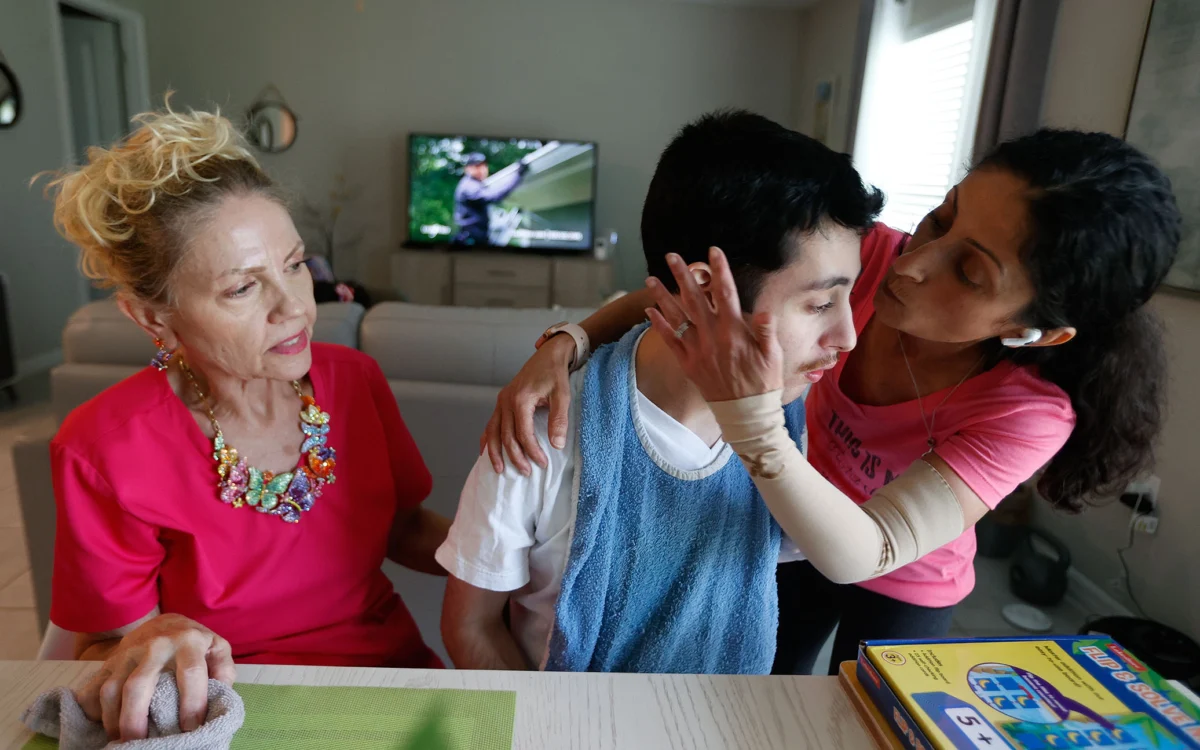
WASHINGTON D.C. – A recent 33-page document issued by the Centers for Medicare and Medicaid Services (CMS) has cast a long shadow of uncertainty over the future of healthcare coverage for millions of vulnerable Americans. The guidance, detailing the application of new, more stringent Medicaid eligibility rules, has done little to calm fears among disability advocates, who warn that a narrowing interpretation of "medical frailty" could strip vital services from individuals with developmental disabilities and other significant health conditions.
n
The guidance aims to clarify how states should evaluate exemptions to forthcoming Medicaid "community engagement" requirements, which are set to take effect for most beneficiaries by the start of next year. These requirements mandate that recipients prove they are working, volunteering, or attending school for at least 80 hours per month to maintain their coverage. While the underlying law—the "One Big Beautiful Bill Act" of 2025, which included nearly $1 trillion in Medicaid cuts—explicitly exempts those deemed "medically frail" or with "special medical needs," including individuals with physical, intellectual, or developmental disabilities, CMS’s regulatory interpretation has provoked widespread concern.
n
Advocates argue that the agency’s strict definition of "medical frailty" goes beyond Congressional intent, potentially jeopardizing the health and well-being of countless individuals. The core of the controversy lies in CMS’s insistence that a disability must "significantly impair" an individual’s ability to perform at least one "activity of daily living" (ADL) or their ability to comply with the work requirements to qualify for an exemption. This standard, critics contend, creates an unduly high bar that many individuals with genuine, lifelong disabilities may struggle to meet, even if their conditions preclude them from consistent, demanding employment or educational pursuits.
n
A Shifting Landscape: The Genesis of Medicaid Work Requirements
n
The introduction of "community engagement" requirements into Medicaid represents a significant ideological shift in the nation’s largest public health insurance program. Historically, Medicaid has served as a safety net for low-income individuals, families, pregnant women, and people with disabilities, without imposing work-related conditions. The "One Big Beautiful Bill Act" of 2025, however, marked a pivotal moment, ushering in an era of fiscal austerity and a push for greater "personal responsibility" within the program.
n
The One Big Beautiful Bill Act of 2025
n
Signed into law amidst contentious debates over federal spending and social welfare programs, the "One Big Beautiful Bill Act" was a comprehensive legislative package that included substantial cuts to Medicaid. Proponents argued that these measures were necessary to ensure the long-term solvency of federal programs and to encourage self-sufficiency. Critics, however, warned that the sweeping cuts and new eligibility criteria would disproportionately harm the nation’s most vulnerable populations, including individuals with chronic illnesses, the elderly, and people with disabilities. The act’s inclusion of work requirements, while allowing for exemptions, laid the groundwork for the current dispute over their implementation.
n
The Mandate for "Community Engagement"
n
Under the new regulations, "community engagement" is broadly defined to include employment, job training, volunteering, or enrollment in an educational institution. The 80-hour monthly threshold is a demanding one, requiring a substantial commitment from beneficiaries. For many, particularly those already struggling with health issues, childcare responsibilities, or limited access to transportation and support services, meeting this requirement presents a formidable challenge. The policy’s stated goal is to promote economic independence, but for those with disabilities, the practical reality can be a barrier to essential healthcare rather than a pathway to empowerment.
n
Congressional Intent vs. Regulatory Reality
n
While Congress included specific language in the 2025 law to protect "medically frail" individuals and those with "special medical needs" from work requirements, disability advocates argue that CMS’s subsequent regulations and guidance have significantly narrowed this protective intent. The legislative text aimed for a broad, clinically grounded definition, recognizing that various conditions, not just severe physical limitations, could impede an individual’s ability to engage in consistent work or schooling. The regulatory interpretation, however, has focused on a very specific measure of impairment, sparking a profound disconnect between the spirit and the letter of the law, as perceived by those it directly impacts.
n
The Nuances of "Medical Frailty": CMS’s Interpretation
n
The heart of the current controversy lies in the precise definitions and standards set forth by CMS for determining "medical frailty" and eligibility for exemption. The agency’s June 2026 regulations, further elaborated by the latest guidance, have established a stringent framework that many believe fails to capture the complex realities of living with a disability.
n
Defining "Significant Impairment" and ADLs
n
According to CMS, individuals with physical, intellectual, or developmental disabilities will qualify as "medically frail" only if their condition "significantly impairs" their ability to perform at least one Activity of Daily Living (ADL). ADLs are fundamental self-care tasks typically performed independently by healthy individuals. These include:
n
- n
- Bathing: The ability to wash oneself.
- Dressing: The ability to select appropriate clothes and put them on.
- Walking: The ability to ambulate or move around.
- Toileting: The ability to get to and from the toilet, use it, and clean oneself.
- Eating: The ability to feed oneself.
- Getting in and out of bed or a chair (transferring): The ability to move from one surface to another.
n
n
n
n
n
n
n
The emphasis on "significant impairment" is particularly troubling. Many individuals with intellectual disabilities, for example, might be able to perform all ADLs independently or with minimal assistance, yet their cognitive impairments or behavioral health conditions profoundly limit their capacity for sustained employment or education. Similarly, individuals with episodic conditions (e.g., certain mental health disorders, autoimmune diseases) might have periods of high functionality interspersed with severe limitations that are not consistently reflected in ADL impairment but nonetheless prevent stable work.
n
Beyond ADLs: Impact on Community Engagement
n
The latest guidance reiterates that an individual is considered medically frail only if their condition "significantly impairs the individual’s ability to comply with the community engagement requirement." While seemingly offering a broader scope than just ADLs, advocates fear this clause will still be interpreted narrowly by states. The challenge lies in objectively measuring how a condition, such as chronic pain, severe anxiety, or a learning disability, directly impairs one’s ability to consistently work 80 hours a month, even if it doesn’t prevent them from, say, eating independently. This subjective assessment opens the door to inconsistent application and potential denial of exemptions.
n
The Verification Process: A Double-Edged Sword
n
CMS has outlined a multi-step process for verifying "medical frailty." States are encouraged to first attempt automatic verification using existing claims data from the previous 12 months. If this is insufficient, beneficiaries may provide a one-time self-declaration. Subsequently, states must re-verify an individual’s "medical frailty" status annually using "reliable information or documentation."
n
While the use of existing data is presented as a means to streamline the process, it poses significant concerns for disability advocates. Claims data, while useful for tracking medical services, often fails to capture the full scope of a disability’s impact on daily life and work capacity. An individual with a lifelong intellectual disability, for instance, may not have recent "claims" that explicitly detail their need for support or their functional limitations, as their condition might be stable but pervasive. This places the burden squarely back on the individual to proactively gather and submit medical records, potentially from multiple providers, every year – a daunting task for many who already face significant challenges.
n
CMS also suggested an optional tiered approach: first checking for conditions known to qualify for an exemption, then conditions that "may indicate" frailty with additional information, and finally, manual review. The optional nature of this framework, however, means states can develop their own, potentially inconsistent, lists and processes, leading to disparate outcomes based on geography rather than need.
Voices of Concern: Disability Advocates Speak Out
The new guidance has ignited a firestorm of criticism from a broad coalition of disability rights organizations, healthcare advocates, and social service providers. They uniformly contend that CMS’s approach undermines the intent of Congress and threatens the fundamental right to healthcare for some of the nation’s most vulnerable citizens.
Overreach and Undermining Congressional Intent
Nicole Jorwic, Chief Program Officer at Caring Across Generations, articulated the prevailing sentiment among advocates. "This updated guidance from CMS does attempt to provide more clarity, but doesn’t undo the overreach of the initial proposed final rule that is causing confusion for states, families, and people with disabilities," Jorwic stated. She emphasized that Congress specifically "wrote a broad, clinically grounded definition of medical frailty into law… to protect people with serious conditions and disabilities." Jorwic lamented that the administration is now "narrowing that definition through sub-regulatory guidance, without the transparency or accountability of formal rulemaking," bypassing the public input and rigorous review typically associated with such significant policy changes.
Data Limitations and Burdens on Beneficiaries
Kim Musheno, Senior Director of Medicaid Policy at The Arc of the United States, acknowledged the positive aspect of CMS encouraging states to use existing information for exemption determinations. However, she quickly pointed out a critical flaw: "A claims record doesn’t always show how a disability affects someone’s daily life. That’s especially concerning for people with intellectual and developmental disabilities whose disabilities may be lifelong but aren’t reflected in recent medical claims." Musheno highlighted the potential for the burden to "shift back to the person to track down medical records or provider documentation" if state data proves insufficient, creating an administrative hurdle that could lead to unwarranted coverage loss. This process is not only time-consuming but can be incredibly stressful and difficult for individuals who may lack the resources, cognitive ability, or physical capacity to navigate complex bureaucratic requirements.
The Threat of Inconsistent State Implementation
Musheno also expressed deep concern over the optional nature of CMS’s suggested tiered framework for evaluating medical frailty. "CMS made its tiered framework optional, giving states significant latitude to develop their own approaches and lists of qualifying conditions," she observed. This discretionary power could lead to a fragmented system where "two people with the same disability could face very different processes and potentially different outcomes, simply because they live in different states." Such geographical disparities would violate principles of equity and fairness, creating a "postcode lottery" for essential healthcare services.
Broader Implications: Beyond Coverage Loss
The potential ramifications of CMS’s strict interpretation extend far beyond individual coverage losses. Advocates warn of a ripple effect that could destabilize the entire ecosystem of support for individuals with disabilities, threatening access to vital community-based services and jeopardizing the financial viability of providers.
Impact on Community-Based Services
Medicaid is not just health insurance; it is the primary funding source for a vast array of community-based services that enable people with disabilities to live independently and participate in their communities. These services include personal care attendants, supported employment, day programs, transportation, and assistive technologies. Losing Medicaid coverage due to unmet work requirements or a denied medical frailty exemption would directly translate into a loss of access to these critical supports.
Barbara Merrill, CEO of the American Network of Community Options and Resources (ANCOR), which signed onto the amicus brief challenging the rules, underscored this point. "The new Medicaid work requirements will interrupt access to community-based services for people with disabilities and threaten the fragile network of community providers," Merrill warned. For many individuals, these services are not merely supplementary; they are foundational to their ability to manage their health, live outside institutions, and engage with the world.
The Fragile Network of Providers
The financial stability of community providers, many of whom operate on thin margins, is heavily reliant on Medicaid reimbursement. Increased coverage losses among their clients would lead to a significant reduction in funding, forcing providers to cut services, reduce staff, or even close their doors. Merrill articulated this dire consequence: "The increased Medicaid coverage losses that will result from narrowing the medical frailty exemption will ultimately reduce access to services for people who truly need them and harm community providers who will continue to deliver support without receiving payment for their services." This creates a vicious cycle: individuals lose coverage, providers lose funding, services become unavailable, and the ultimate outcome is a diminished quality of life and increased risk of institutionalization for people with disabilities.
Legal Battlegrounds: Challenging the New Regulations
The profound concerns raised by the new Medicaid rules have not remained solely in the realm of advocacy. A significant legal challenge is underway, with a broad coalition of organizations and state officials seeking to overturn or significantly modify the CMS regulations.
The Amicus Brief and Coalition of States
This month, over 70 organizations filed an influential amicus brief in a case brought by a coalition of officials from 25 states and Washington, D.C., challenging the CMS rules. This lawsuit, initially filed in July 2026, targets the administration’s interpretation of the Medicaid changes, arguing that the federal agency has exceeded its statutory authority and undermined Congressional intent. The amicus brief, filed by prominent groups such as the National Health Law Program, the American Association of People with Disabilities, the Autistic Self Advocacy Network, and Easterseals, adds substantial weight to the legal challenge by presenting the real-world impact on people with disabilities and articulating why CMS’s rules are unlawful.
The Call for Clarity and Consistency
Jane Perkins, Litigation Director at the National Health Law Program, articulated the core legal argument: "Congress excluded medically frail people from the work requirements. They should not have to repeatedly prove that they are unable to meet the work requirements." The brief argues that the ongoing burden of proof placed on individuals, coupled with the restrictive definition of medical frailty, contradicts the protective measures envisioned by the legislature. It seeks to compel CMS to adopt a more expansive and consistent definition that genuinely safeguards those for whom the work requirements are medically or functionally inappropriate. The legal battle highlights the fundamental tension between administrative discretion and legislative intent, with millions of lives hanging in the balance.
Looking Ahead: The Path Forward
As the deadline for implementing "community engagement" requirements draws near, the stakes for Medicaid beneficiaries, particularly those with disabilities, could not be higher. The current situation represents a critical juncture for the future of the social safety net in the United States.
The Stakes for Vulnerable Populations
The outcomes of both the ongoing advocacy efforts and the legal challenges will profoundly impact access to healthcare and vital support services for millions. Individuals with disabilities, chronic illnesses, and complex medical needs stand to lose not only their health coverage but also the essential community-based services that allow them to live with dignity and independence. The potential for increased health disparities, economic hardship, and a decline in overall quality of life for these populations is a stark reality that advocates are desperately trying to avert.
Advocacy and Oversight
Despite CMS not responding to requests for comment regarding the new guidance, advocacy groups remain resolute in their efforts to influence policy and ensure that the needs of people with disabilities are heard and addressed. This includes continued engagement with state Medicaid agencies to ensure the most compassionate and flexible implementation possible, as well as ongoing pressure on federal policymakers to reconsider the restrictive definitions. The broader public debate over Medicaid’s role and its future funding will continue to be a central focus for these organizations, emphasizing the human cost of policy decisions.
Conclusion
The recent federal guidance on Medicaid’s "medical frailty" exemption, while intended to clarify eligibility, has instead amplified fears among disability advocates. The strict interpretation of "significant impairment" and reliance on potentially insufficient claims data threaten to disqualify countless individuals with genuine disabilities from essential healthcare and community-based services. As states prepare to implement these new "community engagement" requirements, the ongoing legal challenges and the persistent voices of advocacy groups underscore a fundamental tension: the push for fiscal austerity versus the imperative to protect the nation’s most vulnerable. The coming months will be crucial in determining whether the spirit of Congressional protection for the medically frail will prevail over a narrow administrative interpretation, ultimately shaping the lives and well-being of millions of Americans with disabilities.

