
In a landmark decision that ends a 30-year drought in therapeutic innovation, the U.S. Food and Drug Administration (FDA) has officially approved finerenone (marketed under the brand name Kerendia) for the treatment of chronic kidney disease (CKD) associated with type 1 diabetes (T1D). This approval marks a pivotal milestone for millions of patients who have long faced a heightened risk of kidney failure and cardiovascular complications with few specialized pharmaceutical options.
n
Finerenone, a non-steroidal mineralocorticoid receptor antagonist (MRA), is now indicated to reduce the urinary albumin-to-creatinine ratio (UACR) in adults with T1D-related CKD. By targeting the underlying biological drivers of kidney damage, the therapy is expected to significantly slow the progression of renal decline, offering a new line of defense for a community that has seen little pharmacological progress since the early 1990s.
n
The Main Facts: A Paradigm Shift in T1D Care
n
Type 1 diabetes is an autoimmune condition where the pancreas produces little to no insulin. While glycemic control has improved through technology like continuous glucose monitors and automated insulin delivery systems, the long-term microvascular complications—specifically CKD—remain a daunting challenge. Chronic kidney disease occurs when the kidneys are damaged and cannot filter blood as they should. For people with T1D, this damage is often progressive, leading to end-stage renal disease (ESRD), the need for dialysis, or kidney transplantation.
n
The approval of finerenone addresses a critical "unmet need." While therapies like ACE inhibitors and ARBs (angiotensin-receptor blockers) have been the standard of care for decades, they often fail to provide sufficient protection against the inflammatory and fibrotic processes that drive kidney decay. Finerenone operates through a distinct mechanism, blocking the overactivation of the mineralocorticoid receptor (MR), which is known to contribute to permanent organ scarring and inflammation.
n
Chronology of Development: From Type 2 to Type 1 Breakthroughs
n
The journey of finerenone to this specific FDA approval has been a multi-year progression of clinical validation. Developed by the pharmaceutical giant Bayer, the drug first gained prominence in the treatment of Type 2 diabetes (T2D).

n
- n
- July 2021: The FDA initially approved finerenone for adults with CKD associated with Type 2 diabetes, based on the results of the FIDELIO-DKD and FIGARO-DKD trials. These studies demonstrated the drug’s ability to reduce the risk of sustained eGFR (estimated glomerular filtration rate) decline, kidney failure, and cardiovascular death.
- July 2025: In a further expansion of its utility, the therapy received approval for use in certain adults with heart failure, a common comorbidity for those with metabolic and renal disorders.
- The FINE-ONE Initiative: Recognizing that the pathophysiology of kidney disease in T1D shares similarities—yet distinct differences—with T2D, Bayer launched the FINE-ONE trial. This global, Phase 3 study was specifically designed to evaluate whether the benefits observed in the T2D population could be replicated in those with T1D.
- September 2026: Following the successful completion of the FINE-ONE trial and a rigorous regulatory review, the FDA granted this latest indication, officially making finerenone the first therapeutic advance for T1D-related kidney disease in 30 years.
n
n
n
n
n
Supporting Data: Inside the FINE-ONE Study
n
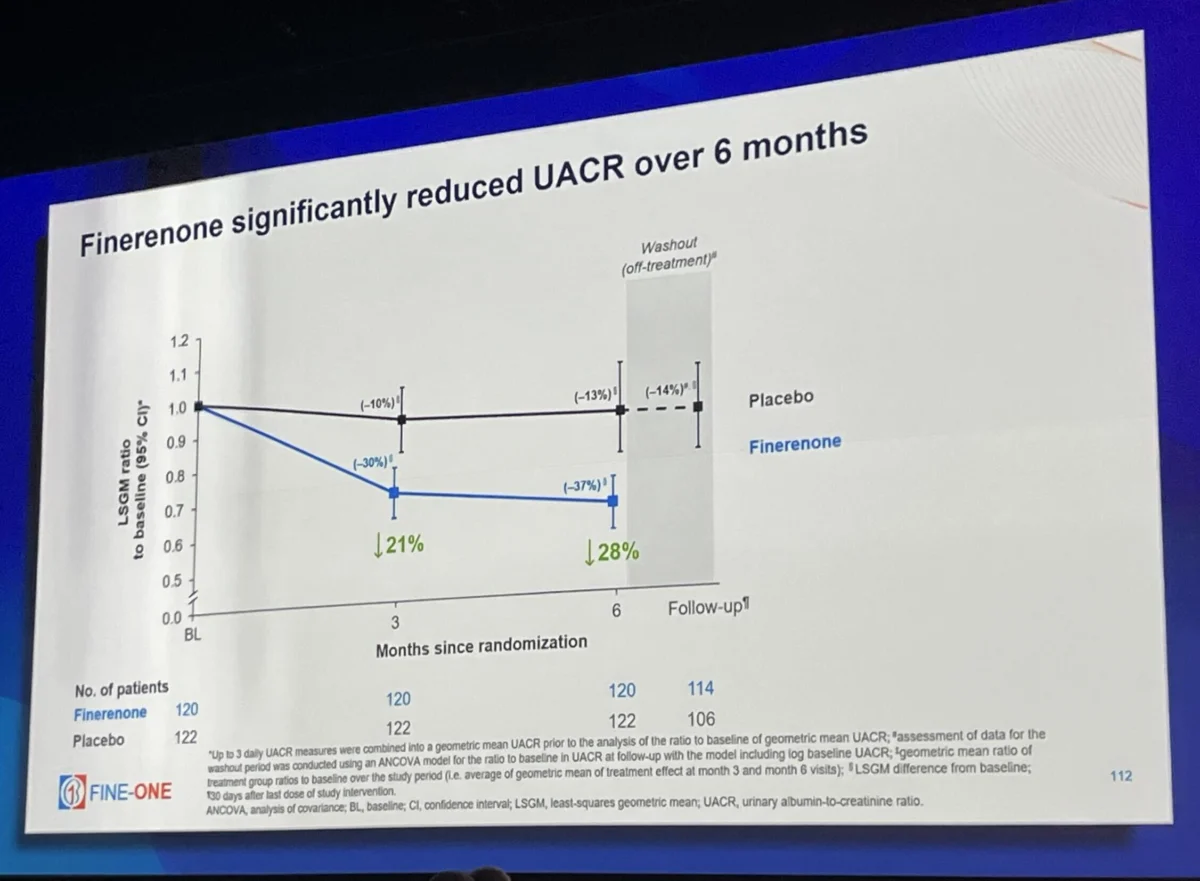
The clinical backbone of this approval is the FINE-ONE trial, a multicenter, double-blind, placebo-controlled study. Researchers focused on a primary endpoint of UACR reduction, a gold-standard biomarker for kidney health.
n
Understanding UACR
n
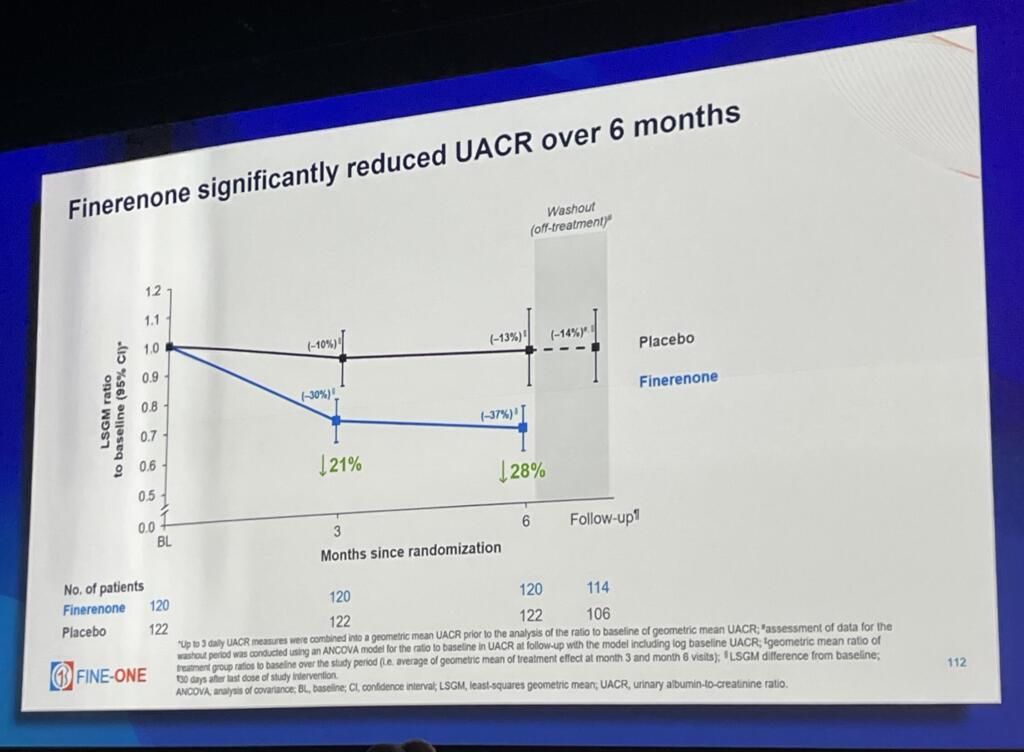
Urinary albumin-to-creatinine ratio (UACR) measures the amount of albumin—a type of protein—that "leaks" into the urine. In a healthy kidney, very little protein escapes the filtration system. A high UACR is often the first clinical sign of diabetic nephropathy. The FINE-ONE study demonstrated that patients treated with a once-daily dose of finerenone experienced a statistically significant reduction in UACR compared to those receiving a placebo.
n
Efficacy and Safety Profile
n
Data published in The New England Journal of Medicine highlighted that the reduction in protein leakage was not merely a temporary improvement in laboratory values but a strong predictor of long-term renal preservation. The trial showed that finerenone was well-tolerated among the T1D cohort. Unlike some traditional MRAs, which are steroidal and often carry a high risk of hyperkalemia (dangerously high potassium levels), finerenone’s non-steroidal structure allows it to bind more selectively to receptors, offering a more favorable safety profile. No new safety signals were identified during the FINE-ONE trial, and serious adverse events remained low.
n
Official Responses: A Victory for Advocacy and Industry
n
The approval has been met with widespread acclaim from medical professionals and patient advocacy groups. Central to this success was the strategic collaboration between Bayer and Breakthrough T1D (formerly JDRF), the world’s leading nonprofit funder of T1D research.
n
"Today, there are few treatments available for chronic kidney disease, a common complication of type 1 diabetes. The approval of finerenone (brand name Kerendia) is a huge win for the T1D community," said Jonathan Rosen, Ph.D., Research Director at Breakthrough T1D. "Breakthrough T1D thanks the FDA for its review and approval and Bayer for their commitment to giving people with T1D a new therapeutic option for chronic kidney disease."
n
The partnership between Breakthrough T1D and Bayer underscores a growing trend in the pharmaceutical industry: the "Improving Lives" model. By identifying complications early and funding targeted clinical trials, advocacy groups can help de-risk drug development for specific populations like the T1D community, which is often overshadowed by the larger T2D market.

n
Bayer’s leadership also emphasized the importance of this milestone. In corporate statements, the company noted that expanding the indication to T1D reflects a commitment to the "whole-patient" approach—treating not just the blood sugar, but the secondary organ systems that bear the brunt of the disease.
n
Implications: Transforming the Landscape of T1D Complications
n
The statistics surrounding T1D and kidney health are sobering. Approximately one-third of individuals living with T1D will eventually develop some form of CKD. This condition does not exist in a vacuum; it is the primary driver of cardiovascular disease in the T1D population. When the kidneys fail, the heart is placed under immense stress, leading to a cycle of declining health that drastically reduces life expectancy.
n
For decades, the "treatment" for T1D-related kidney issues was largely reactive: manage blood pressure and hope for the best. Finerenone changes this dynamic to a proactive one.
n
1. Reducing the Burden of Disease
n
Living with T1D is a 24/7 management task involving carb counting, insulin dosing, and constant monitoring. The addition of a once-daily pill that can prevent the need for dialysis represents a significant reduction in the future "burden of disease." By slowing the progression of CKD, patients can maintain their independence and quality of life for much longer.
n
2. Economic Impact
The economic cost of kidney failure is staggering. End-stage renal disease requires dialysis, which costs the healthcare system tens of billions of dollars annually. By providing an intervention that delays the onset of ESRD, finerenone could offer substantial long-term savings for both private insurers and public health programs like Medicare.
3. Paving the Way for Future Therapies
The success of finerenone and the FINE-ONE trial provides a blueprint for other pharmaceutical companies. It proves that the T1D community is a viable and necessary focus for complication-related drug development. This approval is expected to catalyze further investment into SGLT2 inhibitors and other modern classes of drugs that have yet to be fully optimized for the T1D population.
The Bigger Picture: A Strategic Path Forward
As Breakthrough T1D continues to drive its "Improving Lives" portfolio, the focus is shifting toward "disease modification." This means moving beyond just managing symptoms and toward protecting the body from the damage caused by high glucose levels and autoimmune activity.
The approval of finerenone is more than just a new prescription option; it is a validation of the research pipeline. It confirms that the underlying mechanisms of kidney damage—inflammation and fibrosis—are treatable targets. As more patients begin to integrate Kerendia into their daily regimens, the medical community will gain even more real-world data on its long-term benefits.
In conclusion, the FDA’s decision to approve finerenone for T1D-related CKD represents the closing of a long, stagnant chapter in diabetic care and the opening of a more hopeful one. For the first time in a generation, doctors have a new, validated tool to help their T1D patients protect their kidneys, preserve their heart health, and look toward a future with fewer complications. The 30-year wait is finally over.

