
Introduction: A New Era in Diabetic Nephropathy Management
n
The U.S. Food and Drug Administration (FDA) has reached a landmark decision that marks the most significant therapeutic advancement for the Type 1 Diabetes (T1D) community in three decades. On September 16, 2026, the regulatory body officially approved finerenone (marketed under the brand name Kerendia) for the reduction of urinary albumin-to-creatinine ratio (UACR) in adults with chronic kidney disease (CKD) associated with T1D.
n
This approval represents a paradigm shift in how clinicians approach the complications of T1D. For thirty years, the medical community has relied on a limited arsenal of treatments to manage kidney health in T1D patients, often adapting therapies originally designed for Type 2 Diabetes (T2D) or general hypertension. With this decision, finerenone becomes the first therapy specifically indicated to address the unique challenges of kidney disease within the T1D population since the early 1990s. By targeting the underlying mechanisms of kidney damage, finerenone offers a proactive approach to slowing disease progression, potentially delaying the need for dialysis or kidney transplantation for thousands of patients.
n
Chronology: The Long Road to a T1D-Specific Kidney Therapy
n
The journey to this FDA approval is a story of scientific persistence and strategic collaboration. To understand the weight of this milestone, one must look back at the history of diabetic nephropathy treatment.
n
In the early 1990s, the introduction of Angiotensin-Converting Enzyme (ACE) inhibitors and Angiotensin II Receptor Blockers (ARBs) revolutionized kidney care. These drugs became the "gold standard," providing the first real defense against the progression of kidney failure in diabetic patients. However, following that initial wave of innovation, the T1D community entered a long period of therapeutic stagnation regarding kidney complications. While the management of blood glucose levels improved with the advent of continuous glucose monitors (CGMs) and advanced insulin pumps, the specific treatment of the kidneys remained largely unchanged.
n
The development of finerenone began to change this trajectory in the 2010s. Developed by Bayer, finerenone was designed as a non-steroidal mineralocorticoid receptor antagonist (MRA). Unlike older, steroidal MRAs, finerenone was engineered to be more selective, reducing the risk of side effects like hyperkalemia (excessive potassium levels) while providing potent anti-inflammatory and anti-fibrotic effects in the kidneys and heart.

n
In 2021, the FDA first approved Kerendia for the treatment of CKD associated with Type 2 Diabetes, based on the successful FIDELIO-DKD and FIGARO-DKD trials. This was followed in July 2025 by an expanded indication for certain adults with heart failure (the FINEARTS-HF study). Despite these successes, the T1D community remained underserved, as the physiological drivers of CKD can differ between T1D and T2D. This led to the initiation of the FINE-ONE trial—a global, Phase 3 study specifically designed to evaluate whether the benefits seen in T2D patients would translate to those living with T1D.
n
Supporting Data: The FINE-ONE Trial and the Significance of UACR
n
The FDA’s approval was primarily predicated on the robust data generated by the FINE-ONE clinical trial. This global, multicenter, double-blind, placebo-controlled study investigated the efficacy and safety of once-daily finerenone in adults with CKD and T1D.
n
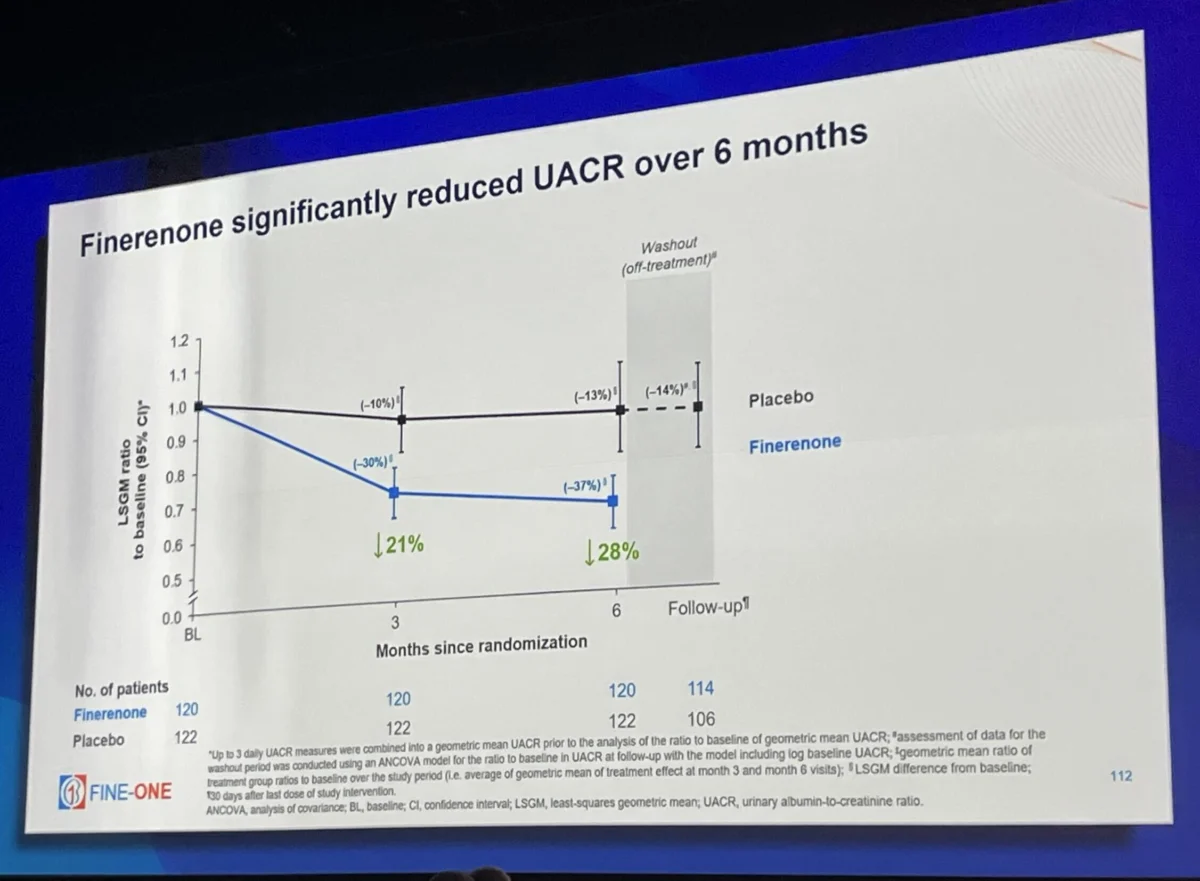
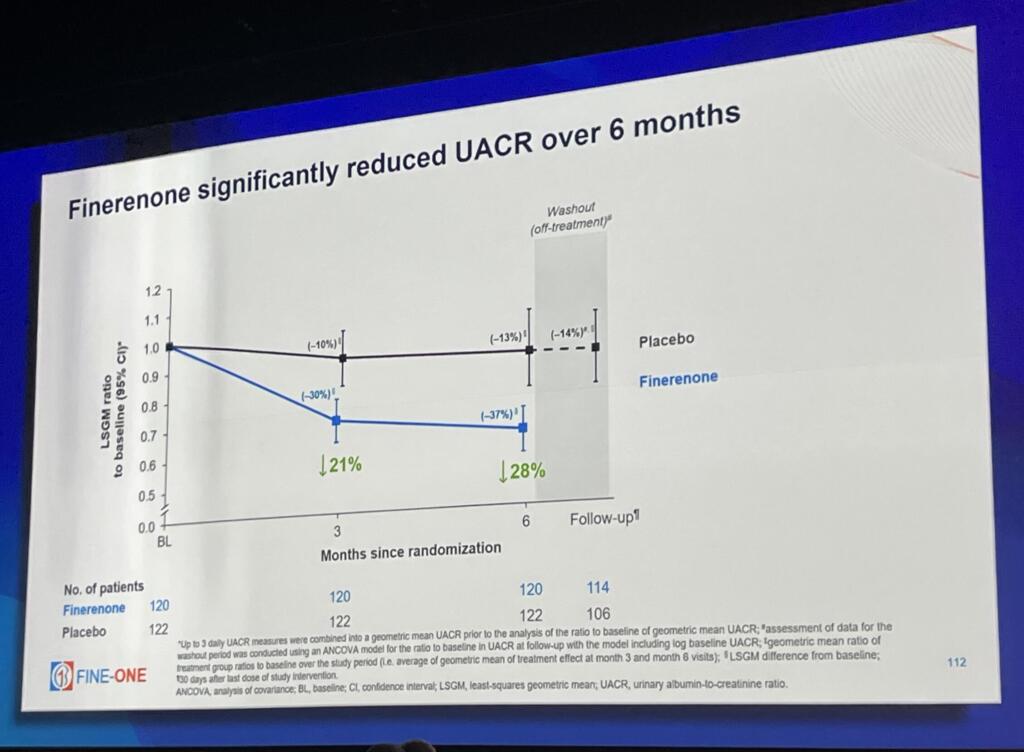
The primary endpoint of the trial was the change in UACR from baseline to month six. UACR is a critical biomarker in renal health; it measures the amount of albumin (a protein) in the urine relative to creatinine (a waste product). High levels of albumin in the urine—a condition known as proteinuria—are a hallmark of kidney damage, indicating that the kidney’s filtration system is failing.
n
According to the trial results, which were published in The New England Journal of Medicine, finerenone demonstrated a statistically significant and clinically meaningful reduction in UACR compared to the placebo group. Because previous long-term studies in T2D populations have established a clear link between UACR reduction and a lower risk of kidney failure and cardiovascular events, the FINE-ONE results are viewed as a reliable predictor of long-term survival and organ preservation in T1D patients.
n
Furthermore, the trial addressed safety concerns that often plague kidney medications. Finerenone was found to be well-tolerated among T1D participants. While MRAs as a class carry a risk of increasing serum potassium, the FINE-ONE data showed that the incidence of serious adverse events was low and comparable to the placebo, with no new or unexpected safety signals emerging during the study period.
n
Mechanism of Action: How Finerenone Protects the Kidneys
n
Finerenone operates through a distinct biological pathway that differentiates it from ACE inhibitors and ARBs. In patients with CKD, the hormone aldosterone is often overactive. Aldosterone binds to mineralocorticoid receptors (MRs) in the kidneys, heart, and blood vessels. When these receptors are overstimulated, they trigger a cascade of inflammation and fibrosis (scarring).

n
In the kidneys, this scarring permanently damages the nephrons—the tiny filtering units of the organ. As more nephrons are lost to fibrosis, the remaining units must work harder, leading to a cycle of further damage and eventual kidney failure.
n
Finerenone acts as a "blockade." By binding to the mineralocorticoid receptors, it prevents aldosterone from triggering the inflammatory and fibrotic response. Unlike older steroidal MRAs like spironolactone, finerenone is non-steroidal, meaning it binds more specifically to the target receptors and distributes more evenly between the heart and kidneys. This specificity is what allows it to provide protective benefits with a more manageable side-effect profile, making it a viable long-term option for chronic management.
n
Official Responses: A Collaborative Triumph
n
The approval has been met with widespread acclaim from patient advocacy groups, researchers, and the pharmaceutical industry. Central to this success was the strategic partnership between Bayer and Breakthrough T1D (formerly JDRF).
n
Breakthrough T1D, the leading global organization funding T1D research, played a pivotal role in supporting the FINE-ONE trial. Their involvement ensured that the specific needs of the T1D community were prioritized in the clinical design.
n
"Today, there are few treatments available for chronic kidney disease, a common complication of type 1 diabetes. The approval of finerenone (brand name Kerendia) is a huge win for the T1D community," said Jonathan Rosen, Ph.D., Research Director at Breakthrough T1D. "Breakthrough T1D thanks the FDA for its review and approval and Bayer for their commitment to giving people with T1D a new therapeutic option for chronic kidney disease."
n
Bayer, in its official statement, emphasized that this approval fulfills a long-standing unmet medical need. By expanding the indication of Kerendia to include T1D, the company has addressed a critical gap in the market, providing a new standard of care for a population that has historically been overshadowed by the larger Type 2 demographic.
n
Implications: Transforming the Landscape of T1D Complications
n
The public health implications of this approval are profound. Chronic Kidney Disease is one of the most devastating complications associated with Type 1 Diabetes. Statistics suggest that nearly one-third of individuals living with T1D will eventually develop some form of CKD. The progression of kidney disease does not just lead to the possibility of dialysis; it also exponentially increases the risk of cardiovascular events, including heart attacks and strokes.
n
For decades, the "burden" of T1D has been described not just as the daily management of blood sugar, but as the constant anxiety regarding long-term complications. The approval of finerenone provides a tangible tool to mitigate that anxiety.
n
From an economic perspective, the approval could lead to significant savings for healthcare systems. The cost of treating end-stage renal disease (ESRD) via dialysis is immense, often exceeding $90,000 per patient per year in the United States. By slowing the progression of CKD in the early stages, finerenone has the potential to keep patients off the transplant list and out of dialysis centers for longer periods, if not indefinitely.
n
Furthermore, this approval signals a shift in the research and development landscape. It proves that there is a viable regulatory and commercial path for T1D-specific complication therapies. As part of Breakthrough T1D’s "Improving Lives" portfolio, the organization hopes that the success of finerenone will encourage other pharmaceutical companies to invest in therapies targeting the eyes (retinopathy), nerves (neuropathy), and heart health specifically for those with T1D.
n
Conclusion: A Milestone of Hope
n
The FDA’s approval of finerenone is more than just the addition of a new drug to the pharmacy shelf; it is a validation of decades of advocacy and scientific inquiry. For the first time in thirty years, adults living with Type 1 Diabetes and the looming threat of kidney disease have a therapy designed to protect their future.
n
As the medical community begins to integrate Kerendia into standard T1D care protocols, the focus will shift to early screening and intervention. By identifying kidney damage through UACR testing early and prescribing finerenone, doctors can now offer a proactive defense against one of diabetes’ most formidable complications. This milestone serves as a powerful reminder that while the search for a cure for T1D continues, the mission to improve and extend the lives of those currently living with the disease is achieving historic success.

