
Main Facts: A Paradigm Shift in Type 1 Diabetes Treatment
n
For over a century, the primary treatment for Type 1 Diabetes (T1D) has been a rigorous, life-long regimen of external insulin administration. While technology—such as continuous glucose monitors (CGMs) and automated insulin delivery (AID) systems—has drastically improved quality of life, it remains a management strategy rather than a cure. However, a significant shift is underway. Recent clinical breakthroughs in islet cell therapies are demonstrating that the biological restoration of insulin production is no longer a distant dream, but an unfolding reality.
n
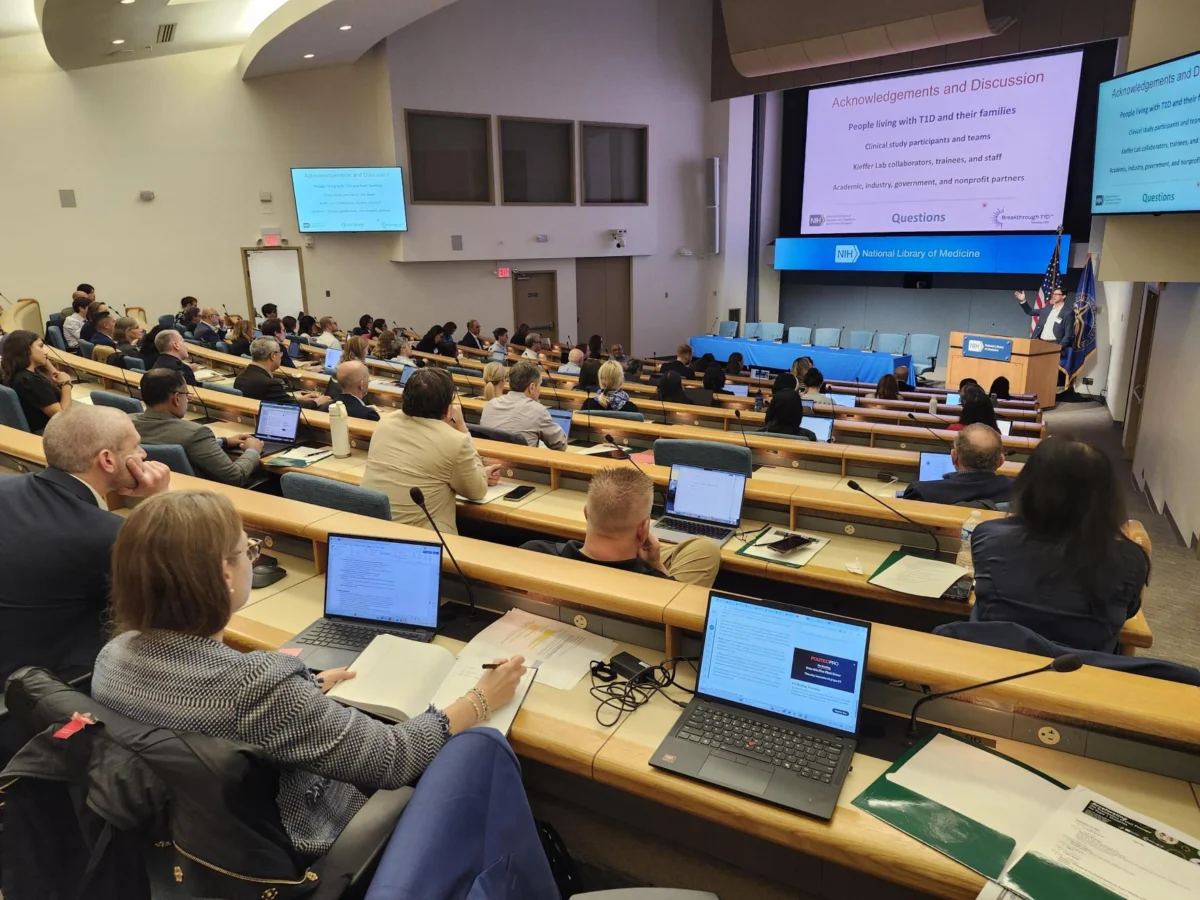
Islet cell therapy involves the transplantation of insulin-producing beta cells into a person with T1D. In recent clinical trials, participants have achieved what was once considered impossible: complete insulin independence and the maintenance of healthy, stable blood sugar levels without external intervention. To catalyze this progress, Breakthrough T1D (formerly JDRF) recently co-hosted a pivotal public workshop with the National Institute of Diabetes and Digestive and Kidney Diseases (NIDDK). Titled “Accelerating the Translation of Cell Therapy for Type 1 Diabetes,” the event served as a high-level summit for researchers, clinicians, industry titans, and the U.S. Food and Drug Administration (FDA).
n
The central takeaway is clear: the transition from "first-generation" cadaveric transplants to "next-generation" manufactured, scalable cell therapies is the final frontier in the quest for a T1D cure. The workshop highlighted that while the science is robust, the path to universal access requires solving complex manufacturing hurdles, refining regulatory frameworks, and integrating the lived experiences of patients into clinical design.
n
Chronology: From the Edmonton Protocol to Lab-Grown Cures
n
The journey toward cell-based cures for T1D has been one of incremental triumphs and significant biological challenges. Understanding the timeline of these therapies is essential to appreciating the current momentum.
n
The Era of Cadaveric Transplants (1990s–2010s)
n
The modern era of islet transplantation began in earnest with the "Edmonton Protocol" in the late 1990s. This first-generation approach relied on islets harvested from the pancreases of deceased donors. While revolutionary, this method faced two massive bottlenecks: a severe shortage of donor organs and the requirement for lifelong, systemic immunosuppression to prevent the patient’s immune system from rejecting the foreign cells. Consequently, these therapies were reserved only for the "sickest of the sick"—those with brittle diabetes or life-threatening hypoglycemia unawareness.
n
The Rise of Stem-Cell Derived Islets (2010s–Present)
n
Recognizing that donor-derived islets could never meet the needs of the millions living with T1D, researchers pivoted toward manufactured cells. By utilizing pluripotent stem cells, scientists discovered they could "coach" these cells in the lab to become fully functional, insulin-producing beta cells. This marked the birth of next-generation therapies.
n
The Current Clinical Momentum (2020–2024)
n
In the last three years, the field has moved from the laboratory to the pharmacy. Companies like Vertex Pharmaceuticals have reported stunning results from early-stage trials, where patients received manufactured islet cells and subsequently ceased all insulin injections. The recent Breakthrough T1D and NIDDK workshop represents the most current milestone in this chronology, shifting the focus from "can we make these cells?" to "how do we deliver them to everyone?"
n
Supporting Data: The Science of Scaling and Innovation
n
The workshop delved into the technical data required to move islet therapies from niche treatments to standard-of-care options. Three specific areas of data-driven research stood out:
n
1. Large-Scale Manufacturing and Consistency
n
The primary challenge in next-generation therapy is scalability. Unlike a chemical pill, islet cells are living "biological drugs." Presenters provided data on the complexities of transitioning from academic lab settings—where a few thousand cells are grown—to industrial settings capable of producing billions.
n
- n
- The Challenge: Islets must be consistent in their potency and purity. Small deviations in the manufacturing environment can lead to cells that do not respond correctly to glucose.
- The Data: Ongoing preclinical projects are testing various cell sources and "immune protection" methods, such as encapsulation (placing cells in a protective pouch) or gene editing, to shield them from the immune system without the need for heavy drugs.
n
n
n
2. The Integration of Artificial Intelligence (AI)
n
Artificial Intelligence is no longer a peripheral tool; it is becoming central to the islet therapy workflow. Data presented at the workshop showed that AI is being used to:
n
- n
- Predict Outcomes: Algorithms can now forecast a patient’s blood sugar response a full year after a transplant by analyzing early post-operative data.
- Optimize Growth: AI analyzes the vast data generated during the manufacturing process to modify conditions in real-time, ensuring the highest yield of healthy cells.
- Bio-Engineering "Smart Cells": Researchers are using AI to design cells that can sense an impending immune attack and automatically deploy localized immune-protective measures, a concept known as "synthetic biology."
n
n
n
n
3. Preclinical Reliability
n
A recurring theme was the need for better "nonclinical" models. Historically, mouse models have been the gold standard, but they do not always perfectly replicate human T1D. The workshop emphasized new data collection methods that provide more accurate, reproducible evidence of safety and efficacy before a single human is treated.
n
Official Responses: Regulatory Pathways and Clinical Design
The presence of the FDA at the workshop underscored the critical nature of regulatory alignment. For next-generation therapies to reach the market, they must pass through a rigorous approval process that balances innovation with patient safety.
The FDA’s Perspective on Evolution
Representatives from the FDA discussed the shifting requirements for manufacturing. As a therapy moves from a Phase I trial (safety) to Phase III (large-scale efficacy), the regulatory burden for manufacturing consistency increases. The agency emphasized the importance of "meaningful endpoints." In the past, the only goal was total insulin independence. However, the FDA and researchers are now discussing whether "significant reduction in insulin" and "elimination of severe hypoglycemia" should also be recognized as primary successes for approval.
Breakthrough T1D’s Strategic Role
Breakthrough T1D has positioned itself as the "connective tissue" between the various stakeholders. Their official stance is that the patient’s voice must guide the regulatory process. They highlighted that for many people living with T1D, the trade-off of taking immunosuppressive drugs is a price they are willing to pay for the stability provided by an islet transplant. Breakthrough T1D is actively working to expand the "inclusion criteria" for clinical trials, ensuring that a broader, more diverse population of people with T1D can participate in—and benefit from—these studies.
Clinical Community Consensus
Clinicians at the workshop argued for a massive overhaul in how the healthcare community views these therapies. They called for better education for endocrinologists to ensure they know when and how to refer patients for cell therapy trials, moving it from a "last resort" to a proactive treatment option.
Implications: The Road to a Functional Cure
The implications of the Breakthrough T1D/NIDDK workshop extend far beyond the laboratory. They signal a fundamental change in the management of autoimmune diseases.
Democratization of the Cure
The most significant implication of manufactured islet cells is the potential for democratization. If these cells can be produced at scale, the cost will eventually decrease, and the dependency on a limited pool of organ donors will vanish. This opens the door for millions of people worldwide—not just those with severe complications—to receive a "functional cure."
The "Functional Cure" vs. The "Biological Cure"
The workshop helped define the future landscape. A "biological cure" (reversing the autoimmune attack entirely) remains the ultimate goal. However, a "functional cure"—where a person has implanted cells that manage their blood sugar perfectly, even if they still technically have the underlying autoimmune condition—is now within reach. This would effectively end the daily burden of T1D.
Impact on Patient Quality of Life
The human stories shared at the workshop provided the most poignant implications. Panelists spoke of the "24/7/365" mental load of T1D—the constant fear of nighttime lows and the exhaustion of carb counting. The possibility of reducing that load by even 80% or 90% was described as life-changing. One participant noted that even if they still required one small injection of insulin a day, the stability provided by the transplant made them feel as though they had been "given their life back."
Conclusion: A Call to Action
The momentum in islet cell therapy is real, but it is not yet self-sustaining. The workshop concluded with a collective call to "double down" on research and funding. As next-generation manufactured islets move into larger human trials, the collaboration between Breakthrough T1D, the NIDDK, the FDA, and industry leaders will be the deciding factor in how quickly these therapies move from the lab bench to the patient’s bedside.
The message to the T1D community is one of tempered but profound optimism: the era of purely mechanical management is fading, and the era of biological restoration has begun. Through continued investment in manufacturing, AI, and patient-centered trial design, a future without the constant burden of Type 1 Diabetes is finally coming into focus.

