
The quest for a cure for type 1 diabetes (T1D) has reached a pivotal inflection point. For decades, the management of this autoimmune condition has relied on external insulin delivery—a life-saving but burdensome necessity. However, a new horizon is emerging: islet cell therapy. Recent clinical breakthroughs have demonstrated that manufactured cells can successfully replace the function of a diseased pancreas, allowing patients to achieve insulin independence and maintain healthy blood sugar levels.
n
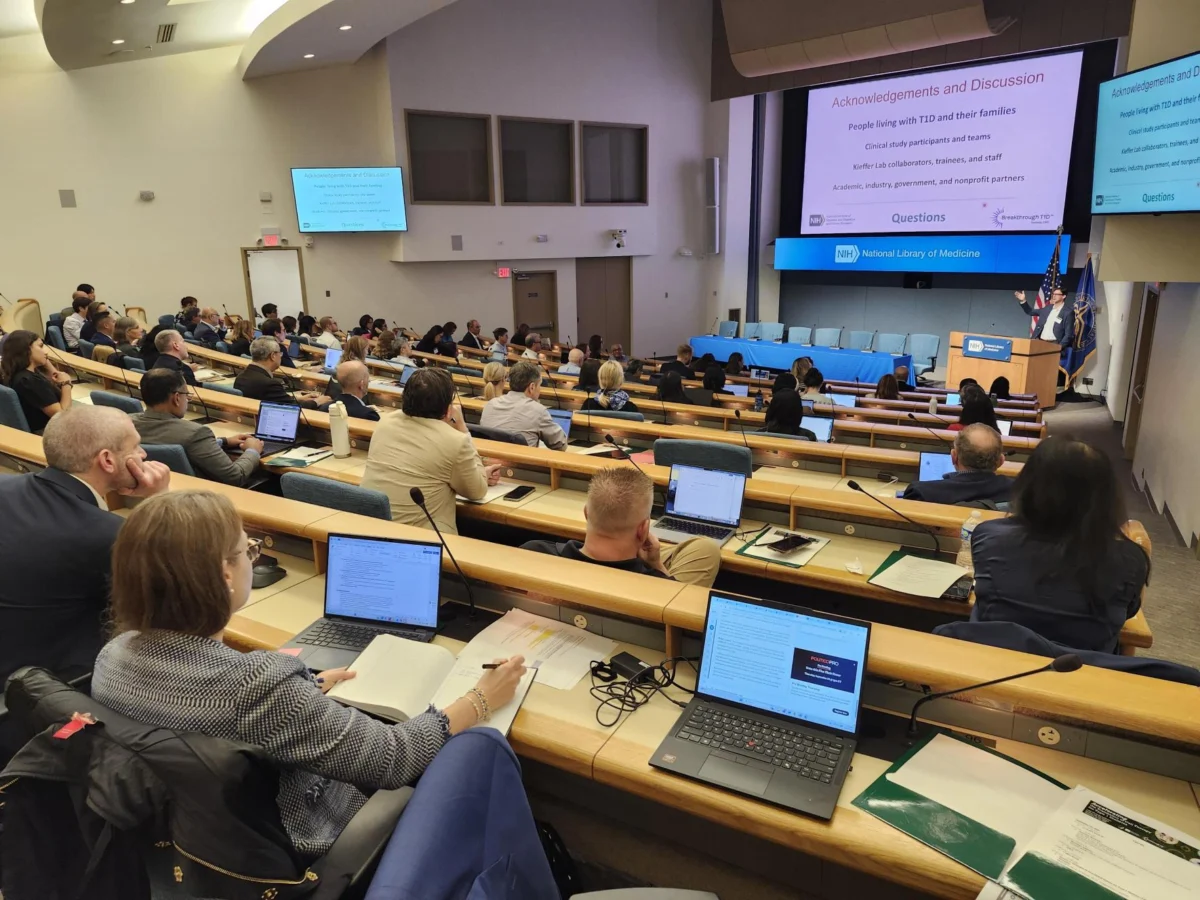
To solidify this momentum, Breakthrough T1D (formerly JDRF) recently partnered with the National Institute of Diabetes and Digestive and Kidney Diseases (NIDDK) to host a landmark public workshop: "Accelerating the Translation of Cell Therapy for Type 1 Diabetes." This gathering represented a strategic alignment of the greatest minds in the field, including researchers, clinicians, industry pioneers, and regulators from the U.S. Food and Drug Administration (FDA), all focused on one goal: transforming islet cell therapy from a clinical rarity into a scalable, universal cure.
n
Main Facts: The Transition from Management to Replacement
n
Type 1 diabetes occurs when the body’s immune system mistakenly destroys insulin-producing beta cells within the pancreatic islets. Islet cell therapy seeks to reverse this by transplanting healthy, functional cells into the patient. While the concept is not new, the technology behind it is undergoing a radical transformation.
n
First-Generation vs. Next-Generation Therapies
n
The current landscape of islet therapy is defined by two distinct eras:
n
- n
- First-Generation Therapies: These primarily utilize islets harvested from deceased organ donors. Due to the scarcity of donor pancreases and the requirement for lifelong, systemic immunosuppression, these treatments are currently reserved for a small subset of patients—those with "hypoglycemia unawareness" or frequent, life-threatening low blood sugar events.
- Next-Generation Therapies: This era focuses on manufactured islet cells derived from stem cells. Because these cells can be grown in labs at a massive scale, the supply is theoretically infinite. Furthermore, researchers are working on "stealth" cells—genetically engineered or encapsulated islets that can evade the immune system without the need for harsh anti-rejection drugs.
n
n
n
The ultimate objective of the Breakthrough T1D and NIDDK collaboration is to move toward a future where every individual living with T1D, regardless of the severity of their complications, has access to a cell-based cure.
n
Chronology: The Evolution of Beta Cell Replacement
n
The journey toward cell therapy has been a multi-decade marathon. Understanding the timeline helps contextualize why the recent workshop is so critical for the current "acceleration" phase.
n
- n
- The 1970s–1990s: Early Proof of Concept. Initial attempts at islet transplantation showed that it was possible to restore glucose regulation, but success rates were low, and the cells rarely survived long-term.
- 2000: The Edmonton Protocol. A breakthrough in the year 2000 standardized the procedure and the immunosuppressive cocktail, significantly improving outcomes. However, the reliance on cadaveric donors remained a primary bottleneck.
- 2014–2021: The Stem Cell Revolution. Researchers successfully figured out the "recipe" to turn undifferentiated stem cells into functional, insulin-producing beta cells. This moved the field from a "harvesting" model to a "manufacturing" model.
- 2023–Present: Clinical Validation. Current clinical trials (such as those by Vertex Pharmaceuticals and other industry leaders) have produced headlines of "functional cures," where trial participants have successfully discontinued insulin injections for over a year.
- The Current Workshop (2024): Recognizing that the science is ready, the focus has shifted to the logistics of translation—how to scale manufacturing, satisfy regulatory requirements, and ensure patient safety on a global level.
n
n
n
n
n
n
Supporting Data: The Three Pillars of Translation
n
The workshop emphasized that the path from a laboratory bench to a patient’s bedside rests on three critical pillars: nonclinical studies, large-scale manufacturing, and optimized clinical trial design.
n
1. Nonclinical Foundations and Immune Protection
n
Before a therapy reaches a human, it must undergo rigorous nonclinical testing. This phase is no longer just about safety; it is about predicting efficacy. Presenters at the workshop highlighted data regarding:
n
- n
- Islet Source and Survival: Comparing the metabolic efficiency of stem-cell-derived islets versus cadaveric islets.
- Immune Evasion: Data from preclinical projects exploring gene editing (using CRISPR) to remove the "flags" on the cell surface that trigger an immune attack.
- Experimental Design: Identifying the most accurate T1D animal models to ensure that data is reproducible and reliable before entering human trials.
n
n
n
n
2. The Manufacturing Bottleneck
Scaling up is perhaps the greatest hurdle facing the industry. Moving from a small laboratory batch to a commercial-grade supply requires sophisticated bioengineering. Key considerations discussed included:
- Academic vs. Industry Settings: While academic labs are essential for innovation, industry settings are necessary for the "industrialization" of cell production.
- Consistency and Quality Control: The FDA requires that every batch of manufactured islets be identical in potency and purity. Achieving this at a scale that can treat millions of people is an unprecedented challenge in regenerative medicine.
- Regulatory Evolution: As trials grow from Phase I (safety) to Phase III (efficacy), the manufacturing requirements become increasingly stringent.
3. Redefining Clinical Trials
The workshop addressed the need to modernize how we measure success in T1D research. Traditionally, HbA1c (average blood sugar) was the gold standard. However, the community is advocating for more nuanced "meaningful endpoints," such as:
- Time in Range (TIR): The percentage of time a patient stays within a healthy glucose window.
- Reduction in Severe Hypoglycemia: Eliminating the life-threatening "lows" that haunt T1D patients.
- Patient-Reported Outcomes: Measuring the reduction in the mental and emotional burden of managing the disease.
The Role of Artificial Intelligence (AI) in Islet Research
One of the most forward-looking segments of the workshop explored the integration of Artificial Intelligence. AI is not merely a tool for data analysis; it is becoming a fundamental part of the therapeutic design process.
- Predictive Modeling: Researchers are using AI to forecast how an individual’s blood sugar will respond a full year after a transplant. This allows for personalized medicine, where treatment can be tailored to the patient’s specific metabolic profile.
- Optimizing Production: AI algorithms can monitor the "health" of cells during the manufacturing process in real-time, modifying conditions (such as temperature or nutrient flow) to ensure the highest quality yield.
- "Smart" Islets: Perhaps most exciting is the concept of cells engineered with "AI-like" logic—biological circuits that can sense a localized immune attack and proactively deploy protective molecules to defend themselves.
Official Responses and Stakeholder Perspectives
The workshop served as a rare forum for direct dialogue between the regulators and the regulated.
The FDA’s Perspective: Representatives from the FDA provided clarity on the regulatory "clear path." Their focus remains steadfast on safety—particularly regarding the long-term risks of stem-cell-derived products, such as the potential for unwanted cell growth (teratomas). However, there is a visible commitment to working with the T1D community to find a balanced approach to risk and benefit.
Breakthrough T1D’s Stance: The organization emphasized its role as a "connective tissue" in the industry. By funding the early-stage research that industry might find too risky, Breakthrough T1D de-risks the field, paving the way for private investment and large-scale commercialization.
The NIDDK’s Commitment: As a federal entity, the NIDDK underscored the importance of public-private partnerships. Their involvement ensures that the research remains grounded in rigorous scientific inquiry and that the data generated is accessible to the broader scientific community to foster further innovation.
Implications: The Human Impact and the Road Ahead
The most poignant moments of the workshop came from the T1D community members themselves. Their stories served as a reminder of the high stakes involved in this scientific endeavor.
The Patient Voice
Panelists shared the "invisible" burdens of T1D: the constant math of carb-counting, the sleep deprivation caused by nighttime alarms, and the trauma of severe hypoglycemic shocks. For those who have already received experimental islet transplants, the impact is transformative. One participant noted that even if they still required a single daily injection of insulin, the "peace of mind" and the elimination of life-threatening lows constituted a "dramatic success."
Economic and Societal Shifts
If islet cell therapies become a reality for the general T1D population, the implications for the healthcare system are profound. While the upfront cost of cell therapy will be high, the long-term savings—from preventing complications like kidney failure, blindness, and cardiovascular disease—are estimated to be in the billions of dollars.
Conclusion: A Unified Front
The "Accelerating the Translation of Cell Therapy for Type 1 Diabetes" workshop made one thing clear: the science is no longer the primary obstacle. The challenges now are logistical, regulatory, and financial. By bringing together the FDA, the NIDDK, industry leaders, and the patient community, Breakthrough T1D is ensuring that the momentum toward a cure is not lost in silos.
The transition from "managing" diabetes with a pump to "curing" it with a biological replacement is the defining challenge of this generation of medical science. Through continued collaboration and a relentless focus on scalable, next-generation therapies, the dream of a world without T1D is moving closer to a tangible, clinical reality.

