
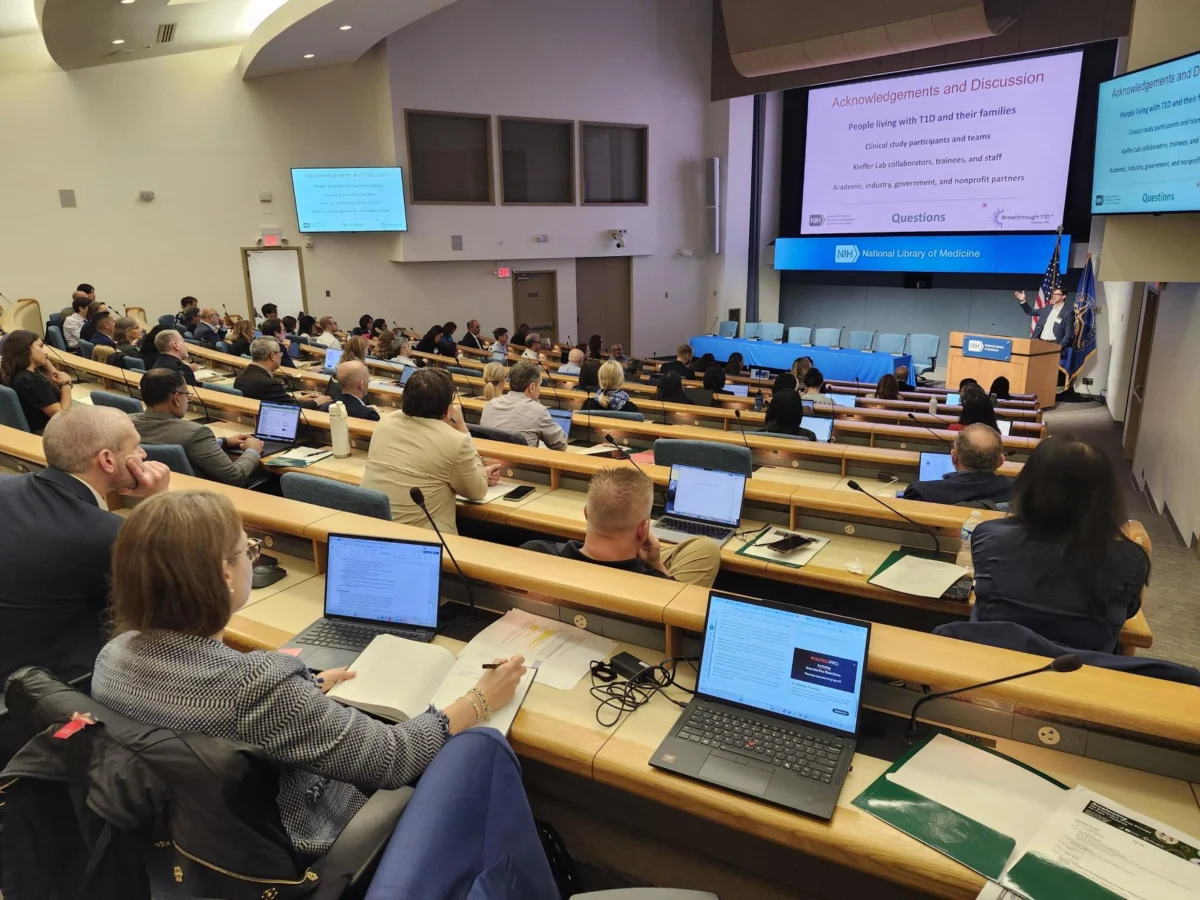
The landscape of Type 1 Diabetes (T1D) treatment is currently undergoing its most significant transformation since the discovery of insulin over a century ago. While insulin has long served as a life-saving bridge, the medical community is now pivoting toward a definitive destination: a biological cure. At the heart of this movement is islet cell therapy—a field that has transitioned from experimental surgery to a sophisticated branch of regenerative medicine.
n
Recently, Breakthrough T1D (formerly JDRF) and the National Institute of Diabetes and Digestive and Kidney Diseases (NIDDK) convened a landmark public workshop titled “Accelerating the Translation of Cell Therapy for Type 1 Diabetes.” This gathering served as a strategic summit for the brightest minds in endocrinology, biotechnology, and regulatory oversight. The objective was clear: to move beyond the limitations of first-generation transplants and establish a roadmap for scalable, manufactured islet cell therapies that could eventually be available to every person living with T1D.
n
I. Main Facts: The Shift from Management to Replacement
n
For decades, T1D management has relied on the external administration of insulin via injections or pumps. However, even with advanced continuous glucose monitors (CGMs) and automated delivery systems, the burden of disease remains immense. Islet cell therapy seeks to replace the destroyed beta cells within the pancreas, effectively restoring the body’s ability to sense glucose and secrete insulin autonomously.
n
The Generational Divide in Therapy
n
The workshop highlighted a critical distinction between "first-generation" and "next-generation" therapies:
n
- n
- First-Generation Therapies: Currently available primarily through clinical trials or specific islet transplant programs, these rely on cadaveric donors. Because the supply of donor pancreases is extremely limited, these therapies are reserved for a small subset of patients—those with "brittle" diabetes, characterized by severe hypoglycemic unawareness and life-threatening blood sugar fluctuations. Furthermore, these patients must remain on lifelong immunosuppression to prevent their bodies from rejecting the donor cells.
- Next-Generation Therapies: These represent the "holy grail" of T1D research. They utilize manufactured islet cells derived from stem cell lines. Because these cells can be grown in a laboratory setting, the supply is theoretically infinite. The goal for this generation is to develop "stealth" cells or encapsulated delivery systems that protect the islets from the immune system, eliminating the need for toxic anti-rejection drugs.
n
n
n
The Role of Breakthrough T1D and NIDDK
n
The collaboration between Breakthrough T1D and the NIDDK signifies a unified front between private advocacy and federal research. By bringing the U.S. Food and Drug Administration (FDA) to the table, the workshop addressed the regulatory hurdles that often slow the transition from successful lab results to human applications.
n
II. Chronology: The Evolution of Islet Science
n
The journey to the current state of islet cell therapy has been one of incremental breakthroughs and hard-won lessons.
n
- n
- The Edmonton Protocol (2000s): This marked the first major success in islet transplantation, proving that infusing donor cells into the portal vein of the liver could result in insulin independence. However, the requirement for two or more donor pancreases per recipient highlighted the immediate need for a scalable cell source.
- The Rise of Stem Cell Research (2010s): Scientists successfully turned human pluripotent stem cells into functional, insulin-producing beta cells in the lab. This solved the "supply" problem but introduced the "protection" problem—how to keep the immune system from attacking these new cells.
- First-in-Human Manufactured Trials (Early 2020s): Companies like Vertex Pharmaceuticals and others began clinical trials using stem-cell-derived islets. Early data from these trials has been nothing short of revolutionary, with participants achieving insulin independence and near-perfect time-in-range for blood glucose levels.
- The 2024 Workshop: This latest milestone represents the transition from "proof of concept" to "industrialization." The focus has shifted from if we can make these cells work to how we can make them work for millions of people safely and affordably.
n
n
n
n
n
III. Supporting Data: The Pillars of Translation
n
To accelerate the translation of these therapies, the workshop focused on four technical pillars: nonclinical studies, large-scale manufacturing, clinical trial design, and the integration of Artificial Intelligence.
n
1. Nonclinical Evidence and Safety
n
Before a therapy reaches a human, it must undergo rigorous nonclinical testing. Presenters at the workshop emphasized the importance of choosing the right T1D models. Traditional mouse models, while helpful, do not always replicate the complex human immune response. Researchers are now utilizing "humanized" models and advanced data collection methods to predict how islet cells will survive and function post-transplant. Data shared during the session focused on islet cell source survival, highlighting that the microenvironment into which the cells are transplanted is just as important as the cells themselves.
n
2. The Manufacturing Hurdle
n
Manufacturing is perhaps the most significant bottleneck in the field. Producing a few million cells for a lab study is a world apart from producing billions of consistent, high-quality islets for a global population.
n
- n
- Academic vs. Industry Settings: Academic centers are excellent at innovation and "boutique" production, but industry leaders bring the infrastructure required for scale.
- FDA Requirements: The FDA’s standards for "Current Good Manufacturing Practice" (cGMP) become increasingly stringent as a therapy moves from Phase I to Phase III trials. The workshop explored how to maintain "lot-to-lot" consistency, ensuring that the millionth batch of cells is identical in potency and safety to the first.
n
n
3. Redefining Clinical Trials
The criteria for who can participate in islet trials are currently narrow. However, as safety profiles improve, there is a push to expand inclusion criteria.
- Endpoints: Beyond just "insulin independence," researchers are looking at "meaningful endpoints" such as a reduction in severe hypoglycemic events and improved quality of life.
- Risk-Benefit Analysis: Recent studies indicate that for many patients, the risks of immunosuppression are a favorable trade-off compared to the long-term complications of poorly controlled T1D, such as kidney failure or blindness.
4. The AI Revolution in Cell Therapy
Artificial Intelligence is no longer a futuristic concept; it is a current tool in the islet cell workflow.
- Predictive Modeling: AI algorithms are being used to forecast how an individual’s blood sugar will respond a year after the transplant.
- Optimization: In manufacturing, AI monitors cell growth in real-time, modifying conditions (like oxygen or nutrient levels) to ensure optimal cell health.
- "Smart" Cells: Perhaps most exciting is the use of AI to design genetically engineered islets. These "smart" cells are programmed to sense an impending immune attack and release localized protective signals, effectively "hiding" from the body’s defenses without requiring systemic immunosuppression.
IV. Official Responses and Regulatory Landscape
The involvement of the FDA in the workshop provided a rare glimpse into the regulatory mindset regarding regenerative medicine.
FDA Perspectives: Representatives emphasized that while they are eager to see these therapies succeed, safety remains the paramount concern. For manufactured cells, the primary risks involve "teratoma formation" (the risk of stem cells turning into other types of tissue) and the long-term stability of the cells. The FDA encouraged "early and frequent" communication with developers to ensure that trial designs are robust enough to support eventual approval.
Breakthrough T1D Stance: The organization reiterated its commitment to being a "bridge-builder." By funding the early-stage research that industry might find too risky, Breakthrough T1D de-risks the field, making it more attractive for large-scale investment. Their message was one of urgency: "The momentum is real, and it is more important than ever to double down."
NIDDK Contribution: The NIDDK highlighted the importance of public-sector funding in understanding the fundamental biology of the "beta cell niche." They argued that a cure will not just come from the cells themselves, but from understanding the systemic environment of the patient.
V. Implications: The Human Element and the Road Ahead
While the technical and regulatory discussions are vital, the workshop never lost sight of the "why." Several members of the T1D community shared their lived experiences, grounding the scientific data in human reality.
The Burden of Disease
Panelists spoke of the "invisible labor" of T1D—the constant mental math, the fear of nighttime lows, and the emotional toll on families. For a parent watching their child struggle with the same disease they have lived with for decades, the promise of islet therapy is not just a medical advancement; it is a generational liberation.
Lived Experience with Transplants
One panelist shared a powerful perspective on what constitutes "success." Even if a transplant does not lead to total insulin independence—for instance, if a patient still requires one small injection a day—the result is still life-changing. The elimination of "blood sugar rollercoasters" and the return of hypoglycemia awareness represent a dramatic improvement in safety and well-being.
Conclusion: A Scalable Future
The "Accelerating the Translation" workshop made it clear that the T1D community is standing at a threshold. The transition from cadaveric islets to manufactured, scalable cell therapies is not just a possibility; it is an active, multi-front operation.
The implications of this shift are profound. If the challenges of manufacturing and immune protection can be solved, the treatment of T1D will move from a chronic management model to a "one-and-done" or "occasional-refresh" biological intervention. This would not only save billions in healthcare costs related to T1D complications but, more importantly, it would return millions of hours of life to those who currently spend their days calculating carbs and chasing glucose curves.
As Breakthrough T1D and the NIDDK continue their collaboration, the focus remains on keeping the patient’s voice at the center of the research. The roadmap is complex, involving AI-driven design, industrial-scale bioreactors, and rigorous clinical oversight, but the destination—a world without T1D—has never been more clearly in sight.

