
By Senior Health Correspondent
n
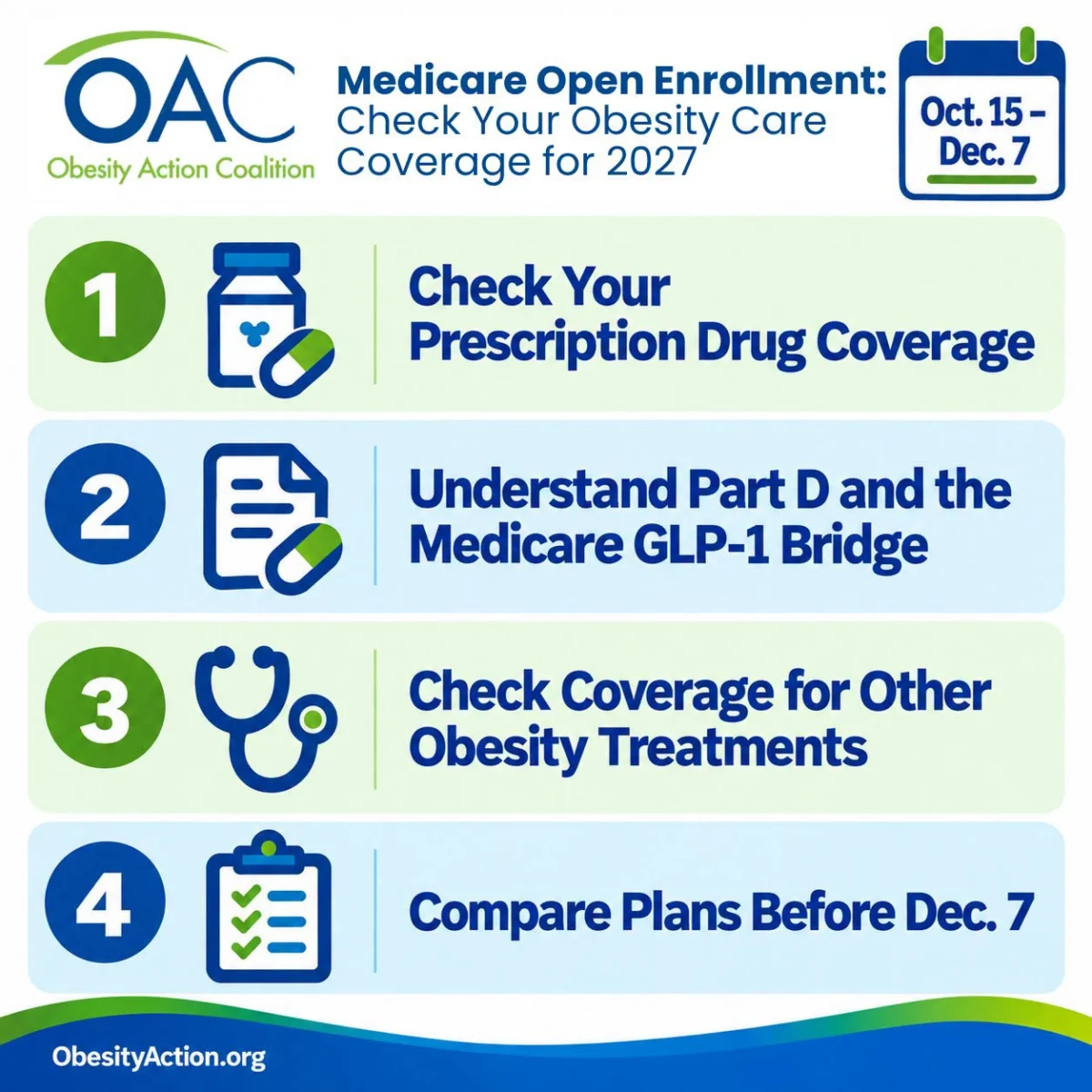
As the calendar turns toward the final quarter of the year, millions of Americans are preparing for the annual Medicare Open Enrollment period. Running from October 15 through December 7, this window represents the primary opportunity for beneficiaries to reassess their healthcare needs and adjust their coverage for the upcoming year. However, for 2027, the stakes have shifted significantly, particularly for the millions of seniors living with obesity and related metabolic conditions.
n
The landscape of Medicare has undergone a transformation, driven by the emergence of highly effective GLP-1 (glucagon-like peptide-1) receptor agonists and a burgeoning recognition of obesity as a complex, chronic disease rather than a lifestyle choice. With the introduction of the Medicare GLP-1 Bridge program and updated Part D regulations, the 2027 enrollment period is arguably the most critical in a generation for those seeking weight management and metabolic health interventions.
n
Main Facts: The New Architecture of Medicare Obesity Coverage
n
The core of this year’s enrollment revolves around the diversification of how obesity-related medications are funded. Historically, the Medicare Modernization Act of 2003 explicitly prohibited Medicare Part D plans from covering drugs used for weight loss. That wall is now beginning to crumble, albeit through specific clinical "doorways."
n
The GLP-1 Bridge Program
n
Beginning July 1, 2026, the Medicare GLP-1 Bridge was established as a temporary mechanism to provide access to these life-changing medications for eligible beneficiaries. For a fixed $50 monthly copay, eligible individuals can access certain GLP-1 medications specifically for obesity. This program is distinct from standard Part D coverage but requires participants to be enrolled in a Part D plan or a Medicare Advantage plan with prescription drug coverage (MA-PD).
n
Part D and "Secondary" Indications
n
While "weight loss" remains a restricted category under original Part D statutes, the Centers for Medicare & Medicaid Services (CMS) has cleared the way for coverage when these medications are prescribed for other FDA-approved indications. As of 2027, Part D plans may cover GLP-1s if they are prescribed for:
n
- n
- Type 2 Diabetes: The traditional use case for medications like Ozempic and Mounjaro.
- Cardiovascular Risk Reduction: Following landmark clinical trials, medications like Wegovy are now covered to reduce the risk of heart attack and stroke in patients with established cardiovascular disease and obesity.
- Obstructive Sleep Apnea (OSA): Coverage for moderate to severe OSA.
- Metabolic Dysfunction-Associated Steatohepatitis (MASH): A severe form of fatty liver disease.
n
n
n
n
n
The critical distinction for 2027 is that if a patient qualifies for a GLP-1 under a Part D-covered indication, they must use their Part D benefit and are ineligible for the $50 Bridge program. This creates a complex decision-making matrix for seniors during this enrollment period.
n
Chronology: The Road to the 2027 Coverage Landscape
n
The path to the current Medicare environment has been marked by rapid clinical advancement and slow-moving legislative reform.
n
- n
- 2003: The Medicare Prescription Drug, Improvement, and Modernization Act is signed into law. It includes a specific exclusion for "weight loss agents," a policy that would stand unchallenged for two decades.
- 2021-2023: The FDA approves GLP-1 medications specifically for chronic weight management (e.g., Wegovy, Zepbound). Despite high demand, Medicare beneficiaries are largely denied access unless they have comorbid Type 2 Diabetes.
- Early 2024: CMS issues a pivotal memo clarifying that Part D plans can cover anti-obesity medications if they receive FDA approval for an additional "medically accepted indication" (such as heart disease).
- July 1, 2026: The Medicare GLP-1 Bridge launches. This temporary program acts as a stopgap, providing lower-cost access to obesity medications while Congress and CMS work on long-term sustainability and the potential passage of the Treat and Reduce Obesity Act (TROA).
- October 15, 2027: Open Enrollment begins for the 2027 plan year, marking the first full year where the Bridge program, expanded Part D indications, and the new $2,000 out-of-pocket cap (established by the Inflation Reduction Act) converge.
n
n
n
n
n
n
Supporting Data: Costs, Formularies, and the "Cliff"
n
The financial implications of choosing the wrong plan in 2027 are substantial. According to data from the Obesity Action Coalition (OAC), the list prices for GLP-1 medications can exceed $1,000 per month. Without proper coverage, these life-saving drugs remain out of reach for the average senior.
n
The $2,000 Out-of-Pocket Cap
n
A major win for beneficiaries in 2027 is the continued implementation of the $2,000 annual out-of-pocket cap on Part D covered drugs. Once a senior spends $2,000 on covered prescriptions, they pay $0 for the remainder of the year. However, it is vital to note that medications obtained through the GLP-1 Bridge may not count toward this Part D out-of-pocket limit, as the Bridge is a separate program.
n
Formulary Volatility
Recent industry reports indicate that Medicare Advantage (MA) and Part D plans are aggressively updating their "formularies"—the list of covered drugs. A plan that covered a specific GLP-1 in 2026 might move it to a higher tier or remove it entirely in 2027. Furthermore, "Utilization Management" (UM) tools like prior authorization and step therapy (requiring a patient to try cheaper drugs first) are becoming more prevalent. In 2024, approximately 80% of Part D plans required prior authorization for anti-obesity medications that were covered under secondary indications.
The Medicare Prescription Payment Plan
Introduced as part of recent federal reforms, this program allows seniors to spread their out-of-pocket costs throughout the year. Instead of paying a $500 deductible or high coinsurance at the pharmacy counter in January, the costs are smoothed out into monthly installments. For seniors on high-cost GLP-1s, this can be the difference between starting treatment and abandoning it at the pharmacy.
Official Responses and Expert Perspectives
The shifting landscape has drawn significant commentary from federal agencies, advocacy groups, and healthcare providers.
The Centers for Medicare & Medicaid Services (CMS) has emphasized that their goal is to balance access with fiscal responsibility. A CMS spokesperson recently noted, "We are committed to ensuring that Medicare beneficiaries have access to the latest medical breakthroughs. By allowing coverage for GLP-1s in cases of cardiovascular risk or sleep apnea, we are following the science while adhering to the statutory requirements set by Congress."
The Obesity Action Coalition (OAC) has taken a more urgent tone. "This year’s Open Enrollment is not just about choosing a plan; it’s about securing your right to health," the organization stated in a recent bulletin. The OAC is urging beneficiaries to use their "Bridge Navigator" tool to determine if they should seek coverage through the Bridge program or through traditional Part D, warning that a "misstep in plan selection could result in thousands of dollars in unnecessary costs."
Physicians and Clinical Experts are highlighting the "whole-person" aspect of the 2027 changes. Dr. Susan Roberts, a geriatrician specializing in metabolic health, explains: "We are finally seeing Medicare move toward a model where we treat the root cause—obesity—rather than just the symptoms like hypertension or joint pain. However, the administrative burden on patients to prove they have a ‘covered indication’ like OSA or MASH is significant. Patients must be their own advocates during this enrollment window."
Implications: The Future of Aging and Obesity in America
The decisions made by Medicare beneficiaries between October 15 and December 7 will have long-term ripples throughout the healthcare system.
1. The Normalization of Obesity Treatment
By creating pathways for GLP-1 coverage, Medicare is effectively signaling to the private insurance market and the broader medical community that obesity treatment is a medical necessity. This shift is expected to increase the demand for Intensive Behavioral Therapy (IBT) and bariatric surgery, both of which are also covered by Medicare but often underutilized.
2. The Fiscal Health of Medicare
The high cost of GLP-1 medications remains a point of contention in Washington. Analysts suggest that while the upfront cost of covering these drugs is high, the long-term savings—achieved by preventing heart attacks, strokes, and the progression of diabetes—could potentially stabilize Medicare’s finances over the next decade. The 2027 plan year serves as a "stress test" for this economic theory.
3. The Need for Health Literacy
The complexity of the 2027 enrollment period highlights a growing "literacy gap." Seniors must now understand the difference between a "weight loss drug" (not covered) and a "cardiovascular drug that causes weight loss" (covered). They must navigate the Bridge program versus Part D and understand the nuances of the $2,000 cap. This underscores the need for resources like Medicare.gov and State Health Insurance Assistance Programs (SHIP) to provide clear, accessible guidance.
Conclusion: A Call to Action
The 2027 Medicare Open Enrollment is more than a routine administrative task; it is a critical health milestone. For those living with obesity, the window from October 15 to December 7 offers a rare chance to access treatments that were, until recently, financially out of reach.
Beneficiaries are encouraged to:
- Log in to Medicare.gov to update their medication lists.
- Verify indications with their primary care providers to see if their GLP-1 usage qualifies for Part D coverage.
- Compare the GLP-1 Bridge eligibility against the benefits of a standard Part D plan with the $2,000 out-of-pocket cap.
- Review non-drug benefits, such as access to nutritionists and metabolic specialists within Medicare Advantage networks.
As the December 7 deadline approaches, the message from health advocates is clear: Do not assume your 2026 plan is sufficient for 2027. In the rapidly evolving world of obesity care, being informed is the best prescription for health and financial security.

