What is a karyotype? This fascinating exploration delves into the world of chromosome analysis, revealing the intricate details of these vital genetic structures. Karyotyping is a powerful tool used in medicine, providing insights into the makeup of an individual’s chromosomes and helping diagnose a wide range of conditions. From defining the process to examining its applications and limitations, this article offers a thorough understanding of this essential diagnostic technique.
Karyotypes visualize the complete set of chromosomes within a cell, arranged in a standardized format. This allows scientists and doctors to identify any structural abnormalities or numerical variations, providing crucial information for diagnosis, prognosis, and treatment. Understanding these arrangements is critical to comprehending how genetic material dictates an individual’s traits and health.
Definition and Purpose
A karyotype is a visual representation of an organism’s complete set of chromosomes. It’s a crucial tool in genetics, offering a snapshot of the chromosomes’ number, size, and structure. This organized display allows for the identification of abnormalities in chromosome structure or number, which can be linked to various genetic disorders. Understanding karyotypes is fundamental to diagnosing and managing numerous conditions.
Karyotype Definition
A karyotype is a photographic representation of the complete set of chromosomes within a cell, arranged in pairs according to their size, shape, and banding patterns. It provides a visual map of the organism’s genome, revealing the number and structure of chromosomes. Karyotypes are commonly used to identify chromosomal abnormalities, such as missing, extra, or rearranged chromosomes.
Purpose of Creating a Karyotype
Karyotypes are created to detect abnormalities in chromosome structure or number. This is crucial in diagnosing genetic disorders and conditions associated with these abnormalities. They are particularly useful in prenatal diagnosis to identify potential genetic issues in a developing fetus. Additionally, karyotyping plays a role in identifying the cause of certain cancers and other diseases.
Steps in Creating a Karyotype
The process of creating a karyotype involves several key steps. First, cells are collected, often from blood samples. Then, the cells are stimulated to divide and then arrested at metaphase, a stage of cell division where chromosomes are most condensed and easily visible. Following this, the chromosomes are stained using specific dyes, which produce characteristic banding patterns that help distinguish different chromosomes.
Finally, the stained chromosomes are photographed and arranged in pairs according to their size and shape, resulting in the karyotype.
Table of Karyotype Information
| Term | Definition | Importance | Application |
|---|---|---|---|
| Karyotype | A visual display of the complete set of chromosomes within a cell, arranged in pairs according to their size, shape, and banding patterns. | Provides a comprehensive view of an organism’s chromosomes, enabling the identification of abnormalities. | Diagnosis of genetic disorders, prenatal screening, cancer research. |
| Chromosome | A thread-like structure of DNA and protein that carries genetic information. | Carries the genetic instructions for an organism. | Fundamental to understanding inheritance and genetic processes. |
| Metaphase | A stage in cell division where chromosomes are highly condensed and aligned in the center of the cell. | Provides the ideal state for chromosome visualization and analysis. | Essential step in preparing chromosomes for karyotyping. |
| Banding Patterns | Characteristic patterns produced on chromosomes when stained with specific dyes. | Allows for differentiation between homologous chromosomes. | Critical for identifying specific chromosomes and their structures. |
Components of a Karyotype
A karyotype is a visual representation of an organism’s complete set of chromosomes. It’s a crucial tool in cytogenetics, providing insights into the structure and number of chromosomes, which can reveal potential genetic abnormalities. Understanding the components and their arrangement is vital for diagnosing various genetic disorders.Karyotypes are meticulously prepared from dividing cells, typically lymphocytes, which are stained and photographed during metaphase, a stage of cell division when chromosomes are most condensed and easily visible.
The resulting image, arranged in homologous pairs, is the karyotype.
Chromosome Structure and Arrangement
Chromosomes are organized structures containing DNA tightly coiled around proteins called histones. This tight packaging allows the immense amount of genetic material to fit within the nucleus of a cell. The arrangement within a karyotype is standardized, with chromosomes ordered by size, from largest to smallest, and by the position of the centromere (the constriction point). The centromere divides the chromosome into two arms, the p arm (short) and the q arm (long).
This standardized arrangement facilitates the identification and comparison of chromosomes across individuals and species.
Key Components of a Karyotype
The key components of a karyotype are the individual chromosomes themselves, arranged in homologous pairs. Homologous chromosomes are chromosome pairs that have the same length, centromere position, and gene sequence. One chromosome in each pair comes from each parent. Identifying homologous pairs is crucial for determining the chromosomal complement.
Types of Karyotypes: Normal vs. Abnormal
Karyotypes can reveal normal or abnormal chromosome complements. A normal karyotype shows the typical number and structure of chromosomes for a given species. In contrast, an abnormal karyotype exhibits numerical or structural variations in chromosomes. These variations can result in genetic disorders, such as Down syndrome (trisomy 21), Turner syndrome (monosomy X), and Klinefelter syndrome (XXY).
Comparison of Normal and Abnormal Karyotypes
A normal karyotype typically shows 23 pairs of chromosomes in humans, for a total of 46 chromosomes. Each chromosome pair has a distinct banding pattern under microscopic examination. Abnormal karyotypes, on the other hand, exhibit alterations in chromosome number (aneuploidy) or structure (e.g., deletions, duplications, inversions, translocations). These alterations can be visualized as missing, extra, or rearranged chromosomes.
Table: Chromosome Types, Appearance, and Significance
| Chromosome Type | Appearance | Significance |
|---|---|---|
| Normal Autosome | Pairs of similar size and shape with distinct banding patterns | Essential for normal development and function. |
| Abnormal Autosome (e.g., Trisomy 21) | Presence of an extra copy of a chromosome (21 in this case) | Associated with Down syndrome, leading to developmental delays and intellectual disabilities. |
| Sex Chromosome (e.g., X) | Distinct shape and size compared to autosomes; shows X or Y shape | Determines sex and crucial for sexual development and function. |
| Abnormal Sex Chromosome (e.g., Klinefelter syndrome) | Presence of extra sex chromosomes (XXY in this case) | Associated with Klinefelter syndrome, leading to variations in physical characteristics and fertility issues. |
Karyotype Analysis Methods
Karyotype analysis is a powerful tool for visualizing and understanding an organism’s complete chromosome set. Accurate analysis relies heavily on precise methods for cell preparation and staining. These methods provide a standardized approach to visualizing chromosomes, facilitating identification of chromosomal abnormalities and their potential impact on an individual’s health. Correct interpretation of the resulting karyotype is critical for accurate diagnosis and prognosis.
Obtaining and Preparing Cells
The process begins with obtaining appropriate cells for analysis. Different cell types are suitable for karyotype analysis, depending on the purpose. Peripheral blood lymphocytes (PBLs) are a common choice due to their accessibility and relatively straightforward culture procedure. Other tissues, such as bone marrow or amniotic fluid cells, may be used when specific chromosomal abnormalities are suspected or when prenatal diagnosis is required.
The obtained cells are then cultured under controlled conditions to stimulate cell division. This crucial step ensures that cells are in the metaphase stage, where chromosomes are highly condensed and easily distinguishable. Culturing conditions are meticulously maintained to optimize the cell cycle progression and ensure the quality of the resulting chromosomes. Appropriate growth factors, media, and incubation temperatures are critical to the process.
After sufficient growth, cells are treated with a hypotonic solution to swell the cells and separate chromosomes. This crucial step is essential for proper chromosome spreading. Fixation with a suitable chemical mixture, such as methanol and acetic acid, preserves the cells’ structural integrity. Finally, the cells are prepared for microscopic visualization.
Staining Techniques
Staining techniques play a crucial role in visualizing chromosomes during karyotype analysis. Appropriate staining enhances the contrast between the chromosomes, making their identification and analysis much easier. Different staining methods are employed based on the specific requirements of the analysis.
Giemsa Staining
Giemsa staining is a common method for visualizing chromosomal banding patterns. This technique stains the chromosomes differentially, creating characteristic banding patterns that are highly specific for each chromosome. These banding patterns allow for the precise identification and characterization of each chromosome. The staining process typically involves the use of a Giemsa dye solution. The resulting visualization shows alternating light and dark bands along the length of each chromosome.
These bands are crucial for identifying specific regions of the chromosomes and for detecting abnormalities like deletions, duplications, and translocations.
Other Staining Techniques
Several other staining techniques are available for specific purposes. For example, fluorescence in situ hybridization (FISH) uses fluorescent probes to target specific DNA sequences. This method is highly sensitive and can detect even small chromosomal abnormalities. Other methods, such as C-banding, Q-banding, and R-banding, provide different banding patterns that highlight specific chromosomal regions, allowing for a more detailed analysis of the chromosomes.
A karyotype is a visual representation of an organism’s chromosomes, offering a glimpse into their genetic makeup. Understanding the arrangement of these chromosomes is crucial for diagnosing various conditions. For example, if you’re researching distal interphalangeal predominant dip psoriatic arthritis overview, distal interphalangeal predominant dip psoriatic arthritis overview might explore how chromosomal variations contribute to this condition.
Ultimately, karyotypes provide a powerful tool for understanding genetic patterns and potential health implications.
These methods are particularly useful when detailed chromosomal analysis is required.
Summary Table of Karyotype Analysis Methods
| Method | Steps | Resulting Visualization |
|---|---|---|
| Giemsa Staining | 1. Cell culture; 2. Hypotonic treatment; 3. Fixation; 4. Staining with Giemsa dye; 5. Microscopic observation | Alternating light and dark bands on chromosomes, allowing for identification and characterization of each chromosome. |
| Fluorescence in situ Hybridization (FISH) | 1. Cell preparation; 2. Hybridization with fluorescent probes; 3. Microscopic observation | Visualization of specific DNA sequences using fluorescent signals, enabling detection of small chromosomal abnormalities. |
Karyotype Interpretation
Interpreting a karyotype involves meticulously analyzing the arrangement and structure of chromosomes to identify any deviations from the normal human karyotype. This process allows clinicians to pinpoint specific chromosome abnormalities, which can be crucial for diagnosing genetic disorders and guiding treatment strategies. A thorough understanding of normal chromosome structure and the implications of abnormalities is essential for accurate interpretation.
Significance of Chromosome Abnormalities
Chromosome abnormalities can stem from errors during cell division, impacting gene expression and potentially leading to various health consequences. These abnormalities can affect the number of chromosomes (numerical abnormalities) or the structure of individual chromosomes (structural abnormalities). Numerical abnormalities, such as trisomy 21 (Down syndrome), result in an extra copy of a chromosome. Structural abnormalities, like translocations, involve rearrangements in chromosome segments.
The severity and type of resulting phenotype depend heavily on the specific abnormality and its location.
Common Chromosomal Abnormalities
Karyotyping can detect a range of common chromosomal abnormalities. These include:
- Trisomy 21 (Down Syndrome): Characterized by an extra copy of chromosome 21, leading to intellectual disability, characteristic facial features, and heart defects. Prevalence increases with maternal age.
- Trisomy 18 (Edwards Syndrome): An extra copy of chromosome 18, resulting in severe developmental delays, growth retardation, and multiple congenital anomalies. Prognosis is generally poor.
- Trisomy 13 (Patau Syndrome): An extra copy of chromosome 13, presenting with severe malformations of the face, brain, and heart. Life expectancy is often limited.
- Sex Chromosome Abnormalities: Conditions like Turner syndrome (XO) and Klinefelter syndrome (XXY) affect individuals’ physical and reproductive development, demonstrating the impact of imbalances in sex chromosomes.
- Structural Abnormalities: Deletions, duplications, inversions, and translocations can lead to various phenotypic effects depending on the specific chromosome and the nature of the rearrangement. These can cause significant developmental and health problems.
Normal and Abnormal Karyotypes, What is a karyotype
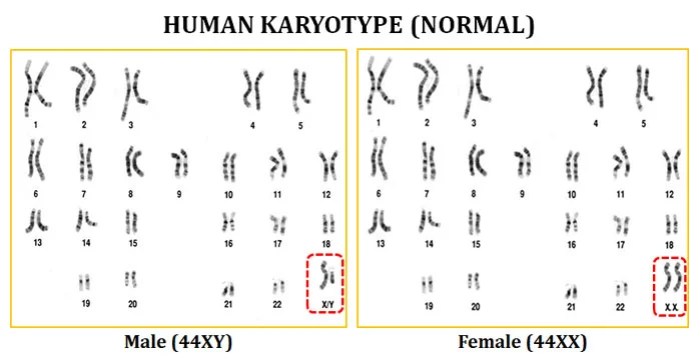
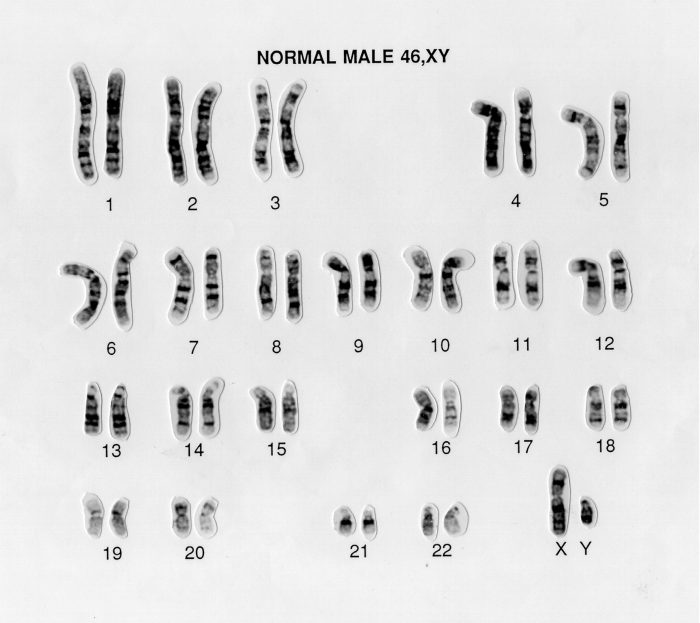
Visual representation of karyotypes provides a crucial insight into chromosome composition. A normal karyotype displays 46 chromosomes, arranged in homologous pairs, with clear identification of each chromosome based on size, banding patterns, and centromere position.
A normal karyotype is a visual representation of the complete set of chromosomes in a cell, arranged in homologous pairs.
A karyotype with an abnormality might show an extra chromosome, missing chromosome, or structural rearrangements. 
 (Note: Replace example.com with actual image hosting)
Normal Karyotype Description
The image shows a standard human karyotype with 46 chromosomes, arranged in 23 pairs. Each pair is visually distinct based on size and banding patterns. The chromosomes are numbered and arranged in descending order of size. The presence of all pairs confirms a normal chromosome complement.
Abnormal Karyotype Description
The abnormal karyotype image displays a total of 47 chromosomes. The extra chromosome is clearly visible, typically chromosome 21, as observed in trisomy 21. The arrangement differs from the normal karyotype in terms of chromosome number and potential for structural rearrangements. The visual differences are significant, signaling the presence of a genetic abnormality.
Comparative Table of Karyotypes
| Characteristic | Normal Karyotype | Abnormal Karyotype (e.g., Trisomy 21) |
|---|---|---|
| Chromosome number | 46 | 47 |
| Chromosome structure | Normal, homologous pairs | Extra chromosome 21 (or other abnormality) |
| Possible conditions | Healthy individual | Down syndrome, other genetic disorders |
| Implications | Normal development and function | Intellectual disability, congenital anomalies, potential health complications |
Applications of Karyotyping
Karyotyping, the process of visualizing and analyzing an individual’s chromosomes, provides crucial insights into their genetic makeup. This powerful technique has revolutionized medical diagnostics, allowing clinicians to identify chromosomal abnormalities that can lead to various diseases. Understanding the applications of karyotyping is vital for both prenatal diagnosis and cancer detection.
Medical Uses of Karyotyping
Karyotyping is a valuable tool in medical diagnostics. It aids in identifying chromosomal abnormalities that can cause a wide range of genetic disorders. These disorders can affect physical development, cognitive abilities, and overall health. The analysis of karyotypes helps in understanding the underlying genetic basis of these conditions, facilitating appropriate management and counseling for patients and their families.
Role of Karyotyping in Prenatal Diagnosis
Prenatal karyotyping plays a critical role in assessing the genetic health of a developing fetus. It can detect chromosomal abnormalities present in the fetus before birth, offering crucial information to parents about potential risks and allowing them to make informed decisions about their pregnancy. Early detection allows for timely interventions and support systems to be put in place.
A karyotype is basically a picture of all your chromosomes, arranged in pairs. Getting a clear karyotype often involves a blood draw, so knowing some tips for making it easier can be helpful. For example, staying hydrated and relaxing beforehand can make a big difference, as can following any specific instructions your doctor or lab tech gives you.
Tips for making a blood draw easier are crucial to ensure the accuracy of the karyotype results, which are essential for diagnosing genetic conditions. Ultimately, understanding your karyotype is a key step in learning more about your overall health.
- Identifying potential genetic disorders, such as Down syndrome, Turner syndrome, and Klinefelter syndrome, which can be detected through prenatal karyotyping.
- Determining the risk of having a child with a genetic disorder in subsequent pregnancies. This is often based on family history and previous prenatal testing results.
- Assessing the overall chromosomal health of the fetus, which can offer a broader understanding of possible developmental issues.
Use of Karyotyping in Cancer Diagnosis
Karyotyping is increasingly used in cancer diagnostics to identify specific chromosomal abnormalities that are frequently associated with certain cancers. These abnormalities often drive the development and progression of the disease, offering valuable insights into the cancer’s nature and potential treatment strategies. Understanding the cancer’s specific genetic profile can inform more targeted and effective therapies.
- Identifying specific chromosomal rearrangements and mutations associated with leukemia, lymphoma, and other cancers. These abnormalities can help predict the course of the disease and the likelihood of response to different therapies.
- Evaluating the response of cancer cells to specific treatments. Karyotyping can track the changes in the cancer cells’ chromosomes after treatment, offering insights into the efficacy of the therapy and potentially guiding adjustments to the treatment plan.
- Differentiating between different types of leukemia. Karyotyping can help distinguish between various subtypes of leukemia, which are crucial for determining the most appropriate treatment approach.
Examples of Specific Diseases Diagnosed through Karyotyping
Karyotyping has proven invaluable in diagnosing various genetic disorders and cancers. It provides a powerful tool for understanding the genetic basis of these conditions and tailoring treatments to the specific needs of the patient.
- Down Syndrome (Trisomy 21): This condition is characterized by the presence of an extra copy of chromosome 21. Karyotyping can confirm the diagnosis and provide information about the potential severity of the syndrome.
- Turner Syndrome (45, X): This condition is a result of a missing or incomplete X chromosome. Karyotyping confirms the presence of this abnormality.
- Klinefelter Syndrome (47, XXY): This disorder is associated with an extra X chromosome in males. Karyotyping plays a key role in confirming the diagnosis and assisting in determining the most suitable course of action.
- Acute Lymphocytic Leukemia (ALL): Specific chromosomal translocations, such as the Philadelphia chromosome (t(9;22)), are characteristic of certain types of ALL. Karyotyping can detect these translocations.
Limitations of Karyotyping: What Is A Karyotype
Karyotyping, a powerful tool for visualizing chromosomes, offers valuable insights into genetic disorders. However, like any technique, it has limitations that impact its application and interpretation. Understanding these limitations is crucial for accurate diagnosis and appropriate patient management. These limitations often involve resolution, the complexity of the sample, and the skill of the analyst.Karyotyping, while a valuable tool, is not without its drawbacks.
The process, while relatively straightforward, can be affected by various factors that influence the quality and reliability of the results. These limitations can lead to misdiagnosis or an inability to identify certain genetic abnormalities, making it essential for clinicians to consider alternative approaches when karyotyping is insufficient.
Resolution and Detail Limitations
Karyotyping’s resolution is inherently limited by the method’s reliance on staining and visualization. The size and structure of chromosomes are critical for diagnosis, but the method cannot reveal subtle changes at the gene level. Small deletions, duplications, or rearrangements within a chromosome band might not be detectable using standard karyotyping techniques. For example, a very small deletion in a specific region of a chromosome might not be evident on a karyotype, whereas a more significant structural change would be.
Molecular cytogenetic techniques like FISH or microarray analysis can sometimes detect these smaller alterations, offering a more comprehensive view of the genome.
Factors Affecting Accuracy
Several factors can affect the accuracy of karyotyping results. The quality of the cell sample is paramount. Cells that are poorly preserved or damaged during collection and preparation may not provide accurate chromosome images. For example, blood samples that are not collected and processed correctly, leading to cell damage or incomplete growth in culture, can compromise the quality of the karyotype.
Also, the skill and experience of the cytogeneticist in interpreting the karyotype can influence the accuracy of the results. Experienced personnel are better equipped to detect subtle anomalies. Technical errors during the staining or imaging process can also introduce artifacts that might be misinterpreted as chromosomal abnormalities.
Situations Where Karyotyping May Not Be Suitable
Karyotyping isn’t always the optimal choice for diagnosing genetic abnormalities. Its limitations in resolving fine-scale structural changes, combined with the time-consuming nature of the process, make it less ideal for conditions requiring rapid results. For example, in cases of suspected aneuploidy (where the number of chromosomes is abnormal) where a rapid diagnosis is needed, a fluorescent in situ hybridization (FISH) test may be a more appropriate and quicker alternative.
Additionally, the need for dividing cells makes it unsuitable for examining tissues with minimal or no cell division.
A karyotype is essentially a picture of all your chromosomes, showing their number and structure. This helps doctors identify potential genetic issues. Sometimes, abnormalities in urine, like the presence of hyaline casts, can be a sign of underlying health problems, which can also be reflected in a karyotype analysis. Understanding the presence of hyaline casts in urine might lead to further investigations and could be a vital piece of information for interpreting a karyotype.
Ultimately, a karyotype provides a comprehensive view of an individual’s genetic makeup.
Table of Karyotyping Limitations
| Limitation | Reason | Alternatives |
|---|---|---|
| Limited resolution | Inability to detect small chromosomal abnormalities, such as microdeletions or microduplications. | FISH, microarray analysis, next-generation sequencing (NGS) |
| Sample quality dependence | Poor sample preservation or processing can lead to inaccurate results. | Careful sample collection and processing protocols. |
| Time-consuming process | Requires cell culture, which can take several days to weeks. | FISH, molecular karyotyping techniques |
| Limited detection of subtle changes | Difficult to identify subtle chromosomal rearrangements or complex structural variations. | Molecular karyotyping, such as comparative genomic hybridization (CGH) or array-based comparative genomic hybridization (aCGH). |
Ethical Considerations
Karyotyping, a powerful tool for diagnosing genetic abnormalities, presents significant ethical considerations that must be carefully addressed. The implications of these results extend beyond the individual patient, impacting families and society as a whole. Understanding these ethical dilemmas is crucial for responsible use and application of karyotyping technology.
Informed Consent
Informed consent is paramount in karyotyping procedures. Patients undergoing karyotyping must be fully aware of the purpose, potential risks, benefits, and limitations of the test. This includes understanding the implications of the results, both for themselves and their potential future family members. Explaining the potential for incidental findings, such as genetic predispositions to other conditions, is also vital.
The consent form should be written in easily understandable language and should allow for questions and clarification. This process ensures that the patient is making an autonomous decision, respecting their right to self-determination.
Confidentiality
Maintaining patient confidentiality is crucial in karyotyping. Genetic information is sensitive and should be treated with the utmost respect and discretion. Data security measures, such as secure storage and access protocols, must be in place to prevent unauthorized access or disclosure of results. This is particularly important for identifying individuals at risk for genetic disorders, as disclosure could lead to discrimination or stigmatization.
Strict adherence to ethical guidelines and legal regulations surrounding patient privacy is mandatory.
Ethical Dilemmas
Karyotyping presents several ethical dilemmas, including the potential for prenatal testing to impact reproductive decisions. The availability of preimplantation genetic diagnosis (PGD) raises questions about the selection of embryos based on genetic traits, potentially leading to societal biases and discrimination. Additionally, the identification of incidental findings not directly related to the reason for the karyotyping can create complex ethical challenges.
Decisions about disclosing such findings and their implications must be made carefully and transparently.
Societal Impact
Karyotyping results can have a significant societal impact, especially when revealing genetic predispositions to certain conditions. The potential for discrimination in employment, insurance, or social interactions must be acknowledged and mitigated. Education and awareness campaigns are crucial to promote understanding and acceptance of genetic diversity. Furthermore, societal expectations surrounding genetic information need to be carefully considered and regulated.
Summary of Ethical Considerations
“Karyotyping, while a powerful diagnostic tool, necessitates careful consideration of ethical implications. Informed consent, strict confidentiality protocols, and responsible societal discourse are essential for mitigating potential risks and maximizing the benefits of this technology. Ethical dilemmas surrounding prenatal testing, incidental findings, and societal impact require careful consideration and transparent communication to ensure responsible use and equitable access to these services.”
Ending Remarks
In conclusion, karyotyping, despite its limitations, remains a valuable tool in medical diagnostics, offering insights into genetic makeup and enabling the identification of various chromosomal abnormalities. From prenatal diagnoses to cancer screenings, its applications are far-reaching. While technological advancements are continually refining diagnostic methods, karyotyping continues to play a significant role in the field of genetics.