
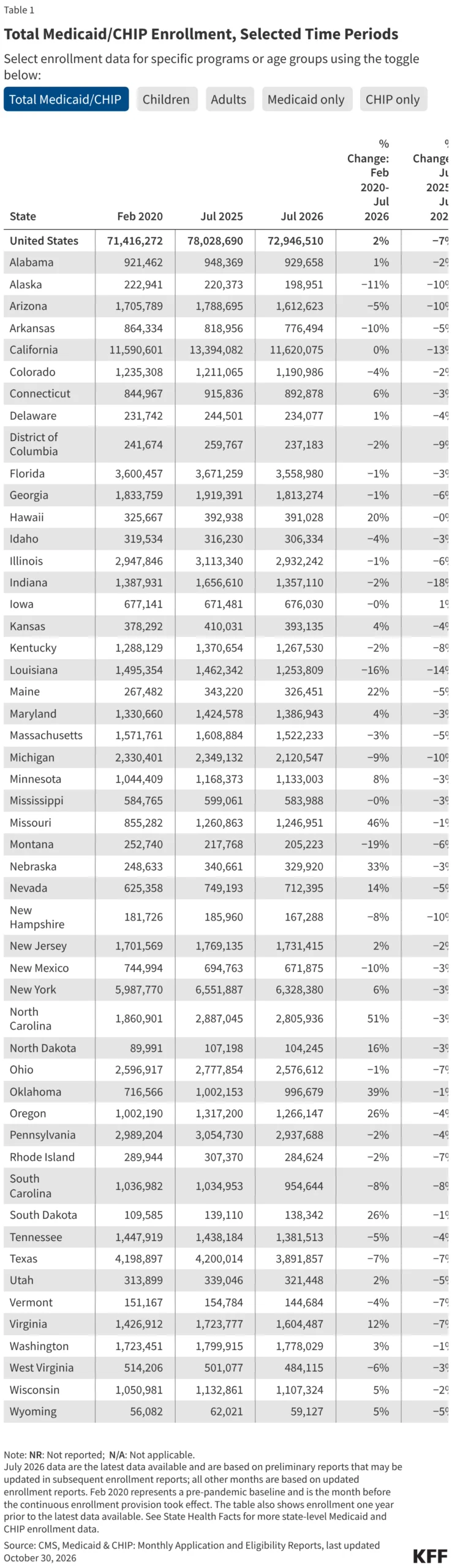
WASHINGTON D.C. — The landscape of public health insurance in the United States is undergoing its most significant transformation since the passage of the Affordable Care Act. As of July 2026, new data from the Centers for Medicare & Medicaid Services (CMS) and analysis by health policy experts reveal a complex portrait of a system in flux. Between the massive "unwinding" of pandemic-era protections and the implementation of the landmark 2025 Federal Budget Reconciliation Law, millions of Americans are navigating a restructured safety net characterized by stricter eligibility hurdles and a renewed focus on workforce participation.
n
Main Facts: A Nation Re-evaluating Its Safety Net
n
The latest enrollment figures for Medicaid and the Children’s Health Insurance Program (CHIP) indicate that the era of "continuous enrollment"—a pandemic-era policy that prohibited states from disenrolling members—has been replaced by a period of contraction and administrative rigor. As of the July 2026 reporting cycle, several key pillars define the current state of national health coverage:
n
- n
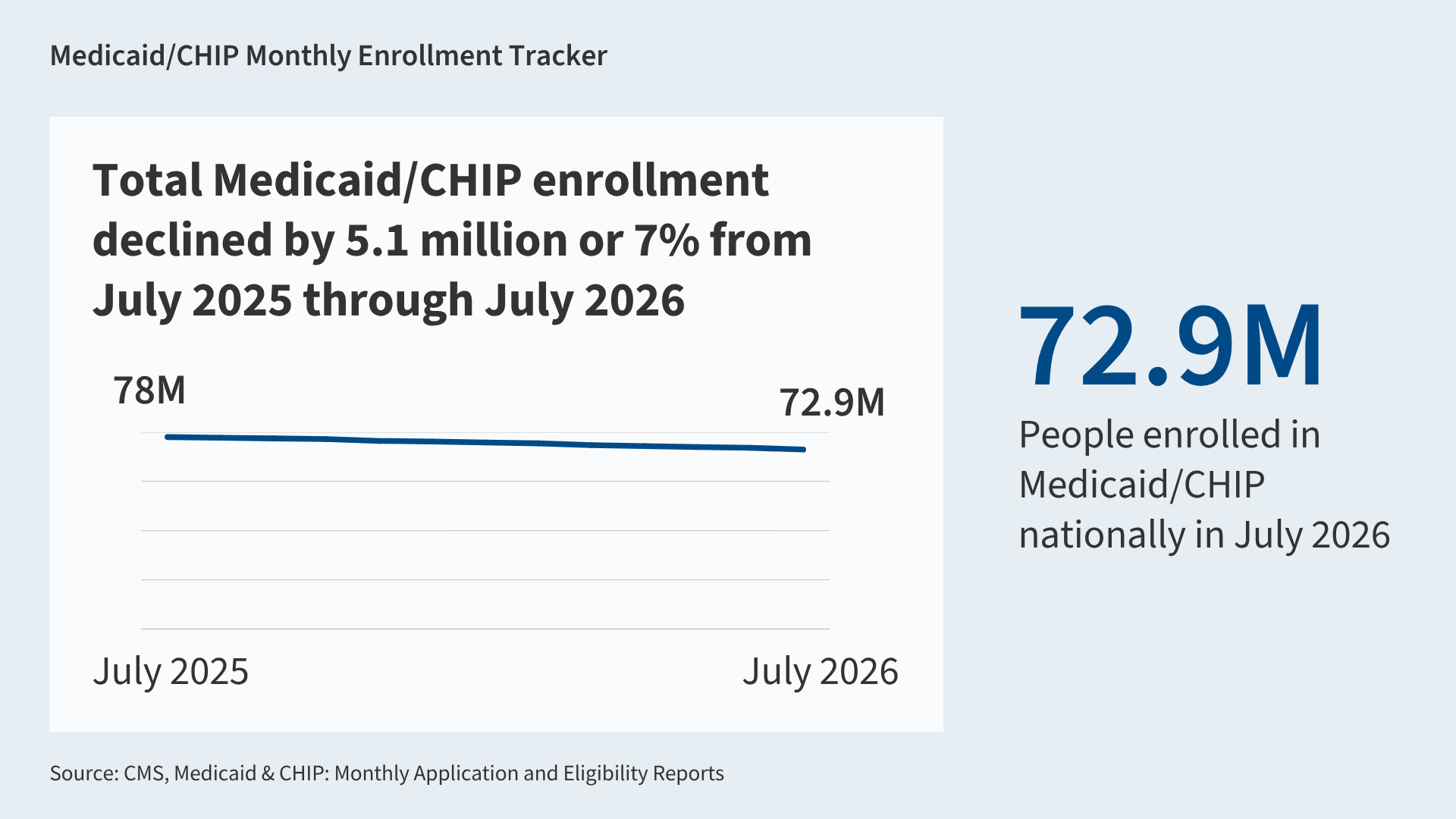
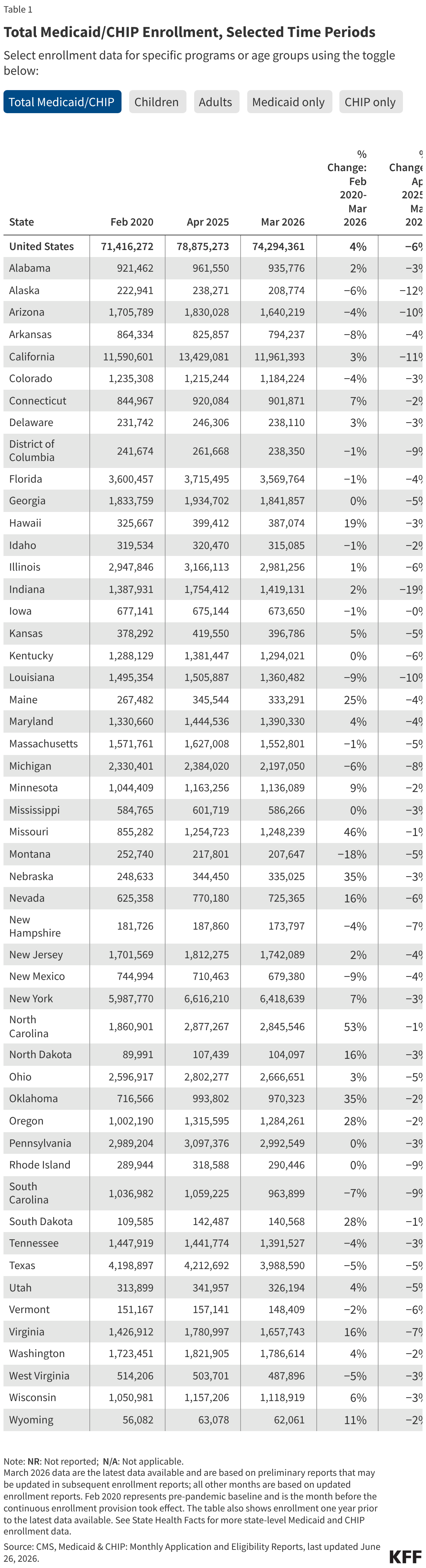
- The Enrollment Contraction: Total Medicaid and CHIP enrollment has seen a steady decline from its pandemic peak. This is attributed primarily to the "unwinding" process, where states redetermined eligibility for every single enrollee for the first time in three years.
- The 2025 Reconciliation Law: A pivotal legislative shift, the 2025 reconciliation law has introduced mandatory work and reporting requirements for adults in the Medicaid expansion group and certain 1115 waiver programs. While these requirements are set to fully trigger in January 2027, their shadow is already affecting enrollment trends and state-level administrative planning.
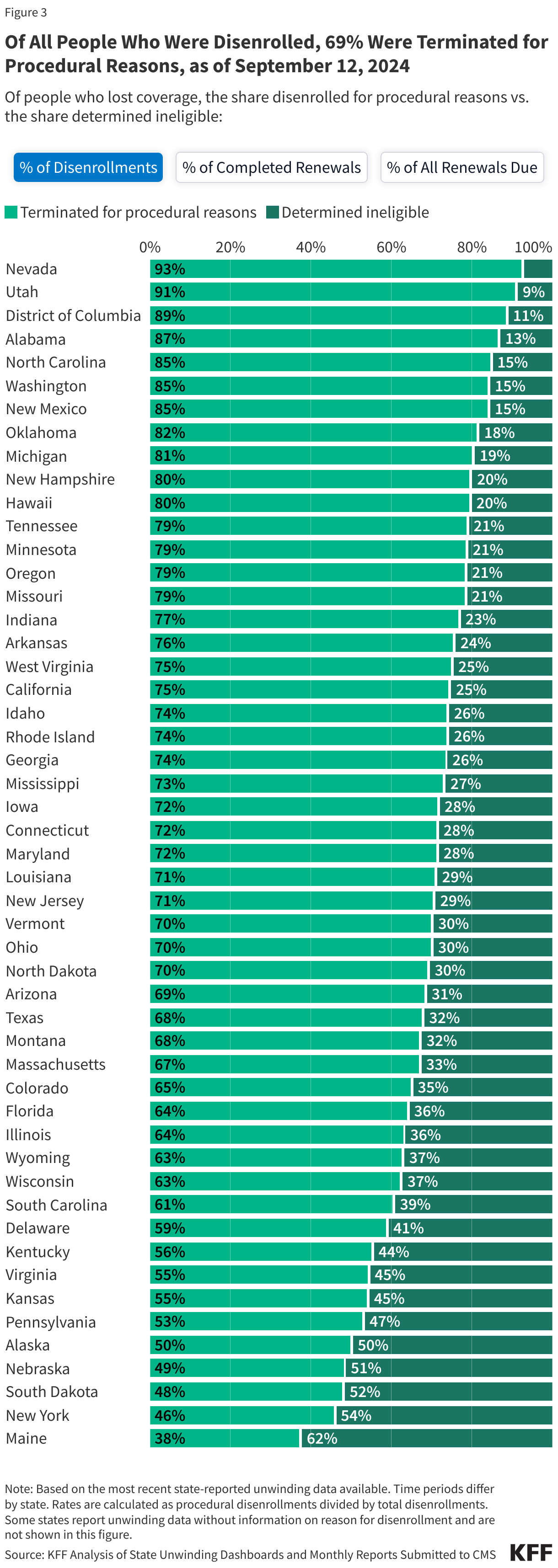
- The Procedural Gap: A staggering 69% of all disenrollments during the unwinding period were categorized as "procedural." This means individuals lost coverage not because they were determined to be over-income, but because of paperwork hurdles, such as outdated contact information or failure to return forms within strict deadlines.
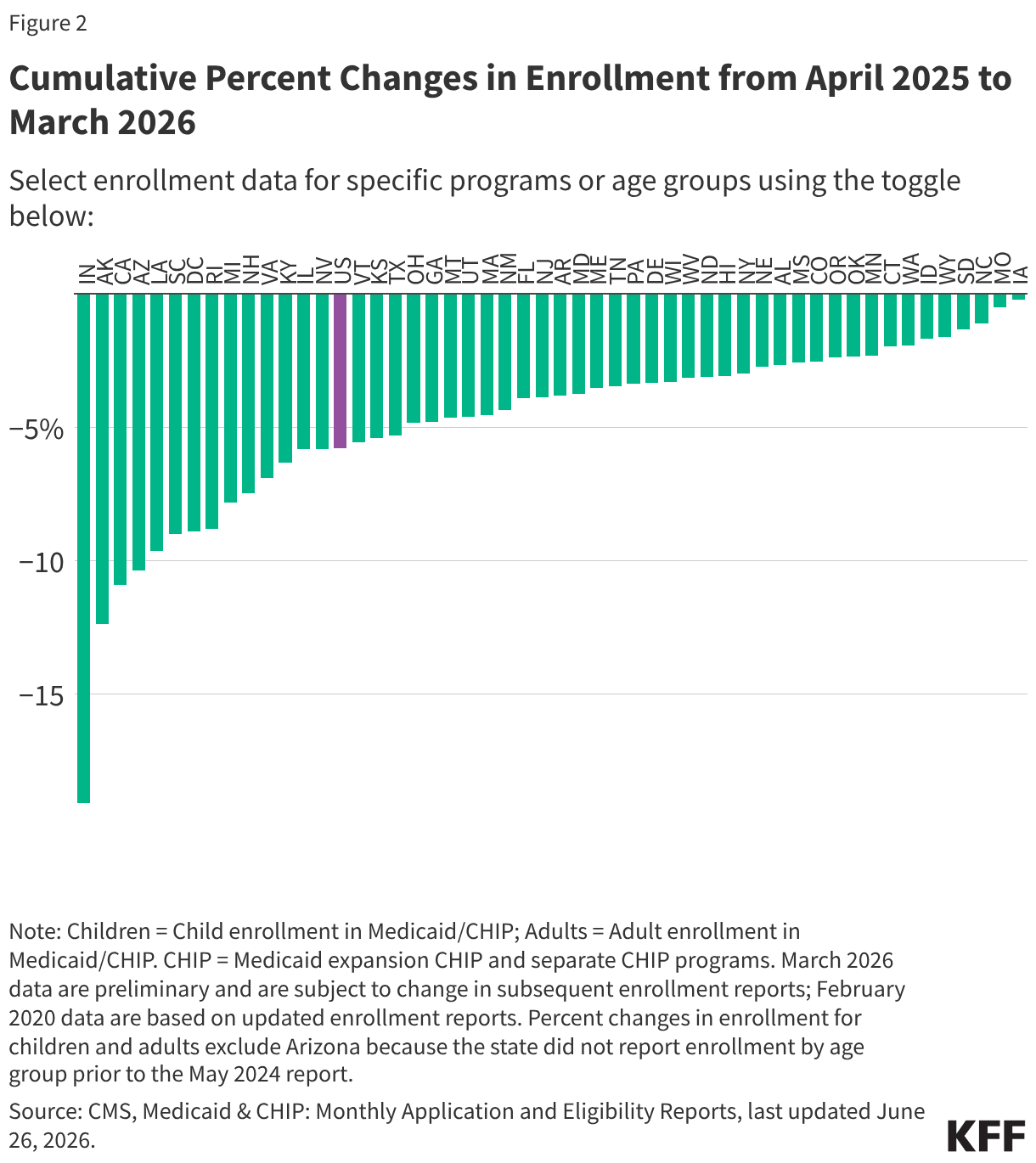
- State Volatility: There is no "national" Medicaid experience. Disenrollment rates vary wildly by geography, with states like Montana disenrolling 57% of those undergoing redetermination, compared to just 12% in North Carolina.
n
n
n
n
n
Chronology: From Pandemic Protections to Work Requirements
n
To understand the current July 2026 data, one must look back at the three distinct phases that have defined the last six years of American healthcare policy.
n
The Pandemic Baseline (February 2020 – March 2023)
n
Before the COVID-19 pandemic, Medicaid enrollment was relatively stable. However, the Families First Coronavirus Response Act (FFCRA) created a "continuous enrollment" provision. In exchange for enhanced federal funding, states agreed to keep enrollees on the rolls regardless of changes in income or status. This led to record-high enrollment, providing a vital cushion during the global health crisis.
n
The Great Unwinding (April 2023 – Late 2024)
n
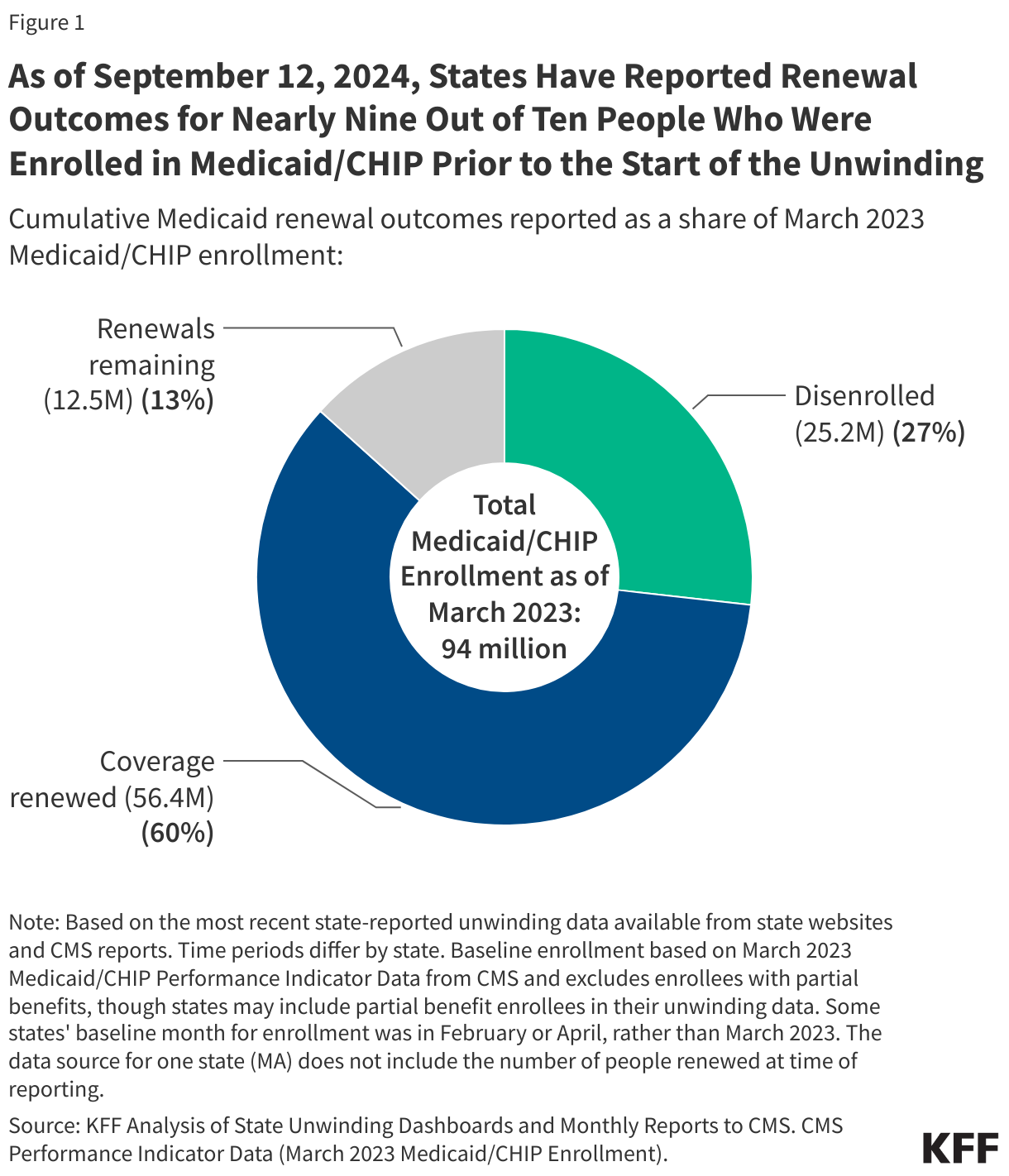
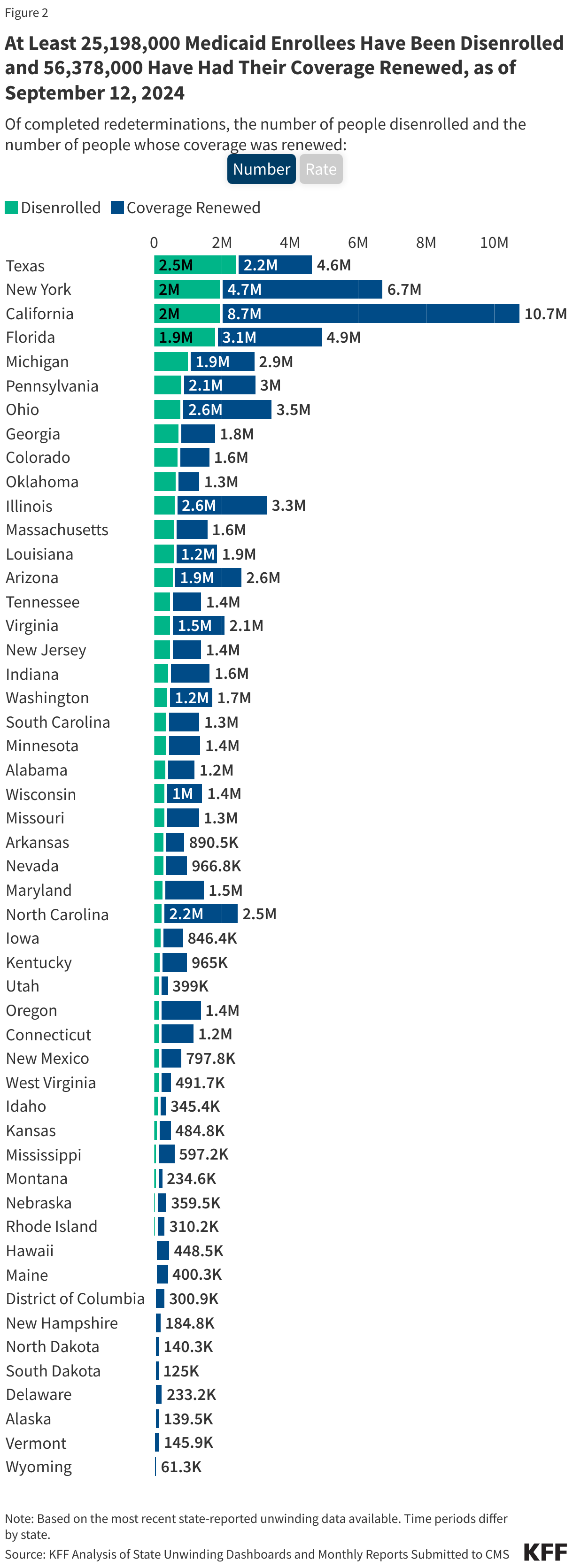
As the public health emergency ended, states began the monumental task of "unwinding" the continuous enrollment provision. This period, which concluded for most states by late 2024, saw at least 25.1 million people disenrolled from Medicaid. During this time, the federal government monitored state performance closely, occasionally pausing disenrollments in states where procedural errors were too high.
n
The Reconciliation Era (2025 – Present)
n
With the passage of the 2025 Federal Budget Reconciliation Law, the policy focus shifted from "coverage at all costs" to "targeted eligibility." The law introduced significant changes to the Medicaid expansion group—the population of low-income adults who gained coverage under the ACA. By July 2026, states have begun the infrastructure build-out to support the work and reporting requirements that will become mandatory in January 2027. Projections suggest these changes will further reduce enrollment over the next decade.
n
Supporting Data: The Anatomy of Disenrollment
n
The data provided by the CMS Performance Indicator Project offers a granular look at who is losing coverage and why. The distinction between "ineligibility" and "procedural termination" remains the most contentious data point for policymakers.
n
The Procedural Hurdle
n
According to KFF analysis of state-reported data, of the millions disenrolled during the unwinding, the vast majority (nearly 70%) were terminated for procedural reasons. This suggests a significant "churn" in the system, where eligible individuals lose coverage due to administrative friction. In many cases, these individuals eventually re-apply, but the gap in coverage can lead to interrupted treatment for chronic conditions and increased emergency room visits.
n
Ex Parte Success Rates
n
One bright spot in the data is the rise of ex parte renewals. This process allows states to automatically renew an individual’s coverage using existing data sources (such as SNAP or wage records) without requiring the enrollee to fill out a form. Nationally, 61% of people who retained their coverage did so through these automated processes. States that invested in robust ex parte systems saw significantly lower procedural disenrollment rates.
n
Demographic Breakdown: Adults vs. Children
n
While much of the legislative focus has been on the adult expansion group, children have not been immune to the shifts. Enrollment data for July 2026 shows that child enrollment in Medicaid and CHIP has dipped significantly from its 2023 peak. In states that did not adopt continuous eligibility for children, the procedural hurdles that affected adults also led to millions of children losing coverage, despite many remaining eligible under higher income thresholds for minors.
n
Official Responses and Policy Context
n
The federal response to these trends has been a mixture of oversight and legislative mandates. CMS has updated its monthly reporting requirements to ensure states provide more transparent data on application processing times and call center wait times.
n
CMS Oversight
n
Federal officials have expressed concern over the high rate of procedural disenrollments. In several memos, CMS urged states to take advantage of "mitigation strategies," such as using National Change of Address (NCOA) data to update enrollee contact info and partnering with managed care organizations (MCOs) to reach out to members.
n
The Legislative Intent of 2025
Proponents of the 2025 reconciliation law argue that the new work requirements are essential for fiscal sustainability and for encouraging economic mobility. "Medicaid was always intended to be a safety net, not a permanent floor," noted one legislative summary. The law includes provisions for 1115 waivers, allowing states to experiment with how they implement these requirements, provided they meet federal reporting standards.
State-Level Divergence
The data highlights a growing divide between "expansion" and "non-expansion" states, as well as between states with different administrative philosophies. North Carolina, which recently expanded Medicaid, has shown a lower disenrollment rate (12%) as it seeks to stabilize its new enrollee base. Conversely, states like Montana have taken a more aggressive approach to redeterminations, resulting in a 57% disenrollment rate.
Implications: The Long-Term Forecast
The shift in Medicaid policy has profound implications for the American healthcare system over the next ten years.
The Uninsured Rate
After reaching record lows during the pandemic, the national uninsured rate is expected to climb. While some individuals disenrolled from Medicaid have transitioned to employer-sponsored insurance or the ACA Marketplace (often with subsidies), a significant portion of the "procedural" group is believed to have become uninsured.
Fiscal Impact on States
While lower enrollment reduces the direct cost of Medicaid for state budgets, it also reduces the amount of federal matching funds entering state healthcare systems. Hospitals, particularly in rural areas, may face higher levels of uncompensated care as more patients present without insurance.
The "Work Requirement" Cliff
As January 2027 approaches, the focus will shift to how many adults can successfully navigate the new reporting requirements. Critics argue that the administrative cost of tracking work hours may exceed the savings from disenrolling non-compliant members. Furthermore, for those with fluctuating gig-economy hours or undiagnosed disabilities, the reporting requirements could become a "second unwinding," triggering another wave of procedural losses.
Health Equity Concerns
Data consistently shows that procedural disenrollments disproportionately affect marginalized communities, including those with limited English proficiency and those living in unstable housing. The 2026 data suggests that without further intervention, the progress made in closing health equity gaps during the pandemic may be reversed.
As the nation moves toward 2027, the Medicaid and CHIP enrollment tracker serves as an essential barometer for the health of the American safety net. The current July 2026 data confirms that while the "unwinding" may be archived, its effects—compounded by new legislative mandates—continue to reshape the lives of millions.

