
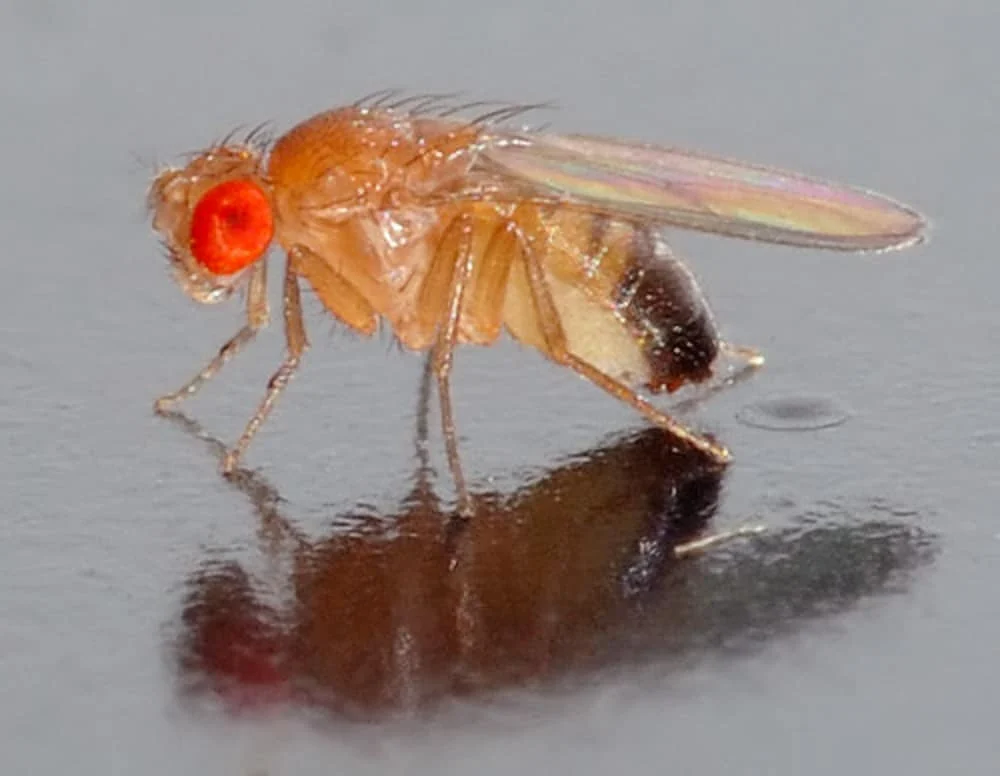
In the quest to understand the biological roots of substance use disorders, researchers have long looked for the "missing link" between physiological stress and the compulsive drive to seek drugs or alcohol. A groundbreaking study from Brown University’s Carney Institute for Brain Science has identified a critical piece of this puzzle. By studying the neural pathways of the Drosophila fruit fly, scientists have uncovered a specific "circuit motif" that directly connects the state of hunger to the activation of alcohol-related memories.
n
The study, published in the journal Current Biology, suggests that addiction is not merely a failure of willpower or a simple reward-seeking behavior, but a complex, state-dependent survival mechanism. When the body is deprived of basic needs—such as food—it activates specific neurons that "unlock" memories of past rewards, such as ethanol, driving the organism to seek those substances with heightened intensity.
n
Main Facts: The Discovery of the "Alcohol Switch"
n
The research team at Brown University focused on how internal biological states—specifically hunger—modulate the way memories are processed and retrieved. While it has been long observed that stress and deprivation can lead to relapse in humans, the precise neural architecture of this phenomenon remained elusive.
n
The study’s primary findings can be summarized as follows:
n
- n
- The Role of the Octopamine Neuron: Researchers identified a single octopamine neuron that is essential for ethanol-seeking behavior. Crucially, this neuron is only required when the fruit flies are in a state of food deprivation.
- Baseline Activity Shifts: Hunger increases the baseline activity within this specific neuron. This "priming" makes the neuron significantly more responsive to environmental cues (such as smells) that the fly has previously associated with alcohol.
- Parallel Memory Circuits: The brain does not use a single path for addiction. Instead, there is a "parallel ethanol memory circuit" that remains dormant during periods of satiety but becomes active the moment the organism becomes hungry.
- A Mechanism for Relapse: This discovery provides a biological explanation for why individuals in recovery are more susceptible to cravings when they are stressed, hungry, or in pain. The internal state acts as a key that opens a specific memory vault associated with the substance of abuse.
n
n
n
n
n
Chronology: From Conditioning to Neural Mapping
n
The journey to this discovery involved a meticulous series of experiments designed to map the intersection of survival instincts and learned behaviors.
n
Phase 1: Associative Conditioning
n
The researchers began by exposing the Drosophila fruit flies to specific odors paired with the reward of ethanol (alcohol). Fruit flies are frequently used in neuroscience because they share approximately 75% of the genes that cause diseases in humans and possess a simplified but highly analogous reward system. Through this conditioning, the flies learned to associate a neutral scent with the "high" of ethanol.
n
Phase 2: State Manipulation
n
Once the memories were formed, the researchers divided the flies into two groups: those that were well-fed and those that were food-deprived. They then exposed both groups to the odor cues associated with ethanol.
n
Phase 3: Observing the Divergence
n
The results were stark. The well-fed flies showed a moderate interest in the ethanol-associated odor, but the food-deprived flies exhibited an intense, compulsive seeking behavior. By using advanced imaging and genetic silencing techniques, the team was able to pinpoint the exact neuron responsible for this shift: a single octopamine-producing cell.
n
Phase 4: Mapping the Circuit
n
The final phase involved identifying the "circuit motif." The researchers found that hunger didn’t just make the flies "want" things more in general; it specifically activated a parallel neural pathway that bypassed the standard reward processing and went straight to the ethanol-seeking memory.
n
Supporting Data: The Biology of Octopamine and Norepinephrine
n
To understand the weight of this study, one must look at the neurochemistry involved. The researchers highlighted octopamine, a neurotransmitter in insects that serves as the functional equivalent of norepinephrine in humans.
n
Norepinephrine is a "fight-or-flight" chemical. It is responsible for arousal, alertness, and the body’s response to stress. In humans, norepinephrine levels spike during periods of withdrawal, stress, and physical pain. The Brown University study suggests that just as octopamine triggers ethanol-seeking in hungry flies, norepinephrine may serve as the bridge between human stress and the drive to consume addictive substances.
n
Key Data Points from the Study:
n
- n
- Sensitivity: Hunger increased the sensitivity of the octopamine neuron to odor cues by a measurable margin, effectively lowering the "threshold" required to trigger a craving.
- Specificity: The researchers noted that this specific circuit was only active during food deprivation. This suggests that the brain has dedicated "emergency" circuits that link survival states to potent rewards.
- Memory Retention: The study confirmed that the memories of ethanol reward are long-lasting and can be "recruited" by the brain whenever the internal state of the organism becomes adverse.
n
n
n
Official Responses: Insights from the Carney Institute
The implications of the study have been met with excitement within the scientific community. Alice Popovici, a writer for the Carney Institute for Brain Science, noted that the research builds upon years of work in the lab of Karla Kaun, an associate professor of neuroscience at Brown.
"Previous studies by scientists in Kaun’s lab have helped to uncover the role of memory formation underlying addiction—how memories of alcohol as a reward can drive cravings," Popovici stated. This latest study adds a layer of "internal state modulation" to that foundation.
The researchers themselves emphasize that this is a step toward a Unified Theory of Addiction. In their published paper, the authors stated:
"Our study provides a circuit motif that directly links internal state modulation to memory processing, as well as an understanding of the impact these state-dependent circuits have in mediating drug use, addiction, cravings, and relapse."
The team believes that while the study focused on hunger, the "circuit motif" likely applies to other adverse states. "We believe that stress and pain can stimulate memories of substance abuse" in a nearly identical fashion, the researchers noted.
Implications: A New Paradigm for Treatment and Recovery
The discovery that hunger can activate a "memory switch" for intoxication has profound implications for how we treat Alcohol Use Disorder (AUD) and other addictions in humans.
1. The Validation of "HALT"
For decades, 12-step programs and addiction counselors have used the acronym HALT (Hungry, Angry, Lonely, Tired) to warn those in recovery about the triggers for relapse. The Brown University study provides the hard biological evidence for the "H" in HALT. It proves that being hungry isn’t just a distraction; it is a physiological trigger that re-wires the brain’s priority list, making the memory of a substance more vivid and the drive to obtain it more powerful.
2. Targeted Pharmacological Interventions
By identifying the specific octopamine (norepinephrine-equivalent) neuron involved, this research opens the door for new medications. If scientists can develop compounds that prevent norepinephrine from "priming" these parallel memory circuits, they might be able to "mute" cravings triggered by stress or physical deprivation without affecting the patient’s normal reward processing.
3. Behavioral Therapy Adjustments
Understanding that addiction utilizes "parallel circuits" suggests that traditional talk therapy may need to be supplemented with "state-dependent" training. Patients might need to learn specific coping mechanisms that are specifically designed for when they are in high-stress or "deprived" states, as the brain functions differently in those moments than it does during a calm therapy session.
4. Rethinking "Choice" in Addiction
The study reinforces the view of addiction as a biological survival mechanism gone awry. In the wild, if an animal is hungry, its brain should prioritize any high-calorie or high-reward stimulus it has encountered in the past. In the context of modern addiction, the brain "mistakes" alcohol or drugs for a survival necessity when the body is under stress. This shifts the narrative from a moral failing to a neural circuit misalignment.
Conclusion: Bridging the Gap Between Fly and Human
While the study was conducted on Drosophila, the universality of these neural "motifs" suggests a deep evolutionary link. The fact that a single neuron can act as a gatekeeper for addiction-related memories based on nutritional status provides a roadmap for future human research.
As we move toward a more unified understanding of addiction, the work at the Carney Institute reminds us that the brain is a highly dynamic organ. It does not exist in a vacuum; its "software"—the memories of reward—is constantly being updated and accessed by its "hardware"—the physiological state of the body. By learning to manage the internal states of hunger, stress, and pain, we may finally find more effective ways to silence the circuits of addiction.

