
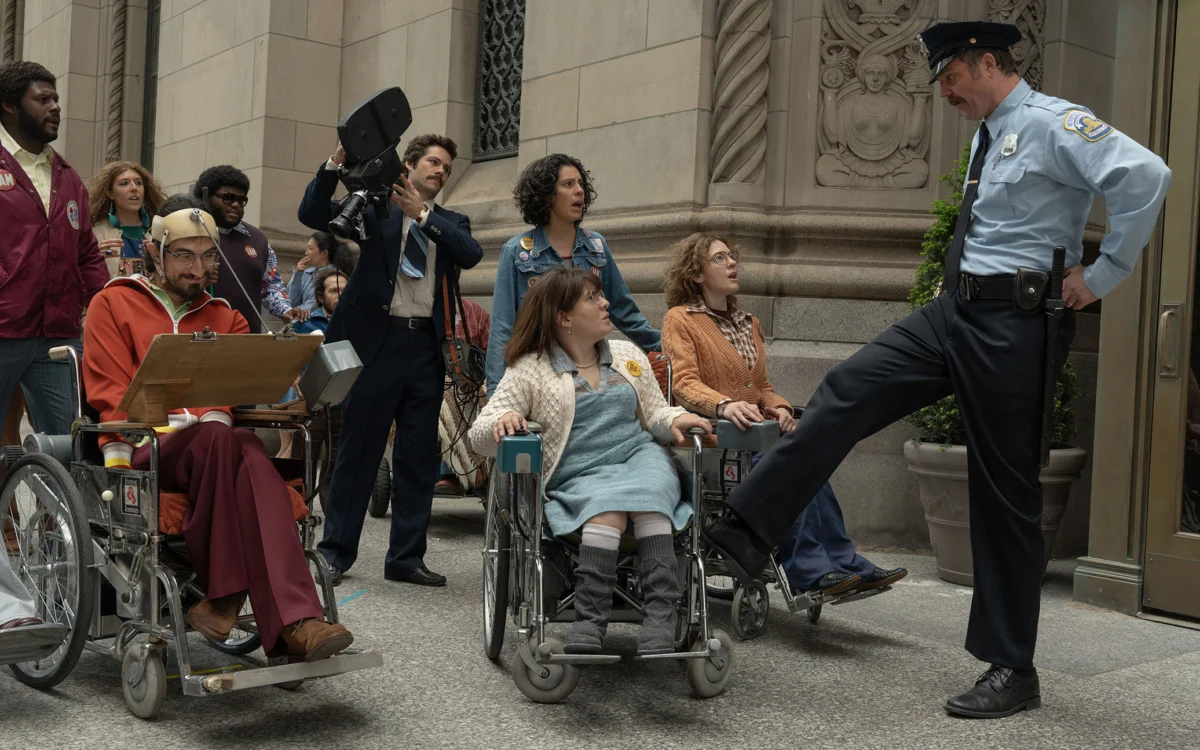
A major motion picture, "Being Heumann," is set to captivate audiences with its powerful portrayal of one of the most pivotal moments in the disability rights movement. Starring Ruth Madeley as the indomitable Judy Heumann, often hailed as the "mother of the disability rights movement," the film focuses on the monumental 1977 sit-in that pressured the U.S. government to enforce Section 504 of the Rehabilitation Act. Opening in select theaters this Friday, the film’s release is accompanied by a unique accessibility initiative, offering tickets at a symbolic $5.04 at various Regal Cinemas locations, underscoring the very law it champions.
n
The highly anticipated Apple Original Film, directed by Academy Award-winner Siân Heder, known for her groundbreaking work on "CODA," promises an authentic and deeply moving account of Heumann’s unwavering fight for justice. Following its theatrical run, "Being Heumann" will be available to stream on Apple TV beginning November 13, ensuring its vital message reaches a global audience.
n
The Unyielding Spirit of Judy Heumann: Mother of the Movement
n
The narrative heartbeat of "Being Heumann" is the life and activism of Judy Heumann, a figure whose courage and strategic brilliance irrevocably altered the landscape of disability rights. Born in Philadelphia in 1947, Heumann contracted polio at 18 months old, leading to her lifelong use of a wheelchair. From an early age, she encountered systemic discrimination that ignited her passion for advocacy. Denied entry to kindergarten due to her disability, she later faced exclusion from public school and, most famously, was initially denied a teaching license in New York in 1970 on the grounds that her wheelchair use would prevent her from evacuating children in an emergency. This discriminatory ruling, which she successfully challenged with the help of the ACLU, became a landmark case, foreshadowing her future battles.
n
Heumann’s early experiences forged her into a formidable activist. In 1970, she co-founded Disabled in Action (DIA), an organization dedicated to fighting for the rights of people with disabilities. Her relentless advocacy work, characterized by direct action and unwavering conviction, laid much of the groundwork for the monumental legislative achievements that would follow. She understood intrinsically that access was not a privilege but a fundamental human right, and her life became a testament to that conviction.
n
The Fight for Section 504: A Decades-Long Struggle
n
The film’s core conflict revolves around Section 504 of the Rehabilitation Act of 1973. This landmark civil rights law was the first federal legislation to prohibit discrimination against individuals with disabilities. It stated, simply yet profoundly: "No otherwise qualified individual with a disability in the United States…shall, solely by reason of her or his disability, be excluded from the participation in, be denied the benefits of, or be subjected to discrimination under any program or activity receiving Federal financial assistance."
n
Despite its passage, Section 504 remained largely unenforced for four years. The Department of Health, Education, and Welfare (HEW) had drafted regulations to implement the law, but successive administrations hesitated to sign them, fearing the cost and political backlash from those who resisted mandating accessibility. This bureaucratic inertia meant that millions of Americans with disabilities continued to face daily discrimination in housing, employment, education, and public spaces, trapped in a society not built for them. The delay was not merely an administrative oversight; it was a denial of basic human dignity and equal opportunity. For Heumann and her peers, this inaction was intolerable, setting the stage for one of the most audacious and impactful acts of civil disobedience in American history.
n
The 504 Sit-in: A Defining Moment of Collective Action
n
The climax of "Being Heumann" centers on the historic 504 Sit-in, a testament to the power of collective action and the resilience of the disability community. Frustrated by the prolonged delay in signing the Section 504 regulations, disability rights activists across the country coordinated protests on April 5, 1977. While demonstrations occurred in cities like Washington D.C., Seattle, and Atlanta, the most significant and enduring protest unfolded in San Francisco.
n
The Call to Action and the San Francisco Occupation
n
Under Judy Heumann’s astute leadership, more than 100 people with disabilities and their allies occupied the San Francisco Federal Building. This was no fleeting protest; it was an act of sustained civil disobedience. The activists, many of whom relied on wheelchairs, crutches, or communication aids, settled in for what would become an unprecedented 25-day occupation. They slept on floors, shared food, and faced immense physical challenges, including limited access to showers and medical care. Their determination was fueled by a deep sense of injustice and a shared vision of an accessible future.
n
Heumann’s strategic genius shone through in her ability to organize and sustain the occupation. She maintained morale, managed resources, and ensured that the activists’ message resonated beyond the walls of the federal building. The protest was a powerful demonstration of unity and resolve, showcasing the disability community’s capacity for self-organization and advocacy.
n
Unprecedented Solidarity: Allies and Advocacy
n
What made the San Francisco sit-in particularly remarkable was the broad coalition of support it garnered. Recognizing the shared struggle for civil rights, the Black Panther Party provided hot meals to the occupiers for the duration of the protest, a powerful symbol of solidarity between marginalized communities. Local churches, unions, and sympathetic politicians also offered critical assistance, from supplying mattresses and blankets to amplifying the activists’ demands to the media.
n
A crucial strategic move was the dispatch of a delegation of activists, led by Heumann, to Washington D.C. They traveled to the nation’s capital to directly confront HEW Secretary Joseph Califano, demanding he sign the regulations. This dual-pronged approach – sustained occupation in San Francisco and direct lobbying in D.C. – put immense pressure on the federal government, making it impossible to ignore the cries for justice. The activists’ message was clear: they would not leave until the regulations were signed.
n
Victory and Its Ramifications
n
The relentless pressure finally broke the bureaucratic stalemate. On April 28, 1977, after nearly a month of unwavering protest, Secretary Joseph Califano signed the Section 504 regulations into law, virtually unchanged from their original draft. The victory was monumental, marking a turning point for disability rights in the United States. It established a legal framework for accessibility and non-discrimination, affecting everything from public transportation and education to employment and telecommunications.
n
The 504 Sit-in is widely considered the birthplace of the modern disability rights movement. It demonstrated the power of collective advocacy and laid the foundational principles that would later culminate in the Americans with Disabilities Act (ADA) of 1990. The success of the sit-in galvanized activists nationwide, proving that with unity and determination, systemic change was not only possible but inevitable. It was a victory not just for the individuals present, but for generations of people with disabilities who would benefit from a more inclusive society.
n
Bringing a Legacy to the Screen: "Being Heumann"
n
The journey of Judy Heumann’s story from a powerful memoir to a major motion picture underscores the enduring relevance of her legacy and the ongoing fight for disability rights.
n
From Memoir to Motion Picture
n
The film "Being Heumann" is based on Heumann’s critically acclaimed book, "Being Heumann: An Unrepentant Memoir of a Disability Rights Activist." Published in 2020, just three years before her passing, the memoir offers a deeply personal and candid account of her life, struggles, and triumphs. Adapting such an impactful autobiography for the screen requires a delicate balance of historical accuracy and cinematic storytelling, a challenge director Siân Heder has embraced with evident dedication. The decision to bring Heumann’s story to the screen is not merely an artistic endeavor but a profound educational one, ensuring that her contributions are recognized and understood by a wider audience.
n
Authentic Storytelling: Cast and Crew
n
Central to the film’s commitment to authenticity is the casting of Ruth Madeley as Judy Heumann. Madeley, an accomplished British actress who has spina bifida, brings an invaluable layer of lived experience to the role. Her casting is a powerful statement about inclusive representation in Hollywood, ensuring that a disabled icon is portrayed by an actress who genuinely understands the nuances of the disability experience. Madeley’s performance is anticipated to be a tour de force, embodying Heumann’s intelligence, wit, and formidable spirit.
n
The film’s direction by Siân Heder further solidifies its commitment to authentic storytelling. Heder’s previous film, "CODA" (Child Of Deaf Adults), made history by winning the Academy Award for Best Picture with a predominantly deaf cast. Her work on "CODA" demonstrated a profound respect for the community it portrayed, immersing audiences in a world often unseen on screen. This experience makes Heder uniquely suited to direct "Being Heumann," promising a nuanced and respectful depiction of the disability community’s history and struggles.
n
The ensemble cast also features acclaimed actors such as Mark Ruffalo, Dylan O’Brien, and Madeline Delp, who lend their talents to this crucial historical narrative, further elevating the film’s profile and reach. Their involvement signifies the increasing recognition within the industry of the importance of disability narratives.
n
A Commitment to Accessibility: The Film’s Theatrical Release
n
In a powerful and symbolic gesture that aligns perfectly with the film’s subject matter, "Being Heumann" is being released with a special emphasis on accessibility.
n
The $5.04 Ticket Initiative
Regal Cinemas, in partnership with Apple Original Films, has announced a unique pricing initiative for select showtimes. From November 9 to 11, tickets for "Being Heumann" at over 100 Regal locations nationwide will be priced at $5.04. This specific pricing is a direct and poignant tribute to Section 504 of the Rehabilitation Act, the very law that Judy Heumann and her fellow activists fought so tirelessly to enforce. It’s a creative way to honor the historical significance of the film’s content while making the cinematic experience more accessible to a broader audience.
Open Captions: Enhancing Inclusivity
Beyond the symbolic ticket price, the partnership between Regal Cinemas and Apple Original Films extends to crucial accessibility features. The $5.04 showtimes will also be offered as open-caption screenings. Open captions, which are always visible on screen and cannot be turned off, are essential for individuals who are deaf or hard of hearing, as well as for those who benefit from visual aids in understanding dialogue. This commitment to open captions reflects a growing awareness within the entertainment industry of the need to make cinematic experiences truly inclusive. It acknowledges that accessibility is not an add-on but an integral part of ensuring equitable access for all moviegoers.
Premiere and Wider Availability
"Being Heumann" made its highly anticipated premiere during the opening night of the Toronto International Film Festival (TIFF) in September, where it garnered significant buzz and critical acclaim. Its selection for such a prestigious slot at TIFF signals its importance and quality. Following its limited theatrical release, the film will quickly transition to streaming, becoming available on Apple TV beginning November 13. This rapid shift ensures that the film’s powerful message will be accessible to a vast global audience, furthering its potential for impact and education.
Official Responses and Industry Implications
The release of "Being Heumann" and its accompanying accessibility initiatives represent more than just a film premiere; they signify a broader shift in industry awareness and responsibility.
Statements on Partnership and Purpose
The collaboration between Regal Cinemas and Apple Original Films on the $5.04 ticket pricing and open-caption showtimes is an implicit official response to the film’s core themes. While direct quotes from executives regarding the partnership’s specific motivations are not widely available, the initiative itself speaks volumes. It demonstrates a conscious effort by major players in the film and exhibition industries to align their commercial practices with the values espoused by the film – values of accessibility, inclusion, and recognition of disability rights history. This move can be seen as part of Apple’s broader commitment to inclusive storytelling, a commitment evident in its backing of films like "CODA" and now "Being Heumann," which elevate diverse voices and narratives.
The Shifting Landscape of Hollywood
The success of Siân Heder with "CODA" and her subsequent direction of "Being Heumann" highlight a critical evolution in Hollywood. There is a growing demand, both from audiences and within the industry, for authentic representation and stories that reflect the full spectrum of human experience. Heder’s work exemplifies how films centered on marginalized communities can achieve critical acclaim and commercial success, proving that "niche" stories can have universal appeal. The casting of Ruth Madeley, a disabled actress, in a leading role about a disabled icon further underscores the industry’s slow but steady move towards more equitable casting practices. This is not just about political correctness; it’s about artistic integrity and enriching the cinematic landscape with genuine perspectives.
The Enduring Legacy and Future Implications
"Being Heumann" arrives at a moment when discussions about civil rights, accessibility, and inclusion are more critical than ever. The film serves as both a historical account and a contemporary call to action.
Judy Heumann’s Continuing Influence
Judy Heumann’s work did not end with the signing of Section 504. Her activism continued throughout her life, serving in various capacities within the U.S. government under Presidents Clinton and Obama, and as an advisor to the World Bank. She remained a tireless advocate for disability rights globally, consistently emphasizing the importance of independent living, self-determination, and full participation for people with disabilities. Her passing in March 2023 was met with widespread mourning and tributes from across the globe, solidifying her status as an unparalleled champion for human rights. The film, therefore, is not just a tribute to a past event but a celebration of her entire life’s unwavering commitment to justice.
The Film as a Catalyst for Change
"Being Heumann" has the potential to be a powerful catalyst for change. For many, particularly younger generations, the story of the 504 Sit-in and the broader history of the disability rights movement remains largely unknown. The film offers an accessible and engaging way to educate audiences about this vital chapter in American civil rights history. By illuminating the struggles and triumphs of activists like Judy Heumann, it can inspire continued advocacy for full inclusion and challenge persistent societal ableism.
The ongoing relevance of Section 504 and the Americans with Disabilities Act cannot be overstated. While significant progress has been made, barriers to accessibility and inclusion still persist in countless forms, from physical infrastructure to digital spaces, employment practices, and societal attitudes. "Being Heumann" serves as a potent reminder that rights must be continually defended and expanded, and that the fight for true equity is an ongoing endeavor. The film encourages audiences to reflect on the progress made, acknowledge the work that remains, and perhaps, even join the next generation of advocates.
In conclusion, "Being Heumann" is more than just a movie; it is a historical document, a celebration of courage, and a powerful call to conscience. Through its compelling narrative, authentic portrayals, and commitment to accessibility, it honors Judy Heumann’s extraordinary legacy and ensures that the pivotal struggle for disability rights continues to resonate with new generations, inspiring them to champion a world where all people are truly valued and included.

