
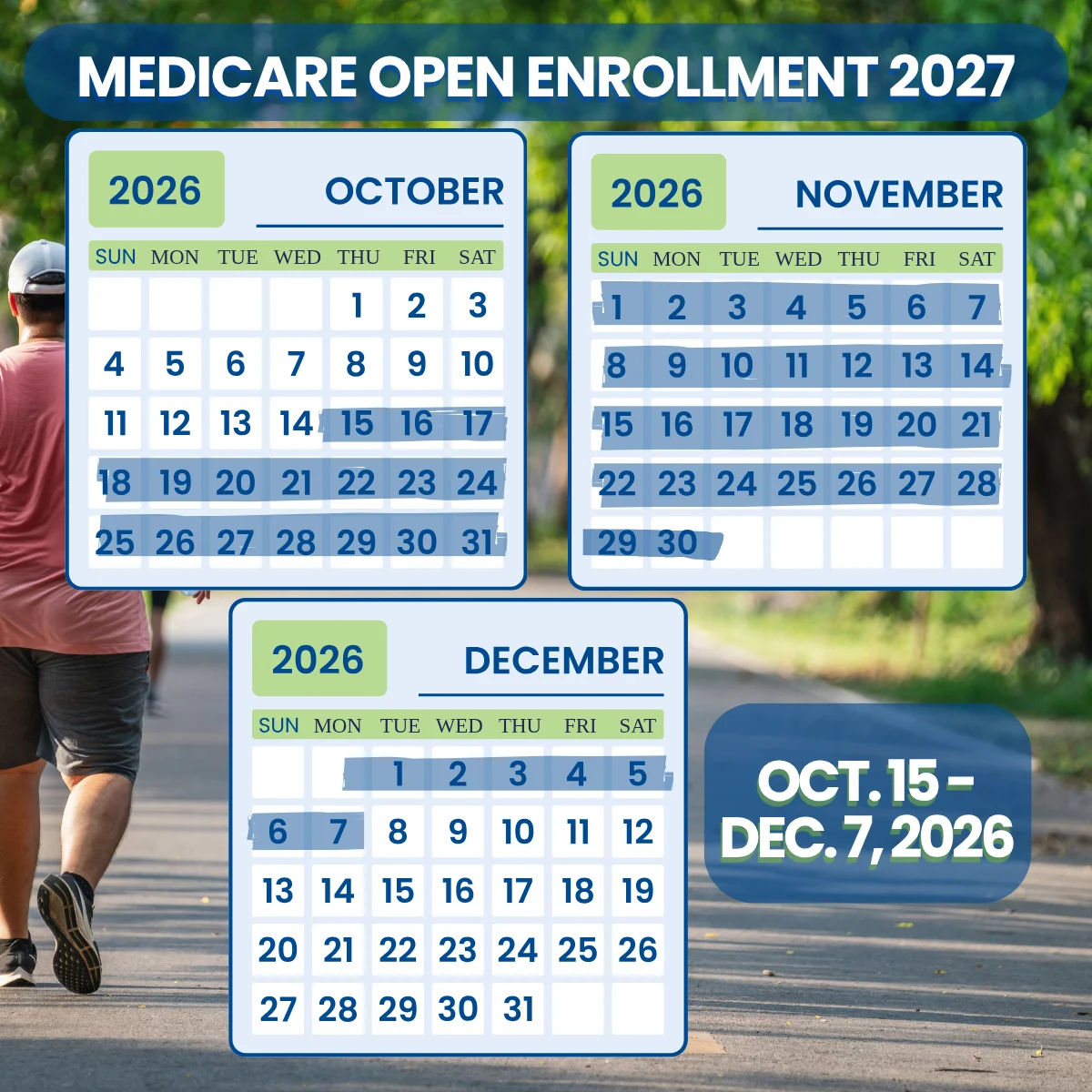
WASHINGTON D.C. — As the annual Medicare Open Enrollment period enters its peak weeks, health policy experts and patient advocacy groups are issuing a targeted call to action for beneficiaries who have historically opted out of prescription drug coverage. This year, the decision to enroll in Medicare Part D carries unprecedented weight, serving as the mandatory gateway to the newly announced Medicare GLP-1 Bridge program—a federal initiative designed to provide affordable access to breakthrough obesity medications.
n
For millions of seniors, the window between October 15 and December 7 represents more than just a routine paperwork update; it is a high-stakes opportunity to secure access to life-changing treatments for chronic weight management that were previously financially out of reach for those on fixed incomes.
n
Main Facts: The Intersection of Part D and Obesity Care
n
The landscape of Medicare coverage is undergoing a seismic shift. Traditionally, Medicare Part D was viewed as a "nice-to-have" insurance for those with few prescriptions or as a safety net for future illnesses. However, the introduction of the Medicare GLP-1 Bridge program has fundamentally altered this calculus.
n
The Bridge Program Defined
n
Beginning July 1, 2026, the Medicare GLP-1 Bridge program will offer eligible beneficiaries living with obesity access to specific GLP-1 (glucagon-like peptide-1) receptor agonists for a flat $50 monthly copay. This program aims to bypass the traditional statutory exclusions that have prevented Medicare from covering weight-loss medications since the Medicare Modernization Act of 2003.
n
The Mandatory Prerequisite
n
The most critical fact for beneficiaries to understand is the "eligibility link." To participate in the Bridge program and access medications like Wegovy or Zepbound at the subsidized rate, a beneficiary must be enrolled in a Medicare Part D plan or a Medicare Advantage plan with prescription drug coverage (MA-PD). Individuals who rely solely on Original Medicare (Part A and Part B) without a standalone Part D plan will be ineligible for the Bridge program, regardless of their medical diagnosis or financial need.
n
The Enrollment Window
n
The current Open Enrollment period, ending December 7, is the primary opportunity for beneficiaries to secure the necessary coverage for the 2027 plan year. For those looking ahead to the Bridge’s launch in mid-2026, the decisions made this autumn are foundational.
n
n
Chronology: The Evolution of Medicare’s Obesity Coverage
n
To understand the urgency of the current enrollment period, one must look at the timeline of legislative and regulatory shifts that led to this moment.
n
- n
- 2003: The Statutory Ban. The Medicare Prescription Drug, Improvement, and Modernization Act (MMA) explicitly prohibited Medicare Part D plans from covering "agents when used for anorexia, weight loss, or weight gain." This effectively locked millions of seniors out of the obesity treatment market for two decades.
- 2023-2024: The GLP-1 Revolution. The FDA approval of GLP-1 medications for chronic weight management—and subsequent data showing their efficacy in reducing cardiovascular risks—triggered a national debate. In early 2024, CMS (Centers for Medicare & Medicaid Services) issued guidance allowing Part D coverage of these drugs only if they were prescribed for a secondary, FDA-approved use, such as reducing the risk of heart attacks in patients with established cardiovascular disease.
- July 1, 2026: The Bridge Launch. Recognizing that many patients with obesity do not yet have established heart disease but require intervention to prevent it, the federal government scheduled the launch of the Medicare GLP-1 Bridge. This temporary program serves as a clinical and financial "bridge" while Congress considers permanent legislative changes like the Treat and Reduce Obesity Act (TROA).
- October 15 – December 7, 2025/2026: These enrollment windows are the critical periods for beneficiaries to align their Part D coverage with the Bridge’s requirements.
n
n
n
n
n
n
Supporting Data: Costs, Penalties, and Demographics
n
The financial implications of missing the Part D enrollment window are significant, particularly for those who have deferred coverage for several years.
n
The Late Enrollment Penalty (LEP)
n
Medicare imposes a lifetime penalty on those who go 63 days or more without "creditable" prescription drug coverage after their Initial Enrollment Period.
n
- n
- The Math: The penalty is calculated as 1% of the "national base beneficiary premium" ($34.70 in 2024, though it fluctuates annually) for every full, uncovered month.
- The Impact: If a senior has gone five years (60 months) without coverage, they would face a 60% surcharge on their Part D premium every month for the rest of their life.
- The Exception: Beneficiaries who qualify for "Extra Help" (the Low-Income Subsidy) are generally exempt from this penalty, making it even more vital for low-income seniors to investigate their status during Open Enrollment.
n
n
n
n
The Cost of Obesity in the Medicare Population
Data from the National Health and Nutrition Examination Survey (NHANES) indicates that approximately 40% of Americans aged 65 and older live with obesity. Without the Bridge program, the out-of-pocket cost for GLP-1 medications can exceed $1,000 per month. The $50 copay offered by the Bridge represents a 95% reduction in cost, provided the beneficiary has paid their Part D premium.
Plan Comparison Metrics
During this enrollment period, experts urge beneficiaries to look beyond the monthly premium. Supporting data suggests that:
- Formulary Variation: 100% of Part D plans cover some form of insulin, but coverage for "weight-adjacent" metabolic drugs varies by over 60% between carriers.
- Network Restrictions: Utilizing "preferred" pharmacies can reduce out-of-pocket costs by an average of 15-20% compared to standard pharmacies.
Official Responses and Expert Guidance
The Obesity Action Coalition (OAC), a leading advocacy group, has been at the forefront of educating the public on these changes. In a recent statement, the OAC emphasized that "The Medicare GLP-1 Bridge is a landmark victory for health equity, but it is a tool that only works if the beneficiary is already inside the Medicare Part D system."
CMS Recommendations
The Centers for Medicare & Medicaid Services (CMS) encourages beneficiaries to use the official Medicare.gov Plan Compare tool. This digital resource allows users to:
- Input their current list of medications.
- Compare the "Total Annual Cost" (Premium + Deductible + Copays).
- Identify which plans require "Prior Authorization" or "Step Therapy"—common hurdles for GLP-1 prescriptions.
Clinical Perspective
Dr. Elena Rodriguez, a geriatrician specializing in metabolic health, notes: "Many of my patients avoided Part D because they ‘didn’t take pills.’ With the Bridge program, we are now talking about injectable biologics that can prevent strokes, kidney failure, and mobility loss. The Part D premium is no longer just a drug cost; it’s an investment in preventative surgery-avoidance."
Implications: A New Era for Public Health and Policy
The integration of the GLP-1 Bridge with Medicare Part D has far-reaching implications for the American healthcare system.
1. Shift Toward Preventative Care
By incentivizing Part D enrollment through the promise of obesity treatment, Medicare is pivoting from a "reactive" system (treating the consequences of obesity, such as diabetes and joint replacement) to a "proactive" system. This could potentially save the Medicare Trust Fund billions in the long term by reducing the incidence of chronic comorbidities.
2. Pressure for Permanent Reform
The "Bridge" is, by definition, temporary. Its success or failure will likely dictate the future of the Treat and Reduce Obesity Act (TROA). If Part D enrollment spikes and the Bridge program shows significant health improvements among seniors, it will provide the data necessary for Congress to permanently repeal the 2003 ban on weight-loss medication coverage.
3. The Digital Divide and Enrollment Barriers
The complexity of the Bridge program—requiring both a specific medical diagnosis and a specific insurance product (Part D)—highlights the ongoing "navigation gap" in Medicare. Beneficiaries who lack digital literacy or access to specialized SHIP (State Health Insurance Assistance Programs) counselors may find themselves inadvertently disqualified from the $50 copay benefit.
4. Market Dynamics for Insurers
Medicare Advantage plans are now in a race to optimize their formularies. To attract the millions of seniors interested in the GLP-1 Bridge, insurers must ensure their MA-PD products are competitive, not just on price, but on the ease of access to the Bridge’s administrative requirements.
Conclusion: The December 7 Deadline
As the December 7 deadline approaches, the message from health officials is clear: Do not leave your eligibility to chance. Even if you currently take no medications, the landscape of 2026 and 2027 will be defined by access to metabolic health tools.
Beneficiaries are urged to log into Medicare.gov, review their "Evidence of Coverage" documents, and confirm that they have a Part D component in their 2027 plan. For those living with obesity, this Open Enrollment isn’t just about choosing a pharmacy; it’s about securing a seat on the bridge to a healthier future.
Resource Directory for Beneficiaries:
- Medicare Plan Finder: www.medicare.gov/plan-compare
- OAC Bridge Resources: www.obesityaction.org/medicare-bridge
- Medicare Helpline: 1-800-MEDICARE (1-800-633-4227)
- SHIP National Network: www.shiphelp.org (For free, personalized counseling)

