
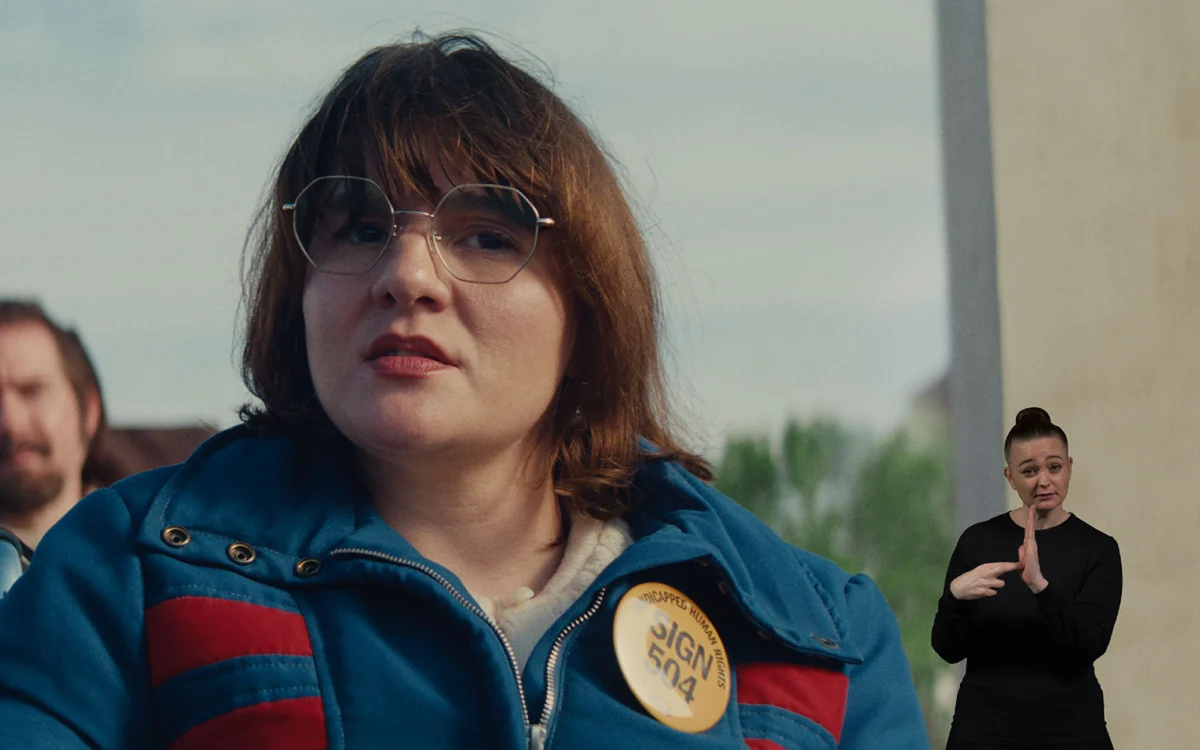
CUPERTINO, CA – [Date of Publication] – In a significant move set to redefine accessibility standards in digital entertainment, Apple has announced the integration of sign language interpretation for select titles on its Apple TV streaming service. This groundbreaking initiative, launched strategically to coincide with the release of "Being Heumann," a powerful Apple Original film chronicling the life and activism of disability rights pioneer Judy Heumann, underscores Apple’s deepening commitment to inclusivity for Deaf and hard-of-hearing audiences worldwide.
n
The announcement heralds a new era for accessible storytelling, making premium content more widely available and culturally relevant to millions of sign language users. The initial rollout features American Sign Language (ASL) and British Sign Language (BSL) interpretation, with plans for broader expansion.
n
Main Facts: Apple TV+ Elevates Accessibility with Groundbreaking Sign Language Integration
n
Apple TV+ has officially rolled out sign language interpretation for a growing library of its original content, marking a pivotal moment in the evolution of digital media accessibility. This feature, which superimposes a sign language interpreter onto the screen during playback, is designed to provide a more immersive and culturally congruent viewing experience for Deaf and hard-of-hearing individuals who communicate primarily through sign language.
n
A New Era for Deaf and Hard-of-Hearing Audiences
n
The introduction of dedicated sign language interpretation is far more than a mere technical upgrade; it represents a profound recognition of the linguistic and cultural distinctiveness of the Deaf community. For native signers, captions, while vital, do not fully capture the nuance, emotion, and flow of spoken dialogue in the same way that a human interpreter, visible on screen, can. This new feature aims to bridge that gap, offering a direct and culturally affirming pathway to engage with cinematic narratives. The immediate availability of both ASL and BSL addresses the distinct linguistic needs of two major sign language communities, signaling a thoughtful and expansive approach to global accessibility.
n
The timing of this launch is particularly poignant, aligning with the premiere of "Being Heumann." This choice is deliberate, as the film itself delves into the historical struggles and triumphs of the disability rights movement, making it a powerful statement on the importance of access and representation. By ensuring that a story central to the Deaf and disability experience is directly accessible in their native language, Apple TV+ reinforces the message of empowerment and inclusion that the film embodies.
n
Pioneering Inclusivity: "Being Heumann" Leads the Charge
n
At the forefront of this initiative is "Being Heumann," the Apple Original film that debuted on the streaming service last week. This biographical drama stars Ruth Madeley, an actress who lives with spina bifida, as the iconic Judy Heumann. The film is based on Heumann’s influential memoir of the same name and vividly portrays her instrumental role in the 1977 San Francisco Federal Building sit-in. This nearly month-long protest was a crucial catalyst, ultimately pressuring the U.S. government to enforce Section 504 of the Rehabilitation Act, a landmark piece of legislation mandating accessibility in federally funded spaces. The decision to make "Being Heumann" immediately accessible with sign language interpretation underscores the symbiotic relationship between content and access, particularly when the content itself champions the very principles of inclusivity.
n
Beyond "Being Heumann," Apple has confirmed that other significant titles are also receiving or are slated to receive sign language interpretation. These include the highly anticipated 2025 Formula 1 movie "F1," as well as "Way of the Warrior Kid" and the World War II drama "Greyhound." This initial slate demonstrates a commitment to diverse genres, ensuring that a broad range of audiences can benefit from this new accessibility option. The technical implementation, featuring an interpreter seamlessly superimposed on the screen, has been developed with rigorous testing and input from Deaf individuals and native signers, ensuring the interpretation is not only accurate but also artistically complementary to the film’s narrative. Daniel Durant, a Deaf actor who portrays disability rights activist Steve McClelland in "Being Heumann," took on the critical role of directing the sign language interpretation for the film, adding an invaluable layer of authenticity and cultural insight to the project.
n
Chronology: A Timeline of Progress in Digital Accessibility
n
The journey towards comprehensive accessibility in media has been a protracted one, marked by continuous advocacy, technological advancements, and evolving social consciousness. Apple’s latest endeavor builds upon decades of efforts to make content universally available, positioning itself as a leader in this ongoing evolution.
n
The Genesis of an Idea: From Advocacy to Implementation
n
The concept of media accessibility gained significant traction with the advent of closed captions in the 1970s, a response to persistent demands from the Deaf and hard-of-hearing communities. While captions provided textual access, they often fell short for native signers for whom English (or other spoken languages) might be a second language, or whose primary mode of communication is visual and gestural. The demand for sign language interpretation in media, particularly in visual storytelling, has grown steadily, advocating for a truly linguistically and culturally accessible experience.
n
The disability rights movement, gaining momentum in the mid-20th century, laid the groundwork for legislative mandates like Section 504 of the Rehabilitation Act. The 1977 sit-in at the San Francisco Federal Building, vividly depicted in "Being Heumann," was a watershed moment, demonstrating the power of collective action in demanding equal rights and access. The success of this protest highlighted the critical need for federal spaces, and by extension, public services and information, to be accessible to all. In recent years, documentaries like "Crip Camp: A Disability Revolution" (2020), which also features Judy Heumann and chronicles the origins of the disability rights movement, have brought these historical struggles and their relevance to contemporary audiences into sharper focus, further amplifying the call for greater inclusion across all sectors, including entertainment. The release of "Being Heumann" with ASL/BSL interpretation directly connects this historical fight for access to modern technological solutions, offering a full-circle moment for the disability community.
n
Apple’s Journey Towards Inclusivity
n
Apple has long positioned itself as a champion of accessibility, integrating a suite of features across its hardware and software ecosystem. From VoiceOver for visually impaired users to AssistiveTouch for those with motor skill challenges, and Live Captions for real-time transcription, the company has consistently invested in tools that empower users with diverse needs. This latest initiative on Apple TV+ is not an isolated development but a natural extension of this ingrained philosophy.
n
The development process for the sign language interpretation feature was rigorous and collaborative. Apple emphasized working closely with Deaf individuals and native signers throughout the design and testing phases. This iterative process ensured that the on-screen interpretation was not only technically proficient but also culturally sensitive and linguistically accurate. The decision to involve Deaf talent like Daniel Durant in directing the interpretation for "Being Heumann" further exemplifies this commitment to authentic representation and expertise, moving beyond mere compliance to genuine co-creation. This collaborative approach is crucial in avoiding common pitfalls where accessibility features, though well-intentioned, fail to meet the actual needs and preferences of the target community.
n
Benchmarking Against Industry Standards: HBO Max’s Precedent
n
While Apple’s entry into on-screen sign language interpretation is a significant milestone for its platform, it is important to note that it is not the first streaming service to venture into this specialized form of accessibility. HBO Max (now Max) pioneered this option in 2023, notably with the blockbuster film "Barbie." This initial offering was well-received, prompting the platform to expand its interpreted content to include other popular titles such as "Godzilla x Kong: The New Empire," "Beetlejuice Beetlejuice," and "The Last of Us."
n
HBO Max’s early adoption set a precedent, demonstrating the viability and demand for such a feature. Apple’s move now solidifies this trend, indicating a broader industry recognition of the importance of sign language interpretation. While the specific implementation details between platforms may vary, the overarching goal remains the same: to dismantle communication barriers and ensure that visual entertainment is truly accessible to Deaf audiences. This friendly competition among streaming giants is a positive development, likely to spur further innovation and expansion of accessibility features across the digital entertainment landscape.
n
Supporting Data: The Landscape of Deaf Audiences and Media Consumption
n
The decision by Apple to invest heavily in sign language interpretation is backed by compelling demographic data and a growing understanding of the unique media consumption patterns and cultural needs of the Deaf community.
n
The Deaf Community: A Significant and Underserved Demographic
n
Globally, the World Health Organization estimates that over 430 million people have disabling hearing loss, with a significant portion of this population relying on sign languages as their primary form of communication. In the United States alone, estimates suggest that hundreds of thousands, if not millions, use ASL. The UK also has a substantial population of British Sign Language users. These are not merely individuals with hearing impairments; they represent vibrant linguistic and cultural communities with distinct communication preferences and a strong desire for content that reflects their identity and is presented in their native language.
n
For native signers, sign language is not simply a translation of a spoken language; it is a distinct language with its own grammar, syntax, and cultural nuances. Therefore, relying solely on written captions, which are often direct translations of spoken dialogue, can be akin to reading a foreign language for some Deaf individuals. A superimposed interpreter, by contrast, offers a direct linguistic pathway, allowing viewers to engage with the narrative in their primary language, capturing emotional subtleties, comedic timing, and dramatic tension that might otherwise be lost. This is why the method of having a human interpreter on screen, rather than relying on AI or simply text, is so crucial for authentic engagement. It respects the cultural and linguistic integrity of sign language.
n
Economic and Social Imperatives for Accessibility
n
Beyond the moral imperative, there is a compelling business case for enhanced accessibility. The disability community collectively wields significant purchasing power, often referred to as the "purple pound" in the UK or the "disability dollar" in the US. By making content accessible, companies tap into a loyal and underserved market segment. Furthermore, accessible products and services often benefit a broader audience; for example, captions are used by individuals in noisy environments or those learning a new language. Investing in accessibility is not merely about compliance; it is about expanding market reach, fostering brand loyalty, and reinforcing a corporate image of social responsibility and innovation.
n
In an increasingly competitive streaming market, differentiated accessibility features can become a key selling point, attracting and retaining subscribers from diverse backgrounds. As consumers become more socially conscious, companies that demonstrate a genuine commitment to inclusivity are likely to resonate more strongly with their audience base.
n
The Craft of Interpreted Storytelling
Daniel Durant’s insight that "Bringing this experience to life required a lot of care to ensure every translation captured the emotion and meaning of the story," highlights the intricate artistry involved in sign language interpretation for film. This is far from a mechanical word-for-word translation. A skilled interpreter must convey not only the literal dialogue but also the character’s tone, body language, facial expressions, and emotional state, all while maintaining the pace and rhythm of the original performance.
For a film like "Being Heumann," which is deeply emotional and historically significant, the interpreter’s role becomes even more critical. They must accurately translate complex political concepts, personal struggles, and moments of triumph, ensuring that the Deaf audience receives the full impact of the narrative. The interpreter also needs to be mindful of visual composition, ensuring their presence on screen complements rather than detracts from the cinematic experience. This meticulous approach, guided by Deaf professionals, ensures that the interpretation is not just functional but also a true artistic complement to the film.
Official Responses: Voices from Apple and the Disability Community
The launch of sign language interpretation has been met with enthusiastic endorsements from Apple leadership and key figures within the Deaf community, underscoring the collaborative spirit behind this initiative.
Apple’s Commitment: A Core Value
Sarah Herrlinger, Apple’s Senior Director of Global Accessibility Policy and Initiatives, articulated the company’s philosophy: "Bringing sign language interpretation to Apple TV is an exciting step forward in making the viewing experience more accessible and inclusive for Deaf audiences. Accessibility is a core value at Apple, and we’re proud to continue creating experiences that allow more people to enjoy the content they love."
Herrlinger’s statement is more than corporate rhetoric; it reflects a long-standing commitment embedded within Apple’s product development cycles. For years, Apple has been lauded for integrating accessibility features from the ground up, rather than treating them as afterthoughts. This "core value" approach means that accessibility is considered alongside other design principles like usability and aesthetics, ensuring that inclusive features are robust, intuitive, and seamlessly integrated into the user experience. This holistic view of accessibility is what distinguishes Apple’s efforts and sets a high bar for the industry. The move into sign language interpretation for streaming content is a natural progression of this ethos, extending Apple’s accessibility leadership into the entertainment sphere.
The Filmmaker’s Perspective: Daniel Durant’s Vision
Daniel Durant’s involvement in directing the sign language interpretation for "Being Heumann" is a testament to Apple’s dedication to authentic representation. As a Deaf actor playing a pivotal role in the film and now overseeing its interpretation, Durant brings an unparalleled level of insight and lived experience to the project. His dual role bridges the gap between creator and audience, ensuring the interpretation resonates deeply with Deaf viewers.
Durant’s personal connection to the subject matter—a film about a disability rights icon—further amplifies the significance of his contribution. He understands not just the technicalities of sign language, but the cultural weight of the narrative and the emotional impact it must convey. His pride in the project and his enthusiasm for Apple TV’s support for Deaf audiences are palpable, highlighting the positive impact of such initiatives when guided by the very communities they aim to serve. His quote underscores that this was not merely a technical exercise, but an artistic endeavor to preserve the story’s integrity through a different linguistic medium.
Anticipated Reception from Advocates and Audiences
The initiative is expected to be widely celebrated by disability rights organizations, Deaf advocacy groups, and individual sign language users. For too long, the Deaf community has faced barriers to fully participating in mainstream culture, particularly in entertainment. This move by Apple TV+ represents a significant step towards dismantling those barriers, offering a sense of belonging and cultural validation.
The user experience for accessing these features has also been thoughtfully designed. Apple TV will feature a distinct sign language icon for interpreted titles, and viewers will be able to search for content using phrases like "with ASL." The interpretation can be activated directly through Apple TV settings and a dedicated sign language button during playback, ensuring ease of access. This attention to user interface and discoverability is crucial for maximizing the impact of the new feature and ensuring it reaches its intended audience effectively.
Implications: Paving the Way for a More Inclusive Digital Future
Apple TV+’s foray into widespread sign language interpretation carries significant implications, not only for the streaming industry but for the broader landscape of digital inclusivity and cultural representation.
Setting a New Industry Standard
By investing in and meticulously implementing on-screen sign language interpretation, Apple TV+ is setting a new benchmark for accessibility in the streaming world. While HBO Max made initial strides, Apple’s extensive ecosystem, global reach, and reputation for innovation mean that its commitment is likely to exert considerable influence across the industry. This could ignite a "race to the top," compelling other streaming platforms and content creators to evaluate and enhance their own accessibility offerings, moving beyond basic captions and audio descriptions to more linguistically and culturally specific solutions. This competitive push would ultimately benefit countless Deaf and hard-of-hearing viewers who have historically been underserved. The conversation around accessibility will shift from mere compliance to integrated, thoughtful design that considers diverse user needs from the outset of content production.
Expanding the Narrative: The Power of Authentic Representation
The decision to launch this feature with "Being Heumann" is particularly impactful. It ensures that a story celebrating a pivotal figure in the disability rights movement is directly accessible to the very community whose history it chronicles. This not only broadens the audience for such vital narratives but also amplifies the message of empowerment and the ongoing struggle for equality. When content about disability is made accessible to people with disabilities, it validates their experiences and reinforces the importance of their voices. This fosters a deeper connection between the audience and the content, transforming passive viewing into active engagement and cultural affirmation. It’s about more than just watching a movie; it’s about seeing one’s history and identity reflected and respected.
The Future of Accessible Entertainment
Looking ahead, Apple’s initiative opens doors for further innovation in accessible entertainment. This could include expanding the range of sign languages offered, integrating more interactive interpretation options, or even leveraging advanced AI to assist in the interpretation process while retaining human oversight for accuracy and nuance. The continuous dialogue between technology companies and user communities will be essential in shaping these future developments, ensuring that technological advancements truly meet the evolving needs and preferences of diverse audiences.
Ultimately, Apple TV+’s commitment to sign language interpretation is a powerful statement about the future of digital media: one where universal design is paramount, where linguistic and cultural diversity is celebrated, and where entertainment is truly accessible to all. This move marks a significant step towards a more inclusive digital age, reinforcing the idea that access is not a privilege, but a fundamental right. It signifies a societal shift where companies are increasingly recognizing the moral, social, and economic imperatives of designing for everyone, transforming the viewing experience for millions and enriching the cultural landscape for all.

