
The journey of a thousand miles begins with a single step, but for those living with Type 1 Diabetes (T1D), every step is a calculated negotiation between biology, technology, and sheer willpower. For Chris Ronzio, a CEO, father, and competitive endurance athlete, those steps have spanned five continents and raised over $1 million for medical research. His story is not merely one of personal triumph over a chronic condition; it is a testament to the evolving landscape of T1D advocacy and the transformative power of community-driven philanthropy.
n
Main Facts: The Intersection of Leadership, Athletics, and Advocacy
n
At the heart of this narrative is Chris Ronzio, the founder and CEO of a 140-person company, who has spent more than three decades managing the complexities of Type 1 Diabetes. Diagnosed in 1994 at the age of nine, Ronzio has transitioned from a child navigating a frightening diagnosis to a global ambassador for Breakthrough T1D (formerly JDRF).
n
Type 1 Diabetes is an autoimmune disease in which the pancreas produces little to no insulin, a hormone required to allow sugar (glucose) to enter cells to produce energy. Unlike Type 2 diabetes, T1D is not related to diet or lifestyle; its onset is sudden and its management is a 24/7 commitment. For Ronzio, this management has been "woven into every part of life," serving as a backdrop to his professional success and his grueling schedule as an endurance athlete.
n
The primary vehicle for Ronzio’s advocacy is the Breakthrough T1D Run program, a global initiative that invites athletes to participate in some of the world’s most prestigious races—the Abbott World Marathon Majors—to raise funds for T1D research. Ronzio’s efforts have culminated in a staggering $1 million raised, a milestone that underscores the potential for individual impact within the broader mission to find a cure.
n
Furthermore, the organization has recently expanded its reach through the "My Run" initiative. This program seeks to democratize the fundraising experience, allowing participants of all skill levels to contribute to the cause without the daunting requirement of a 26.2-mile commitment. By "reimagining the starting line," Breakthrough T1D is moving toward a more inclusive model of advocacy that recognizes every mile logged as a step toward a cure.
n
Chronology: Thirty-Two Years of Resilience and Innovation
n
The timeline of Chris Ronzio’s experience mirrors the technological revolution in diabetes care over the last three decades.
n
1994: The Diagnosis
n
At age nine, Ronzio was diagnosed during an era when blood glucose monitoring was cumbersome and insulin delivery was largely restricted to manual injections. However, Ronzio quickly became a pioneer in the patient community. He was among the first teenagers globally to adopt the insulin pump—a device that provides a continuous flow of insulin, mimicking the function of a healthy pancreas more closely than injections.
n
1994–2021: The Formative Years of Advocacy
n
From the outset, Ronzio was a regular participant in the Breakthrough T1D Walks. These local events served as his introduction to the T1D community. As he transitioned into adulthood and built a successful career as a CEO, his commitment to the cause grew alongside his physical ambitions. He moved from walking to running, eventually setting his sights on the "World Majors"—a series of the most elite marathons across the globe.
n
2022: The Boston Marathon Milestone
n
The 2022 Boston Marathon represented a "full-circle moment" for Ronzio. Growing up in Boston, the race held deep personal significance. Running through his home streets while wearing the Breakthrough T1D colors allowed him to bridge his childhood identity with his adult mission. It was here that the emotional weight of the "invisible disease" became visible, as he ran for the millions of people who manage the same daily struggles.
n
2026: The London Marathon and the Million-Dollar Mark
n
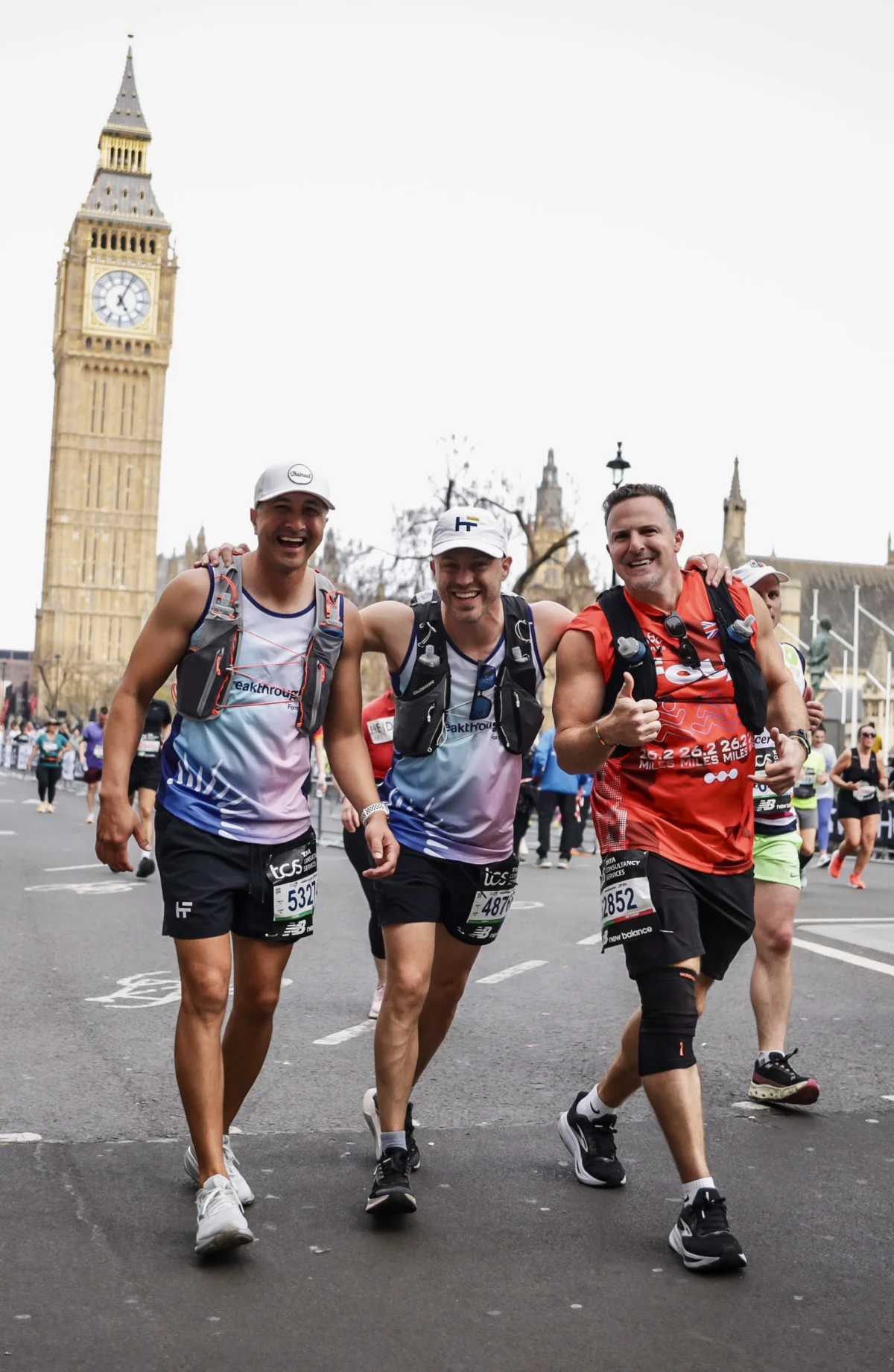
By the time Ronzio reached the 2026 TCS London Marathon, his fundraising total had surpassed the $1 million mark. Standing before Big Ben, flanked by fellow T1D runners, Ronzio exemplified the "early adopter" spirit he embraced as a teenager. His participation in London was not just about the distance; it was a celebration of the $1 million in research funding that he helped facilitate—funding that moves the needle on therapies like artificial pancreas systems and beta-cell encapsulation.

n
Supporting Data: The Magnitude of the Mission
n
The efforts of individuals like Ronzio are set against a backdrop of significant medical and economic urgency.
n
The Prevalence of T1D
n
Approximately 1.45 million Americans are living with T1D, with roughly 64,000 people diagnosed each year in the United States alone. Globally, the numbers are even more staggering, necessitating a massive infusion of capital into research and development.
n
The Cost of Management
n
The financial burden of T1D is substantial. Between 2012 and 2016, the cost of insulin in the U.S. nearly doubled. Advocacy groups like Breakthrough T1D focus not only on cures but also on "treat and prevent" strategies that include making insulin more affordable and reducing the daily burden of care.
n
The Abbott World Marathon Majors
n
Breakthrough T1D leverages the global platform of the Abbott World Marathon Majors. This series includes:
n
- n
- Sydney (The newest addition to the Majors)
- Boston
- Berlin
- Chicago
- New York City
- Tokyo
- London
- Cape Town
n
n
n
n
Participating in these races requires athletes to meet high fundraising minimums, often ranging from $3,000 to over $10,000 per race. Ronzio’s ability to raise $1 million indicates a highly engaged network and a sophisticated approach to philanthropic storytelling.
The "My Run" Incentive Structure
To broaden the donor base, the "My Run" program introduced a tiered reward system in 2026 to incentivize grassroots fundraising:
- $150: Breakthrough T1D T-shirt
- $300: Performance Singlet
- $500: Snapback Hat
- $1,000: The North Face Backpack
- $5,000: The North Face Vest
- $10,000: The North Face 3-in-1 Jacket
- $15,000: Apple iPad with a custom Breakthrough T1D case
Official Responses: Perspectives from the Front Lines
The leadership at Breakthrough T1D emphasizes that the organization’s strength lies in its versatility and the shared lived experience of its members.
Anthony Geraci, National Director of Breakthrough T1D Ride and Endurance, highlights the philosophy behind the "My Run" initiative:
"When we built My Run last year, the whole point was to reimagine the starting line. You don’t have to be a marathoner to make an impact. You can walk a mile or run a mile, log it on a treadmill or out on a trail… every distance, every pace, and every ability moves our mission forward."
Geraci’s comments reflect a strategic shift toward "endurance for all," acknowledging that the grit required to manage T1D daily is, in itself, a form of endurance.

Emily Mazreku, a Breakthrough T1D staff member and "My Run" participant, shares the personal motivation that drives the community. Celebrating her 10th "dia-versary" (the anniversary of her diagnosis), Mazreku pledged to run 100 miles and raise $1,000.
"Every mile will be a reminder and a celebration of how far I’ve come, how far research has come, and everyone who has supported me along the way," Mazreku stated.
Chris Ronzio himself views the athletic challenges as a training ground for life with the disease.
"Learning to manage T1D through all the variables of training and racing—the fueling, the glucose swings, the unexpected curveballs—makes managing the day-to-day so much easier," Ronzio noted. "Diabetes can feel incredibly isolating… These races crack that open."
Implications: The Path Toward a World Without T1D
The implications of Ronzio’s journey and the Breakthrough T1D movement extend far beyond the finish lines of marathons. They signal a shift in how chronic diseases are managed, perceived, and eventually cured.
1. The Psychological Impact of Community
One of the most profound implications of the Run program is the mitigation of "diabetes burnout." T1D is often described as an "invisible" illness; a person may look perfectly healthy while their internal systems are in a state of constant fluctuation. By congregating in public spaces like the London or Boston Marathons, participants transform an isolating struggle into a collective triumph. This community support is vital for mental health, reducing the stigma and loneliness often associated with the disease.
2. Technological Acceleration
The $1 million raised by Ronzio and the millions more raised by the Breakthrough T1D community directly fund the next generation of therapies. We are currently seeing the results of previous decades of fundraising: Continuous Glucose Monitors (CGMs) that talk to insulin pumps, and the development of "smart" insulins that respond to blood sugar levels in real-time. The ultimate goal remains "cures"—plural—referring to both biological cures (cell replacement) and functional cures (advanced technology that removes the burden of management).
3. Advocacy and Accessibility
The movement also carries political and economic implications. As more high-profile individuals like Ronzio share their stories, the pressure on policymakers to address insulin affordability and healthcare access increases. The "mission behind the miles" includes a future with fewer finger pokes, fewer dangerous hypoglycemic episodes, and a healthcare system that supports the innovations necessary for T1D patients to thrive, not just survive.
4. Redefining the "Athlete"
Finally, the success of the "My Run" program suggests a broader definition of what it means to be an advocate. By removing registration fees and fundraising minimums for the "My Run" tier, Breakthrough T1D is fostering a new generation of philanthropists. It suggests that the fight against T1D is not just for the elite marathoner, but for anyone willing to log a mile on a treadmill or a local park trail.
As Chris Ronzio continues to watch his two sons, his "urgency" for a cure is fueled by both a father’s love and an athlete’s discipline. With over 32 years of experience and five continents behind him, Ronzio remains steadfast in his belief that a cure is not a matter of "if," but "when." Until that day, he and the Breakthrough T1D community will keep running, proving that while the disease may be woven into their lives, it does not define the distance they can go.

