
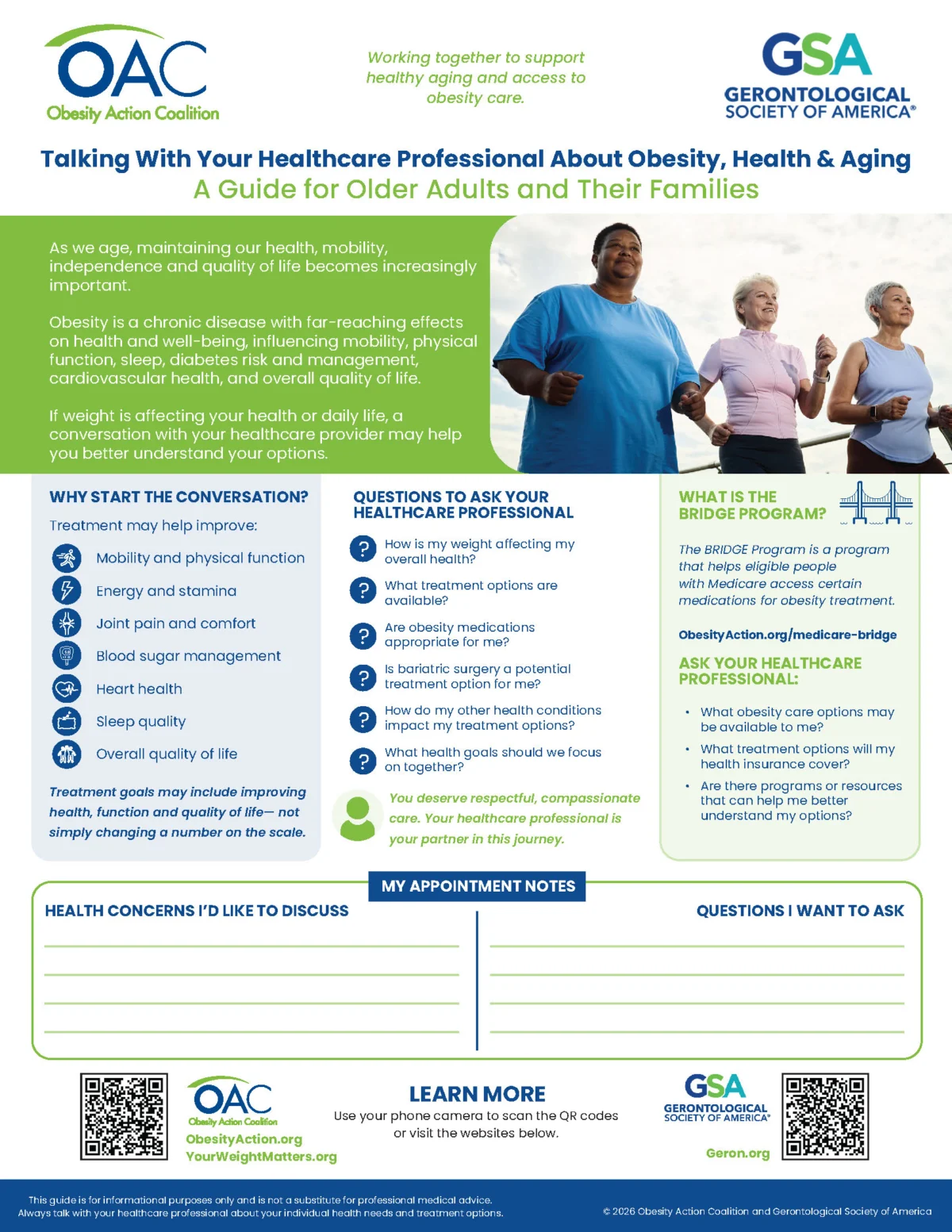
In a significant move toward improving the clinical landscape for the aging population, the Gerontological Society of America (GSA) and the Obesity Action Coalition (OAC) have announced the release of a landmark resource titled Talking With Your Healthcare Professional About Obesity, Health & Aging. This collaborative effort aims to dismantle the barriers of communication between older adults and their medical providers, shifting the focus from mere weight loss to the broader, more vital goals of functional independence, mobility, and overall quality of life.
n
The guide arrives at a critical juncture in public health, as the "Silver Tsunami"—the rapid aging of the global population—intersects with a rising prevalence of obesity among seniors. By combining GSA’s clinical expertise in the complexities of aging with OAC’s long-standing dedication to patient advocacy and education, the two organizations have created a roadmap for respectful, individualized, and effective obesity management in the later stages of life.
n
Main Facts: A New Approach to Geriatric Obesity
n
The primary objective of the Talking With Your Healthcare Professional About Obesity, Health & Aging guide is to empower older adults to take an active role in their healthcare journey. Unlike traditional weight-loss literature, which often focuses strictly on caloric restriction and aesthetics, this guide emphasizes the "health-first" perspective.
n
Focus on Functional Independence
n
For many older adults, the primary concern regarding weight is not the number on the scale, but rather how that weight affects their daily activities. The guide highlights how obesity can directly impair mobility, increasing the risk of falls and reducing the ability to perform basic tasks such as grocery shopping, bathing, or visiting family. By framing obesity treatment as a tool for maintaining independence, the GSA and OAC aim to increase patient engagement.
n
Collaborative Healthcare Dialogue
n
A central feature of the guide is its practical toolkit for communication. It provides specific, evidence-based questions that patients and their families can bring to the examination room. These questions are designed to bypass the stigma often associated with weight and focus instead on clinical outcomes, such as joint health, cardiovascular stamina, and metabolic stability.
n
Individualized Care Models
n
The guide rejects the "one-size-fits-all" approach to obesity. It acknowledges that an 80-year-old patient has vastly different nutritional and physical needs than a 40-year-old. The collaboration emphasizes that treatment must be compassionate and tailored to the patient’s specific comorbidities, lifestyle, and personal health goals.
n
Chronology: The Evolution of Obesity Management in Aging
n
The development of this guide is the culmination of years of evolving medical understanding regarding the "obesity paradox" and the specific needs of the elderly.
n
The Historical Oversight
n
For decades, obesity in the elderly was often overlooked or even dismissed by the medical community. There was a prevailing sentiment that "it was too late" to intervene in the weight of a senior citizen, or that the risks of weight loss—such as muscle wasting (sarcopenia)—outweighed the benefits. Consequently, many older adults were left without guidance, navigating the complications of obesity in silence.
n
The Rise of Advocacy (2000s–2010s)
n
The Obesity Action Coalition (OAC) was founded in 2005 to give a voice to individuals affected by obesity. Over the last two decades, the OAC has worked to reclassify obesity as a chronic disease rather than a character flaw. Simultaneously, the Gerontological Society of America (GSA), the nation’s oldest and largest interdisciplinary organization devoted to research, education, and practice in the field of aging, began seeing a surge in data suggesting that obesity was a primary driver of disability in the 65+ demographic.
n
The Partnership Formation (2022–2023)
n
Recognizing that neither organization could tackle the intersection of aging and obesity alone, the GSA and OAC began a formal collaboration. The goal was to synthesize the latest geriatric research with patient-centric advocacy. Throughout 2023, experts from both fields worked to distill complex clinical guidelines into a readable, actionable format for the layperson.
n
The Launch (2024)
n
The official release of the guide marks a turning point. It represents a formal acknowledgment by the scientific community that obesity management is a vital component of healthy aging and that the patient’s voice must be at the center of the clinical conversation.
n
Supporting Data: The High Stakes of Obesity in Older Adults
n
The necessity of this guide is underscored by sobering statistics regarding the health of the aging population. As the demographic of adults aged 65 and older grows, so does the clinical burden of obesity-related conditions.
n
Prevalence and Demographics
n
According to the Centers for Disease Control and Prevention (CDC), the prevalence of obesity among adults aged 60 and older has climbed significantly over the past two decades, now exceeding 40% in the United States. This trend is expected to continue as the "Baby Boomer" generation enters their 70s and 80s.
n
The Risk of Sarcopenic Obesity
n
One of the most dangerous conditions addressed by the GSA’s research is "sarcopenic obesity." This occurs when an individual has high body fat alongside low muscle mass. In older adults, this combination is a "perfect storm" for disability. Muscle loss naturally occurs with age, but when compounded by the inflammatory effects of excess adipose tissue, it leads to a rapid decline in strength and balance. The guide provides data-driven insights into how proper treatment can preserve muscle while managing fat.
n
Impact on Chronic Disease
n
Data shows that obesity is a primary driver for several conditions that disproportionately affect seniors:
n
- n
- Osteoarthritis: Every pound of excess weight puts four pounds of extra pressure on the knees.
- Cardiovascular Disease: Obesity remains a leading risk factor for heart failure and stroke in the elderly.
- Type 2 Diabetes: Over 25% of Americans aged 65 and older have diabetes, with obesity being the most significant modifiable risk factor.
The Economic Burden
The healthcare costs for older adults with obesity are significantly higher than those of their healthy-weight peers. These costs stem from increased medication use, more frequent hospitalizations, and a higher need for long-term care facilities due to loss of mobility.
Official Responses: A Commitment to Compassion
The leaders of the GSA and OAC have been vocal about the philosophy behind this new resource, emphasizing that the guide is as much about changing the culture of medicine as it is about providing information.
The Gerontological Society of America (GSA)
In statements regarding the collaboration, GSA representatives emphasized the clinical necessity of the guide. "Aging is a complex process, and obesity adds a layer of complication that requires a nuanced approach," a spokesperson noted. "Our goal with this guide was to provide a framework that respects the biological realities of aging while offering hope for improved vitality. We want to move away from the ‘weight-loss-at-all-costs’ mentality and toward a ‘health-at-any-age’ reality."
The Obesity Action Coalition (OAC)
The OAC has expressed deep gratitude for the partnership, viewing it as a major win for patient rights. "Obesity is often met with bias and stigma, especially in the doctor’s office," the OAC stated. "For an older adult, that stigma can be even more isolating. We are proud to support a resource that encourages respectful, compassionate, and individualized care. This guide is about giving seniors the tools to demand the quality of care they deserve."
Patient Advocates
Family caregivers have also responded positively, noting that the guide helps them navigate difficult conversations with aging parents. By providing a third-party, authoritative resource, the guide helps families discuss health and mobility without the emotional baggage often attached to discussions about weight.
Implications: Changing the Future of Geriatric Care
The release of Talking With Your Healthcare Professional About Obesity, Health & Aging has far-reaching implications for the future of the healthcare industry and the well-being of the elderly.
Shifting the Clinical Conversation
The most immediate implication is the potential shift in how doctors and patients interact. By using the questions provided in the guide, patients can steer conversations toward functional goals—such as "I want to be able to walk my granddaughter to the park"—rather than just discussing Body Mass Index (BMI). This "Person-First" approach is proven to improve patient compliance and mental health outcomes.
Combating Ageism and Weight Bias
The guide serves as a tool to fight "dual stigma"—the intersection of ageism and weight bias. When healthcare providers view an older patient’s weight as "inevitable" or "unimportant," they may fail to provide life-saving interventions. This guide empowers patients to challenge those assumptions and seek proactive care.
Policy and Insurance Coverage
The collaboration between the GSA and OAC also adds weight to the ongoing push for better insurance coverage for obesity treatments. Currently, Medicare coverage for obesity medications and intensive behavioral therapy is limited. By highlighting the clinical necessity of obesity management for healthy aging, these organizations are providing the data needed to advocate for policy changes that would make treatment more accessible to seniors on fixed incomes.
Long-Term Health Outcomes
Ultimately, the widespread adoption of the principles in this guide could lead to a more "resilient" aging population. If older adults can maintain their mobility and metabolic health through better obesity management, the strain on the long-term care system may be reduced. More importantly, millions of individuals will be able to enjoy their later years with greater dignity, independence, and physical comfort.
The Talking With Your Healthcare Professional About Obesity, Health & Aging guide is more than just a pamphlet; it is a manifesto for a more inclusive, scientific, and compassionate approach to senior health. As the GSA and OAC continue their work, the hope is that every older adult feels empowered to have these vital conversations, ensuring that their "golden years" are defined by health and activity, not by the limitations of a chronic condition.

