
Introduction
n
Four years after the United States Supreme Court overturned Roe v. Wade via the Dobbs v. Jackson Women’s Health Organization decision, the landscape of reproductive healthcare in America has been fundamentally reshaped. What was once a federally protected right has devolved into a complex, fragmented patchwork of state-level mandates, where a woman’s ability to access care is determined largely by her zip code, her income, and her digital literacy.
n
The 2026 KFF Women’s Health Survey provides a comprehensive look at this "new normal." Based on a nationally representative sample of 3,538 women ages 18 to 49, the report reveals a nation where medication abortion and telehealth have become vital lifelines, even as legal barriers and rising costs push essential care out of reach for many. As of 2026, 13 states maintain total provision bans, while dozens of others have implemented restrictive gestational limits. The survey results underscore a growing sense of precariousness among American women, with majorities now expressing concern over the safety of future pregnancies and the availability of emergency care.
n
Main Facts: A Nation Divided by Access
n
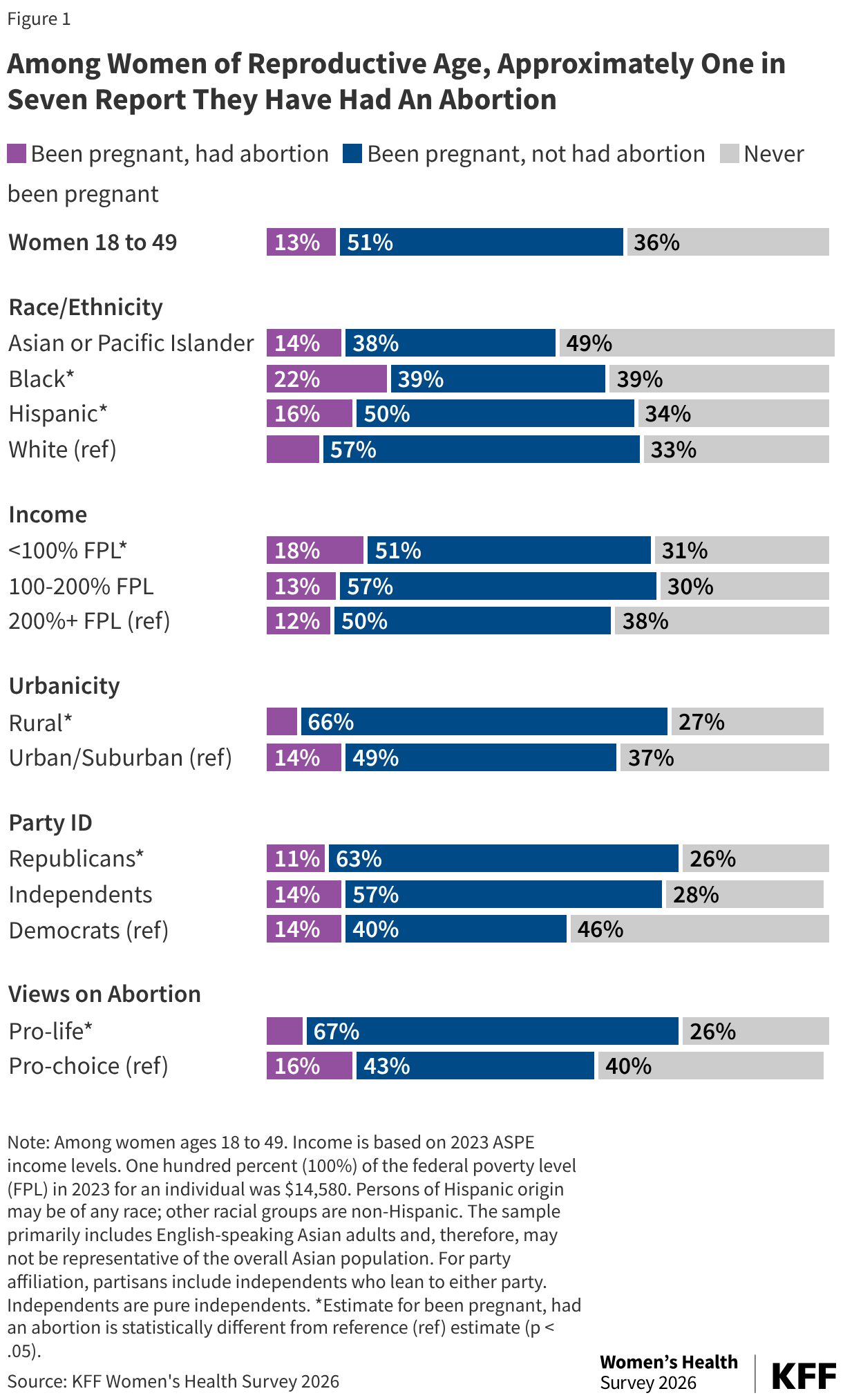
The KFF survey highlights several staggering statistics that define the current era of reproductive health. Perhaps most notably, approximately one in eight women of reproductive age (13%) report having had an abortion at some point in their lives. This figure, however, masks deep demographic disparities. Black women (22%) and Hispanic women (16%) are significantly more likely to have accessed abortion services compared to White women (10%).
n
Socioeconomic status remains the primary predictor of abortion access and experience. Nearly one in five women (18%) living below the federal poverty level report having had an abortion, compared to 12% of those with higher incomes. Furthermore, the survey found that 3% of reproductive-age women—representing hundreds of thousands of individuals—have wanted or needed an abortion at some point but were unable to obtain one. The reasons cited range from the purely financial to the legally insurmountable.
n
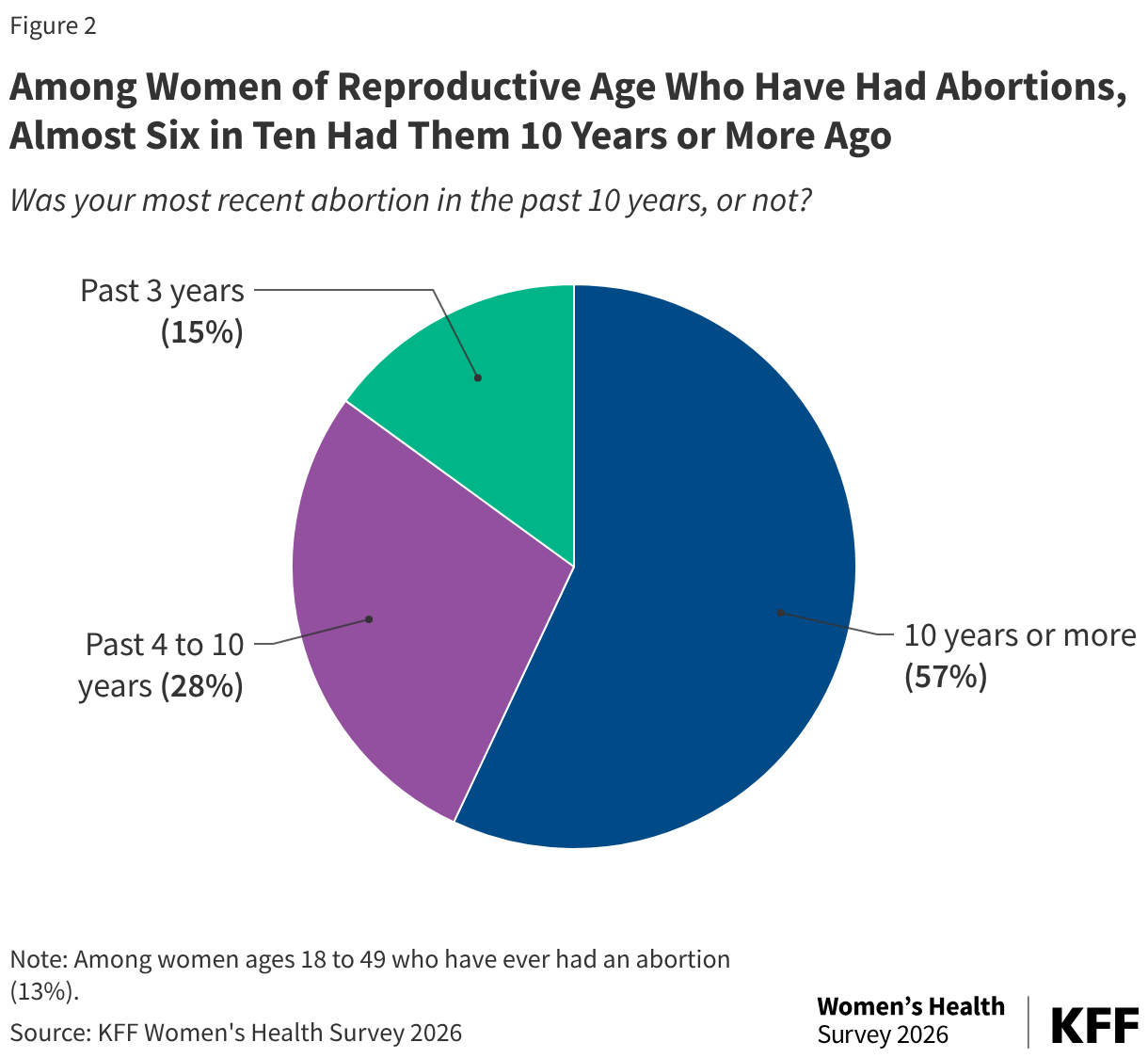
The survey also sheds light on the rising prominence of medication abortion. In the decade leading up to 2026, 59% of all abortions were medication-based, a trend accelerated by the expansion of telehealth. Despite this, a "knowledge gap" persists: while 68% of women have heard of medication abortion, only 18% are aware that these pills can be legally obtained online through various service providers, even in states with restrictive laws.
n
Chronology: From Roe to the 2026 Reality
n
The current state of affairs is the culmination of a decade of intense political and judicial shifting.
n
- n
- 2016–2020: The appointment of three conservative justices to the Supreme Court by the Trump administration set the stage for a challenge to federal abortion protections.
- June 24, 2022: The Dobbs decision officially overturned Roe v. Wade, ending nearly 50 years of federal abortion rights and returning the authority to regulate or ban the procedure to individual states.
- 2022–2024: A "trigger law" phenomenon saw 13 states immediately or rapidly ban abortion provision. During this period, the medical community began reporting "chilling effects," where doctors in ban states hesitated to provide care for miscarriages or ectopic pregnancies for fear of prosecution.
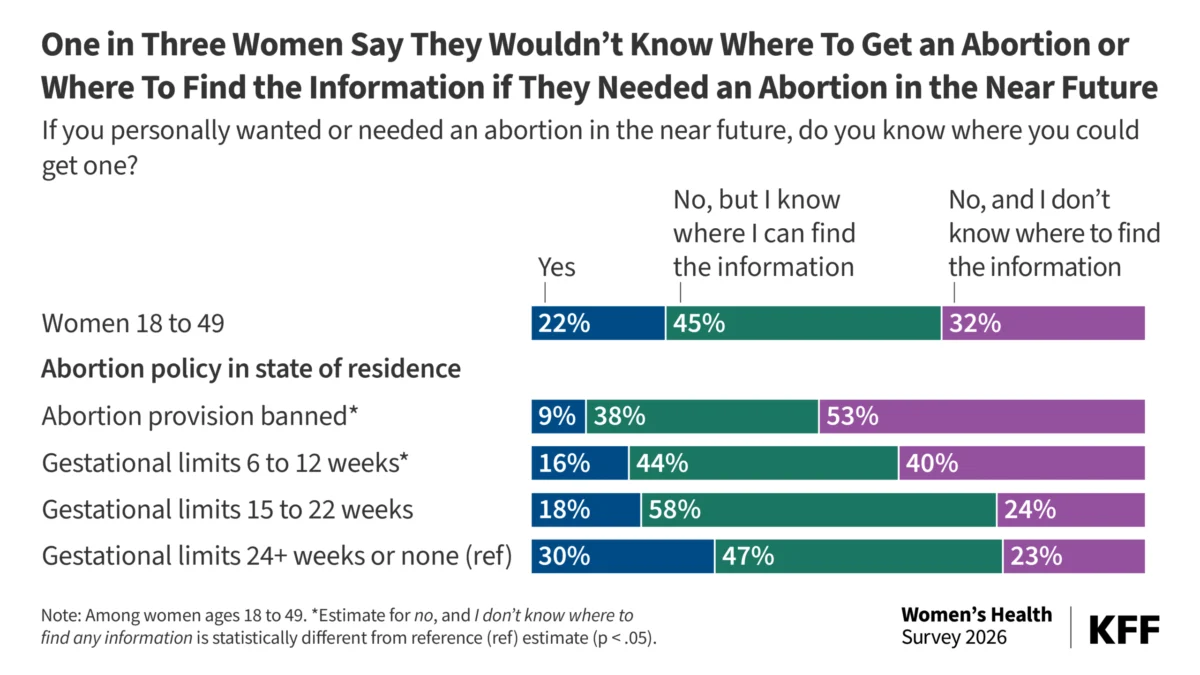
- 2024–2026: The rise of "shield laws" in protective states allowed clinicians to mail medication abortion pills to patients in ban states. Simultaneously, the 2026 KFF survey indicates that public confusion has increased; the share of women who would not know where to find information about obtaining an abortion rose from 26% in 2024 to 32% in 2026.
n
n
n
n
n
This timeline illustrates a rapid transition from a standardized federal framework to a volatile environment characterized by legal "cat-and-mouse" games between state legislatures and telehealth providers.
n
Supporting Data: Barriers, Costs, and the Burden of Travel
n
The KFF data clarifies the specific hurdles women face in a post-Roe America. For those living in states with bans or early gestational limits (6–12 weeks), the difficulties are not merely theoretical.
n
The Difficulty of Access
n
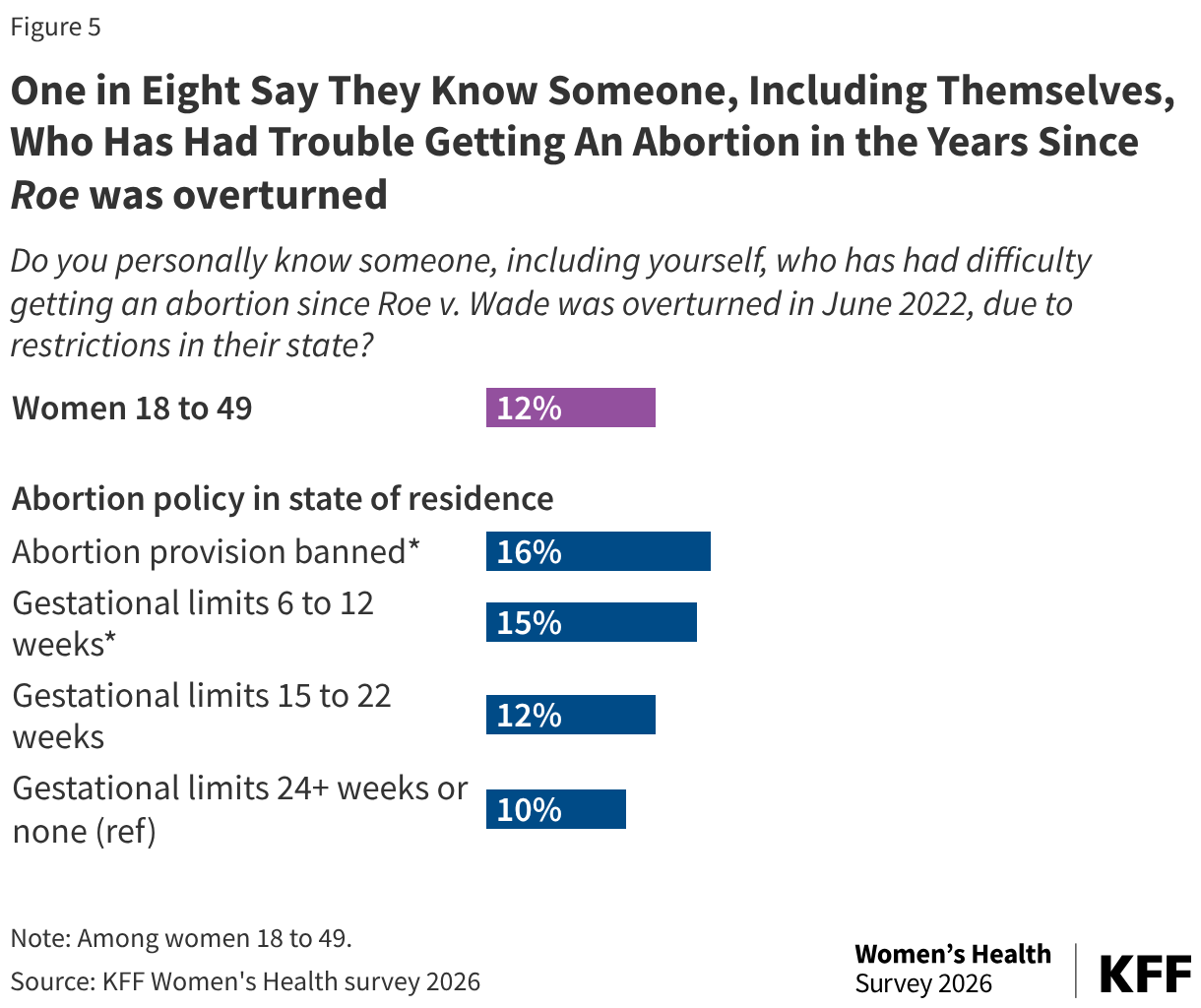
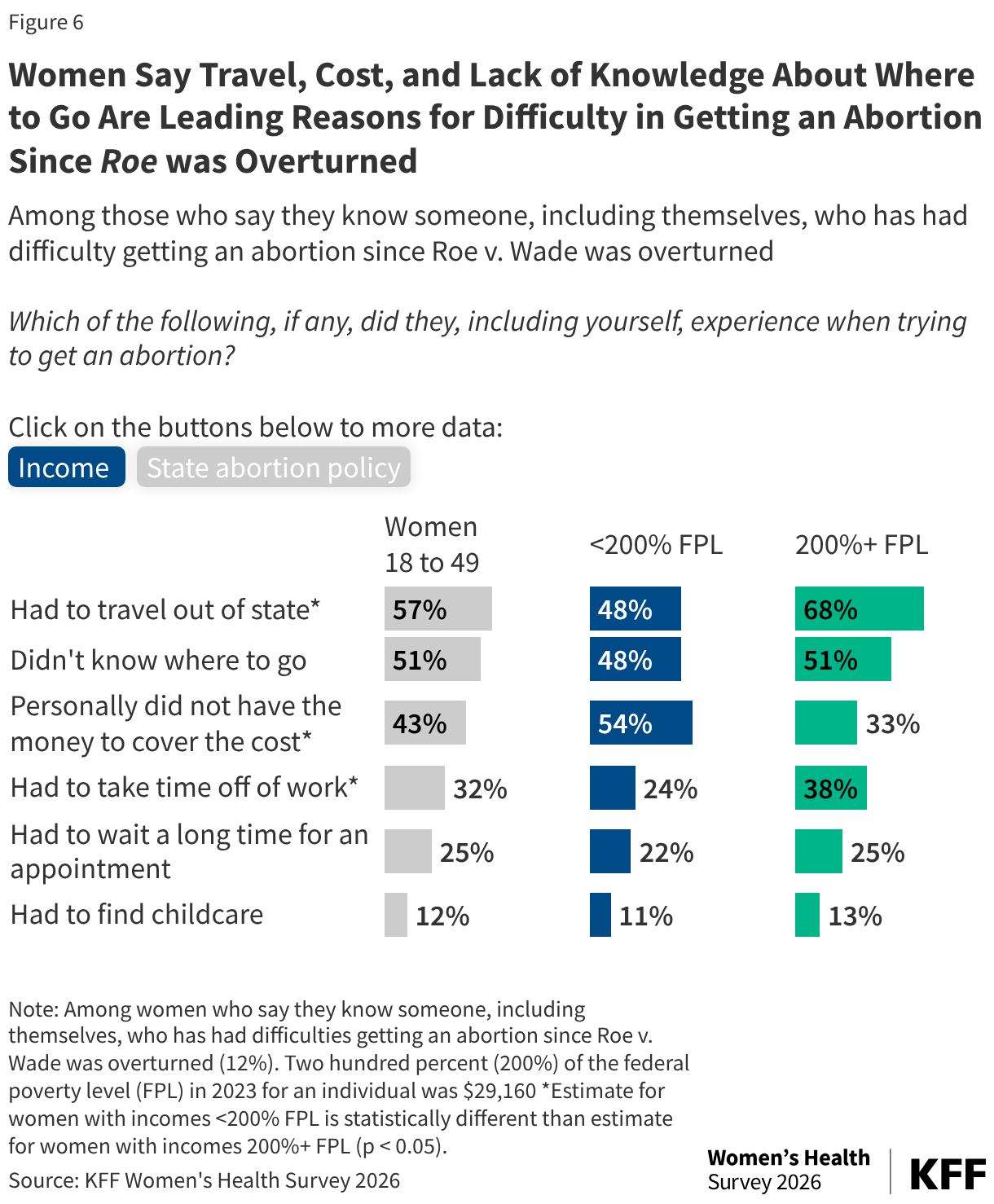
Twelve percent of all reproductive-age women personally know someone—including themselves—who has struggled to access abortion services since 2022. In states with total bans, this number rises to 16%. Of those who faced difficulties:
n
- n
- 57% had to travel out of state.
- 51% did not know where to go to seek help.
- 43% could not afford the costs associated with the procedure and travel.
- 32% had to take time off work, further compounding the financial strain.
n
n
n
n
n
The Financial Burden
n
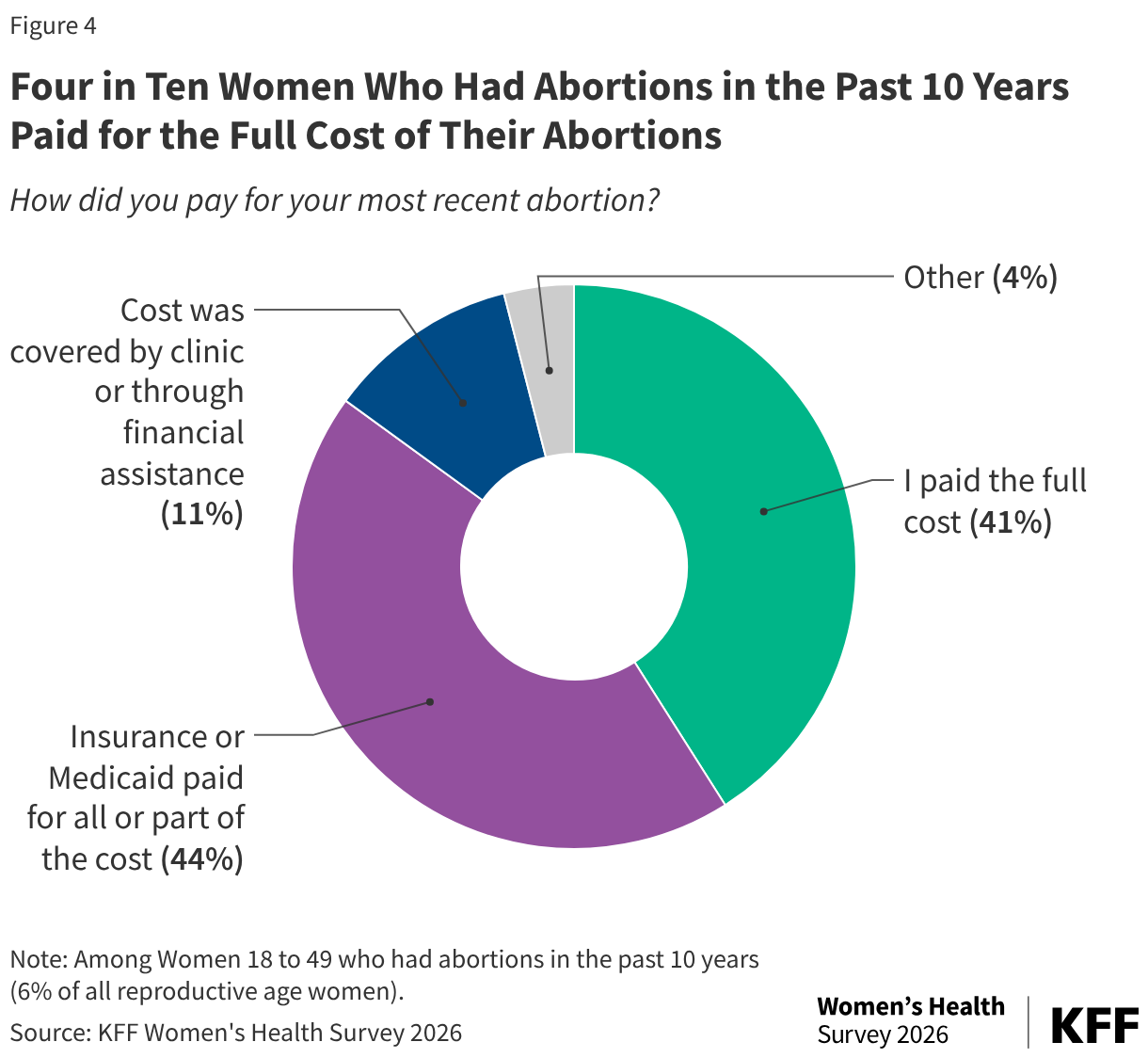
Abortion care is increasingly an out-of-pocket expense. The survey found that 41% of women who had an abortion in the last decade paid the full cost themselves. While 44% had some portion covered by insurance or Medicaid, the Hyde Amendment continues to block federal funding for most abortions, leaving low-income women in the 29 states that do not use state funds for abortion coverage in a precarious position.
n
The Miscarriage Connection
n
The survey highlights a critical overlap between abortion and miscarriage care. Among women who have ever been pregnant, 36% have experienced a miscarriage. Because the medical interventions for miscarriage management are often identical to those used in abortion care, state-level bans have created a dangerous environment for pregnancy loss. The report notes that denials of care stemming from these restrictions have led to health-threatening situations and, in some documented cases, preventable deaths.
Official Responses and the Legal Patchwork
The official response to the Dobbs decision has been a stark polarization of state policy.
The Restrictive Bloc
Thirteen states have banned the provision of abortion entirely. Another ten states have implemented "heartbeat" bills or limits between 6 and 22 weeks. Legislators in these states often frame these laws as "pro-life" protections, yet the KFF data shows that even among women who identify as pro-life, 7% have had an abortion, suggesting that the need for the procedure transcends political and ideological labels.
The Protective Bloc and Shield Laws
In response to the bans, 21 states now use their own funds to cover abortion for Medicaid enrollees. Furthermore, several states have passed "shield laws." these legal frameworks protect healthcare providers who use telehealth to prescribe and mail medication abortion pills to patients residing in states where the procedure is illegal. This has become the primary friction point in 2026, as restrictive states attempt to find ways to intercept mail or prosecute out-of-state clinicians.
Voices of the Impacted
The survey included qualitative testimony from women who were unable to get the care they needed. Their accounts paint a vivid picture of the barriers:
- “The cost. I did not have health insurance at the time and was told it would be $500+… Couldn’t afford it. So I had the baby.”
- “Not able to receive due to state regulations.”
- “My partner was controlling and kept me from having enough money to get one.”
These testimonies highlight that for many, the "choice" is dictated by bank accounts and abusive domestic situations as much as by state law.
Implications: A Future Defined by Uncertainty
The implications of the 2026 KFF survey extend beyond the immediate statistics of abortion procedures; they point to a systemic shift in how women view their health and safety.
The Safety of Future Pregnancies
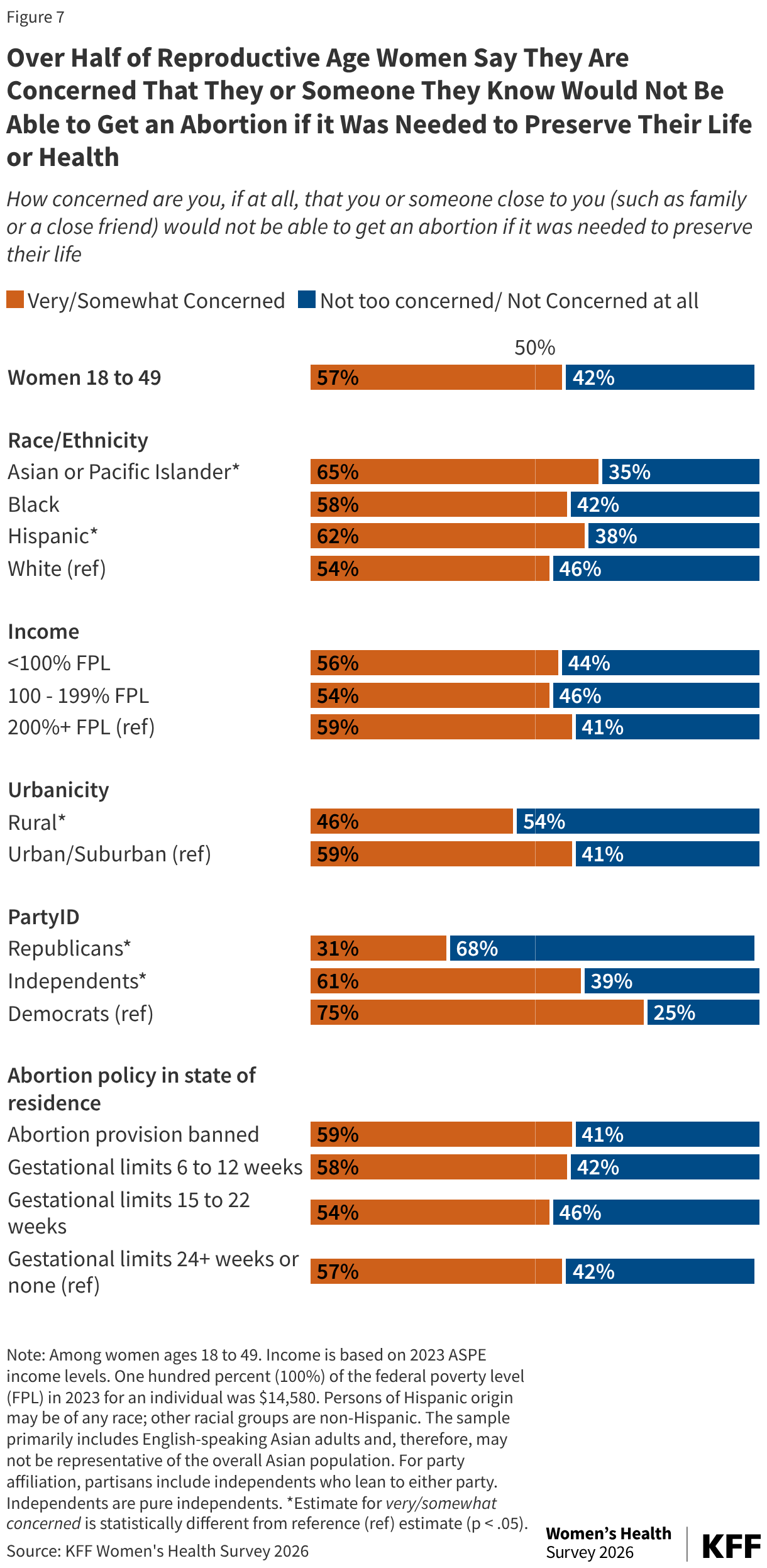
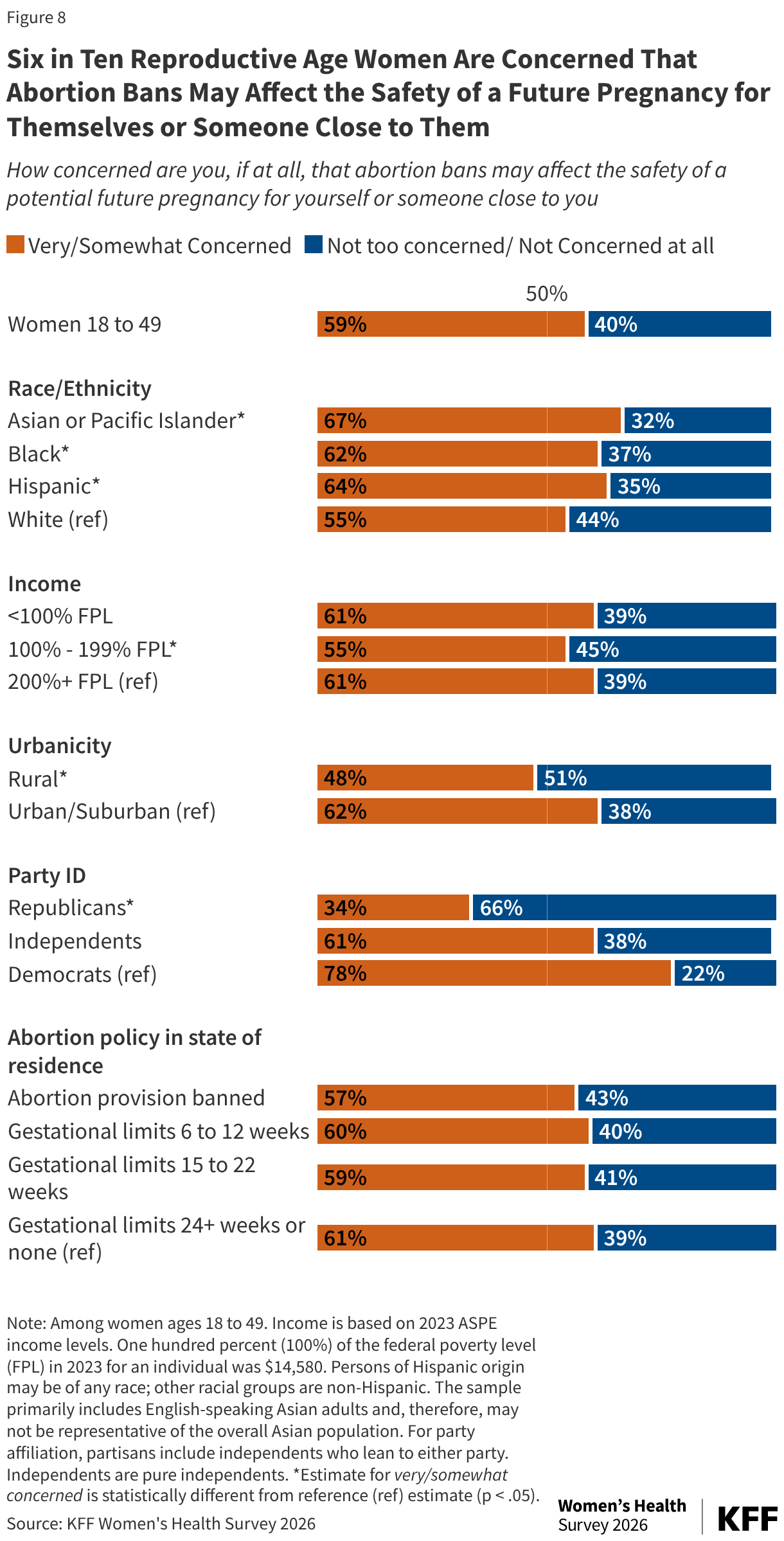
A profound sense of anxiety has permeated the reproductive-age population. Nearly six in ten (59%) women are concerned that abortion bans may affect the safety of a future pregnancy for themselves or a loved one. This concern is not limited to those seeking abortions; it reflects a fear that emergency obstetric care is being compromised by legal restrictions. This anxiety is highest among women of color, with 67% of Asian or Pacific Islander women and 62% of Black women expressing concern.
The Knowledge Gap as a Health Risk
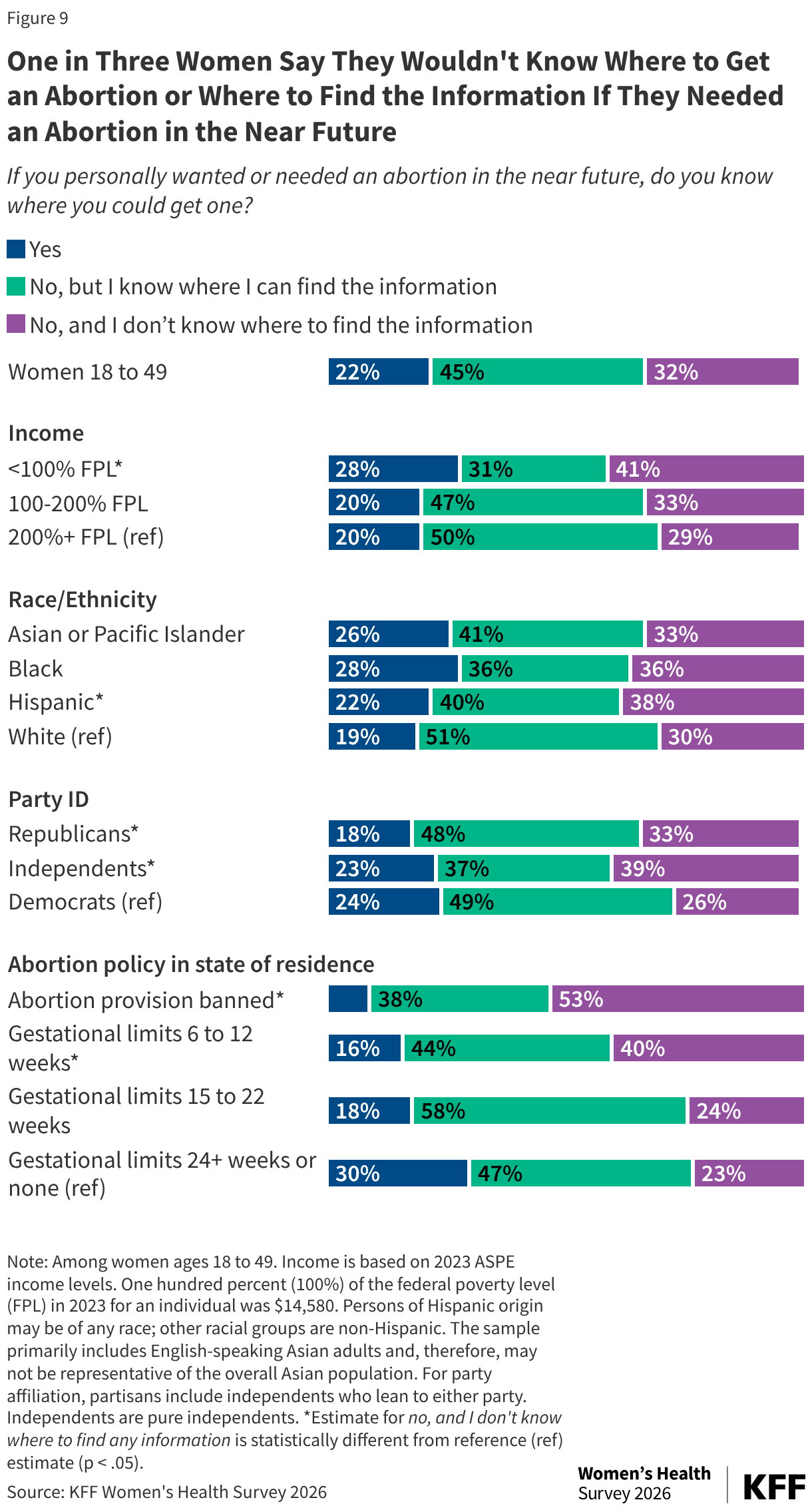
The fact that 32% of women would not know where to find information if they needed an abortion suggests a failure of public health communication. In states with bans, this number jumps to 53%. When a third of the population is "information-dark" regarding a time-sensitive medical procedure, the risk of individuals turning to unsafe methods or delaying care until they face life-threatening complications increases significantly.
Conclusion
Four years after Dobbs, the 2026 KFF Women’s Health Survey paints a picture of a nation in flux. While medication abortion and telehealth have provided a technological workaround for some, they have not solved the issues of cost, travel, and fear. The "new normal" is an environment where reproductive health is no longer a standard of care, but a luxury of the informed and the affluent. As the legal battles over shield laws and online pharmacies continue, the fundamental reality for American women remains one of deep uncertainty, where the safety of a pregnancy is now a matter of political geography.

