
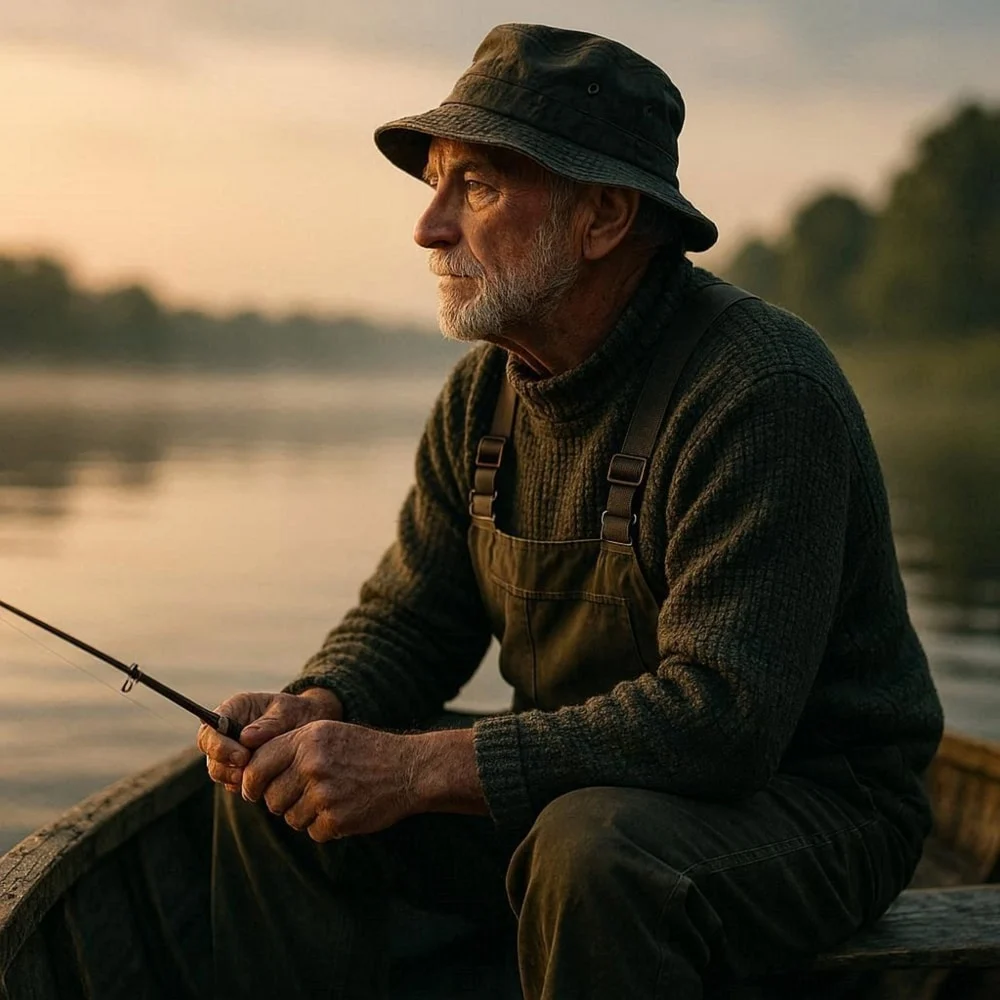
In the quiet, rhythmic arc of a fly line casting over a mountain stream, there is more than just the pursuit of trout; for many struggling with substance use disorders (SUD), there is the pursuit of a lost self. As the global addiction crisis continues to evolve, traditional clinical interventions are increasingly being supplemented by holistic, nature-based therapies. Among the most promising of these is the work of "Adam’s Parachute," a nonprofit organization that leverages the technical complexity and meditative stillness of fly fishing to help those in recovery navigate the turbulent waters of sobriety.
n
The intersection of outdoor recreation and neurobiology has revealed a profound truth: the rituals of fishing—the planning, the tactile engagement, and the mastery of technique—serve as a powerful "displacement" for the rituals of addiction. By replacing the destructive habits of substance use with the constructive, demanding "game" of the river, organizations like Adam’s Parachute are providing a new blueprint for long-term recovery.
n
Main Facts: The Intersection of Recreation and Recovery
n
Adam’s Parachute was founded by Jim Faust, a man whose personal tragedy became the catalyst for a national movement. The organization is named after two things: Faust’s late son, Adam, who succumbed to a drug overdose, and the "Adams Parachute," arguably the most versatile and popular dry fly in the world of trout fishing. This dual nomenclature serves as a poignant reminder that while a father could not save his son, he might provide the "parachute" necessary to catch others before they hit bottom.
n
The program operates on the principle that recovery is not merely the absence of a substance, but the presence of a meaningful life. Based in Massachusetts, the nonprofit provides fly-fishing instruction, equipment, and community support to individuals in recovery, as well as to the high-stress healthcare professionals who treat them.
n
The core of the program’s efficacy lies in three pillars:
n
- n
- Displacement Therapy: Redirecting the nervous energy and "ritual hunger" of addiction into the complex tasks of fly-tying and casting.
- Mindfulness in Motion: Forcing the brain to focus on the immediate environment—the ripple of the water, the hatch of insects—thereby silencing the intrusive thoughts of past trauma or future cravings.
- Community and Agency: Rebuilding the social bonds and the sense of personal competence that addiction often destroys.
n
n
n
n
Chronology: From Personal Tragedy to a Growing Movement
n
The journey of Adam’s Parachute is a testament to the power of "pro-social" obsession. The timeline of the organization reflects a rapid scaling of impact, driven by a desperate need for innovative recovery tools.
n
- n
- Pre-2024: The Catalyst: Jim Faust, an avid fisherman, experienced the devastating loss of his son, Adam, to an overdose. In the wake of this loss, Faust sought solace on the water, recognizing that the very activity that provided him peace could serve as a bridge for others struggling with the same demons that claimed his son.
- 2024: The First Cast: Faust began volunteering at local recovery centers near his home in Massachusetts. He started simply, teaching the intricate art of fly-tying. He noticed that the "fidgety" energy common in early recovery was channeled into the delicate manipulation of feathers and thread.
- 2025: Scaling Up: Adam’s Parachute officially expanded its reach. In this year alone, Faust and his team of volunteers taught over 100 recovering addicts how to fly fish. The program moved from the classroom to the riverbank, providing participants with the equipment and licenses needed to pursue the sport independently.
- July 2026: National Recognition: The organization gained significant momentum following a feature on NPR’s All Things Considered. The segment highlighted the "Adams Parachute" as a metaphor for the safety net the recovery community provides.
- Late 2026 and Beyond: With a goal to double its impact, the organization is currently on track to train over 200 participants this year. Expansion plans include partnerships with more high-stress addiction care facilities, recognizing that "compassion fatigue" among workers is a major hurdle in the recovery ecosystem.
n
n
n
n
n
n
Supporting Data: The Neurobiology of Displacement and Ritual
n
To understand why fishing is more than just a hobby, one must look at the psychological concept of displacement. Human beings are creatures of ritual. Much of the difficulty in quitting a substance like nicotine or opioids is not just the chemical dependency, but the loss of the physical rituals associated with it—the hand-to-mouth motion of smoking, the preparation of the drug, or the social "planning" involved in procurement.
n
The Power of Substitution
n
Research published in the journal Psychology of Addictive Behaviors (2016) suggests that visual and physical cues are deeply embedded in the addict’s brain. For instance, the study found that the mere sight of vaping products increased the urge to smoke because it mimicked the ritualistic hand-to-mouth motion. Conversely, watching someone drink water—a different motion—did not trigger the same urge.
n
Fishing provides a near-perfect "substitution" ritual. Consider the parallels:
n
- n
- Planning: Addiction involves an obsession with the "next fix." Fishing involves an obsession with the "next hatch," checking weather patterns, and selecting the right gear.
- Tactile Engagement: Fly fishing requires constant use of the hands—stripping line, tying knots, and feeling for the subtle "take" of a fish. This occupies the motor cortex, leaving less room for the "fidgeting" associated with withdrawal.
- The Dopamine Loop: Traditional addiction hijacks the brain’s reward system. Fishing offers a "slow-release" dopamine reward. The anticipation of the catch provides a healthy spike in neurochemicals, while the "tension release" of the fight and the eventual catch (or release) provides a sense of accomplishment that builds self-esteem.
n
n
n
Mindfulness and the "Flow State"
A 2026 report on outdoor therapies highlighted that fly fishing is uniquely suited to inducing a "flow state"—a mental state where a person is fully immersed in an activity. Because a fly fisherman must "read" the water and account for wind, current, and insect behavior, there is no cognitive space left for ruminating on the past. This "enforced mindfulness" is a cornerstone of Cognitive Behavioral Therapy (CBT) but is achieved here through recreation rather than a clinical setting.
Official Responses and Philosophical Context
The success of programs like Adam’s Parachute has drawn the attention of both the scientific and philosophical communities.
Dr. C. Thi Nguyen, a professor of philosophy at the University of Utah and a noted expert on the philosophy of games, argues that "play" is a fundamental human need. In an essay for the Financial Times, Nguyen posits that we are "designed to play games." He suggests that in a world where modern conveniences make life "too easy," we seek out "artificial obstacles" to find meaning.
"When you fly fish, you don’t just want a fish," Nguyen writes. "You are playing a game: you want to get that fish by a specific, difficult, and fascinating technique." For a person in recovery, this "difficult technique" is a godsend. It provides a sense of agency. Addiction is characterized by a loss of control; the mastery of a difficult cast returns that sense of control to the individual.
Healthcare professionals have also weighed in. Many addiction specialists now advocate for "Green Prescriptions"—clinical recommendations for patients to spend time in nature. The consensus among providers at the facilities where Jim Faust volunteers is that patients who engage in fly fishing show higher rates of "program adherence" and lower reported levels of anxiety. By focusing on the journey (the technique) rather than the destination (the fish), patients learn the vital life lesson of patience—a skill that is essential for avoiding relapse.
Implications: A New Era of Holistic Treatment
The rise of Adam’s Parachute and similar outdoor-based recovery programs signals a shift in how society views addiction treatment. We are moving away from a purely "pathology-based" model toward a "strength-based" model.
1. Cost-Effectiveness and Accessibility
Traditional rehabilitation is prohibitively expensive. While fly fishing requires an initial investment in gear, the "therapy" itself is provided by the natural world for the price of a fishing license. As organizations like Adam’s Parachute provide the gear and the expertise, they lower the barrier to entry for low-income individuals who are often hit hardest by the opioid epidemic.
2. Treating the Healer
One of the most significant implications of Faust’s work is the inclusion of healthcare workers. Burnout in the addiction treatment field is at an all-time high. By bringing therapists and nurses onto the water, the program ensures that the "caregivers" remain mentally resilient, creating a more stable environment for the patients they serve.
3. Redefining "Success"
In the philosophy of fly fishing, "success" is often defined by the release. Many fly fishermen, including Dr. Nguyen and those in the Adam’s Parachute program, practice catch-and-release. This is a powerful metaphor for recovery: the ability to experience a moment of intense connection and then let it go without the need to possess or consume it. It teaches a non-attachment that is the antithesis of addictive behavior.
4. Environmental Stewardship as a Recovery Tool
Participants in these programs often develop a deep connection to the environment. This "eco-recovery" fosters a sense of responsibility toward something larger than oneself. When a person in recovery begins to care about the health of a river or the survival of a trout species, they are practicing the outward-facing empathy that addiction often suppresses.
Conclusion
The story of Jim Faust and Adam’s Parachute is a reminder that the most effective tools for healing are often found in the simplest places. While the science of neurobiology and the philosophy of games provide a framework for understanding why fishing works, the true magic happens on the water.
As the morning mist rises off a Massachusetts stream, a man who once lost everything to a needle now finds everything in a fly rod. He is not just casting for trout; he is casting for a future. In the rhythmic "ten and two" of the fly cast, there is a heartbeat of hope—a parachute that, thanks to the vision of a grieving father, is saving lives one cast at a time.

