
WASHINGTON D.C. — A comprehensive national assessment has revealed that the infrastructure supporting home-based care for America’s most vulnerable populations is nearing a breaking point. As of 2026, every responding state in the U.S. is grappling with significant labor shortages in Medicaid home- and community-based services (HCBS), a sector that provides essential daily living support to more than five million low-income seniors and people with disabilities.
n
According to the 24th annual KFF survey of state Medicaid officials, the crisis is being fueled by a "perfect storm" of factors: historically low wages, high turnover, tightening state budgets, and a shifting federal policy landscape that includes intensified immigration enforcement and new spending restrictions.
n
Main Facts: A Universal Labor Shortage
n
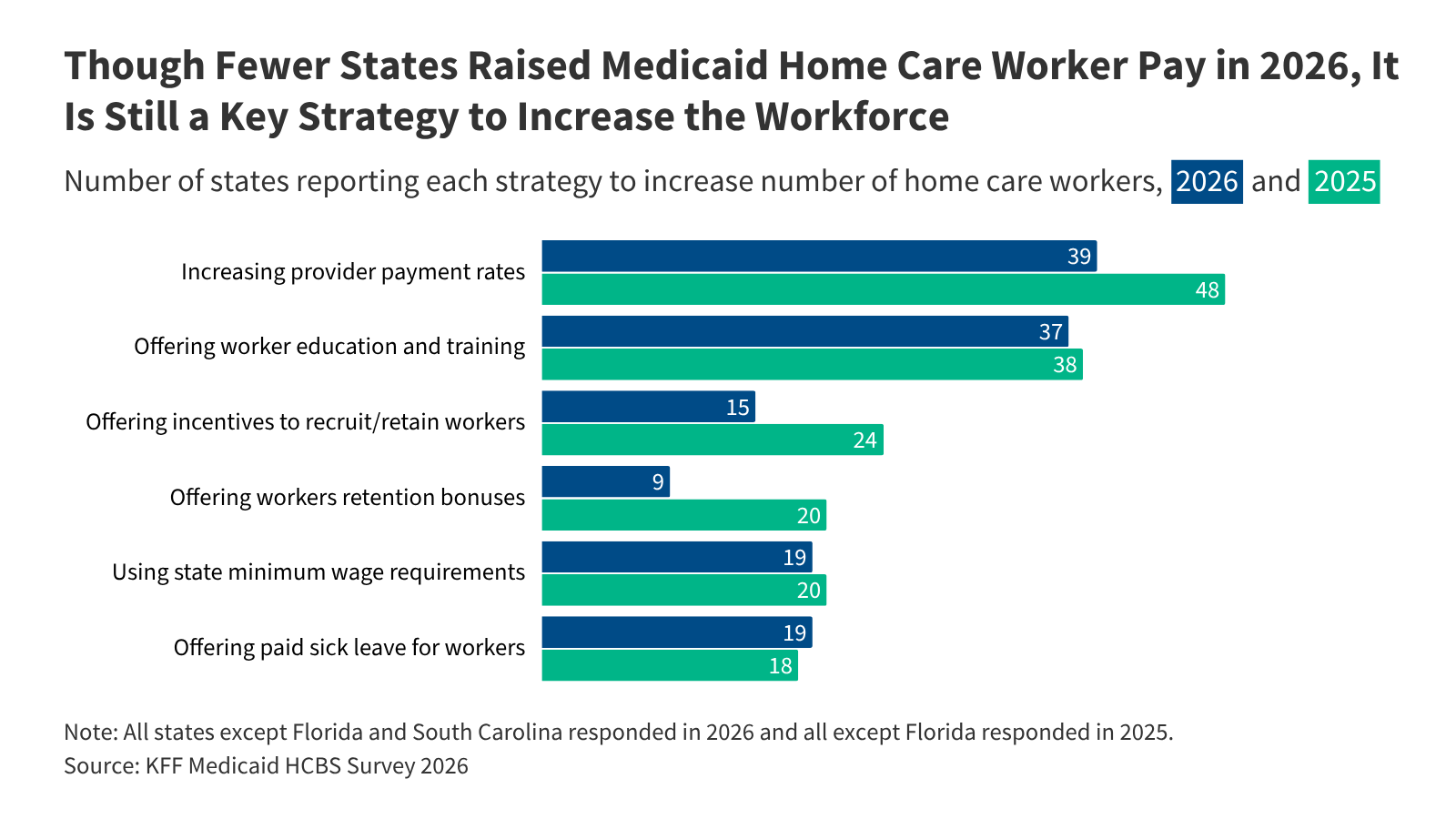
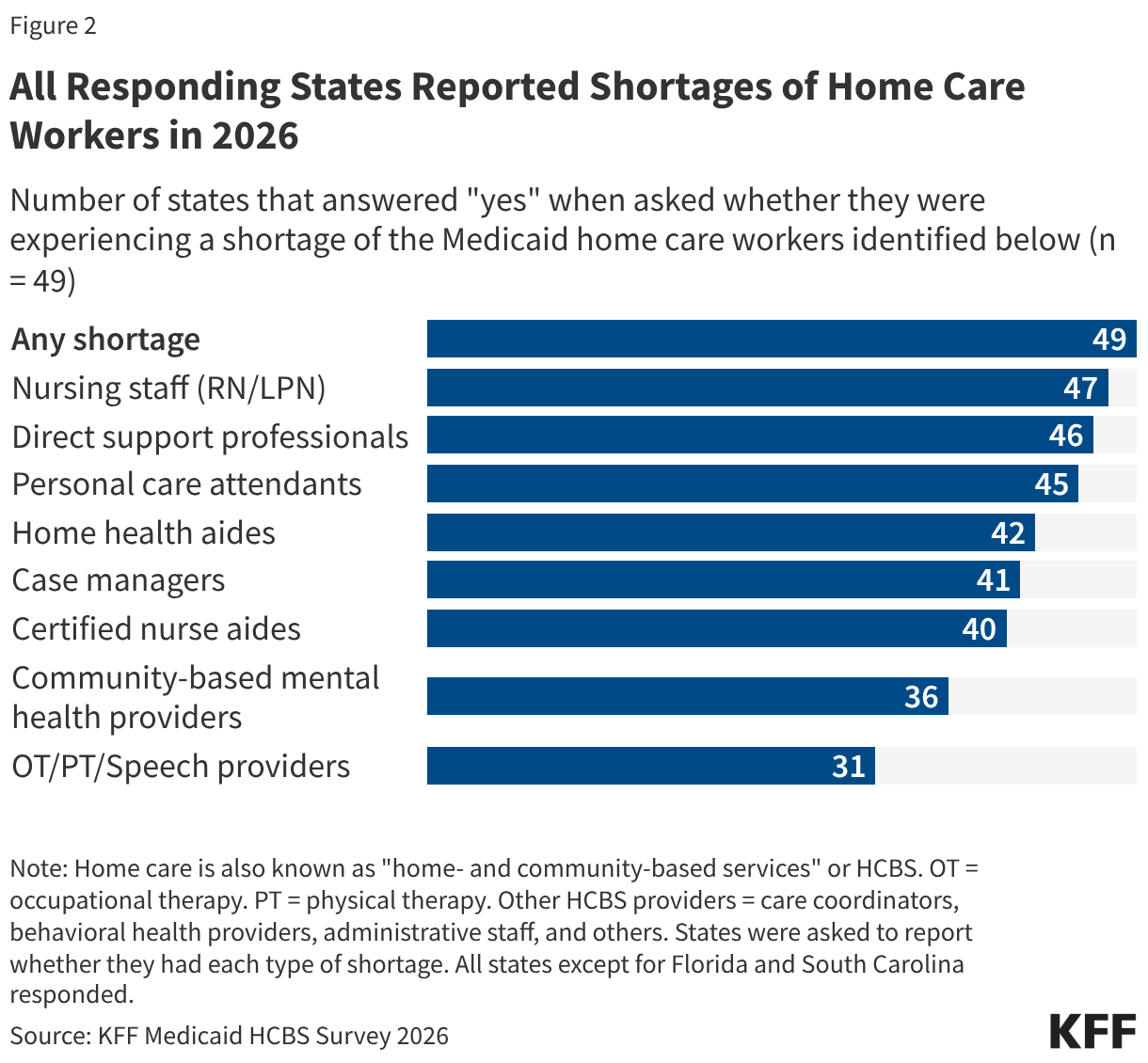
The 2026 KFF survey, which includes data from 48 states and the District of Columbia, paints a stark picture of a workforce in retreat. For the first time in the survey’s history, 100% of responding states reported shortages in at least one category of home care worker.
n
The depth of the shortage is pervasive across all professional levels:
n
- n
- Nursing Staff: 47 states reported shortages.
- Direct Support Professionals (DSPs): 46 states reported shortages.
- Personal Care Attendants: 45 states reported shortages.
- Home Health Aides: 42 states reported shortages.
n
n
n
n
n
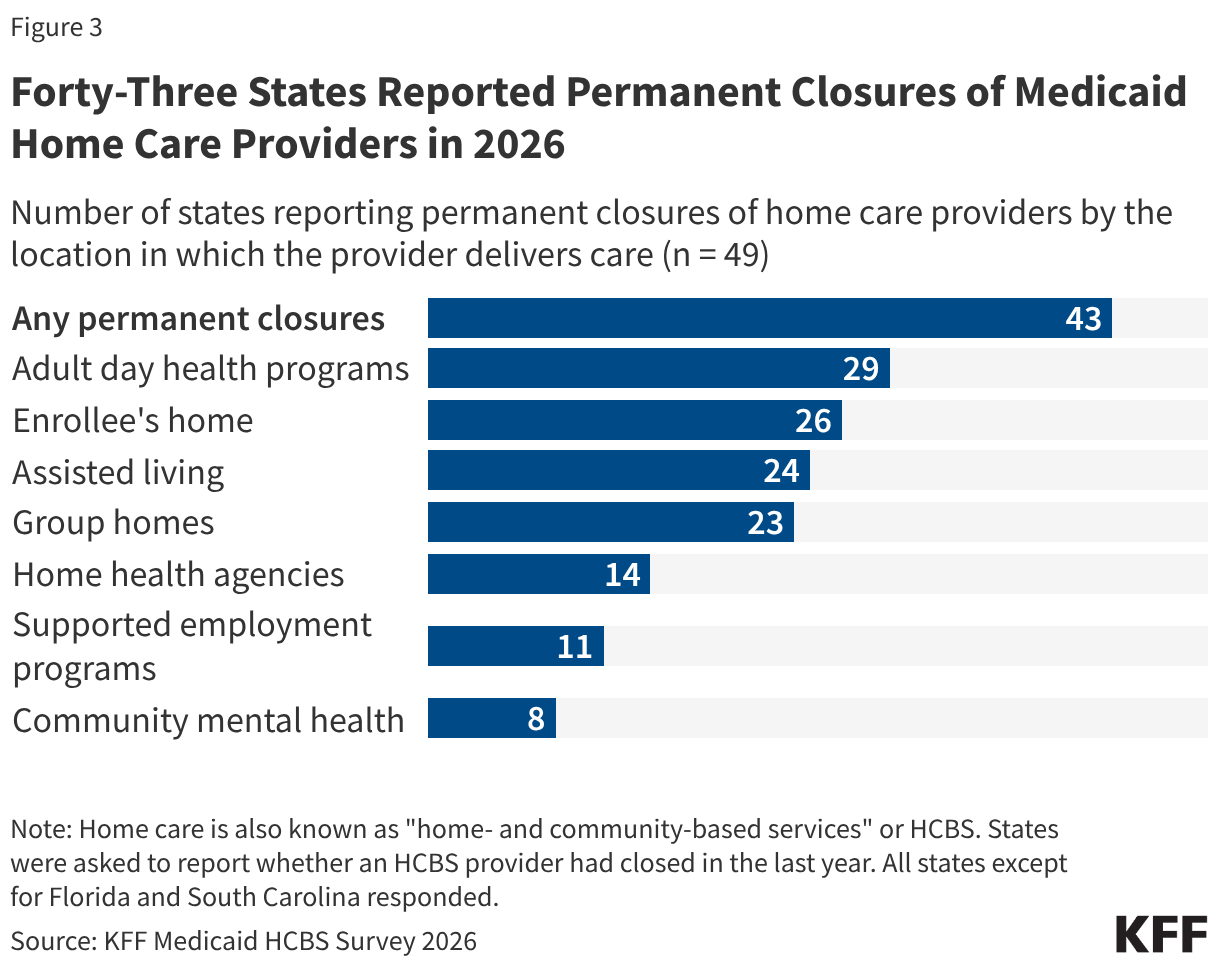
The consequences of these vacancies are not merely administrative; they are physical. Forty-three states reported the permanent closure of home care providers within the last year. These closures were most prevalent among adult day health programs (29 states) and agencies providing care directly in enrollees’ homes (26 states). Assisted living facilities and group homes have also seen a sharp decline in available care providers, often because the agencies that staff these facilities can no longer find enough workers to fulfill their contracts.
n
Chronology: From Pandemic Recovery to Fiscal Contraction
n
The current crisis is the result of a multi-year trajectory of policy shifts and economic pressures.
n
In 2024, the federal government introduced the "Medicaid Access Rule," a landmark regulation designed to increase transparency and ensure that a larger portion of Medicaid payments reached the hands of workers. This rule set the stage for the "80/20" requirement, mandating that by 2030, at least 80% of Medicaid payments for certain services must go toward direct care worker compensation.
n
In 2025, the landscape shifted dramatically with the passage of a federal reconciliation law. This legislation introduced substantial reductions in federal Medicaid spending, placing immediate pressure on state coffers. Simultaneously, the Trump administration began intensifying immigration enforcement. Given that nearly one in three home care workers in the U.S. are immigrants, these policies triggered a wave of "anxiety and fear" that led many workers to exit the labor market or avoid seeking employment in the sector altogether.
n
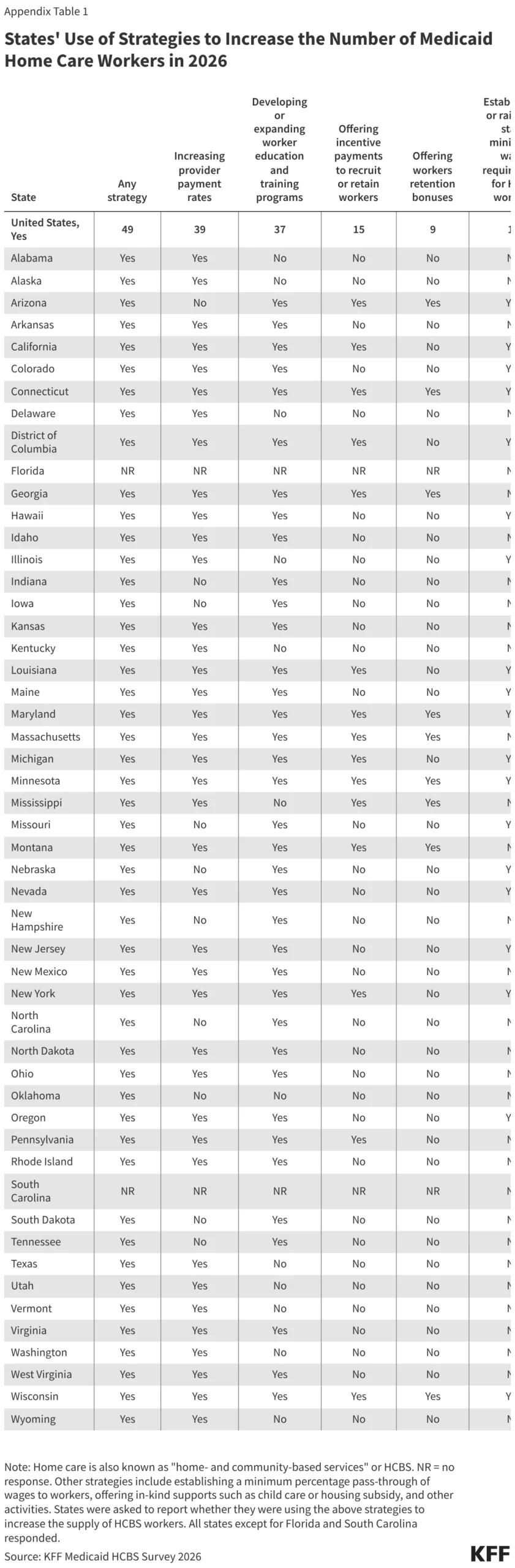
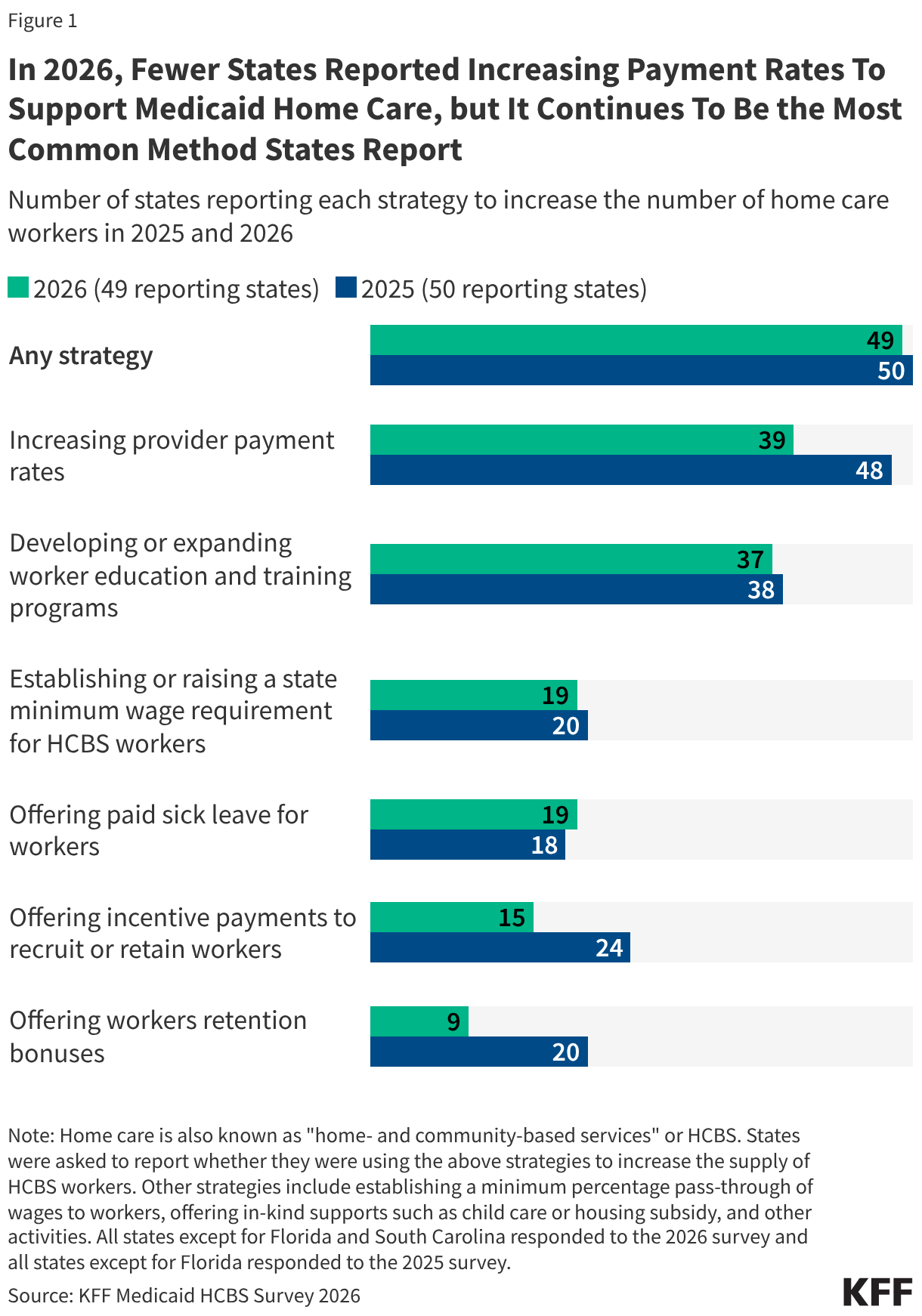
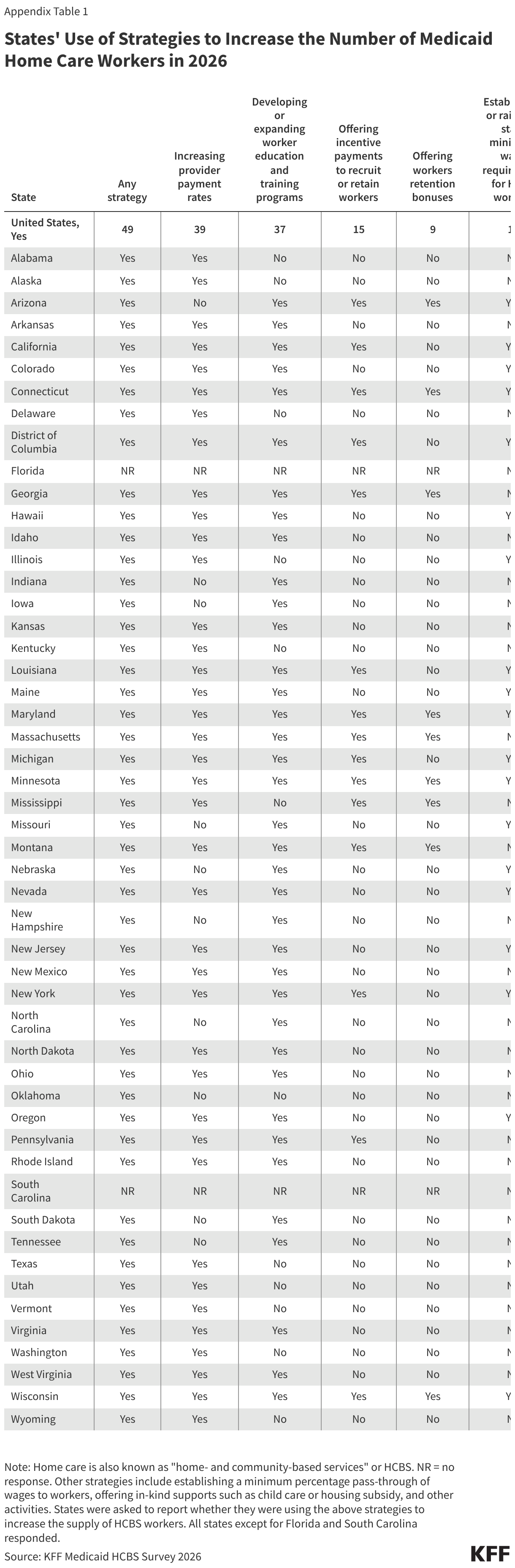
By 2026, the data shows a clear pullback in state-level support. While 48 states reported increasing provider payment rates in 2025, that number dropped to 39 in 2026. Similarly, the number of states offering retention bonuses plummeted from 20 to just nine. This suggests that as federal pandemic-era funding dried up and the 2025 reconciliation cuts took hold, states lost the fiscal flexibility to maintain the aggressive recruitment incentives used in previous years.
n
Supporting Data: The Cost of Care and the Wage Gap
n
The KFF report highlights a massive disparity in how home care workers are compensated, both across state lines and between different types of care.
n
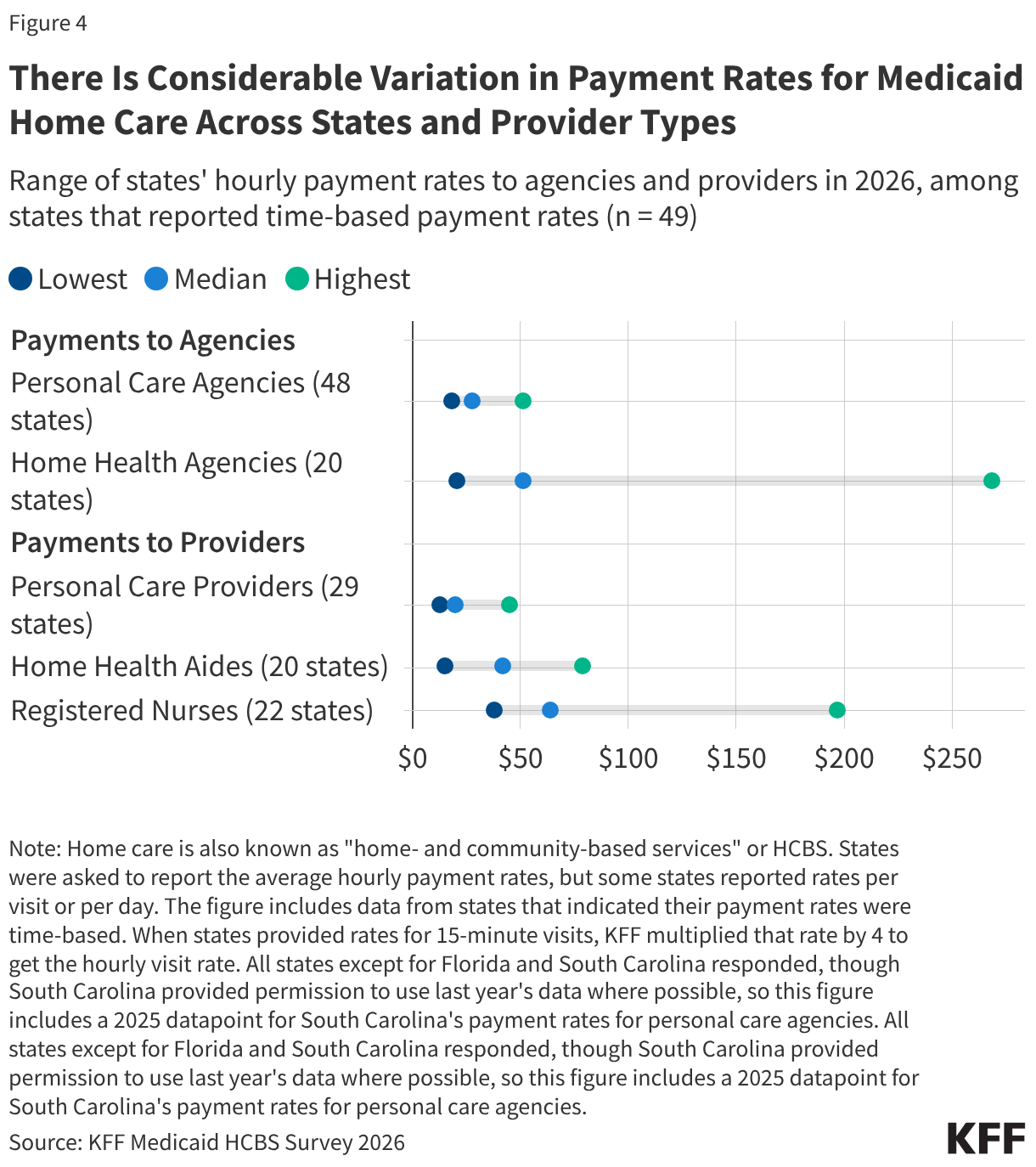
Median Hourly Payment Rates (2026)
n
- n
- Registered Nurses: $64 per hour (a decrease from $70 in 2025).
- Home Health Aides: $42 per hour (a marginal increase from $41).
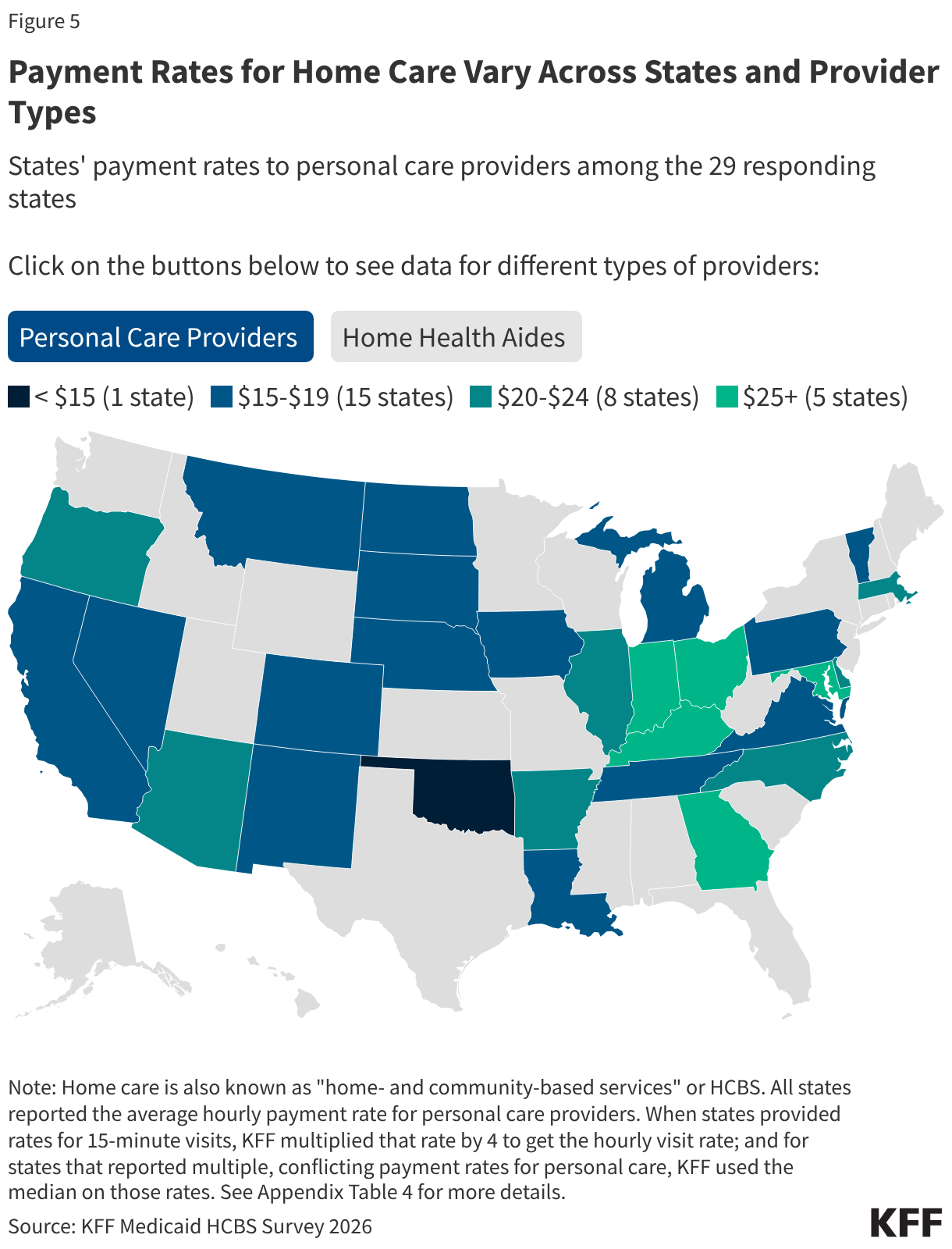
- Personal Care Providers: $19 per hour (stagnant since 2025).
n
n
n
n
While $19 per hour for personal care may seem higher than some state minimum wages, Medicaid officials note that this is a "gross rate" paid to agencies, not the "take-home wage" for the worker. After agency overhead, insurance, and administrative costs, the actual wage often falls below what workers can earn in entry-level retail or fast-food positions—sectors that often offer more consistent hours and fewer physical demands.
n
The survey also revealed a significant lack of data transparency. Despite new federal requirements, many states struggled to report basic hourly rates. For instance, 29 states could not provide an hourly rate for home health agencies, often because they pay through "per-visit" or "bundled" models that obscure how much is actually being paid for an hour of labor.
n
Factors Contributing to Worsening Shortages
n
When asked why the crisis is accelerating, state officials ranked the following as top priorities:
n
- Low wages relative to other sectors: Workers are leaving for jobs with less "emotional and physical toll" that pay more.
- High turnover rates: Currently ranging between 29% and 48% for direct support workers.
- Increased demand: As the U.S. population ages, more families are seeking home-based care over institutionalization.
- Inflation: Rising costs for gas and supplies are eating into the already thin margins of home care workers who must travel between clients.
Official Responses: Federal Mandates vs. State Realities
The Centers for Medicare and Medicaid Services (CMS) has attempted to intervene by limiting the ability of states to slash provider rates. During a 2026 public webinar, CMS officials warned that they might reject any proposed rate reductions that cause more than a 4% decrease in Medicaid expenditures for a specific service category.
However, state officials expressed skepticism about their ability to comply with both federal "Access Rule" mandates and the reality of their shrinking budgets.
"With inflation rising and low reimbursement rates, it is difficult for agencies to offer competitive salaries to retain qualified professional staff," one state official noted in the survey. Another official highlighted the "80/20 rule" as a looming challenge, noting that while the intent is to help workers, the administrative burden of tracking and reporting these expenditures is further straining already thin state resources.
The Trump administration’s focus on program integrity and provider revalidation has also added a layer of complexity. While intended to reduce fraud, state officials report that these new requirements can inadvertently "de-enroll" legitimate small-scale providers who lack the administrative staff to navigate the increasingly complex re-certification processes.
Implications: The Future of Aging in America
The findings of the 2026 KFF survey suggest that the U.S. is facing a fundamental "care gap" that could have long-term societal consequences.
The Institutionalization Risk
As home care agencies close and worker shortages grow, Medicaid enrollees who cannot find home-based support may be forced into nursing homes—a move that is often more expensive for the state and contrary to the preferences of most seniors and people with disabilities. The 43 states reporting provider closures suggest this shift is already underway.
The Rural Divide
The shortage is not felt equally. State officials reported that rural areas are being hit hardest, as the "windshield time" (unpaid or underpaid travel time) makes home care work financially unviable for providers in low-density regions.
The Economic Impact on Families
When professional home care is unavailable, the burden falls on family caregivers. KFF data suggests that the lack of professional workers is forcing family members—primarily women—to reduce their own hours in the workforce or exit it entirely to provide unpaid care. This creates a secondary economic ripple effect, reducing household income and overall economic productivity.
Policy Deadlock
As we move toward the 2030 deadline for the 80/20 rule, the tension between federal oversight and state fiscal autonomy is expected to intensify. Without a significant infusion of federal funding or a dramatic shift in how the direct care workforce is valued, the "Medicaid home care safety net" may continue to fray, leaving millions of Americans without the support they need to live independently.
The 2026 KFF survey serves as a final warning: the workforce challenges that were once considered "long-standing" have now evolved into a national emergency, requiring more than just marginal rate increases to resolve.

