
The landscape of Type 1 Diabetes (T1D) treatment is undergoing a fundamental shift. For over a century, the medical community has focused on refining exogenous insulin delivery—moving from glass syringes to sophisticated automated insulin delivery (AID) systems. However, a new era has arrived where the focus is shifting from managing a deficiency to restoring biological function. Islet cell therapy, once a distant hope, has entered a phase of rapid acceleration, promising a future where the daily burden of T1D is replaced by the silent, internal regulation of blood glucose.
n
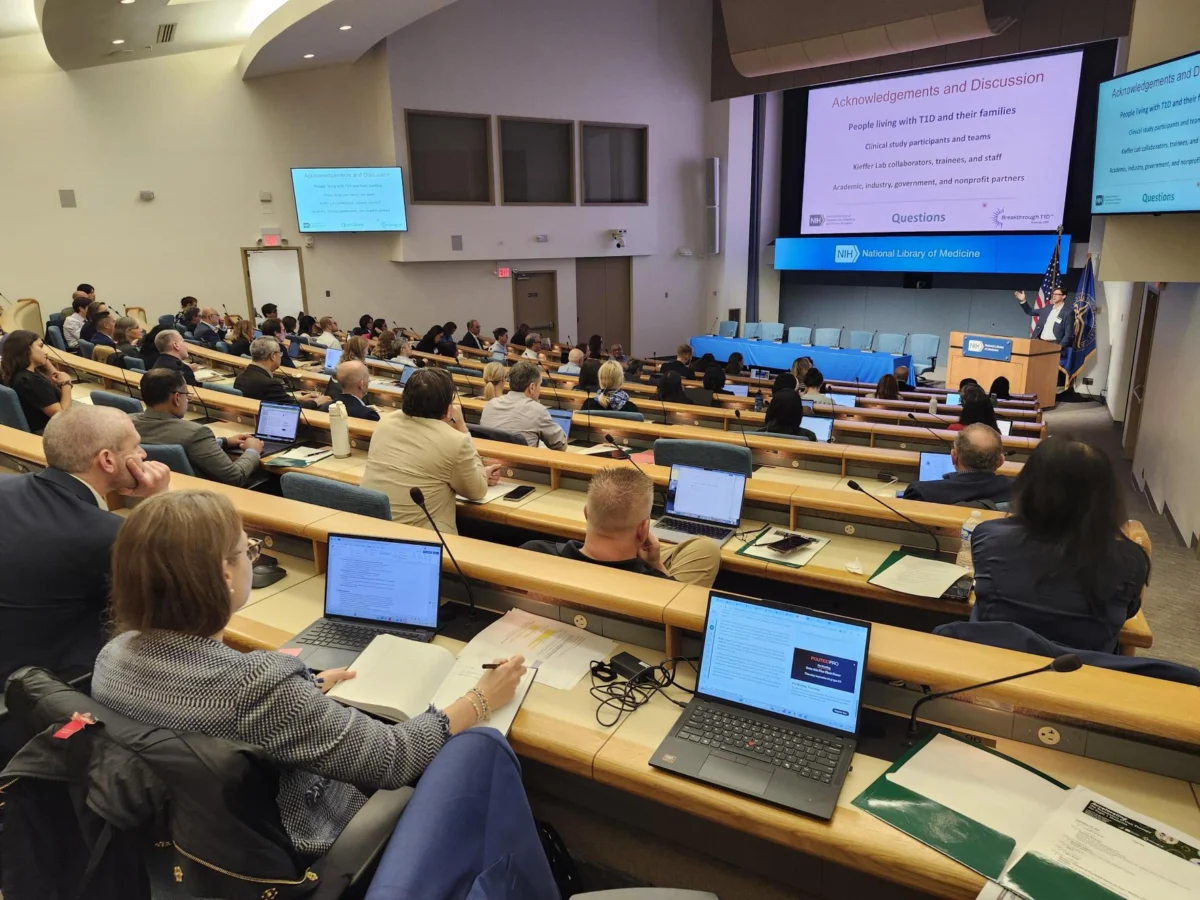
To catalyze this transition, Breakthrough T1D (formerly JDRF) recently partnered with the National Institute of Diabetes and Digestive and Kidney Diseases (NIDDK) to host a landmark public workshop: "Accelerating the Translation of Cell Therapy for Type 1 Diabetes." This gathering represented a "meeting of the minds," bringing together the U.S. Food and Drug Administration (FDA), academic researchers, industry titans, and—most importantly—the patients themselves. The goal was clear: to move beyond experimental successes and establish a scalable, universal cure.
n
Main Facts: The Current State of Islet Cell Science
n
The premise of islet cell therapy is straightforward but biologically complex: replace the insulin-producing beta cells destroyed by the body’s immune system. Currently, these therapies are categorized into two distinct waves:
n
- n
- First-Generation Therapies: These rely primarily on cadaveric islet cells (harvested from deceased donors). While effective, they are hampered by a severe shortage of donor tissue and the requirement for lifelong systemic immunosuppression. Consequently, these treatments are currently reserved for individuals with "brittle" diabetes, characterized by severe hypoglycemic unawareness and life-threatening blood sugar fluctuations.
- Next-Generation Therapies: This is the frontier of modern medicine. These therapies utilize manufactured islet cells derived from stem cells. Because they can be grown in a laboratory, the supply is theoretically infinite. Furthermore, researchers are developing "cloaking" technologies—using gene editing (CRISPR) or physical encapsulation—to protect these cells from immune attack, potentially eliminating the need for immunosuppressive drugs.
n
n
n
The momentum is supported by clinical trial data showing that participants receiving these cell infusions are achieving insulin independence, maintaining near-perfect "time-in-range" (TIR) metrics, and experiencing a dramatic improvement in quality of life.
n
A Chronology of Progress: From the Edmonton Protocol to Stem Cells
n
To understand the urgency of the recent NIDDK/Breakthrough T1D workshop, one must look at the timeline of cellular intervention in T1D.
n
- n
- The 1990s – Early Experimentation: Initial attempts at islet transplantation often failed because the body’s immune system quickly destroyed the new cells, and the steroid-heavy anti-rejection drugs used at the time were themselves toxic to beta cells.
- 2000 – The Edmonton Protocol: A breakthrough occurred when researchers in Alberta, Canada, developed a steroid-free immunosuppressive regimen. This proved that islet transplantation could lead to insulin independence, though the effect often waned over five to ten years.
- 2014-2021 – The Stem Cell Revolution: Companies like Vertex Pharmaceuticals and Viacyte (now part of Vertex) began clinical trials using stem-cell-derived islets. This marked the transition from relying on organ donation to using a manufactured, scalable product.
- 2023-2024 – Regulatory Milestones: The FDA approved the first allogeneic (donor-derived) islet cellular therapy for adults with T1D who cannot reach target HbA1c levels due to repeated hypoglycemia. This set the regulatory precedent for the next generation of "off-the-shelf" manufactured cells currently in the pipeline.
n
n
n
n
n
Supporting Data: The Four Pillars of Translation
n
The workshop focused on four critical areas that will determine how quickly these therapies reach the general T1D population.
n
1. Nonclinical and Preclinical Rigor
n
Before a therapy reaches a human being, it must undergo rigorous testing in "models." Presenters at the workshop emphasized the need for standardized experimental designs. Choosing the right animal model is essential for predicting how a human immune system will react to a manufactured cell. Data shared during the sessions highlighted new methods for tracking islet survival in real-time, allowing researchers to see exactly when and why a cell might fail, thereby allowing for adjustments before human trials begin.
n
2. The Challenge of Large-Scale Manufacturing
n
Scalability is the bridge between a "scientific miracle" and a "public health solution." Manufacturing millions of clusters of highly sensitive, living cells is an immense industrial challenge.
n
- n
- Consistency: Every batch of stem-cell-derived islets must be identical in its ability to sense glucose and secrete insulin.
- Environment: The workshop explored the differences between academic manufacturing (focused on small-batch innovation) and industry manufacturing (focused on high-volume reliability).
- FDA Requirements: As a trial moves from Phase I (safety) to Phase III (efficacy), the FDA’s requirements for manufacturing purity and potency become increasingly stringent.
n
n
n
n
3. Clinical Trial Design and Patient Safety
n
The workshop reimagined what future clinical trials should look like. Historically, trials have been very exclusive. To accelerate a cure, the community is pushing for expanded inclusion criteria—allowing more people with different types of T1D to participate.
Furthermore, the "risk-benefit" ratio is shifting. For many years, the medical establishment felt that the risks of immunosuppression were worse than the risks of T1D. However, new data on the long-term complications of T1D—and the success of newer, milder anti-rejection protocols—suggests that many patients are willing to accept certain risks in exchange for the freedom from insulin injections.
4. The Integration of Artificial Intelligence (AI)
In a modern twist, AI is being deployed to optimize the islet workflow. Researchers are using machine learning algorithms to:
- Predict Outcomes: Forecasting a patient’s blood sugar response a full year after transplant.
- Optimize Growth: Using AI to monitor the "health" of cells in a bioreactor, adjusting nutrients and oxygen levels in real-time to produce more robust islets.
- Design "Smart Cells": Engineering islets that can sense an incoming immune attack and "deploy" their own localized immune-protective measures.
Official Responses: A Unified Front
The workshop served as a platform for official stances from the primary stakeholders in the T1D space.
Breakthrough T1D emphasized its role as a "convener." By bringing the FDA and industry leaders into the same room, they aim to de-risk the investment for pharmaceutical companies. Their message was clear: the science is ready, and the funding must follow to ensure these therapies don’t get stuck in the "valley of death" between the lab and the pharmacy.
The NIDDK (National Institute of Diabetes and Digestive and Kidney Diseases) highlighted the importance of federal research funding in the early stages of cell biology. Their representatives stressed that while industry handles the "scaling," the government remains committed to the "discovery" of new ways to protect islets from the autoimmune response.
The FDA provided a roadmap for researchers, offering guidance on what "meaningful endpoints" look like. For a therapy to be approved, it isn’t enough to just lower blood sugar; it must do so safely, consistently, and with a clear benefit to the patient’s daily life.
Implications: The Human Element and the Road Ahead
Perhaps the most poignant part of the workshop was the testimony from the T1D community. Patients who have lived with the disease for 40 or 50 years spoke alongside parents of newly diagnosed children. Their message to the researchers was one of "patient-centered design."
For a person with T1D, a "cure" doesn’t necessarily have to be 100% biological perfection. One panelist noted that even if a transplant only reduced their insulin needs to one injection a day, it would still be a "dramatically positive outcome" because it would eliminate the constant fear of nocturnal hypoglycemia.
The Global Impact
The implications of successful next-generation islet therapy are staggering. Globally, over 8 million people live with T1D. The current model of care—lifelong insulin, constant monitoring, and the threat of kidney, eye, and heart complications—is a massive economic and human burden.
If manufactured, "cloaked" islet cells become a reality, T1D could move from a chronic, managed condition to a treatable one-time procedure. We are currently in the "transitional phase," moving from the lab to the clinic. The collaborative spirit of the NIDDK and Breakthrough T1D workshop suggests that the barriers—manufacturing, regulatory, and biological—are being dismantled one by one.
The road ahead requires "doubling down" on investment and research. But as the workshop concluded, the momentum is no longer just a hope—it is a measurable, scientific reality. The transition of islet cell therapy from a specialized treatment for the few to a scalable cure for the many is not a matter of "if," but "when."

