
The Patient Safety Movement Urges Scrutiny Following Revelations from "Bottle of Lies"
n
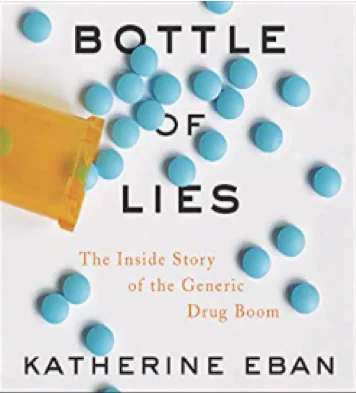
A recent review by Lisa Morrise, shared through the Patient Safety organization, has reignited critical conversations surrounding the integrity and efficacy of generic medications. Morrise’s compelling account, centered on Katherine Eban’s investigative exposé "Bottle of Lies – The Inside Story of the Generic Drug Boom," paints a stark picture of a global supply chain fraught with alarming deficiencies in oversight and a troubling lack of integrity. Describing the book as a "true to life thriller," Morrise’s personal reflection underscores a pervasive concern: that her own family, like countless others, may have been adversely affected by substandard generic drugs. While acknowledging the crucial role patient advocacy has played in initiating reforms, her review pointedly asserts that "much remains to be done," particularly for patients beyond U.S. borders, issuing a vital call to action for individuals to engage their healthcare providers if generic alternatives prove less effective than their brand-name counterparts.
n
The concerns raised by Morrise’s review are not isolated; they echo a growing chorus of voices from healthcare professionals, regulators, and investigative journalists who have spent years peeling back the layers of a complex, global industry. "Bottle of Lies" stands as a seminal work in this ongoing investigation, meticulously detailing how the promise of affordable medicine has, in some instances, been compromised by systemic fraud, regulatory loopholes, and a relentless pursuit of cost-cutting that prioritizes profit over patient safety. This article will delve into the core revelations of this crisis, trace its chronological development, examine supporting data, analyze official responses, and explore the profound implications for global health and patient trust.
n
Main Facts: Unmasking the Global Generic Drug Deception
n
Katherine Eban’s "Bottle of Lies" is not merely a critique; it is a meticulously researched investigative journalism piece that systematically uncovers widespread fraud within the generic drug manufacturing industry, primarily focusing on facilities located in India, which has become the world’s largest supplier of generic drugs. The central premise of the book is that many generic pharmaceutical companies, under intense pressure to produce drugs at rock-bottom prices, have routinely engaged in illicit practices, including falsifying data, fabricating test results, substituting active pharmaceutical ingredients (APIs), and manipulating manufacturing processes to conceal impurities or quality defects.
n
The investigation, spanning years and involving hundreds of interviews with whistleblowers, former executives, and regulatory officials, reveals how these fraudulent activities directly led to the distribution of ineffective or potentially harmful medications to millions of patients globally. The book highlights specific instances and companies, most notably Ranbaxy Laboratories, a major Indian pharmaceutical firm, whose systemic deceit was exposed by courageous whistleblowers. These revelations demonstrate a profound failure of regulatory oversight, particularly by the U.S. Food and Drug Administration (FDA), which struggled to adapt to the complexities and vastness of an increasingly globalized drug supply chain.
n
Lisa Morrise’s review encapsulates the terrifying realization for many consumers: that the drugs intended to heal might, in fact, be inert or even detrimental. Her description of the book as a "true to life thriller" speaks to the shocking nature of the disclosures, transforming what might seem like an abstract regulatory issue into a deeply personal threat to health and well-being. The recognition of patient advocacy’s role offers a glimmer of hope, suggesting that collective action can indeed force change, but her poignant reminder that the battle is far from over, especially outside the U.S., underscores the urgent, ongoing nature of this crisis.
n
Chronology: The Evolution of a Global Health Challenge
n
The narrative of the generic drug crisis is a complex tapestry woven over several decades, marked by legislative intent, economic pressures, and critical failures in oversight.
n
The Genesis of Generics: The Hatch-Waxman Act
n
The modern generic drug industry in the United States was largely catalyzed by the Drug Price Competition and Patent Term Restoration Act of 1984, commonly known as the Hatch-Waxman Act. This landmark legislation aimed to balance pharmaceutical innovation with public access to affordable medicines. It streamlined the FDA approval process for generic drugs, allowing them to enter the market once brand-name patents expired, provided they demonstrated "bioequivalence" – meaning they delivered the same amount of active ingredient into a patient’s bloodstream over the same period as the brand-name drug. The act was a resounding success in making medications more affordable, saving consumers and healthcare systems billions of dollars annually.
n
The Shift to Global Manufacturing and the Rise of "Quality Arbitrage"
n
As the generic drug market expanded exponentially, driven by fierce price competition, pharmaceutical companies began aggressively seeking lower manufacturing costs. This led to a significant migration of drug production, particularly of active pharmaceutical ingredients (APIs) and finished drug products, to countries like India and China, where labor, raw materials, and environmental regulations were often less stringent and therefore cheaper. This era, roughly from the late 1990s through the 2000s, saw the rapid rise of companies like Ranbaxy, Dr. Reddy’s Laboratories, and Wockhardt, which became major suppliers to Western markets.
n
However, this global shift inadvertently created what some analysts call "quality arbitrage" – a situation where manufacturers could cut corners on quality control, testing, and regulatory compliance to achieve lower prices, knowing that distant regulators might struggle to detect the fraud.
n
The Unveiling of Systemic Fraud: Whistleblowers and Investigations
n
The first major cracks in the façade of generic drug quality began to appear in the mid-2000s. A pivotal moment, extensively detailed in "Bottle of Lies," was the brave stand taken by Dinesh Thakur, a former Ranbaxy executive. Thakur blew the whistle on systemic data falsification and manufacturing malpractices at Ranbaxy, revealing how the company routinely doctored stability test results, manipulated samples, and even substituted ingredients to pass regulatory inspections. His evidence, meticulously compiled, ultimately led to a multi-year investigation by the FDA and the U.S. Department of Justice.
n
In 2013, Ranbaxy pleaded guilty to felony charges related to manufacturing and distributing adulterated drugs and making false statements to the U.S. government, agreeing to pay $500 million in civil and criminal fines. This landmark settlement was the largest ever against a generic drug manufacturer and sent shockwaves through the industry, exposing the vulnerability of the global supply chain.
n
Following the Ranbaxy exposé, similar issues began to surface at other major Indian and Chinese manufacturers. The FDA, initially slow to adapt, began to ramp up its international inspection efforts.
n
Regulatory Catch-Up and Ongoing Challenges
n
The period from the mid-2010s to the present has been characterized by increased, though still insufficient, regulatory scrutiny. The FDA issued numerous warning letters, import alerts, and even bans on products from facilities found to be non-compliant. However, the sheer volume of foreign manufacturing sites, coupled with resource limitations and the sophisticated methods employed by fraudsters, meant that regulatory bodies were often playing catch-up.
n
The COVID-19 pandemic further exposed the fragility and lack of transparency in the global drug supply chain, highlighting the critical reliance on a few key regions and the potential for disruptions or quality compromises to have widespread health impacts. The timeline underscores a critical lesson: while the initial intent of generic drugs was noble, the execution in a globally competitive, cost-driven market has often faltered, demanding constant vigilance and reform.
n
Supporting Data: The Scope and Impact of the Crisis
n
The concerns highlighted in "Bottle of Lies" and Lisa Morrise’s review are supported by a substantial body of evidence, illustrating the scale of the generic drug quality crisis and its profound implications.
n
Economic Footprint and Global Reliance
n
The generic drug market is a behemoth. Globally, it was valued at over $400 billion in 2022 and is projected to grow significantly. In the U.S., generic drugs account for nearly 90% of all prescriptions filled but represent only about 20% of total drug spending, saving the healthcare system hundreds of billions of dollars annually. This economic imperative drives the intense pressure on manufacturers to produce drugs at the lowest possible cost.
n
India alone supplies roughly 40% of generic and over-the-counter drugs consumed in the U.S. and a significant portion of drugs to Africa and other developing nations. China is the dominant producer of active pharmaceutical ingredients (APIs) globally, supplying ingredients for both generic and brand-name drugs. This heavy reliance on a few key manufacturing hubs creates systemic vulnerabilities.
n
Documented Failures and Adverse Outcomes
n
While proving direct patient harm from each specific batch of substandard generics is challenging, particularly when drugs are merely inert rather than actively toxic, there is compelling evidence of therapeutic failures and adverse events:
n
- n
- Therapeutic Failures: Numerous reports detail instances where patients taking generic versions of critical medications (e.g., blood pressure drugs, antidepressants, antibiotics, seizure medications) experienced a return of symptoms or a lack of improvement after switching from a brand-name drug, only to recover when switched back. While not always attributable to fraud, such cases raise significant concerns about bioequivalence and manufacturing consistency.
- Antibiotic Resistance: The distribution of sub-potent antibiotics is a particularly grave concern. If a generic antibiotic contains too little active ingredient, it may not effectively kill bacteria, inadvertently contributing to the development of antibiotic resistance – a major global health threat.
- FDA Enforcement Actions: Between 2013 and 2017, the FDA issued over 100 warning letters to foreign drug manufacturers for data integrity violations alone. In the wake of the Ranbaxy scandal, the agency issued numerous import alerts, effectively banning products from dozens of facilities in India and other countries found to be non-compliant. These actions represent only a fraction of detected issues, given the FDA’s limited inspection capacity relative to the number of facilities.
- Inspection Disparities: Historically, the FDA conducted far fewer inspections of foreign manufacturing sites compared to domestic ones. While foreign inspections have increased, they often involve pre-announced visits, giving manufacturers ample time to prepare and potentially conceal issues. This contrasts sharply with the often unannounced inspections of U.S. facilities.
- Whistleblower Impact: The revelations from whistleblowers like Dinesh Thakur have been instrumental. Their courageous actions, often at great personal and professional risk, have provided the most detailed insights into the inner workings of fraudulent pharmaceutical operations, demonstrating that internal mechanisms for ensuring quality were either non-existent or actively subverted.
- Recalls: The generic drug industry has also seen its share of recalls, some due to contaminants (e.g., NDMA in certain blood pressure medications like Valsartan), which, while not always directly linked to fraud, underscore broader quality control issues in the manufacturing process.
Patient Advocacy and Awareness
Groups like the Patient Safety organization, which published Lisa Morrise’s review, play a crucial role in amplifying these concerns. Their efforts, alongside other patient advocacy groups, have been vital in pushing for greater transparency, stricter regulations, and increased public awareness. The call for patients to discuss concerns about generic efficacy with their providers is a direct outcome of these advocacy efforts, empowering individuals to become active participants in their own healthcare safety. The very existence of platforms like CAPS Book Club (implied by the original text) points to a concerted effort to educate and mobilize patients on critical health issues.
Official Responses: Navigating a Complex Regulatory Landscape
The revelations of widespread fraud and quality issues in the generic drug industry have elicited varied responses from regulatory bodies, governments, and the industry itself.
The U.S. Food and Drug Administration (FDA)
Initially criticized for being slow to adapt to the globalized drug supply chain, the FDA has significantly increased its efforts to address the crisis:
- Increased Foreign Inspections: The FDA has expanded its international inspection force and increased the frequency of inspections at foreign manufacturing sites. It has also striven for more unannounced inspections, though logistical challenges persist.
- Data Integrity Initiatives: Recognizing that data falsification is a core problem, the FDA has launched specific initiatives to improve data integrity during inspections, scrutinizing electronic records and data management systems more rigorously.
- Foreign Offices: The FDA has established offices in key manufacturing hubs, such as India and China, to facilitate closer oversight and engagement with local regulators and manufacturers.
- Warning Letters and Import Alerts: The agency continues to issue warning letters for non-compliance and implement import alerts, effectively blocking drugs from facilities that fail to meet U.S. quality standards.
- Collaborative Efforts: The FDA actively collaborates with international regulatory bodies, such as the European Medicines Agency (EMA), to share information and harmonize standards, recognizing that drug safety is a global responsibility.
Despite these efforts, the FDA faces significant challenges, including budget constraints, the sheer volume of foreign facilities, the sophisticated methods employed by fraudsters, and geopolitical complexities that can hinder access or enforcement.
The Pharmaceutical Industry (Generic Manufacturers)
The industry’s response has been mixed:
- Denial and Reform Promises: Many companies initially denied widespread fraud, attributing issues to "isolated incidents" or misunderstandings. However, facing regulatory penalties and reputational damage, many major players have publicly committed to internal reforms, strengthening quality control systems, and enhancing data integrity.
- Pressure for Cost Reduction: The inherent tension between quality assurance and aggressive price competition remains a significant challenge. The drive for the lowest possible cost can create perverse incentives that make quality corners tempting to cut.
- Industry Associations: Generic drug industry associations have also committed to promoting higher quality standards and working with regulators to restore public trust, though the effectiveness of these self-regulatory measures is often questioned.
International Regulators
Other major regulatory bodies, such as the European Medicines Agency (EMA), have also intensified their scrutiny of generic drug manufacturers. The EMA, like the FDA, has increased inspections, issued its own warnings, and worked to enhance cooperation with national authorities across Europe to ensure drug quality. Developing nations, heavily reliant on generic imports, often lack the robust regulatory infrastructure to conduct independent oversight, making them particularly vulnerable to substandard products.
Government and Policy Makers
Legislators in the U.S. and other countries have introduced bills and held hearings aimed at:
- Increasing FDA Funding: Providing more resources for inspections and enforcement.
- Enhancing Supply Chain Transparency: Developing technologies and regulations for better tracking of drugs from raw materials to finished products.
- Strengthening Whistleblower Protections: Encouraging more insiders to come forward with information about fraud without fear of retaliation.
However, political will and legislative action can be slow, and implementing effective, globally harmonized solutions remains a complex undertaking.
Implications: Rebuilding Trust in a Globalized World
The generic drug crisis, as illuminated by "Bottle of Lies" and echoed by patient advocates like Lisa Morrise, carries profound implications that extend far beyond individual drug batches.
Erosion of Patient Trust
Perhaps the most significant long-term consequence is the erosion of patient trust. When individuals question the efficacy or safety of their prescribed medications, it undermines the very foundation of the doctor-patient relationship and the broader healthcare system. This distrust can lead to non-compliance, poorer health outcomes, and increased anxiety for patients. Rebuilding this trust requires consistent, verifiable commitment to quality from both manufacturers and regulators.
Global Health Security and Vulnerability
The crisis exposes the inherent vulnerabilities of a highly globalized and consolidated drug supply chain. A problem in one manufacturing plant in a distant country can have immediate and widespread health consequences across continents. This vulnerability became acutely apparent during the COVID-19 pandemic, when disruptions to supply chains highlighted the critical reliance on foreign manufacturers for essential medicines and even basic medical supplies. Ensuring a resilient and secure drug supply chain is now recognized as a critical component of national and global health security.
Economic Repercussions
While generic drugs save billions, the cost of systemic fraud is also substantial. Recalls, legal penalties, and the need for enhanced regulatory oversight all add to the economic burden. Furthermore, if quality concerns lead to a reluctance to use generics, it could undermine the cost-saving benefits that generics were designed to deliver, potentially driving up healthcare expenditures. Legitimate manufacturers who invest in robust quality control may also face unfair competition from those who cut corners.
The Future of Regulatory Oversight
The crisis necessitates a fundamental re-evaluation of how drug quality is regulated in a globalized world. Key areas for future action include:
- Proactive, Risk-Based Inspections: Moving beyond reactive responses to more predictive, data-driven approaches for identifying high-risk manufacturing sites.
- Advanced Analytical Technologies: Employing cutting-edge analytical tools and artificial intelligence to detect data manipulation and quality anomalies more effectively.
- Supply Chain Traceability: Implementing robust "track and trace" systems that provide end-to-end visibility of pharmaceutical products, from raw materials to the patient.
- Empowered Whistleblowers: Strengthening legal protections and incentives for whistleblowers is critical, as they have consistently proven to be the most effective early warning system for systemic fraud.
- Enhanced International Collaboration: Greater harmonization of standards and more effective sharing of information and enforcement actions among global regulatory bodies are essential to address a truly global problem.
The Ongoing Role of Patient Advocacy
As Lisa Morrise’s review powerfully concludes, the fight for safe and effective generic medicines is far from over. Her emphasis that "much remains to be done, especially for patients that live outside of the United States," highlights the disparity in regulatory oversight and consumer protection globally. The call for patients to communicate openly with their providers about concerns regarding generic efficacy remains paramount. This empowers individuals, transforming them from passive consumers into active participants in ensuring their own health outcomes.
Ultimately, the revelations from "Bottle of Lies" serve as a stark reminder that the pursuit of affordable medicine must never compromise the fundamental principle of patient safety. The journey toward a truly trustworthy global drug supply chain requires unwavering commitment, continuous vigilance, and collaborative action from all stakeholders – regulators, industry, healthcare providers, and, most importantly, patients themselves.

