
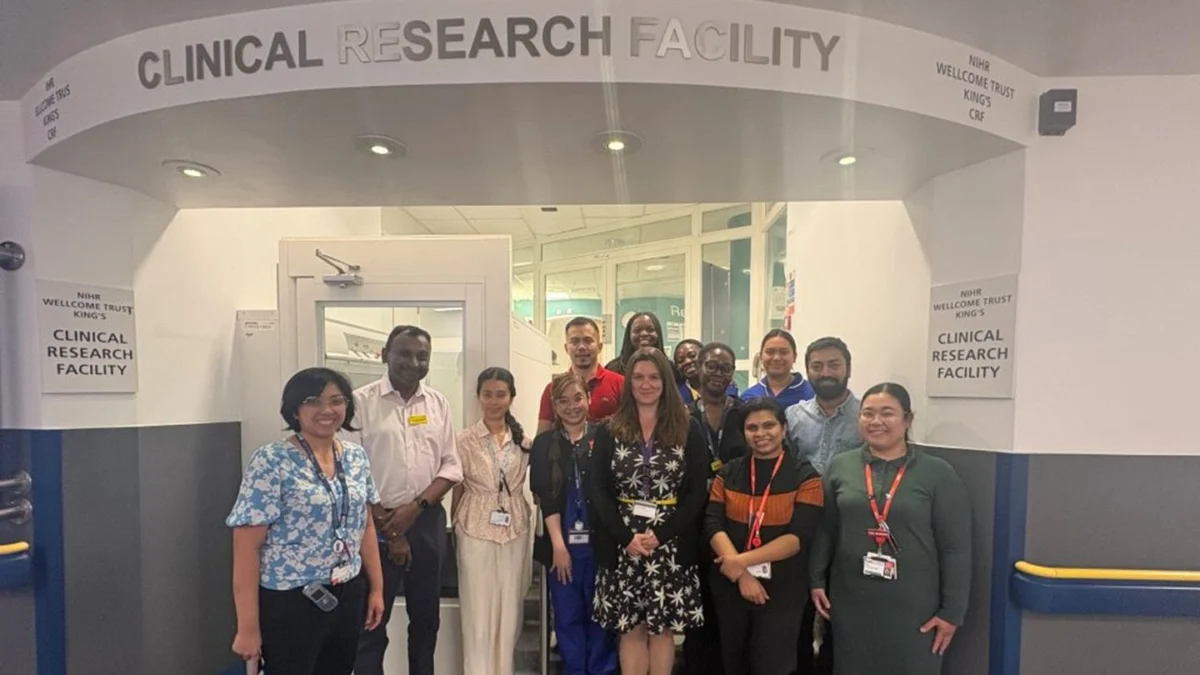
LONDON, UK – King’s College Hospital NHS Foundation Trust has announced a significant milestone in global medical research, securing the first patient recruitment worldwide for TAK-226-3001, a pivotal Phase III clinical trial sponsored by Takeda Pharmaceuticals. This ambitious study is set to evaluate the efficacy and safety of elritercept, a novel investigational therapy, against epoetin alfa in treating anaemia in adult patients suffering from very low, low, or intermediate-risk myelodysplastic syndromes (MDS) who are dependent on regular red blood cell transfusions.
n
The achievement underscores King’s College Hospital’s standing as a leading centre for haematological research and its commitment to advancing treatment options for rare and complex blood disorders. The trial aims to enrol 300 participants globally, with patients potentially remaining in the study for up to five years, highlighting the long-term commitment to understanding the full impact of elritercept. King’s is one of only two UK hospitals participating in this crucial international endeavour, further cementing the UK’s role at the forefront of clinical innovation.
n
Myelodysplastic syndromes are a group of bone marrow disorders where the bone marrow fails to produce enough healthy blood cells. Often described as a pre-leukaemic condition, MDS carries a significant risk of progression to acute myeloid leukaemia (AML) and profoundly impacts patients’ quality of life, primarily through severe anaemia requiring frequent blood transfusions. The TAK-226-3001 trial seeks to address this critical unmet need by investigating whether elritercept can reduce the transfusion burden and improve patient outcomes.
n
Main Facts: A New Horizon for MDS Treatment
n
The TAK-226-3001 trial represents a beacon of hope for individuals living with lower-risk myelodysplastic syndromes, a patient population often struggling with chronic anaemia and the associated complications of frequent blood transfusions. At its core, the study is a head-to-head comparison, pitting elritercept against epoetin alfa, a standard erythropoiesis-stimulating agent (ESA). This direct comparison is designed to provide robust data on elritercept’s potential superiority or non-inferiority in reducing the need for red blood cell transfusions, a primary endpoint that holds immense importance for patient well-being.
n
Beyond the critical measure of transfusion independence, researchers are meticulously examining a comprehensive suite of secondary objectives. These include a detailed assessment of elritercept’s safety profile compared to epoetin alfa, providing crucial insights into potential side effects and tolerability. Patient-reported outcomes, such as fatigue levels, a debilitating symptom frequently experienced by MDS patients, will also be rigorously evaluated. Furthermore, the trial will explore the overall transfusion burden, its impact on the participants’ quality of life, and the extent of the immune response to the investigational therapy. These multifaceted objectives reflect a holistic approach to understanding the true clinical benefit of elritercept, moving beyond mere physiological improvements to encompass the broader impact on patients’ daily lives and long-term health.
n
The strategic enrolment target of 300 participants underscores the statistical rigour required for a Phase III trial, ensuring that any observed effects are clinically meaningful and statistically significant enough to support potential regulatory approval. The extended potential duration of patient participation – up to five years – is particularly noteworthy. This long-term follow-up will allow researchers to gather extensive data on the sustained efficacy and safety of elritercept, crucial for understanding its potential as a durable treatment option and for monitoring any long-term adverse events or benefits, including its potential impact on the progression of MDS itself.
n
The choice of King’s College Hospital as the site for the first global patient recruitment is a testament to its distinguished expertise in haematology and its robust clinical trial infrastructure. As a National Reference Centre for MDS, King’s possesses a unique concentration of specialist knowledge, state-of-the-art facilities, and a dedicated patient cohort, making it an ideal environment for conducting such a complex and vital study. This early recruitment success not only signifies an encouraging start for the trial but also highlights the UK’s capabilities in expediting critical research that can ultimately transform patient care on a global scale.
n
Chronology: Accelerating Research in a Post-Pandemic Era
n
The initiation of the TAK-226-3001 trial and King’s College Hospital’s swift recruitment of the first global patient is particularly timely, aligning with broader national efforts to streamline and accelerate clinical research within the United Kingdom. In April, the UK government introduced ambitious new targets aimed at significantly cutting the time required to set up clinical trials. These targets were a direct response to lessons learned during the COVID-19 pandemic, which highlighted the critical importance of rapid research initiation and execution for public health.
n
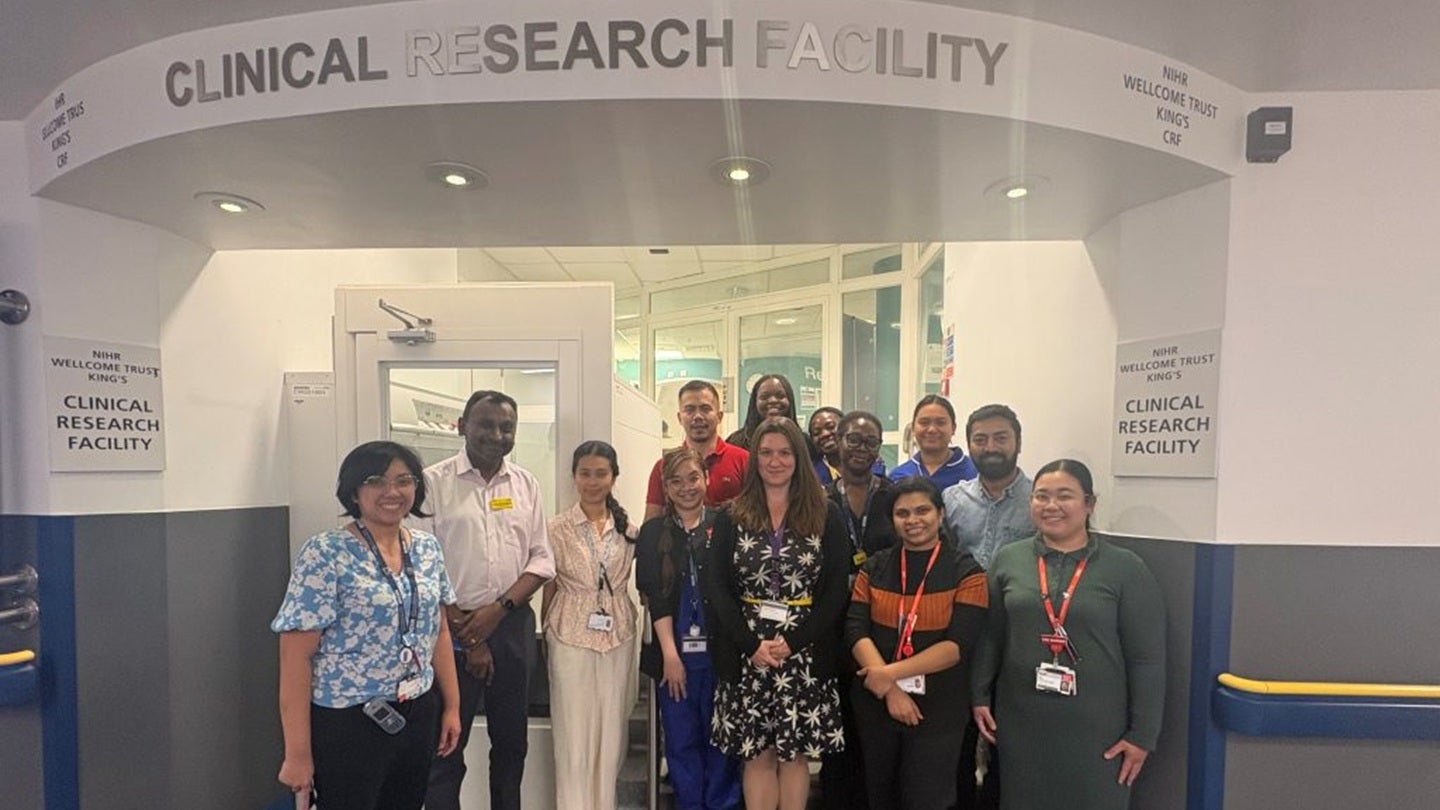
King’s College Hospital’s ability to recruit the first patient ahead of these newly established national targets is a strong indicator of its operational efficiency and dedication to research excellence. This proactive approach demonstrates how leading institutions are not merely meeting but exceeding governmental expectations, playing a crucial role in revitalizing the UK’s clinical trial landscape. The National Institute for Health and Care Research (NIHR) Clinical Research Facility at King’s provided essential support for this rapid recruitment, showcasing the synergistic power of collaborative research infrastructure. The NIHR, a major funder of health and social care research, plays a vital role in enabling high-quality studies by providing the necessary resources, expertise, and patient access.
n
Takeda Pharmaceuticals, the sponsor of TAK-226-3001, has a long-standing commitment to developing innovative therapies for rare diseases, including a strong presence in haematology. The journey of elritercept through the drug development pipeline, from preclinical studies to its current Phase III status, represents years of scientific endeavour and significant investment. Phase I trials typically assess safety and dosage in a small group of healthy volunteers, while Phase II trials evaluate efficacy and further safety in a larger group of patients with the target condition. A Phase III trial, such as TAK-226-3001, is the penultimate stage before potential regulatory submission, involving hundreds or thousands of patients across multiple sites to confirm efficacy, monitor side effects, compare it to common treatments, and collect information that will allow the drug to be used safely.
n
The successful and timely launch of this Phase III trial at King’s, therefore, marks a critical juncture in elritercept’s development. It signals Takeda’s confidence in the drug’s potential, building on promising data from earlier phases. For the UK, this early recruitment success reinforces its reputation as a preferred destination for complex and high-impact international clinical trials, attracting investment and fostering scientific collaboration that ultimately benefits patients globally. The coordinated effort between King’s, Takeda, and the NIHR exemplifies the collaborative model necessary to bring cutting-edge treatments from the laboratory to the patient’s bedside efficiently.
n
Supporting Data: Unpacking Myelodysplastic Syndromes and Elritercept’s Promise
n
Myelodysplastic syndromes (MDS) are a heterogeneous group of clonal haematopoietic stem cell disorders characterized by ineffective haematopoiesis, leading to cytopenias (low blood cell counts) in one or more lineages, and an increased risk of progression to acute myeloid leukaemia (AML). MDS primarily affects older adults, with a median age of diagnosis around 70 years. The incidence is estimated to be approximately 4-5 cases per 100,000 people per year, rising significantly to 20-50 cases per 100,000 in individuals over 70.
n
The classification of MDS risk is crucial for guiding treatment decisions and predicting prognosis. The Revised International Prognostic Scoring System (IPSS-R) is widely used, categorizing patients into very low, low, intermediate, high, and very high-risk groups based on cytogenetics, blast percentage in the bone marrow, and the number and severity of cytopenias. Patients in the very low, low, and intermediate-risk categories, who constitute the focus of the TAK-226-3001 trial, generally have a better prognosis than their higher-risk counterparts but still frequently suffer from chronic anaemia that necessitates regular red blood cell transfusions.
n
The burden of transfusion dependence in MDS patients is substantial. Frequent transfusions carry risks such as iron overload, transfusion reactions, infections, and alloimmunization, which can complicate future transfusions. Furthermore, the logistical demands of regular hospital visits for transfusions significantly impair patients’ quality of life, limiting their independence and daily activities. Current treatment options for lower-risk MDS-associated anaemia include erythropoiesis-stimulating agents (ESAs) like epoetin alfa, which stimulate the bone marrow to produce red blood cells. However, ESAs are effective in only about 40-50% of patients and many eventually lose response, leading to transfusion dependence. Other treatments, such as lenalidomide for patients with del(5q) cytogenetic abnormality, or hypomethylating agents like azacitidine for higher-risk or specific lower-risk patients, are also used, but a significant unmet need remains for effective, well-tolerated therapies that can reduce transfusion dependence in ESA-refractory or ESA-ineligible lower-risk MDS patients.
n
Elritercept (TAK-226) is an investigational activin receptor type IIA ligand trap. This mechanism of action is distinct from traditional ESAs. Activin receptors play a crucial role in regulating erythropoiesis (red blood cell production) by negatively impacting the maturation of erythroid precursors. By acting as a ligand trap, elritercept is designed to bind to and sequester ligands (such as GDF11 and activin B) that would otherwise activate the activin receptor type IIA pathway. This effectively inhibits the negative signaling that suppresses red blood cell production, thereby promoting the late-stage maturation of red blood cells. This novel approach holds the potential to stimulate erythropoiesis in patients who do not respond to or have become refractory to ESAs, offering a new therapeutic avenue for managing anaemia in lower-risk MDS.
n
The National Institute for Health and Care Research (NIHR) plays a pivotal role in supporting clinical trials across the UK. Through its network of Clinical Research Facilities (CRFs), such as the one at King’s, the NIHR provides dedicated facilities, expert staff, and specialized equipment to conduct complex and early-phase clinical research. This infrastructure is vital for translating scientific discoveries into tangible patient benefits. The NIHR’s commitment extends to streamlining trial initiation and recruitment processes, making the UK an attractive environment for global pharmaceutical companies to conduct their research.
n
King’s College Hospital’s designation as a National Reference Centre for MDS signifies its comprehensive expertise, multidisciplinary approach, and leadership in both clinical care and research for this complex condition. Such centres typically offer specialized diagnostic services, access to advanced therapies, and a strong pipeline of clinical trials, drawing patients from across the country seeking state-of-the-art treatment and research opportunities. This status is not merely an accolade but reflects a deep institutional capacity to manage complex patient populations and drive forward medical science. King’s extensive research portfolio, encompassing over 1,200 active studies annually across various domains from discovery science to population health, further demonstrates its profound commitment to pushing the boundaries of medical knowledge and improving patient outcomes. Its specialized research units, including the Cicely Saunders Institute (palliative care), the Clinical Age Research Unit, the Harris Birthright Centre (fetal medicine), and the HIV Research Centre, underscore the breadth and depth of its scientific endeavors.
n
Official Responses: Voices of Hope and Progress
n
Dr. Austin Kulasekararaj, Consultant Haematologist at King’s College Hospital and the Chief Investigator for the TAK-226-3001 study, articulated the significance of this trial with profound optimism: "King’s College Hospital is immensely proud to be a National Reference Centre for Myelodysplastic Syndromes, a distinction that allows us to offer our patients access to cutting-edge clinical trials designed to profoundly improve their outcomes and elevate their quality of life. The challenge of anaemia in lower-risk MDS is particularly vexing; the only currently approved treatment in the UK, supportive therapy with erythropoietin injections, regrettably fails a significant proportion of patients, leaving them reliant on the often burdensome necessity of regular blood transfusions. This pivotal trial, evaluating elritercept, holds the promise of a truly transformative therapeutic option. It could provide a fantastic, much-needed opportunity for our patients to benefit from a novel therapy that has the potential to alleviate the relentless cycle of transfusions, thereby enhancing their independence and overall well-being. Our early recruitment success is a testament to the dedication of our entire research team and the infrastructure provided by the NIHR."
n
Professor Clive Roberts, Director of Research and Innovation at King’s College Hospital NHS Foundation Trust, expressed the institution’s pride in its leading role: "Achieving the first global patient recruitment for a Phase III trial of this magnitude is a monumental accomplishment for King’s College Hospital and a clear indicator of our unwavering commitment to pioneering medical research. Our ability to swiftly initiate and enrol patients, even ahead of ambitious national targets, reflects the exceptional talent of our clinical and research teams and the robust support provided by our NIHR Clinical Research Facility. This trial not only offers a new ray of hope for MDS patients suffering from debilitating anaemia but also reinforces the UK’s global standing as a powerhouse in clinical trial delivery. We are dedicated to translating scientific breakthroughs into real-world patient benefits, and this milestone is a shining example of that mission in action."
n
A spokesperson from Takeda Pharmaceuticals commented on the collaborative effort: "We are incredibly pleased with the rapid and efficient patient recruitment achieved by King’s College Hospital for the TAK-226-3001 trial. This collaborative spirit and the dedication of the research teams are vital to accelerating the development of novel therapies for rare diseases. At Takeda, our mission is to address significant unmet medical needs, and we believe elritercept holds substantial promise for patients with lower-risk MDS who are struggling with transfusion-dependent anaemia. We look forward to the continued progress of this global study and the potential it holds to redefine care standards for this vulnerable patient population."
n
Dr. Jonathan Sheffield OBE, Chief Executive Officer of the NIHR Clinical Research Network, praised King’s efficiency: "The NIHR is immensely proud to support institutions like King’s College Hospital, which consistently demonstrate excellence in clinical research. The swift recruitment of the first global patient for Takeda’s TAK-226-3001 trial is an outstanding achievement, showcasing the UK’s capacity to deliver high-quality research efficiently. This success is particularly gratifying as it aligns perfectly with the government’s recent drive to accelerate clinical trial setup times, positioning the UK as a premier destination for life-changing research. Our investment in infrastructure and support for research facilities ensures that more patients can access innovative treatments sooner."
n
Implications: Reshaping the Landscape of MDS Care and UK Research
n
The successful and early recruitment of the first global patient for the TAK-226-3001 trial carries profound implications, both for the future of myelodysplastic syndromes treatment and for the United Kingdom’s standing in the global clinical research arena.
n
For Patients with Lower-Risk MDS: The most direct and significant implication lies in the potential for improved patient outcomes. If elritercept demonstrates superior efficacy in reducing or eliminating the need for red blood cell transfusions compared to epoetin alfa, it could fundamentally alter the treatment paradigm for anaemia in lower-risk MDS. Reduced transfusion dependence would translate into a dramatically improved quality of life for patients, freeing them from the constant burden of hospital visits, minimizing the risks associated with transfusions (such as iron overload, infections, and alloimmunization), and enhancing their energy levels and overall well-being. Furthermore, a therapy that effectively manages anaemia might potentially delay or even prevent the progression of MDS to higher-risk forms or acute myeloid leukaemia, though this would require long-term follow-up and specific investigation. The introduction of a novel mechanism of action, distinct from existing ESAs, offers a crucial alternative for patients who are refractory to current treatments, addressing a significant unmet need.
n
For the Healthcare System: A successful outcome for elritercept could also have substantial benefits for healthcare systems. A reduction in transfusion requirements would alleviate pressure on blood banks, ensuring that this precious resource is available for other critical medical needs. It could also lead to more efficient patient management, reducing hospital bed days and outpatient clinic visits associated with transfusions, thereby optimizing resource allocation within strained healthcare services. The long-term economic implications, including cost-effectiveness analyses, would also be crucial in determining its broader adoption.
n
For the UK’s Position in Clinical Research: King’s College Hospital’s achievement reinforces the UK’s reputation as a world-leading hub for clinical trials. In a competitive global landscape, the ability to initiate and recruit patients efficiently and effectively is a major draw for pharmaceutical companies seeking to conduct their pivotal studies. This success, particularly in light of the new government targets aimed at accelerating trial setup, signals that the UK is not only committed to but also highly capable of delivering on its promises to streamline research processes. This will likely attract further investment in pharmaceutical R&D, foster greater international collaboration, and create opportunities for UK patients to access cutting-edge experimental therapies earlier. It underscores the value of the National Institute for Health and Care Research (NIHR) infrastructure in supporting and enabling such achievements.
For Takeda Pharmaceuticals and Pharmaceutical R&D: For Takeda, a successful Phase III trial would pave the way for regulatory submissions and potential market approval, positioning elritercept as a significant new asset in its rare disease portfolio. It would validate their investment in novel biological pathways for haematological disorders. More broadly, the development of drugs like elritercept with unique mechanisms of action highlights the ongoing innovation in pharmaceutical R&D, moving beyond symptomatic relief to target underlying disease processes. This trial exemplifies the complex, multi-year, and resource-intensive journey required to bring a new drug to patients, underscoring the critical importance of strong academic-industry partnerships.
In conclusion, the first global patient recruitment for the TAK-226-3001 trial at King’s College Hospital is far more than an administrative milestone. It represents a significant step forward in the quest to improve the lives of MDS patients, a powerful affirmation of the UK’s clinical research prowess, and a beacon of hope for future therapeutic advancements in haematology. The journey of elritercept is now firmly underway, carrying the hopes of hundreds of patients and the aspirations of a global scientific community dedicated to conquering complex diseases.

