
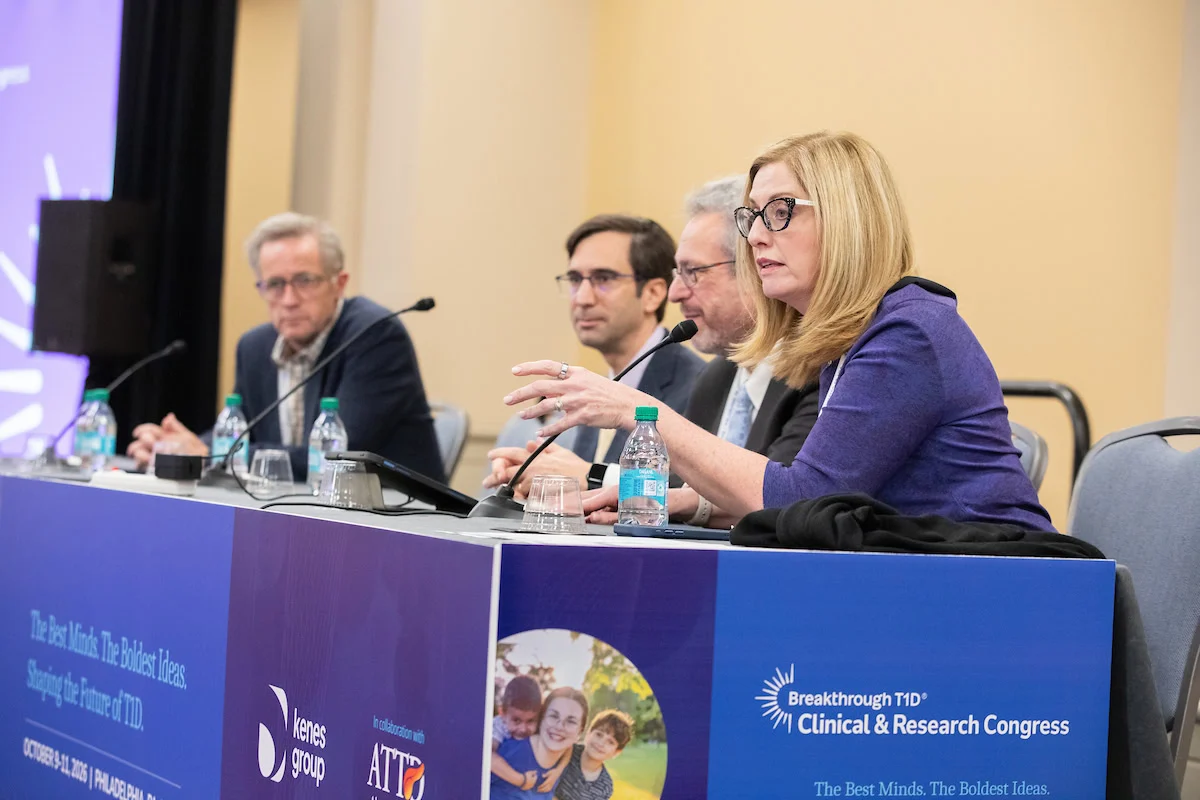
PHILADELPHIA – Despite the grey skies and persistent rain over the city of Philadelphia, the atmosphere inside the inaugural Breakthrough T1D Clinical & Research Congress (CRC 2026) was defined by a palpable sense of optimism and urgency. Bringing together a global cohort of clinicians, researchers, and industry leaders, the congress marked a historic shift in the landscape of Type 1 Diabetes (T1D) research. For the first time, a forum of this scale has been dedicated exclusively to the acceleration of T1D therapies, bridging the gap between laboratory discovery and clinical application.
n
The central theme of the congress was clear: the scientific community is no longer merely managing T1D; it is actively engineering its obsolescence. From the debate over disease-modifying therapies to the revolutionary potential of chemical cellular reprogramming, CRC 2026 provided a comprehensive roadmap for a world without insulin dependence.
n
Main Facts: A New Era in T1D Advocacy and Science
n
The Breakthrough T1D Clinical & Research Congress (CRC 2026) serves as the premier forum for the T1D community, uniting stakeholders from every sector of the healthcare ecosystem. The meeting’s primary objective is to foster "translational insights"—moving scientific breakthroughs from the "bench" of the lab to the "bedside" of the patient.
n
Key highlights from the congress include:
n
- n
- A Shift in Strategy: A movement toward combining islet cell replacement with immune system modulation.
- Technological Integration: The use of Artificial Intelligence (AI) and machine learning to identify biomarkers and predict disease progression.
- Psychosocial Integration: A renewed focus on the "diabetes stigma" and the mental health burden of chronic disease management.
- Future Planning: The announcement that CRC 2027 will be held in Washington, D.C., from October 15–17, 2027, ensuring the momentum generated in Philadelphia continues.
n
n
n
n
n
Chronology of Innovation: Day Two Highlights
n
The congress was structured to address the lifecycle of the disease, from early detection and prevention to late-stage cell replacement and the psychosocial realities of living with T1D.
n
The Great Debate: Islet Cell Therapies vs. Disease-Modifying Therapies
n
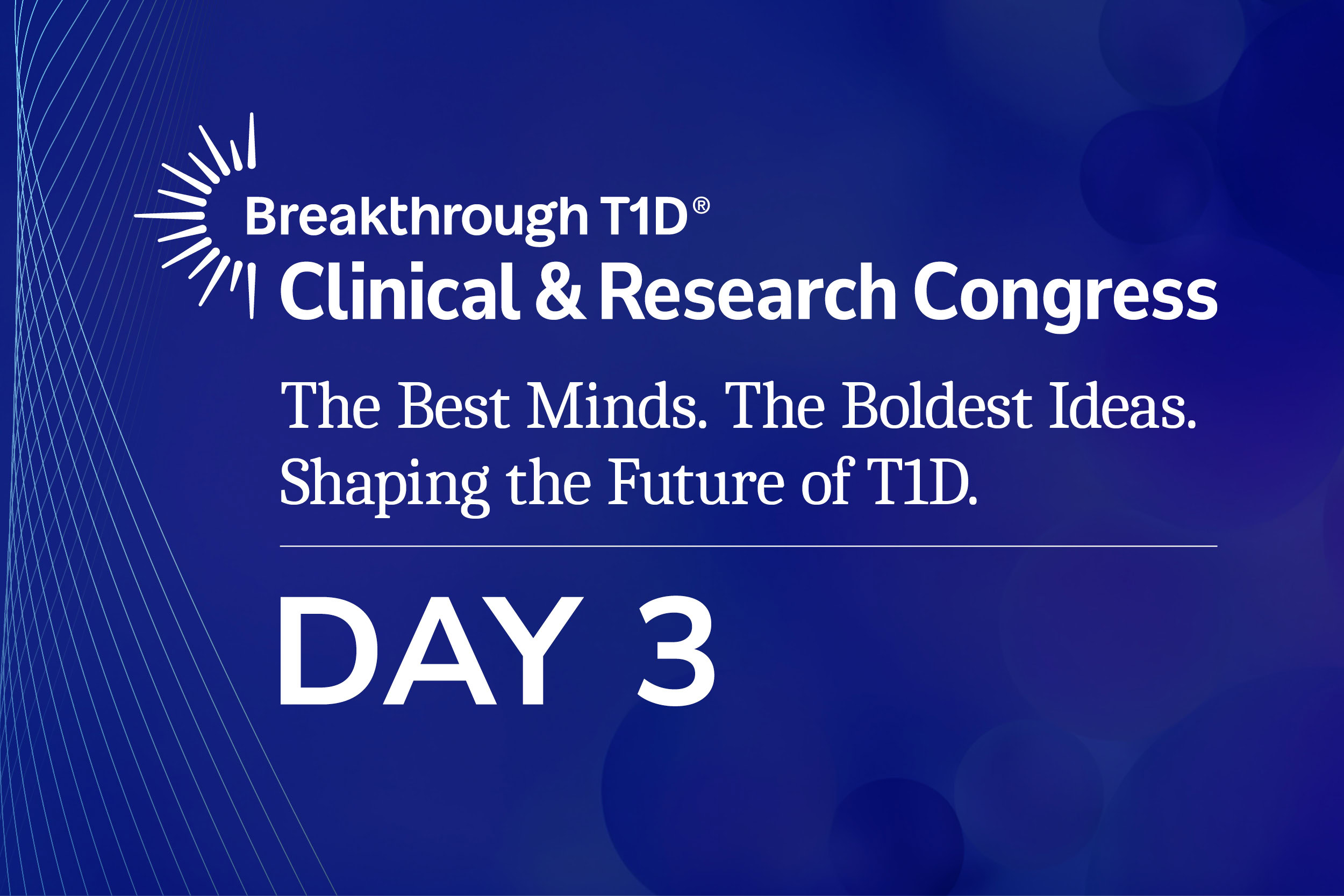
One of the most anticipated sessions featured a spirited debate between Peter Senior, MBBS, Ph.D. (University of Alberta) and Colin Dayan, MBBS, Ph.D. (University of Birmingham). The two experts weighed the merits of Islet Cell Therapies (ICT) against Disease-Modifying Therapies (DMTs).
n
Dr. Dayan championed the cause of DMTs, particularly for the pediatric population. He argued that DMTs address the root cause of the disease—the autoimmune attack—rather than merely treating the symptoms. He posited that DMTs could eventually offer a "one-and-done" solution that is more scalable and affordable for global populations.
n
In contrast, Dr. Senior highlighted the reality for the millions already living with established T1D. For these individuals, the beta cells are already gone. Dr. Senior argued that manufactured, scalable islet cell therapies are the only path to true insulin independence for the existing T1D population, offering patients a level of flexibility and metabolic control that DMTs alone cannot provide.
n
The consensus from the floor, however, pointed toward a synergistic future. The ultimate "cure" likely involves a combination: using DMTs to halt the autoimmune attack while simultaneously using islet cell transplants to restore insulin production.
n
Advancements in Islet Cell Engineering
n
The sessions on islet cell therapies revealed significant leaps in overcoming the two biggest hurdles: cell supply and immunosuppression.
n
Dr. Sabarinathan Ramachandran (University of Minnesota) addressed the "burden of immunosuppression." Currently, islet transplant recipients must take anti-rejection drugs that often have significant side effects. Dr. Ramachandran outlined new strategies, including gene editing and encapsulation (placing cells in a protective "pouch"), to shield new cells from the immune system without the need for systemic drugs.
n
Perhaps the most "science-fiction" moment of the congress came from Dr. Hongkui Deng (Peking University). His team has pioneered "chemical reprogramming," using small molecules to turn a patient’s own fat cells into functioning islet cells. Because these cells are derived from the patient’s own body, the risk of rejection is theoretically lowered. Dr. Deng’s team has already successfully transplanted these cells into human subjects, resulting in improved "time-in-range" and blood sugar management.
n
Supporting Data: The Quantitative Reality of T1D
n
The congress was not just a platform for theory; it was backed by rigorous data highlighting the challenges and successes in the field.
n
The Burden of Stigma
n
Dr. Jane Speight (Deakin University) presented sobering statistics regarding the psychosocial impact of T1D. Her research indicates that the "stigma" associated with the disease—the feeling of being judged for high blood sugar levels or the "burden" of management—has a direct correlation with clinical outcomes.
n
- n
- 98% of teens and young adults with T1D report experiencing diabetes stigma.
- 4 in 5 adults report similar experiences.
- 1 in 5 adults report being treated differently or discriminated against due to their diagnosis.
n
n
The data shows that this stigma is not just an emotional issue; it is a physiological one. High levels of stigma are associated with 2–3 times the odds of having an HbA1c above 9% and up to twice the likelihood of Diabetic Ketoacidosis (DKA).
Genetic Risk and Screening
In the realm of early detection, Dr. Callie Zaborenko (Indiana University) shared data on genetic risk scores. By analyzing Electronic Health Records (EHR), her team found that adults with the highest genetic risk scores were ten times more likely to be diagnosed with T1D than those with average scores. This data suggests that targeted autoantibody testing in high-risk adults could revolutionize how we identify the disease before it becomes a clinical emergency.
Official Responses and Institutional Leadership
The leadership of Breakthrough T1D (formerly JDRF) emphasized that the congress is part of a larger, global infrastructure designed to bring therapies to market.
Dr. Thomas Danne, Breakthrough T1D Chief Medical Officer International, provided a vivid analogy for the current state of the field: "Cures for T1D are planes in the air. We’re still building the plane, but it’s in the air right now. We must ensure there is a runway so that when the plane is ready to land, it can."
To build this "runway," the organization has launched the Centers of Reference program. As explained by Dr. James Shaw (Newcastle University), these centers are multidisciplinary hubs designed to prepare healthcare professionals to administer manufactured islet cell therapies once they receive regulatory approval. These centers are currently focusing on:
- Standardizing clinical protocols.
- Developing training for surgeons and endocrinologists.
- Establishing "centers of excellence" that can scale these treatments globally.
Dr. Peter Gottlieb (Barbara Davis Center for Diabetes) also highlighted the T1D Cures Accelerator, a consortium of experts using AI to aggregate data from various clinical trials. This effort aims to identify "biomarkers"—biological signposts—that can tell researchers much earlier if a drug is working, potentially shaving years off the clinical trial process.
Implications: What CRC 2026 Means for the Future
The implications of the findings presented at CRC 2026 are profound for both the medical community and the patient population.
1. The End of "One Size Fits All"
The work of Dr. Katsiaryna Prystupa and others in machine learning suggests that T1D is not a monolithic disease. By sorting patients into "endotypes" based on their specific immune profiles and insulin resistance, doctors will soon be able to tailor treatments. A child diagnosed at age 5 may receive a completely different therapeutic cocktail than an adult diagnosed at age 35.
2. A Shift Toward "Pre-Symptomatic" Treatment
The success of screening programs like the T1DRA study (presented by Dr. Kathleen Gillespie) suggests that population-wide screening for islet autoantibodies is becoming increasingly viable. Identifying T1D in "Stage 1" or "Stage 2"—before symptoms appear—allows for the use of DMTs like Teplizumab to delay the onset of insulin dependence by years.
3. Scaling the Cure
The move from cadaveric islet transplants (which are limited by donor availability) to "manufactured" cells (stem-cell derived or chemically reprogrammed) means that "the cure" could eventually be produced in a lab at scale. The "Centers of Reference" are the final piece of the puzzle, ensuring that when these cells are ready, the medical infrastructure exists to deliver them to patients safely.
4. Holistic Care and Pregnancy
The insights from Dr. Carol Levy regarding pregnancy highlighted that technological advances like CGMs and pumps are only half the battle. The future of T1D care must include "flexibility and creativity," recognizing that life events—like gestation—require specialized, empathetic management that accounts for the physical and emotional changes of the patient.
Conclusion
As the inaugural Breakthrough T1D Clinical & Research Congress concludes, the message to the global community is one of focused determination. The "rainy day in Philadelphia" served as a backdrop to a meeting that effectively moved the goalposts for what is possible in T1D care. With CRC 2027 already on the horizon for Washington, D.C., the "runway" is being built, the "planes" are in flight, and the T1D community is closer than ever to a future defined not by management, but by freedom.
This report was compiled based on sessions led by Sandy Vogt, Ph.D., and Brian Herrick, with contributions from the Breakthrough T1D scientific leadership team.

