

Recent headlines have painted a dire picture: a new study suggests that regular consumption of sugar-sweetened beverages (SSBs) could more than double the risk of developing stomach cancer. While such pronouncements are designed to capture attention and convey a sense of urgency, a closer examination of the study’s methodology and data reveals a more nuanced, and perhaps less alarming, reality. This in-depth analysis delves into the findings, scrutinizes the statistical evidence, and explores the potential implications, offering a balanced perspective beyond the sensationalized claims.
n
Main Facts: The Study and Its Headline-Grabbing Association
n
A recently published prospective study has ignited a firestorm of media attention by reporting a significant association between the consumption of sugar-sweetened beverages and an increased risk of stomach cancer. The study, which followed a large cohort of participants over several years, identified that individuals who reported consuming more than one sugary drink per day had a hazard ratio (HR) of 2.45 for developing stomach cancer. This figure, often rounded up to "more than double the odds," has been widely disseminated by news outlets, leading to widespread public concern.
n
The study defined a serving of a sugar-sweetened beverage as eight ounces. Participants were categorized into five groups based on their weekly consumption. The critical finding emerged from the highest consumption group, defined as "more than one per day." This group, according to the study, exhibited a substantially elevated risk compared to those who consumed fewer or no sugary drinks.
n
However, the immediate alarm raised by these headlines masks several critical details within the study’s findings that warrant careful consideration. While the association is statistically significant, the robustness of the causal link and the practical implications of the observed risk are subject to considerable debate when examined closely.
n
Chronology of Concern: From Study Publication to Media Frenzy
n
The journey from a scientific study’s publication to widespread public awareness is often rapid, particularly when the findings touch upon health behaviors and cancer risks. The study in question, published in the journal Gastroenterology, likely underwent peer review and then became accessible to the public and media.
n
The striking hazard ratio of 2.45, indicating a more than twofold increase in risk, immediately caught the attention of science journalists and health communicators. This figure, when presented without the full context of the study’s limitations, is a powerful hook for sensational headlines. The media’s tendency to prioritize alarming statistics over complex statistical nuances played a significant role in the rapid dissemination of this particular finding.

n
It’s important to note that this is not the first time that popular media has amplified findings from nutritional studies, sometimes leading to public confusion or overreaction. In this instance, the starkness of the "more than doubles your risk" claim, coupled with the widespread appeal and consumption of sugary drinks, created a perfect storm for a media frenzy. The initial reporting focused almost exclusively on the headline number, with less emphasis on the underlying data and potential confounders.
n
Supporting Data: Deconstructing the Numbers and Identifying Oddities
n
A closer examination of the study’s data reveals several "oddities" that temper the certainty of the headline claims. These points, while not invalidating the study’s findings entirely, highlight areas where skepticism is warranted and further research is needed.
n
Oddity #1: The Implausible Dose-Response Pattern
n
One of the cornerstones of establishing a causal relationship between an exposure and a disease is the presence of a dose-response pattern. This means that as the exposure increases, the risk of the disease should also increase proportionally. In this study, such a clear pattern is notably absent.
n
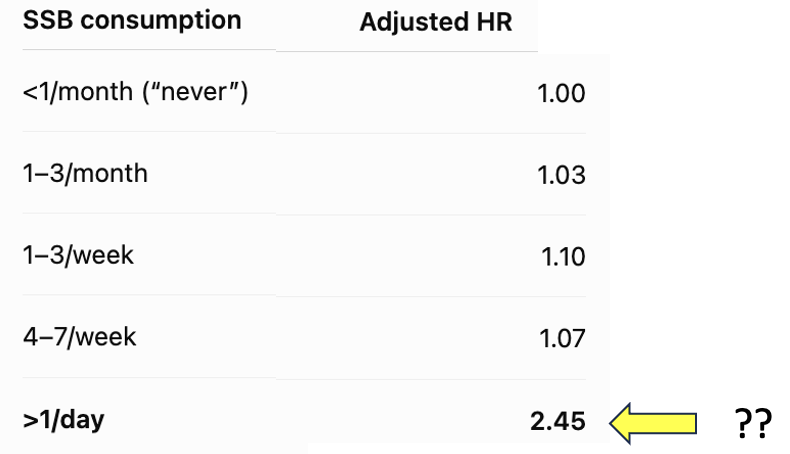
The participants were divided into five consumption groups, with an eight-ounce serving as the standard. The hazard ratios for stomach cancer were as follows:
n
- n
- Essentially Zero to Very Low Consumption: HR of 1.00
- Up to Seven Sugary Drinks Per Week: HRs ranging from 1.03 to 1.10
- More Than One Sugary Drink Per Day: HR of 2.45
n
n
n
n
The data reveals a remarkable plateau in risk for individuals consuming up to seven servings per week. The hazard ratios remain close to baseline (1.00), indicating virtually no increased risk. Then, abruptly, the risk jumps to 2.45 in the highest consumption group. This sharp, non-linear increase is atypical for a dose-response relationship and suggests that the elevated risk might be concentrated in a specific subgroup within the "more than one per day" category, or influenced by other factors.
n
Furthermore, the definition of the highest consumption group as ">1-per-day" is problematic due to its open-ended nature. It’s impossible to ascertain the actual volume of consumption within this category. Does ">1-per-day" mean 1.1 servings, or 15 servings? This ambiguity is a significant weakness, as the entire observed effect hinges on this poorly defined group. Without knowing the actual consumption levels, it’s difficult to confidently attribute the elevated risk solely to the quantity of sugary drinks.

n
Oddity #2: The Small Number of Cancers Behind the Scary Number
n
The hazard ratio of 2.45, while statistically significant, represents a relative risk. It tells us how much greater the risk is in one group compared to another. However, it doesn’t necessarily reflect the absolute risk, which is the actual frequency of the event occurring.
n
In this study, stomach cancer, while serious, was a relatively rare outcome. Across 112,284 participants, only 278 cases of stomach cancer were recorded over more than 3.2 million person-years of follow-up. Crucially, within the highest consumption group (">1-serving-per-day"), only 31 cases of stomach cancer occurred.
n
This small number of events in the group driving the headline statistic is a critical point. When the number of observed events is small, a few cases can disproportionately influence the calculated hazard ratio. This is reflected in the wide 95% confidence interval (CI) around the HR of 2.45, which ranges from 1.49 to 4.04. This broad range indicates that while 2.45 is the study’s best estimate, the true effect could plausibly be as low as a 1.5-fold increase or as high as a fourfold increase. A narrower CI would provide greater confidence in the precision of the estimated effect size.
n
Combining this with Oddity #1, the concern is amplified. The 2.45 HR is derived from a mere 31 cancers in a single, open-ended consumption category. This makes it difficult to definitively ascertain the true magnitude of the effect and its reliability.
n
Oddity #3: The Obesity Confounder
n
Obesity is a well-established risk factor for numerous cancers, including certain types of stomach cancer. Given that high consumption of sugar-sweetened beverages is often linked to weight gain and obesity, it’s a logical and crucial question to ask whether obesity itself, rather than the sugary drinks directly, could be responsible for some or all of the observed increased risk.
n
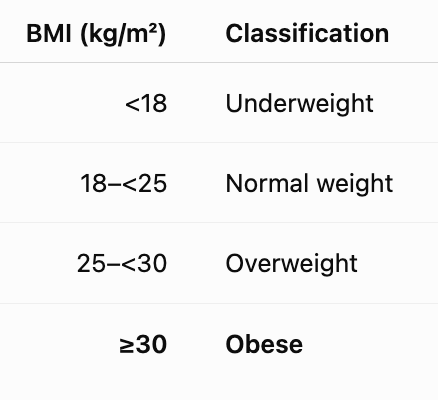
The study authors did attempt to control for obesity by categorizing participants based on their Body Mass Index (BMI). However, similar to the consumption categories, the BMI categories used were also problematic. Specifically, all individuals with a BMI of 30 or greater were lumped into a single category. This means that someone with a BMI of 30.1 was treated the same as someone with a BMI of 50.
n
This broad categorization raises concerns about whether the analysis adequately accounted for the degree of obesity. If the individuals who consumed the most sugary drinks also tended to be the most obese, then lumping all individuals with a BMI of 30 or higher into one group could mask important differences in risk. It’s possible that the elevated HR observed in heavy sugary drink consumers is, in part, attributable to higher levels of obesity within that subgroup, which wasn’t sufficiently differentiated in the analysis. The study does not provide the necessary data to confirm or refute this possibility.
Official Responses and Expert Commentary
While no specific "official responses" from major health organizations or regulatory bodies are typically immediate following the publication of a single study, the findings are likely to be reviewed and considered by various public health entities. The American Council on Science and Health (ACSH), the source of the original article, has taken a critical stance on the study’s sensationalized reporting.
ACSH’s analysis, authored by Josh Bloom, highlights the statistical limitations discussed above. The organization emphasizes the importance of distinguishing between relative and absolute risk and points out the methodological weaknesses in the study’s categorization of consumption and BMI.
"No. Unlike the artificially sweetened beverage study I wrote about earlier, this is a serious prospective study, and the authors found a statistically significant association that shouldn’t simply be dismissed," states Bloom. However, he immediately follows this by stating, "But ‘statistically significant’ isn’t the same thing as ‘case closed.’"
ACSH’s commentary serves as a crucial counterpoint to the immediate media narrative, advocating for a more cautious and evidence-based interpretation of the findings. Their approach is to "stay curious" and "stay informed," urging the public to look beyond simplistic headlines.
Implications and Future Directions: Beyond the Headlines
The study’s findings, despite their limitations, do raise important questions about the potential health impacts of sugar-sweetened beverages. While the sensationalized claims of "more than doubling your risk" may be an oversimplification, the association warrants continued attention and research.
For the Public:
- Maintain a Balanced Perspective: It’s essential to avoid overreacting to single studies. Health decisions should be based on a broad body of scientific evidence and personalized advice from healthcare professionals.
- Focus on Overall Diet and Lifestyle: While sugary drinks are a concern, they are just one component of a complex dietary pattern. A balanced diet rich in fruits, vegetables, and whole grains, combined with regular physical activity, remains the cornerstone of good health.
- Consider Absolute Risk: Understanding that a relative risk increase from a rare event might translate to a small absolute increase in risk can help contextualize the findings.
For Researchers:
- Refine Consumption Categories: Future studies should employ more granular and precise methods for quantifying beverage consumption, moving beyond broad, open-ended categories.
- Improve Confounder Control: More sophisticated statistical models are needed to adequately account for the complex interplay between diet, obesity, and cancer risk. This includes better stratification of obesity levels.
- Investigate Mechanisms: While this study identifies an association, further research is needed to explore the biological mechanisms by which sugary drinks might influence stomach cancer development. This could involve examining the role of inflammation, insulin resistance, or other metabolic pathways.
- Replicate Findings: Independent replication of these findings in different populations and study designs is crucial to confirm the observed association and its strength.
In conclusion, while the recent study linking sugar-sweetened beverages to stomach cancer has generated alarming headlines, a deeper dive into the data reveals significant statistical nuances and methodological limitations. The "more than double the risk" claim, while statistically significant, is based on an open-ended consumption category, a small number of cancer cases, and potentially insufficient control for obesity. This does not render the study invalid, but it strongly suggests that the public and media should approach the findings with a healthy dose of skepticism and a demand for more rigorous scientific evidence before drawing definitive conclusions. The conversation should move beyond sensationalism to a more informed and evidence-based understanding of dietary impacts on health.

