

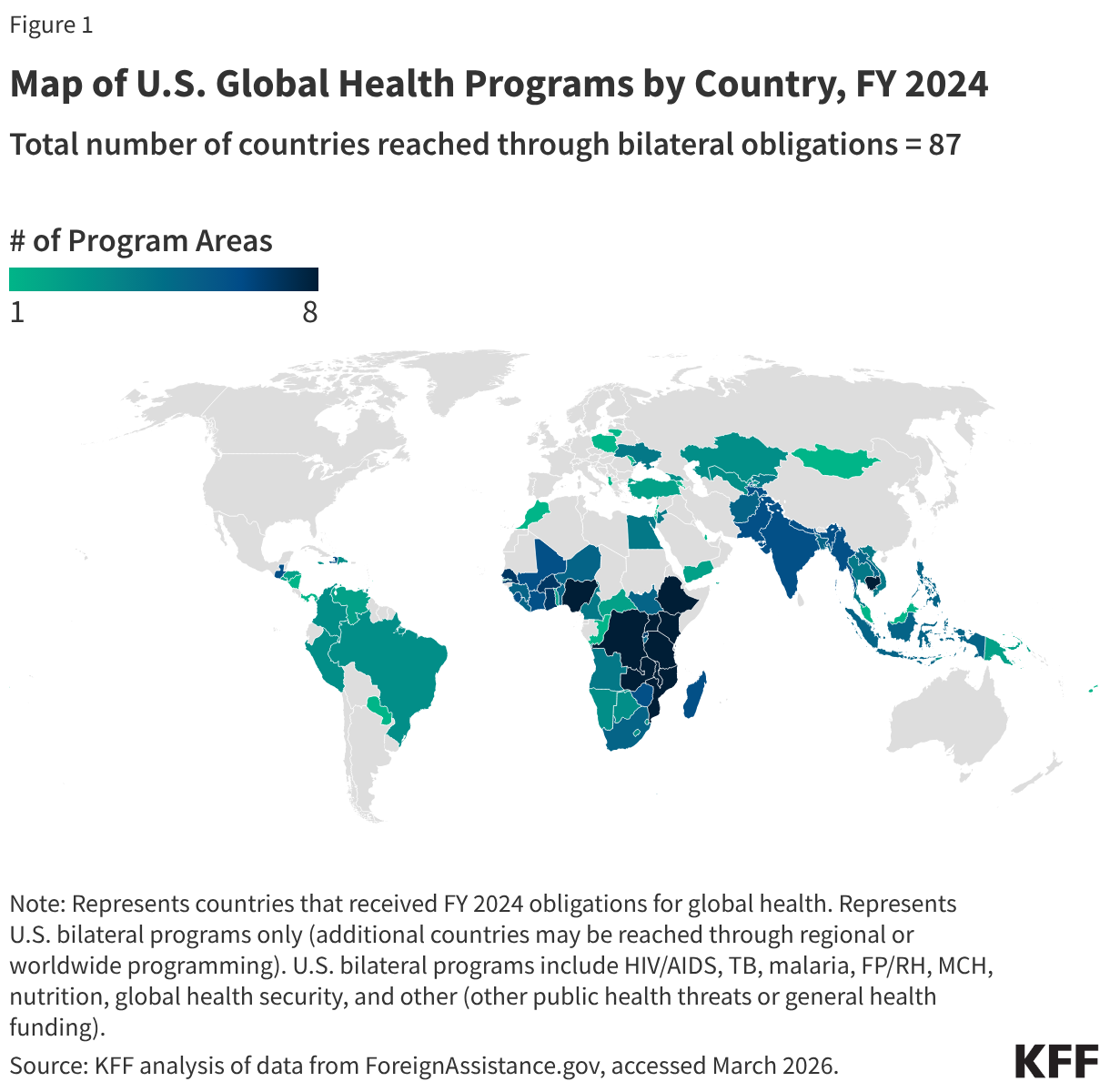
In an era defined by interconnectedness and shared biological vulnerabilities, the United States continues to anchor the global health landscape through an expansive network of bilateral and multilateral initiatives. As of Fiscal Year (FY) 2024, the U.S. government supports global health programs in over 80 countries, leveraging a sophisticated multi-agency approach to combat infectious diseases, improve maternal outcomes, and fortify health security against future pandemics.
n
The latest data from the U.S. Global Health Country-Level Funding Tracker reveals a strategic deployment of resources that transcends simple philanthropy. It represents a cornerstone of American soft power and a vital component of national security. By addressing health crises at their source, these programs aim to stabilize volatile regions, foster economic growth, and prevent the international spread of disease.
n
Main Facts: A Multi-Pillar Strategy for Global Well-being
n
The U.S. global health portfolio is not a monolithic entity but a collection of specialized programs tailored to the specific needs of partner nations. In FY 2024, these programs are categorized into several critical pillars, each with distinct mandates and operational frameworks.
n
The Pillars of Engagement
n
- n
- PEPFAR (The President’s Emergency Plan for AIDS Relief): Often cited as the most successful international health initiative in history, PEPFAR continues to lead the fight against HIV/AIDS. It focuses on prevention, treatment, and care, particularly in sub-Saharan Africa, where the burden of the epidemic remains highest.
- The President’s Malaria Initiative (PMI): This program aims to reduce malaria-related mortality and morbidity. Through the distribution of insecticide-treated bed nets, indoor residual spraying, and the provision of artemisinin-based combination therapies (ACTs), PMI has saved millions of lives since its inception.
- Tuberculosis (TB) Control: As one of the world’s leading infectious killers, TB remains a priority. U.S. programs focus on early detection, treatment of drug-resistant strains, and strengthening laboratory infrastructure.
- Maternal and Child Health (MCH) and Nutrition: These programs target the most vulnerable populations. By improving access to skilled birth attendants, vaccinations, and essential nutrients, the U.S. seeks to end preventable child and maternal deaths.
- Family Planning and Reproductive Health (FP/RH): These initiatives provide voluntary family planning services, which are critical for reducing maternal mortality and supporting sustainable community development.
- Global Health Security (GHS): A rapidly expanding area of focus, GHS programs help countries detect, prevent, and respond to infectious disease outbreaks before they become global pandemics. This includes strengthening zoonotic disease surveillance and laboratory networks.
n
n
n
n
n
n
n
Geographic Reach
n
While the U.S. maintains a presence in over 80 countries, the intensity of engagement varies. Africa remains the primary recipient of bilateral aid, particularly through PEPFAR and PMI. However, significant investments are also directed toward Southeast Asia, Central Asia, and Latin America, reflecting a global strategy to mitigate health risks that do not respect national borders.
n
Chronology: From Emergency Response to Sustainable Systems
n
The evolution of U.S. global health policy reflects a shift from reactive, emergency-based interventions to the construction of sustainable, locally-led health systems.
n
The Early 2000s: The Era of Grand Initiatives
n
The landscape changed dramatically in 2003 with the launch of PEPFAR under the Bush administration. At the time, HIV/AIDS was decimateing the workforce and social fabric of many African nations. This was followed by the launch of the President’s Malaria Initiative in 2005. These "vertical" programs were designed for rapid impact, flooding high-burden areas with life-saving commodities.
n
2010–2019: Integration and Strengthening
n
During the Obama and Trump administrations, there was a growing recognition that vertical programs needed to be integrated into broader health systems. The focus shifted toward "Health Systems Strengthening" (HSS). This involved training local healthcare workers, improving supply chain management, and ensuring that a clinic built for HIV treatment could also provide maternal care and nutrition counseling.
n
2020–Present: The Pandemic Paradigm Shift
n
The COVID-19 pandemic served as a catalyst for the current FY 2024 strategy. The global disruption caused by the virus underscored the reality that a health threat anywhere is a threat everywhere. Consequently, the "Global Health Security" pillar has been elevated. The current administration has integrated COVID-19 lessons into permanent structures, focusing on the "One Health" approach—recognizing the link between human, animal, and environmental health.
n
Supporting Data: FY 2024 Allocations and Regional Trends
n
Data for FY 2024 indicates a stabilization of funding after the massive emergency outlays of the pandemic years. However, the breadth of the programs remains unprecedented.
n
Regional Distribution of Programs
n
According to the tracker, the distribution of program areas reveals regional priorities:
n
- n
- Sub-Saharan Africa: Hosts the highest concentration of multi-pillar programs. Nearly every partner country in this region receives support for HIV, Malaria, and MCH.
- Asia and the Pacific: Focus is heavily weighted toward TB control and Global Health Security, reflecting the region’s history as a "hotspot" for emerging infectious diseases.
- Latin America and the Caribbean: Programs here are often focused on FP/RH, Nutrition, and more recently, health security to manage migration-related health challenges and vector-borne diseases like Zika and Dengue.
n
Impact Metrics
While specific FY 2024 outcomes are still being tabulated, the trajectory is supported by historical success:
- Lives Saved: PEPFAR is credited with saving over 25 million lives and preventing millions of HIV infections.
- Malaria Reduction: In PMI-supported countries, child mortality has dropped by over 50% since the program began.
- Immunization: Through contributions to multilateral organizations like Gavi, the Vaccine Alliance, U.S. funding has helped immunize nearly one billion children globally.
Official Responses: The Government and NGO Perspective
The U.S. government’s stance on these programs remains one of "strategic partnership." Officials from the U.S. Agency for International Development (USAID) and the Department of State emphasize that these investments are not merely charity.
The USAID Mandate
USAID Administrator Samantha Power has frequently highlighted the "localization" agenda. In recent statements regarding FY 2024 priorities, USAID has emphasized shifting more direct funding to local NGOs and government health departments in partner countries. The goal is to move away from a "donor-recipient" model toward a "partnership" model where local entities eventually take full ownership of their health outcomes.
The State Department and PEPFAR
The Office of the U.S. Global AIDS Coordinator, which oversees PEPFAR, has faced recent debates in Congress regarding the program’s reauthorization. Despite political friction, the official stance remains that PEPFAR is a vital tool for regional stability. State Department officials argue that healthy populations are less susceptible to radicalization and more capable of participating in the global economy.
Independent Policy Analysis
Organizations like the Kaiser Family Foundation (KFF), which maintains the funding tracker, provide a critical lens on these efforts. KFF analysts note that while the U.S. remains the largest donor to global health, the "flat-funding" trend in recent budget cycles poses a challenge. As the costs of commodities rise and new threats emerge, maintaining the same level of impact with a static budget requires unprecedented efficiency.
Implications: The Future of Global Health Diplomacy
The U.S. commitment to global health in 80+ countries carries profound implications for the future of international relations and global stability.
National Security and Biodefense
By funding Global Health Security programs, the U.S. is essentially building an early-warning system. Improving the diagnostic capabilities of a laboratory in Southeast Asia or a surveillance network in Central Africa provides the U.S. with critical data on emerging pathogens. In the post-COVID era, global health is now viewed through the same lens as counter-terrorism or cybersecurity.
Economic Stability
Healthier populations contribute to more stable markets. By reducing the burden of diseases like malaria and HIV, U.S. programs help ensure that adult populations remain in the workforce. This reduces the need for humanitarian aid and creates potential trading partners for U.S. businesses.

The Challenge of Sustainability
The primary concern for FY 2024 and beyond is "transition." Many partner countries have become reliant on U.S. bilateral aid. The current challenge is "domestic resource mobilization"—encouraging partner governments to increase their own health spending. If the U.S. were to abruptly withdraw support, the resulting "funding cliff" could lead to a resurgence of diseases that were previously under control.
Geopolitical Competition
Global health has also become an arena for geopolitical influence. As China and other emerging powers increase their "health diplomacy" through infrastructure projects and vaccine distribution, the U.S. bilateral programs serve as a testament to the quality and transparency of Western-led initiatives. The U.S. model, which emphasizes human rights and community engagement, stands in contrast to more transactional forms of aid.
Conclusion
The U.S. global health strategy for FY 2024 represents a sophisticated blend of humanitarianism and strategic self-interest. By maintaining a presence in over 80 countries and addressing a spectrum of health issues from nutrition to pandemic preparedness, the United States remains the indispensable leader in global health. However, the path forward will require navigating fiscal constraints, evolving political landscapes, and the ever-present threat of the next "Disease X." The success of these programs will ultimately be measured not just by the amount of money spent, but by the resilience of the health systems they help to build.

