
The landscape of Type 1 Diabetes (T1D) treatment is undergoing a fundamental shift. For over a century, the primary mode of management has been exogenous insulin—a life-saving but burdensome intervention that requires constant vigilance, precise calculation, and a grueling daily routine. However, a new era is dawning. Islet cell therapies, once a distant scientific aspiration, are now transitioning from experimental success stories to scalable medical realities.
n
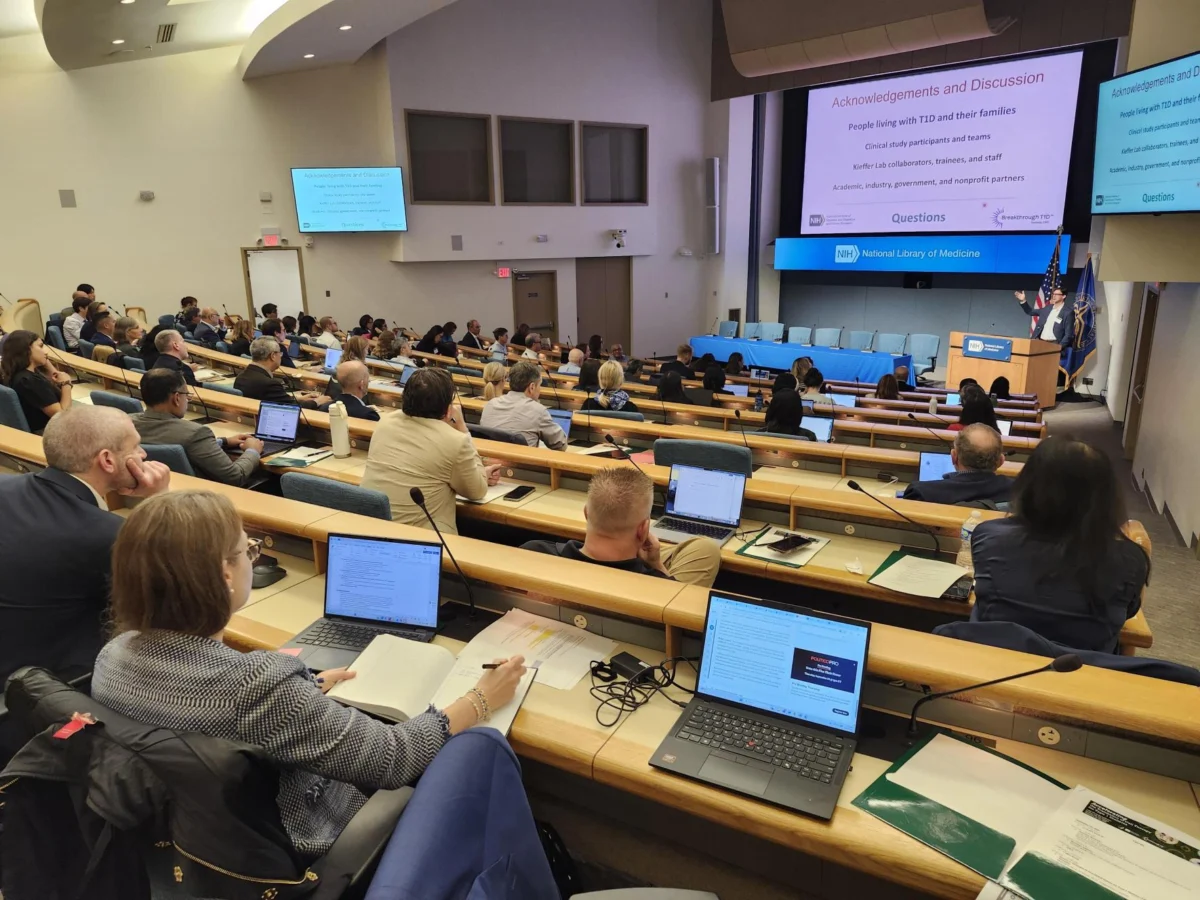
Recent clinical trials have demonstrated that manufactured islet cells can successfully restore endogenous insulin production, allowing patients to achieve healthy blood sugar levels and, in many cases, eliminate the need for external insulin entirely. To catalyze this momentum, Breakthrough T1D (formerly JDRF) recently partnered with the National Institute of Diabetes and Digestive and Kidney Diseases (NIDDK) to host a pivotal public workshop: "Accelerating the Translation of Cell Therapy for Type 1 Diabetes." This gathering represented a strategic convergence of the world’s leading researchers, regulatory bodies, and industry innovators, all focused on a singular goal: moving beyond management toward a functional cure.
n
Main Facts: The Evolution of Islet Cell Therapy
n
Type 1 Diabetes is an autoimmune condition in which the body’s immune system mistakenly attacks and destroys the insulin-producing beta cells within the islet clusters of the pancreas. Without these cells, the body cannot regulate glucose, leading to life-threatening complications. Islet cell therapy seeks to replace these lost cells.
n
First-Generation vs. Next-Generation Therapies
n
The current medical landscape distinguishes between two tiers of therapy:
n
- n
- First-Generation Therapies: These rely primarily on cadaveric islet cells (harvested from deceased donors). While effective, they are severely limited by a chronic shortage of donor organs. Consequently, these treatments are currently reserved for patients with "brittle" diabetes—those experiencing life-threatening hypoglycemic unawareness or severe glucose volatility.
- Next-Generation Therapies: These involve "manufactured" islet cells derived from stem cells. These cells can be produced in virtually unlimited quantities within specialized laboratories. The objective is to make these therapies available to the broader T1D population, regardless of the severity of their hypoglycemic events.
n
n
n
The Workshop’s Core Mission
n
The Breakthrough T1D/NIDDK workshop served as a high-level strategic forum to address the "translational gap"—the space between successful laboratory experiments and widespread clinical availability. The discussions focused on four critical pillars: nonclinical safety, industrial-scale manufacturing, innovative clinical trial design, and the integration of Artificial Intelligence (AI).
n
Chronology: From the Edmonton Protocol to the Stem Cell Revolution
n
To understand the urgency of the current workshop, one must look at the timeline of islet transplantation and the hurdles that have historically slowed its progress.
n
- n
- 1990s – Early Experimentation: Islet transplantation was attempted with limited success, as the body’s immune system quickly rejected the foreign donor cells.
- 2000 – The Edmonton Protocol: Researchers in Alberta, Canada, developed a specific combination of anti-rejection drugs and infusion techniques that allowed several patients to achieve insulin independence for the first time. This proved the concept but highlighted the limitations of donor cell supply.
- 2014-2020 – The Stem Cell Breakthrough: Scientists successfully figured out how to "teach" human stem cells to become functional, insulin-producing beta cells. This solved the supply problem, moving the field into the "Next-Generation" era.
- 2021-2023 – First-in-Human Trials: Companies like Vertex Pharmaceuticals began reporting results from clinical trials where manufactured stem-cell-derived islets were successfully transplanted into humans, leading to significant reductions in A1c levels and insulin requirements.
- 2024 – The Acceleration Workshop: Recognizing that the science is ready, Breakthrough T1D and the NIDDK convened the "Accelerating the Translation" workshop to address the final hurdles: regulatory approval, mass production, and long-term safety.
n
n
n
n
n
n
Supporting Data: The Four Pillars of Translation
n
The workshop deep-dived into the technical requirements for bringing these therapies to the masses. The following areas were identified as the primary drivers of progress:
n
1. Nonclinical Studies and Data Reproducibility
n
Before a therapy can be tested in humans, it must undergo rigorous nonclinical testing. Presenters at the workshop emphasized the need for standardized T1D models. Historically, data from mouse models has not always translated perfectly to human biology. The consensus among researchers is that identifying the right "proxy" for the human immune response is essential for predicting how islet cells will survive post-transplant. New data shared during the session focused on "immune protection"—strategies to shield cells from the autoimmune attack that caused the diabetes in the first place.
n
2. The Manufacturing Hurdle: Scaling the "Living Drug"
n
Perhaps the greatest challenge is manufacturing. Unlike a chemical pill, islet cells are living organisms.
n
- n
- Academic vs. Industry: Academic labs are excellent at producing small batches for early trials, but they lack the infrastructure for the millions of doses required for a global cure.
- Consistency and Reliability: The U.S. Food and Drug Administration (FDA) requires that every batch of manufactured cells be identical in potency and purity. Presenters discussed the difficulty of maintaining "cell fitness" when scaling up from small petri dishes to large-scale bioreactors.
n
3. Redefining Clinical Trials
The workshop addressed the need to modernize the way we test these therapies in humans. Traditionally, clinical trials are very restrictive. The "Next-Generation" roadmap proposes:
- Expanding Inclusion Criteria: Allowing a wider range of patients to participate earlier in the process.
- Defining Meaningful Endpoints: Moving beyond just "insulin independence" to include metrics like "time-in-range" and the reduction of long-term complications (kidney disease, retinopathy).
- Benefit-Risk Ratio: For many patients, the risk of taking immunosuppressants (to prevent cell rejection) is a worthy trade-off for the elimination of glucose volatility.
4. The AI Revolution in Islet Science
Artificial Intelligence is no longer a peripheral tool; it is becoming central to islet therapy.
- Predictive Modeling: Researchers are using AI to forecast how a specific patient’s blood sugar will respond a full year after a transplant.
- Process Optimization: In manufacturing, AI monitors the "health" of cells in real-time, modifying growth conditions (temperature, nutrients) to ensure maximum yield.
- "Smart" Islets: The most futuristic application discussed was the design of cells that can "sense" an immune attack and autonomously deploy protective molecules to defend themselves.
Official Responses: Regulatory and Stakeholder Perspectives
The workshop included a robust dialogue with representatives from the FDA, ensuring that scientific advancement remains aligned with regulatory safety standards.
The FDA’s Stance:
Regulatory officials emphasized that while they are eager to see these therapies succeed, the safety of "manufactured" biological products is paramount. They provided guidance on the shifting requirements for islet cell therapies as they move from Phase I (safety) to Phase III (efficacy) trials. The FDA highlighted the importance of long-term monitoring for potential side effects related to stem-cell-derived products.
Breakthrough T1D Leadership:
The organization underscored its role as a "connective tissue" between the lab and the patient. Breakthrough T1D staff members on the planning committee noted that their goal is to ensure the patient voice is not lost in the technical jargon. They advocated for "person-centered research," where the ease of the procedure and the quality of life after the transplant are given as much weight as the biological data.
The Patient Voice:
Members of the T1D community provided powerful testimony. One panelist, who had received an islet transplant, noted that even though they still required one small injection of insulin per day, the "mental freedom" from constant monitoring was a life-changing outcome. This reinforced the idea that a "functional cure" does not necessarily have to be 100% insulin-free to be a massive success for the patient.
Implications: A Future Without Fingerpricks
The implications of accelerating islet cell therapy are profound, both for the individual and the global healthcare system.
Economic Impact:
Type 1 Diabetes is an incredibly expensive disease to manage. Between the cost of insulin, continuous glucose monitors (CGMs), pumps, and the treatment of long-term complications, the lifetime cost for a single patient can reach hundreds of thousands of dollars. A scalable, one-time (or long-term) cell therapy could dramatically reduce these costs, providing a significant "Return on Investment" for healthcare systems worldwide.
Psychological and Social Shift:
The "burnout" associated with T1D is a documented clinical phenomenon. Constant decision-making regarding food, exercise, and insulin dosage leads to significant cognitive load. Successful islet therapy would represent the end of this "24/7" burden, allowing millions of people to live without the constant fear of hypoglycemia.
The Scalability Promise:
The move toward manufactured cells means that we are no longer waiting for a tragedy (organ donation) to provide a cure. It moves T1D treatment into the realm of "off-the-shelf" regenerative medicine. If the hurdles identified in the workshop—manufacturing consistency, immune protection, and regulatory clarity—can be cleared, the next decade could see islet therapy become a standard of care rather than a clinical trial rarity.
In conclusion, the Breakthrough T1D and NIDDK workshop was more than a meeting of minds; it was a mobilization of resources. By addressing the nonclinical, manufacturing, and regulatory challenges head-on, the scientific community is paving a clear, evidence-based road to a future where Type 1 Diabetes is no longer a lifelong sentence, but a manageable—and eventually curable—condition.

