
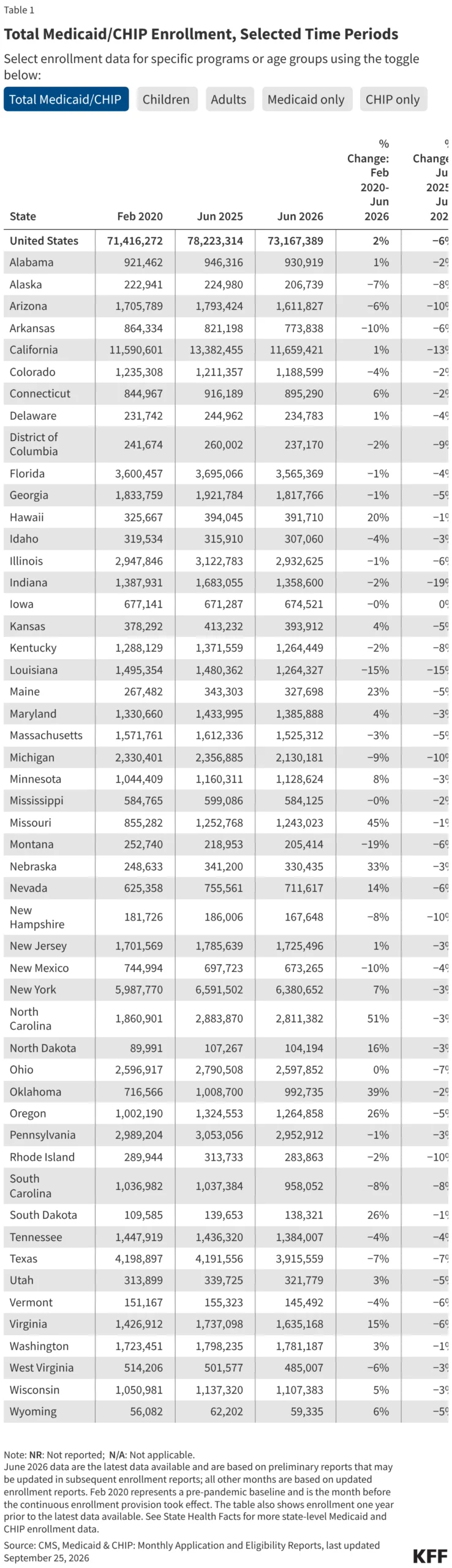
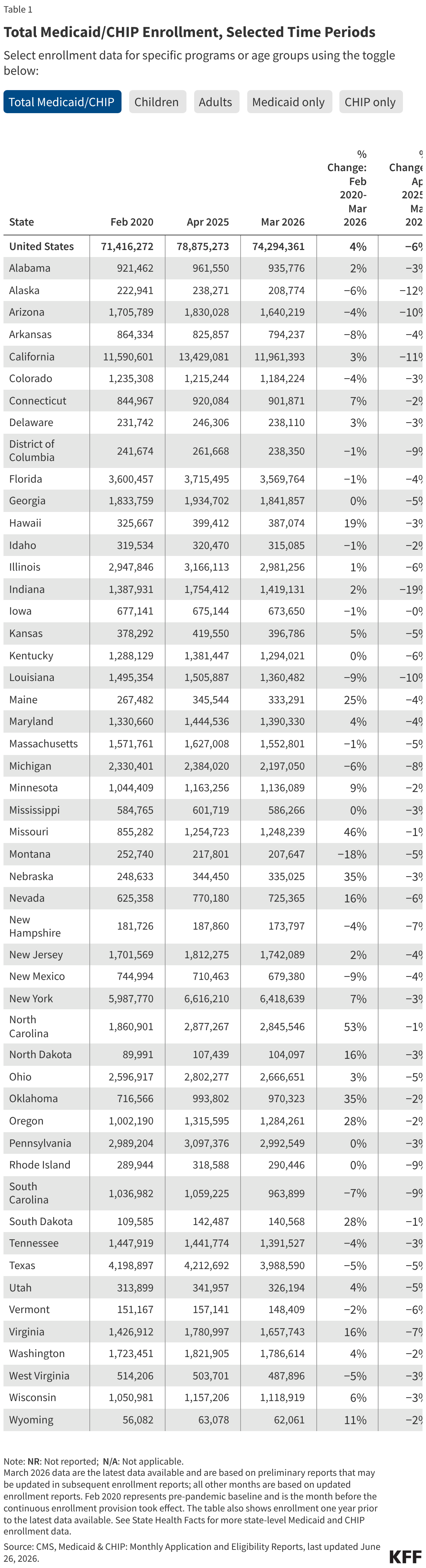
WASHINGTON D.C. — The American healthcare safety net is currently navigating a period of unprecedented transformation. As of June 2026, the latest data from the Centers for Medicare & Medicaid Services (CMS) reveals a complex picture of Medicaid and Children’s Health Insurance Program (CHIP) enrollment, shaped by the final resolution of the post-pandemic "unwinding" and the looming implementation of the 2025 federal budget reconciliation law.
n
With over 90 million Americans relying on these programs for essential health coverage, the stakes for administrative efficiency and legislative oversight have never been higher. Recent figures indicate that while the massive spike in enrollment seen during the COVID-19 pandemic has largely stabilized, new federal mandates—specifically regarding work requirements and reporting protocols—are set to fundamentally alter the trajectory of the program over the next decade.
n
Main Facts: A Program in Transition
n
The current state of Medicaid and CHIP is defined by three primary factors: the stabilization of enrollment after the "Great Unwinding," the administrative shift toward automated renewals, and the projected impact of the 2025 Reconciliation Law.
n
The Scale of Coverage
n
As of the June 2026 reporting cycle, Medicaid and CHIP remain the nation’s largest source of health coverage. However, the data provided by the CMS Performance Indicator Project focuses specifically on "full-benefit" enrollees. This distinction is vital, as it excludes millions who receive limited benefits, such as family planning services only. Consequently, while the reported figures show a robust system, they likely undercount the total population interacting with state Medicaid agencies.
n
The 2025 Reconciliation Law
n
Perhaps the most significant development in recent healthcare policy is the 2025 federal budget reconciliation law. This legislation introduces stringent work and reporting requirements for adults in the Medicaid expansion group and those enrolled through certain 1115 waiver programs. While the law is already on the books, its core provisions are not scheduled to take effect until January 2027. Actuaries and policy analysts at the Kaiser Family Foundation (KFF) project that these changes will lead to a sustained reduction in Medicaid enrollment over the next ten years compared to previous baseline expectations.
n
The Unwinding Completion
n
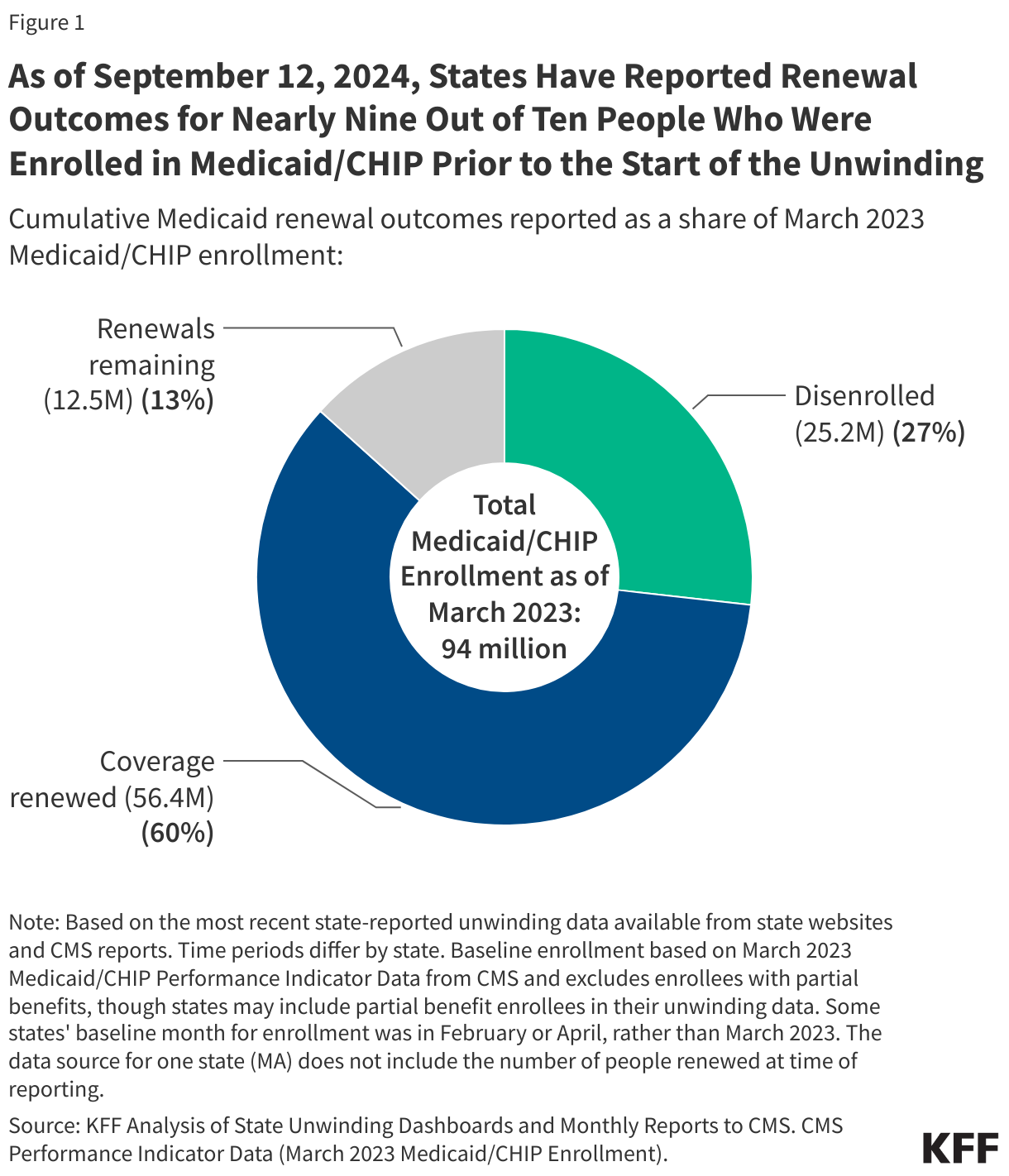
The "unwinding"—the process by which states resumed regular eligibility redeterminations after a three-year pandemic-induced hiatus—is now considered archived history for most jurisdictions. As of late 2024, nearly nine out of ten people enrolled prior to the unwinding have seen their cases resolved. The legacy of this period is a leaner, though arguably more volatile, enrollment pool.
n
Chronology: From Pandemic Protection to Fiscal Reform
n
To understand the current fluctuations in enrollment, one must look back at the legislative and global health milestones that dictated Medicaid policy over the last six years.
n
- n
- February 2020: The Pre-Pandemic Baseline. Before the global onset of COVID-19, Medicaid enrollment sat at a stable baseline. This month serves as the primary point of comparison for all subsequent growth and contraction.
- March 2020: The Continuous Enrollment Provision. In response to the pandemic, Congress passed the Families First Coronavirus Response Act (FFCRA). This required states to keep enrollees covered in exchange for enhanced federal funding, leading to a historic surge in the Medicaid population.
- April 2023: The Unwinding Begins. Following the Consolidated Appropriations Act of 2023, the continuous enrollment provision ended. States began the Herculean task of redetermining the eligibility of every single Medicaid recipient.
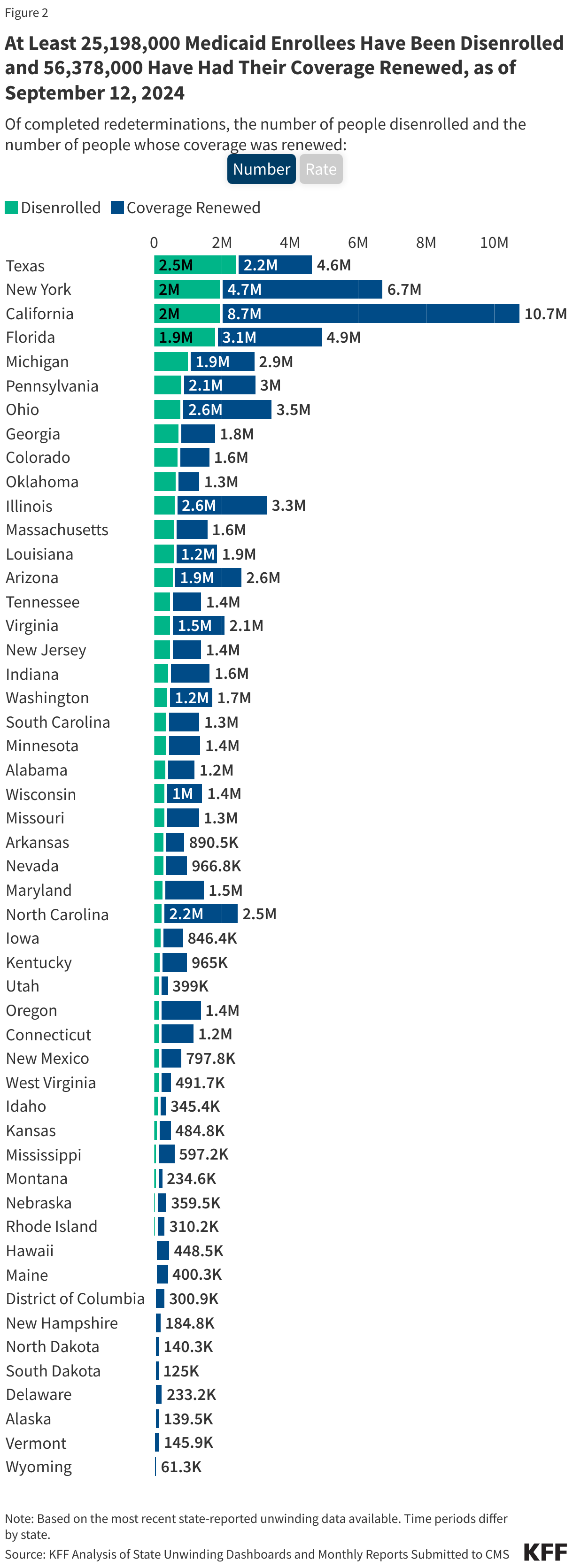
- September 2024: End of the Unwinding Period. By this date, most states had processed their backlogs. Disenrollment reached a cumulative total of over 25 million people nationwide.
- 2025: Legislative Overhaul. The 2025 Reconciliation Law is passed, signaling a shift toward more conservative fiscal management of the Medicaid expansion and introducing the framework for work requirements.
- June 2026: Current Reporting Period. Enrollment data reflects a "new normal," as states prepare for the 2027 implementation of the reconciliation law’s reporting mandates.
n
n
n
n
n
n
n
Supporting Data: Disenrollment Trends and Procedural Hurdles
n
The data captured during the unwinding period provides a cautionary tale for future policy implementation. The variation between states and the reasons for loss of coverage highlight significant gaps in the administrative infrastructure.
n
The "Procedural" Crisis
n
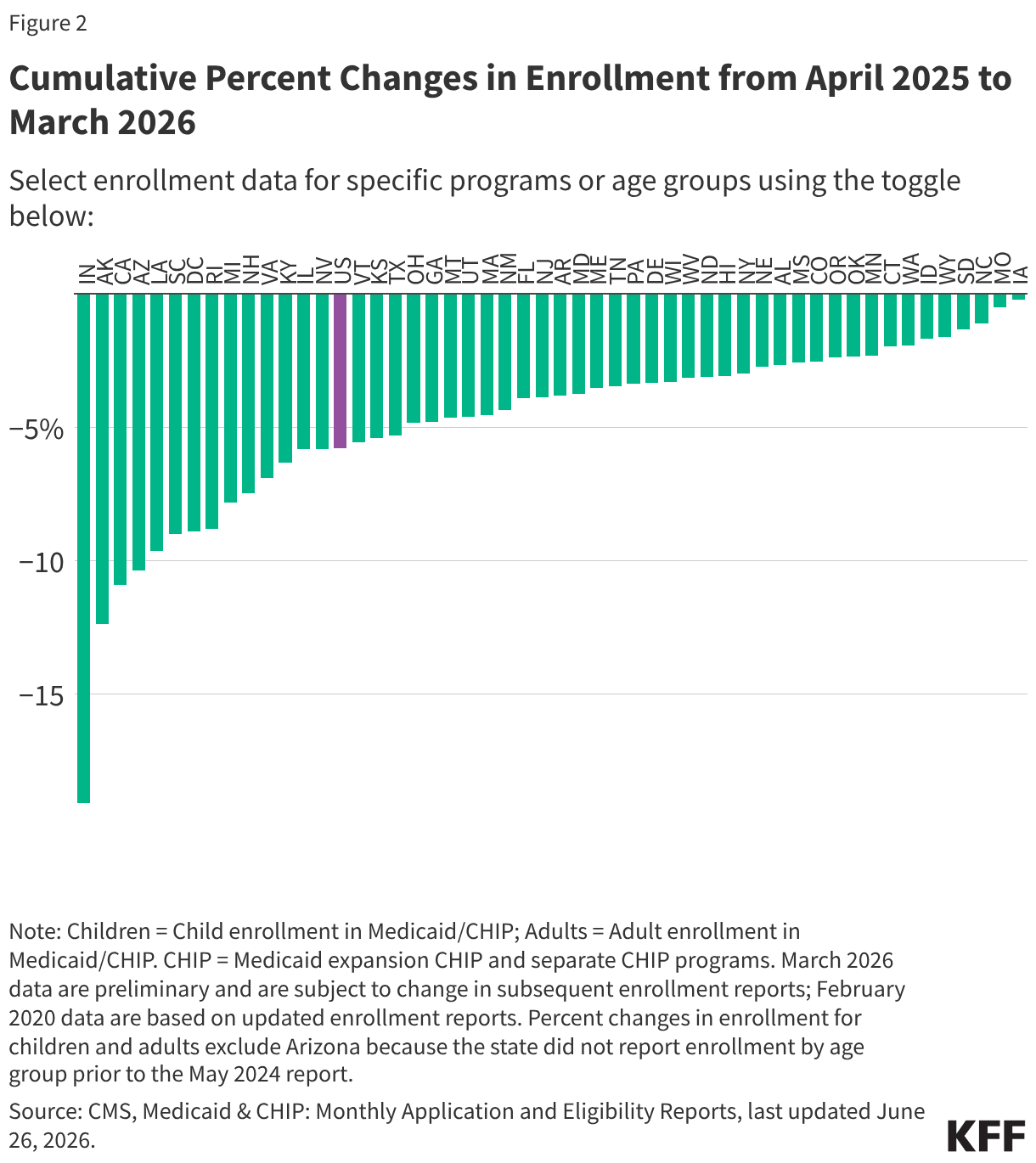
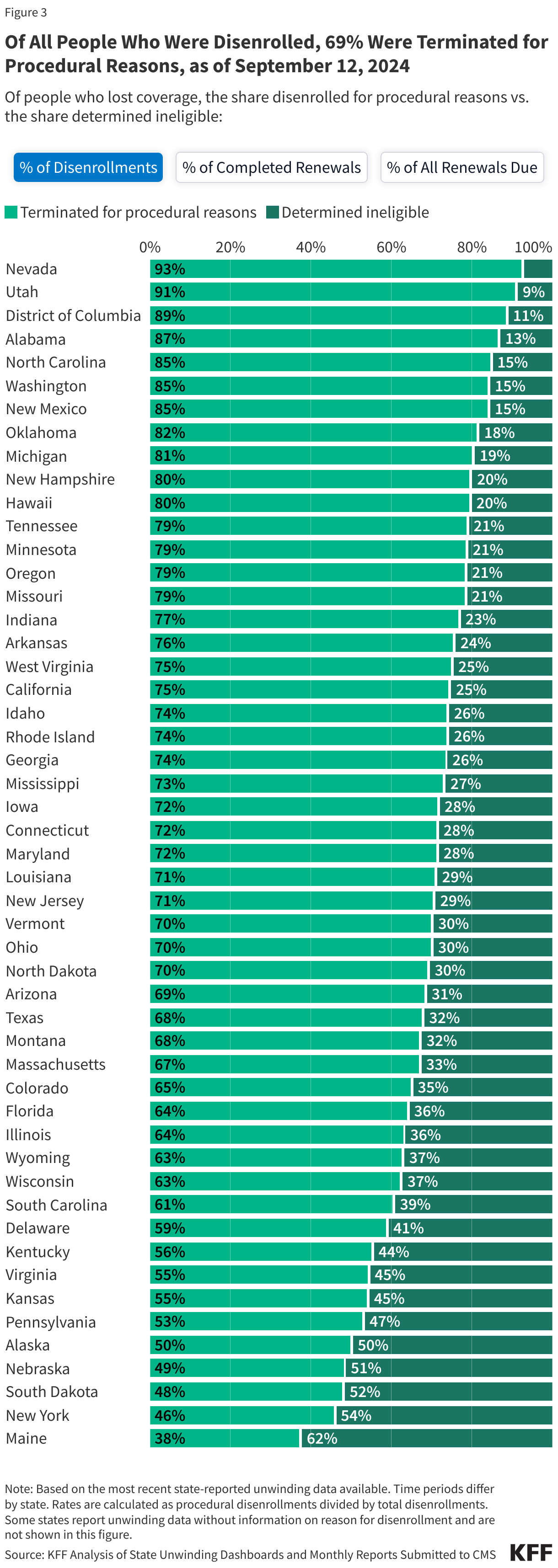
One of the most startling statistics from the unwinding period is the rate of procedural disenrollments. According to KFF analysis, 69% of all people disenrolled were terminated for procedural reasons. This means that the vast majority of those who lost coverage did not necessarily become ineligible due to an increase in income; rather, they lost coverage because of paperwork issues, such as a change of address, failure to receive a renewal form, or difficulty navigating complex state portals.
n
State-Level Disparity
n
The data reveals a massive chasm in how different states managed their Medicaid rolls:
n
- n
- Montana: Reported the highest disenrollment rate at 57% of completed redeterminations.
- North Carolina: Reported one of the lowest disenrollment rates at 12%.
n
n
This disparity is often attributed to the "Ex Parte" renewal process—an automated system where states use existing data (such as SNAP or Social Security records) to verify eligibility without requiring the enrollee to return paperwork. Nationally, 61% of those who retained coverage were renewed through these ex parte processes, proving that automation is the most effective tool for maintaining continuity of care.
Demographic Breakdown
While total Medicaid/CHIP enrollment includes both adults and children, the impact of the unwinding was felt acutely among the pediatric population. In many states, children make up a significant portion of the Medicaid rolls, and procedural disenrollments have raised concerns among pediatricians regarding a potential rise in the number of uninsured minors.
Official Responses: CMS and State Oversight
The Centers for Medicare & Medicaid Services (CMS) have maintained a rigorous reporting schedule, updating monthly application and eligibility data to ensure transparency. However, CMS officials have noted that their data often lags behind state-level dashboards by several months.
Federal Guidance
In response to the high procedural disenrollment rates seen in 2024, CMS issued several rounds of guidance urging states to adopt "mitigation strategies." These included delaying terminations for certain populations and increasing outreach efforts. The September 25, 2026, update from CMS highlights that while many states have improved their reporting accuracy, Arizona remains a notable exception, often excluded from national totals due to unavailable child and adult enrollment data for specific months.
The Role of the KFF
The Kaiser Family Foundation has acted as a primary independent auditor of this data. Their "Medicaid Work Requirements Tracker" has become an essential tool for policy experts to monitor how the 2025 Reconciliation Law is being integrated at the state level. KFF researchers emphasize that the 2025 law’s impact will not be a "cliff" but a gradual erosion of enrollment as reporting requirements become more stringent.
Implications: The Road to 2027 and Beyond
The current trends in Medicaid enrollment suggest a healthcare system in a state of "managed contraction." As the 2027 deadline for work requirements approaches, several implications emerge for the American public and the economy.
1. The Risk of Uninsurance
The high rate of procedural disenrollment during the unwinding serves as a warning. If the 2027 work and reporting requirements are not implemented with robust "ex parte" protections and simplified reporting tools, millions of eligible Americans—particularly those in the expansion group—could lose coverage due to administrative friction rather than actual ineligibility.
2. Fiscal Impact on States
The 2025 Reconciliation Law is designed to reduce federal spending on Medicaid over the next decade. While this may assist in federal deficit reduction, it places a heavier burden on states to manage the administrative costs of tracking work hours and reporting compliance. States that fail to implement these systems efficiently may see a rise in emergency room visits and uncompensated care costs as the uninsured rate climbs.
3. Healthcare Equity
The move toward work requirements historically impacts marginalized communities more significantly. Those working in the "gig economy" or in seasonal agriculture may find it difficult to provide the consistent documentation required by the 2025 law, potentially exacerbating existing health disparities.
4. The Future of CHIP
While the 2025 law focuses heavily on the adult expansion group, the stability of CHIP remains a vital concern. The data shows that child enrollment is often more sensitive to administrative shifts. Ensuring that children do not become "collateral damage" in the push for adult work requirements will be a primary focus for healthcare advocates in the coming 24 months.
Conclusion
As of June 2026, the Medicaid and CHIP programs have emerged from the chaos of the pandemic era into a new period of fiscal and administrative scrutiny. The data proves that while the system is capable of covering nearly 100 million people, it is also fragile, with millions at risk of losing coverage due to simple paperwork errors. As the nation looks toward 2027, the focus must shift from simply "counting enrollees" to ensuring that those who are eligible can navigate the increasingly complex web of federal and state requirements.

