
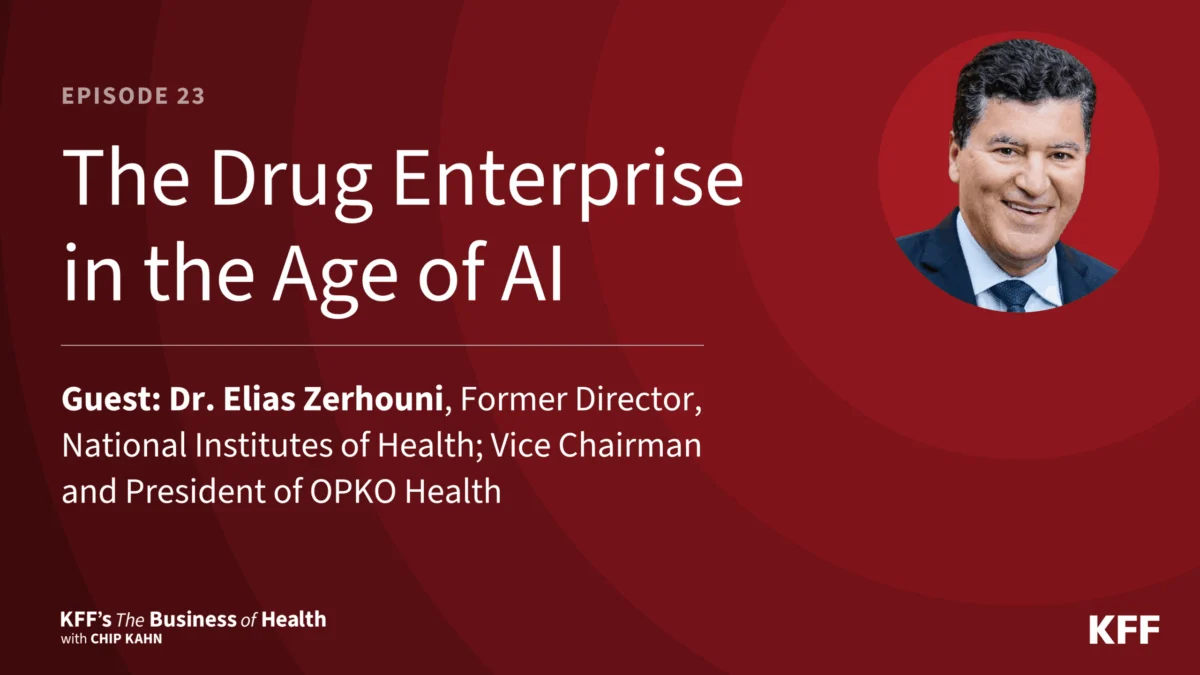
WASHINGTON D.C. — In the rapidly evolving landscape of biotechnology, the promise of Artificial Intelligence (AI) has moved from the realm of science fiction to the center of the pharmaceutical boardroom. Yet, as billions of dollars pour into AI-driven drug discovery, a fundamental question remains: Can a machine truly "discover" something new, or is it merely a high-speed calculator for existing knowledge?
n
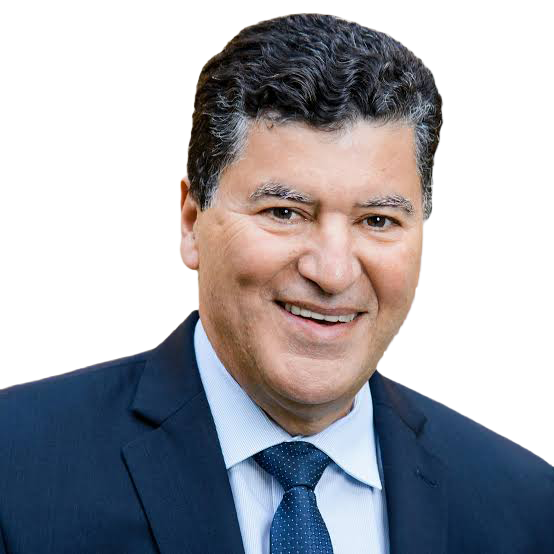
In a landmark episode of The Business of Health, host Chip Kahn sat down with Dr. Elias Zerhouni—one of the most influential figures in global health policy and medical research—to dissect the reality behind the AI hype. Dr. Zerhouni, whose resume includes a six-year tenure as Director of the National Institutes of Health (NIH) and a leadership role at Sanofi, argues that while AI is an unprecedented tool for efficiency, the "spark" of scientific revolution remains stubbornly, and perhaps exclusively, human.
n
Main Facts: The Limits of Algorithmic Logic
n
The central thesis of the discussion between Kahn and Zerhouni revolves around the distinction between pattern recognition and conceptual breakthrough. Dr. Zerhouni posited a provocative thought experiment: if you had fed an AI every piece of biological data available in the early 1950s, would it have discovered the double helix structure of DNA?
n
His answer is a definitive "no."
n
"AI is a master of interpolation," Zerhouni suggested. It can scan millions of existing data points to find correlations that humans might miss, and it can optimize known structures with breathtaking speed. However, the discovery of the double helix by Watson, Crick, and Franklin required a leap of intuition—a "non-linear" realization that moved beyond the data available at the time.
n
Currently, AI in the pharmaceutical sector is being utilized primarily in three areas:
n
- n
- Target Identification: Finding which proteins or genes are responsible for specific diseases.
- Lead Optimization: Taking a promising molecule and tweaking its structure to make it more effective or less toxic.
- De Novo Design: Creating entirely new antibodies or proteins that do not exist in nature, a field where Dr. Zerhouni’s company, ModeX Therapeutics, is currently a pioneer.
n
n
n
n
Despite these advances, the "Business of Health" highlights a sobering reality: the success rate for drugs entering clinical trials remains abysmal, often cited at less than 10%. The industry is looking to AI to fix this "Eroom’s Law" (the observation that drug discovery is becoming slower and more expensive over time, despite improvements in technology).
n
Chronology: A Career at the Intersection of Policy and Science
n
To understand Dr. Zerhouni’s perspective, one must look at the trajectory of his career, which has spanned the highest levels of government, academia, and private industry.
n
The NIH Years (2002–2008):nAppointed by President George W. Bush, Dr. Zerhouni managed the NIH’s 27 centers and an annual budget of nearly $30 billion. During this time, he launched the "NIH Roadmap for Medical Research," designed to break down "silos" between different scientific disciplines. This experience gave him a bird’s-eye view of how foundational research is translated into bedside treatments.
n
The Sanofi Transformation (2011–2018):nAs the President of Global R&D at Sanofi, Zerhouni transitioned from the public sector to the "Big Pharma" engine. He oversaw the development of a massive pipeline of biologics and vaccines. It was here that the limitations of traditional drug discovery became clear: the process was too slow, too expensive, and too prone to late-stage failure.
n
The ModeX and OPKO Era (2020–Present):nFollowing his time at Sanofi, Zerhouni co-founded ModeX Therapeutics (now a subsidiary of OPKO Health). ModeX represents the "cutting edge" that Kahn and Zerhouni discussed—using machine learning to design "multi-specific" antibodies. Unlike traditional antibodies that hit one target, these AI-designed molecules can attack multiple disease pathways simultaneously, offering a potential breakthrough in treating complex cancers and viral infections.
n
Supporting Data: The High Stakes of the AI Race
n
The push for AI in health care is driven by staggering economic pressures. According to recent industry reports, the average cost to bring a new drug to market now exceeds $2.6 billion.
n
Dr. Zerhouni’s work at ModeX highlights why AI is essential for the business of health, even if it hasn’t replaced human creativity. By using machine learning, researchers can model how a synthetic antibody will bind to a virus in a virtual environment before ever stepping into a wet lab. This reduces the "cycle time" of drug design from years to months.
n
Key data points discussed or implied in the episode include:
n
- n
- The Data Explosion: The NIH and other global bodies have sequenced millions of genomes, creating a "data lake" too vast for human researchers to navigate without algorithmic help.
- The "Black Box" Problem: A significant hurdle remains the "interpretability" of AI. If an algorithm suggests a specific molecular structure, but researchers cannot explain why it works, regulatory bodies like the FDA face a dilemma in granting approval.
- Productivity Gap: Despite a 10-fold increase in R&D spending globally over the last two decades, the number of new molecular entities (NMEs) approved annually has not kept pace, necessitating the efficiency gains promised by AI.
n
n
n
Official Responses: Regulatory Hurdles and Global Competition
A critical segment of the conversation focused on the role of the U.S. Food and Drug Administration (FDA) compared to its international counterparts.
Dr. Zerhouni expressed concern regarding the "regulatory lag" that often accompanies disruptive technology. While the FDA has begun issuing frameworks for AI and Machine Learning (AI/ML) in software as a medical device, the guidelines for AI-discovered drugs are still in their infancy.
"The regulator’s job is safety and efficacy," Kahn noted during the discussion. However, Zerhouni pointed out that if the U.S. regulatory environment becomes too cumbersome, the center of gravity for biotech innovation could shift. He noted that regulators in some regions are becoming more "permissive" in allowing AI-driven trials to proceed, creating a competitive disadvantage for American labs.
Furthermore, Zerhouni touched upon the "erosion of American research." While the U.S. has historically led the world in biomedical innovation, the rise of sophisticated research hubs in Asia and Europe—coupled with domestic debates over drug pricing and patent protections—threatens this hegemony. He warned that a "slowdown" in AI adoption or a lack of investment in basic research could mean that the next generation of cures is discovered elsewhere.
Implications: The Future of the "Human-Machine" Partnership
The implications of Dr. Zerhouni’s insights for the future of medicine are profound. The takeaway for the "Business of Health" audience is that AI will not replace scientists; rather, scientists who use AI will replace those who do not.
1. The Democratization of Discovery
If AI can reduce the cost of drug development, it may become economically viable to develop treatments for "orphan diseases"—rare conditions that were previously ignored by Big Pharma because the R&D costs could never be recovered.
2. Personalized Medicine
AI allows for the analysis of a patient’s unique genetic makeup in real-time. Zerhouni’s vision includes a future where "non-natural" antibodies are tailored to a specific individual’s tumor, a level of precision that was unthinkable a decade ago.
3. The Ethical and Philosophical Shift
The "Double Helix" argument serves as a warning against over-reliance on technology. If the scientific community stops valuing the "human spark"—the ability to question the data and look for what isn’t there—we may enter a period of "hyper-optimization" where we get better at making existing drugs, but fail to discover entirely new classes of medicine.
4. Economic Competitiveness
For the United States to maintain its lead, Zerhouni suggests a three-pronged approach: robust funding for the NIH to fuel "spark" research, a modernized FDA that can handle algorithmic data, and a business environment that rewards the high-risk endeavor of de novo drug design.
Conclusion
As Chip Kahn concluded the episode, the picture of AI in health care remains one of "cautious optimism." Dr. Elias Zerhouni’s career serves as a bridge between the era of manual discovery and the era of digital synthesis. His message is clear: AI is the most powerful "microscope" and "scalpel" ever invented, but it still requires a human hand to guide it toward the truth.
The business of health is no longer just about chemistry and biology; it is about the management of information. But as the double helix reminds us, information alone is not knowledge. Knowledge requires that elusive human spark—the ability to see the curve of a spiral in a world of straight lines.
For more insights into the intersection of policy and technology, listen to "The Business of Health with Chip Kahn" on YouTube or your preferred podcast platform.

