
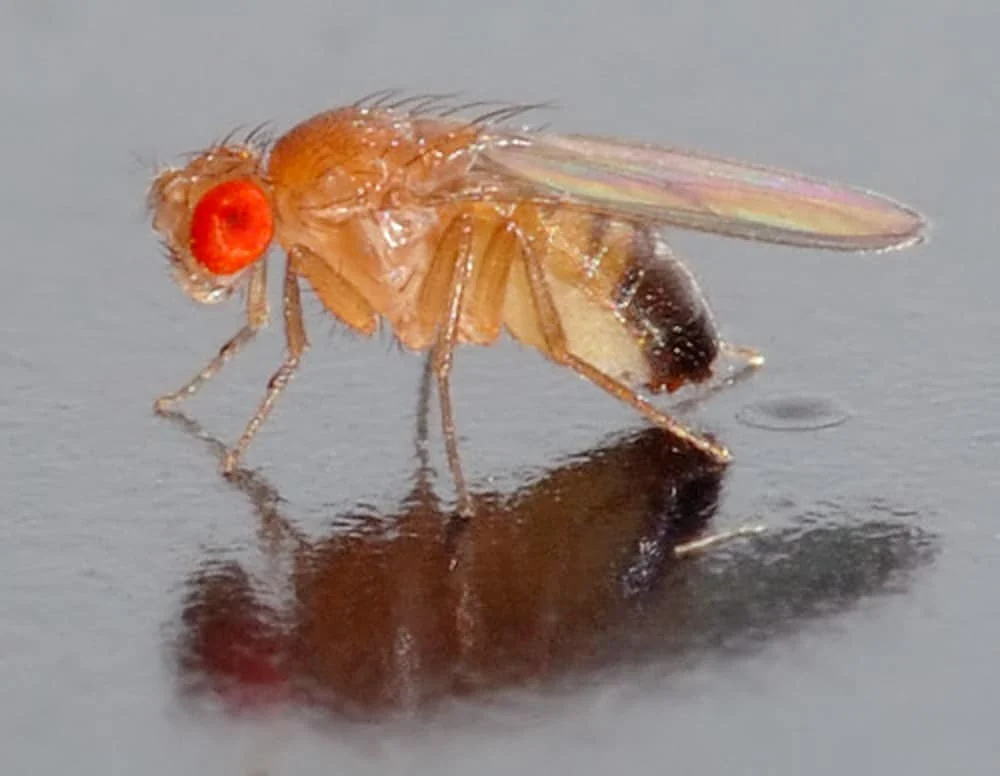
In a groundbreaking study that challenges conventional understanding of how the brain processes cravings, researchers at Brown University have identified a biological "switch" that links the sensation of hunger directly to the pursuit of addictive substances. Published in the journal Current Biology, the research utilizes the Drosophila fruit fly model to demonstrate that adverse internal states—specifically nutritional deprivation—can activate dormant memory circuits associated with alcohol reward.
n
This discovery provides a significant piece of the puzzle for a "Unified Theory of Addiction," suggesting that the biological drive for survival and the pathological drive for substance use are inextricably linked through shared neural pathways. By mapping these circuits, scientists at the Carney Institute for Brain Science have opened new doors for understanding why stress, pain, and hunger serve as such potent triggers for relapse in human populations.
n
Main Facts: The Octopamine Switch and State-Dependent Memory
n
The crux of the study revolves around a single, specific neuron that utilizes octopamine—a neurotransmitter in insects that serves as the functional equivalent of norepinephrine (the "fight-or-flight" hormone) in humans. Researchers found that this neuron acts as a gatekeeper for memories associated with alcohol.
n
Under normal, satiated conditions, the fruit flies showed moderate interest in ethanol. However, when the flies were food-deprived, a dramatic shift occurred. The state of hunger increased the baseline activity of the octopamine neuron, lowering the threshold required for it to fire. This heightened sensitivity made the flies significantly more responsive to odor cues that they had previously learned to associate with the intoxicating effects of alcohol.
n
Key findings from the Brown University study include:
n
- n
- Parallel Circuitry: The brain does not have a single, monolithic memory for alcohol. Instead, it possesses "parallel circuit motifs." One circuit may be active during normal states, while another, more aggressive circuit is recruited specifically during times of physiological stress or hunger.
- Internal State Modulation: The research proves that memory retrieval is not a static process. Instead, the brain’s internal environment (its "state") dictates which memories are accessible and how powerfully they influence behavior.
- The Ethanol-Seeking Drive: Hunger does not merely make the flies "irritable"; it specifically activates a learned memory to seek out ethanol as a source of reward, potentially hijacking the biological machinery intended to find food.
n
n
n
n
Chronology: From Alcohol Memory to State-Dependent Cravings
n
The path to this discovery was built on years of incremental research within the lab of Karla Kaun, an associate professor of neuroscience at Brown University. The Carney Institute has long been at the forefront of investigating how alcohol alters gene expression and neural circuitry.
n
Phase 1: Mapping Alcohol Reward (Pre-2024)nEarlier studies by the Kaun lab focused on identifying which neurons were involved in the initial formation of alcohol-related memories. They discovered that alcohol changes the "molecular signature" of certain neurons, making the reward of intoxication more "sticky" and harder for the brain to ignore.
n
Phase 2: Investigating Adverse States (2024–2025)nThe research team shifted focus toward how negative biological states—hunger, thirst, and physical discomfort—interact with these established memories. They began observing that flies in "survival mode" were not just looking for calories; they were specifically gravitating toward substances that provided a dopamine spike.
n
Phase 3: The Discovery of the Octopamine Link (2026)nThe most recent experiments, culminating in the Current Biology publication, successfully isolated the octopamine neuron. By using optogenetics and advanced imaging, the researchers were able to see the neuron "glow" with activity when the fly was hungry, even before the fly was presented with alcohol. This established the chronological link: hunger happens first, which then "primes" the brain to react to addiction cues.
n
Supporting Data: The Mechanics of the Fruit Fly Model
n
While the use of fruit flies (Drosophila melanogaster) might seem distant from human clinical psychology, the data is highly relevant due to the conservation of reward pathways across species. Approximately 75% of human disease-causing genes have a functional equivalent in fruit flies, making them an ideal model for mapping complex neural circuits.
n
The Behavioral Assay
n
Researchers trained the flies by exposing them to a specific odor paired with ethanol vapor. Later, the flies were placed in a T-maze where they had to choose between the "ethanol-scented" path and a neutral path.
n
- n
- Satiated Group: Showed a 25–30% preference for the ethanol scent.
- Hungry Group: Showed a 70–80% preference for the ethanol scent.
n
n
n
Neural Activity Metrics
n
Using calcium imaging to measure neuronal firing, the study recorded a marked increase in "baseline noise" within the octopamine circuit of hungry flies. This suggests that hunger puts the addiction-seeking part of the brain on "high alert." When the odor cue was finally introduced, the neuron’s response was twice as intense in hungry flies compared to the control group.
n
The "Unified Theory" Context
The study supports the burgeoning "Unified Theory of Addiction," which posits that all forms of substance use disorder (SUD) share a common root in the brain’s inability to distinguish between survival-based rewards (food, water) and chemically induced rewards (alcohol, drugs). The data shows that when the body signals a survival deficit (hunger), the brain defaults to the most potent reward it remembers: the drug.
Official Responses: Insights from the Carney Institute
The implications of the study have been met with significant interest from the neuroscience community. Alice Popovici, representing the Carney Institute for Brain Science, emphasized the evolutionary logic behind this seemingly self-destructive behavior.
"In fruit flies, appetite activates a neuron that tells the fly to look for ethanol," Popovici noted. "Hunger activates this learned memory to search for alcohol. The fact that hunger can activate a memory switch of intoxication helps animals adapt to their environment, as it illustrates how the nervous system integrates nutritional needs into memory circuits."
Dr. Karla Kaun’s lab members have further explained that this research provides a "circuit motif" that directly links internal state modulation to memory processing. This is a significant departure from previous theories that viewed addiction as a simple failure of willpower or a static chemical imbalance. Instead, it is now viewed as a dynamic, state-dependent biological process.
"Our study provides an understanding of the impact these state-dependent circuits have in mediating drug use, addiction, cravings, and relapse," the research team stated in their formal conclusion. They suggest that the "arousal" caused by hunger or stress acts as a key, unlocking memories of substance use that might remain dormant during periods of stability and health.
Implications: A New Paradigm for Human Recovery
The discovery of the hunger-alcohol circuit has profound implications for the treatment of Alcohol Use Disorder (AUD) and other addictions in humans. It provides a biological basis for many of the "common sense" strategies currently used in recovery programs.
1. Validating the "HALT" Protocol
In 12-step programs and addiction counseling, the acronym HALT (Hungry, Angry, Lonely, Tired) is used to warn individuals of the states in which they are most vulnerable to relapse. The Brown University study provides the first concrete neural evidence for the "H" in HALT. It proves that being hungry is not just a psychological distraction; it is a physiological trigger that re-wires the brain to seek out its old "fix."
2. Targeted Pharmacological Treatments
Because the study identified octopamine—and by extension, the human equivalent, norepinephrine—as the primary driver of this state-dependent craving, it opens the door for new medications. Future treatments could involve norepinephrine antagonists or modulators that prevent the "hunger switch" from activating the "alcohol circuit," effectively decoupling the two drives.
3. Addressing Cross-Addiction and Obesity
The link between appetite and addiction also sheds light on the high rates of "transfer addiction," where individuals in recovery from alcohol may develop an addiction to high-sugar foods, or vice versa. If the same circuit controls both drives, treating obesity and treating substance abuse may require nearly identical neurological approaches.
4. Stress and Pain Management
While the study focused on hunger, the researchers believe the same "circuit motif" applies to stress and pain. If the brain perceives pain as an adverse internal state, it may activate parallel circuits for opioids or alcohol to "solve" the survival threat. This suggests that effective addiction treatment must include the stabilization of the patient’s physical state—nutrition, sleep, and pain management—to keep the addiction-seeking circuits in a dormant state.
5. Rethinking Relapse
By understanding that a parallel circuit exists specifically for "bad times," clinicians can better prepare patients for high-risk situations. Relapse is often viewed as a failure of the "primary" brain, but this research suggests it is the activation of a "secondary" brain circuit designed for survival.
In conclusion, the work coming out of the Carney Institute for Brain Science represents a pivotal shift in addiction research. By proving that the brain’s "wiring" for addiction is hidden within its wiring for survival, scientists have provided a roadmap for more compassionate and biologically informed treatments. The fruit fly, in its simple search for a meal, may have just shown humanity the way out of the cycle of craving and relapse.

