
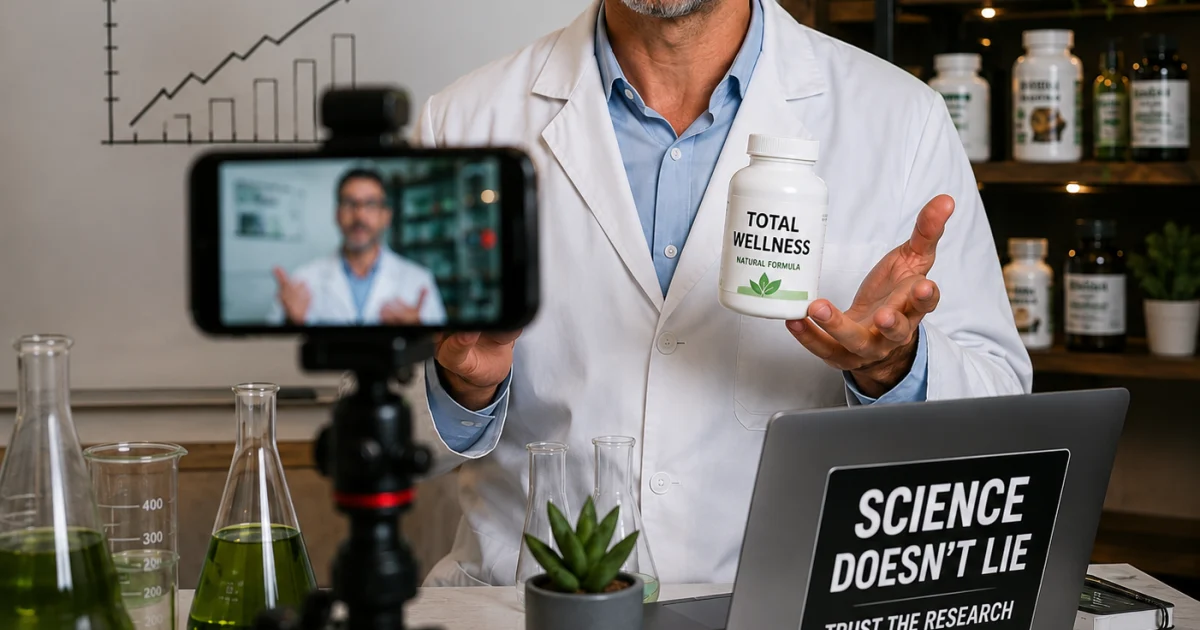
The hallowed halls of peer-reviewed scientific journals have long served as a bastion of authority, bestowing a gravitas upon scientific claims that commercial speech rarely attains. This inherent trust, built on rigorous methodology and independent scrutiny, is fundamental to scientific progress. However, a concerning trend is emerging: scientists, carrying the weight of this scientific seal of approval, are increasingly venturing into the commercial marketplace, publicly disparaging products while enjoying protections that their manufacturers do not. This article delves into the complex interplay between scientific credibility, commercial influence, and the potential for public deception when the lines between academic pursuit and market manipulation blur.
n
The Scientific Seal of Approval: A Double-Edged Sword
n
Publication in a peer-reviewed journal is more than just an academic achievement; it’s a critical checkpoint in the scientific process. It signals that research has, at least ostensibly, adhered to established scientific methods, that data has been meticulously collected and analyzed, and that conclusions are drawn logically from the evidence. The subsequent scrutiny by independent reviewers and the potential for replication by other researchers are cornerstones of scientific integrity. This process is designed to weed out flawed research and ensure that the scientific community operates on a foundation of verifiable truth.
n
Yet, the system is not infallible. History offers cautionary tales, such as the 1982 study published in the prestigious New England Journal of Medicine by Brian MacMahon, then head of Epidemiology at Harvard. This article controversially linked coffee consumption to pancreatic cancer. While many in the scientific community recognized inherent flaws in the study’s design, its publication granted it an initial aura of legitimacy. It was only through persistent, unsuccessful replication attempts by other researchers that the study’s inaccuracies were ultimately exposed. Such instances, though not the norm, highlight the inherent vulnerabilities within the peer-review system.
n
In recent years, the proliferation of what is often termed "trash science" has become a significant concern. Organizations like Retraction Watch, under the umbrella of The Center for Scientific Integrity, actively monitor and expose fraudulent or flawed scientific work that manages to bypass peer-review safeguards. The sheer volume of retractions—over 66,000 entries currently in the Retraction Watch Database—underscores the persistent challenge of maintaining scientific rigor in the face of academic pressures, potential biases, and sometimes, outright misconduct.
n
The issue intensifies when scientists transition from the academic arena to the commercial one. When they leverage the prestige of their peer-reviewed publications to sway public opinion about products, they begin to resemble a new breed of influencer—one whose pronouncements carry an unwarranted weight of scientific authority. The traditional legal and ethical frameworks designed to protect the public from misleading commercial claims often prove inadequate in these scenarios. Scientists, cloaked in the mantle of scientific status, can sometimes operate with a degree of impunity, leaving consumers vulnerable to potentially inaccurate or biased information.
n
When Science Becomes a Litigation Tool: The Rise of "Guns for Hire"
n
The legal system has long recognized the special status of peer-reviewed literature, often deeming it indicative of scientific validity and admissible as evidence in court. As scientific litigation has surged, a concerning phenomenon has emerged: the conscription of scientific publications by so-called "guns for hire" to advance litigation-driven agendas. These experts, often paid for their testimony or research, may produce work that appears scientifically sound on its surface but is fundamentally motivated by legal strategy rather than genuine scientific inquiry.
n
Judges, when determining the admissibility of expert testimony, are tasked with evaluating its scientific reliability. The landmark Daubert standard, for instance, emphasizes that testimony must be "derived by the scientific method." The standard explicitly acknowledges that "testimony proffered by an expert based directly on legitimate, preexisting research unrelated to the litigation provides the most persuasive basis for concluding that the opinions he expresses were ‘derived by the scientific method.’"
n
However, the reality on the ground can be far more complex. Paid experts have been known to utilize the scientific press as a platform for their litigation-supported positions, with their work later referenced in court to legitimize their conclusions, whether personal or financially motivated. As long as the research superficially mimics the scientific method, it has often been permitted. This has led to a situation where attempts by defendants to penalize researchers for work that disparages their products, on grounds of slander or defamation, have frequently failed. The legal system, grappling with the nuanced distinction between genuine scientific discourse and litigation-fueled advocacy, has struggled to adequately address this challenge.
n
Scientific Speech Meets Commercial Speech: A Regulatory Mismatch
n
The legal landscape governing speech is multifaceted, with different categories receiving varying levels of protection. Defamation cases, particularly those involving public figures or prominent products and manufacturers, are notoriously difficult to win. The defense of truth is a powerful shield, and even demonstrably false speech enjoys substantial constitutional protection. In the current digital age, characterized by the pervasive influence of bots and 24/7 social media, the traditional remedy of "more speech" to counter falsehoods is increasingly being called into question.
n
Commercial speech occupies a distinct middle ground. Unlike purely political or artistic expression, commercial speech can be subject to government regulation to ensure truthfulness and prevent deception, thereby protecting the public. The Supreme Court, in its 1980 ruling, established that "false, deceptive, or misleading commercial advertising receives no First Amendment protection and could be banned." This legal principle imposes stringent requirements on manufacturers. Products, especially those in sensitive categories like nutritional supplements, must base their health and safety claims on actual, tested results. Cosmetic promises of youth and beauty must be tempered with appropriate caveats, such as "may help to promote youthful skin," acknowledging the limitations of the product. In essence, manufacturers operate under a regime of accountability for their marketing claims.
n
However, the scientist acting as a public critic of a product often finds themselves operating under a different set of rules. While scientific disagreement and even acrimony have been a historical feature of scientific progress, the context has shifted dramatically. The intellectual disputes between giants like Ilya Metchnikoff, the discoverer of phagocytosis, and Paul Ehrlich, a pioneer in humoral immunity, were primarily confined to the scientific arena. Their goal was to persuade fellow scientists, not to directly influence courts, regulators, or the general public. The heated nature of their debates, while intense, remained a form of academic discourse, ultimately contributing to a more robust understanding of the immune system.
n
The current situation, however, marks a departure. When scientists adopt the role of commercial influencers, leveraging their credentials to impact public perception of products, the protections afforded to scientific speech begin to break down in problematic ways. The First Amendment’s broad protections, while crucial for fostering open scientific inquiry, can inadvertently create a shield for individuals who blur the boundaries between legitimate scientific critique and market manipulation.
n
When Scientists Become Influencers: The Case of Sugar Substitutes and Beyond
n
The debate surrounding sugar substitutes offers a pertinent example of this evolving dynamic. Extensive research has explored the potential dangers of various artificial sweeteners, particularly when viewed against the backdrop of the well-documented health risks associated with refined sugar in ultra-processed foods. The history of saccharin, for instance, illustrates the complex regulatory journey of such products. Initially met with significant reservations by the FDA due to concerns about its potential to cause urinary bladder cancer in laboratory animals, its eventual licensing was heavily influenced by the pressing needs of diabetic patients. The debate centered on a careful scientific weighing of risks and benefits, a process that, while contentious, remained within the realm of scientific discourse.
n
The Splenda Case: Science Enters the Marketplace
n
A more recent and illustrative case involves Splenda, a popular brand of artificial sweetener. At the heart of the controversy is a study published by Susan Schiffman, a professor in the department of electrical and computer engineering at North Carolina State University. Schiffman’s research, published in a recognized journal, claimed that sucralose-6-acetate (S6A), a metabolite of sucralose (the primary ingredient in Splenda), was genotoxic and called for its regulation. Notably, the product tested by Schiffman was not Splenda itself, and the independent lab did not test Splenda directly.
n
Following the publication of her article, Dr. Schiffman embarked on a public relations tour, aggressively promoting the perceived dangers of sucralose. Her public statements, while not always directly naming Splenda, employed innuendo and oblique references to the product, often interposing remarks about the dangers of excessive sucralose intake with implications for Splenda. This public campaign aimed to influence consumer perception and potentially impact market share.
n
The scientific article itself has come under scrutiny, with Retraction Watch reporting that it is under review for retraction. This indicates potential issues with the study’s methodology, data, or conclusions, further complicating the narrative.
n
In response to the public statements and the perceived damage to its brand, TC Heartland, the producer of Splenda, filed a lawsuit against Dr. Schiffman, alleging "false and defamatory statements about Splenda’s health effects." However, the judge ultimately dismissed the case, citing the First Amendment rights of both parties to discuss scientific research and its conclusions. The judge famously advised the parties to "return to the marketplace of ideas and laboratories to duke out their differences over artificial sweeteners."
n
This judicial decision, while upholding First Amendment principles, raises significant questions. The "marketplace of ideas," as conceived by the founders, was intended for open intellectual exchange. However, in this instance, the court’s interpretation facilitated a scenario where a scientist, armed with the perceived authority of peer-reviewed research, could effectively engage in a form of commercial warfare against a product without facing significant legal recourse for potentially misleading public statements, even if her underlying research was later questioned.
n
The Scientific Double Standard: Accountability and Authority
n
Scientific disagreement is the lifeblood of scientific progress. It is through robust debate, critical analysis, and the willingness to challenge established ideas that science evolves and corrects itself. This principle of open scientific discourse deserves broad protection. However, this protection becomes significantly more complicated when a scientist transitions from the academic arena to the commercial marketplace and uses their scientific credentials to influence consumer behavior.
n
Manufacturers of products are rightfully constrained by regulations that prevent them from making false or misleading claims. They are held accountable for the accuracy of their marketing, ensuring that consumers are not deceived about the benefits or safety of what they purchase. It is a matter of considerable concern that those who leverage scientific credentials to attack these same products often face virtually no comparable responsibility for the accuracy of their public pronouncements.
n
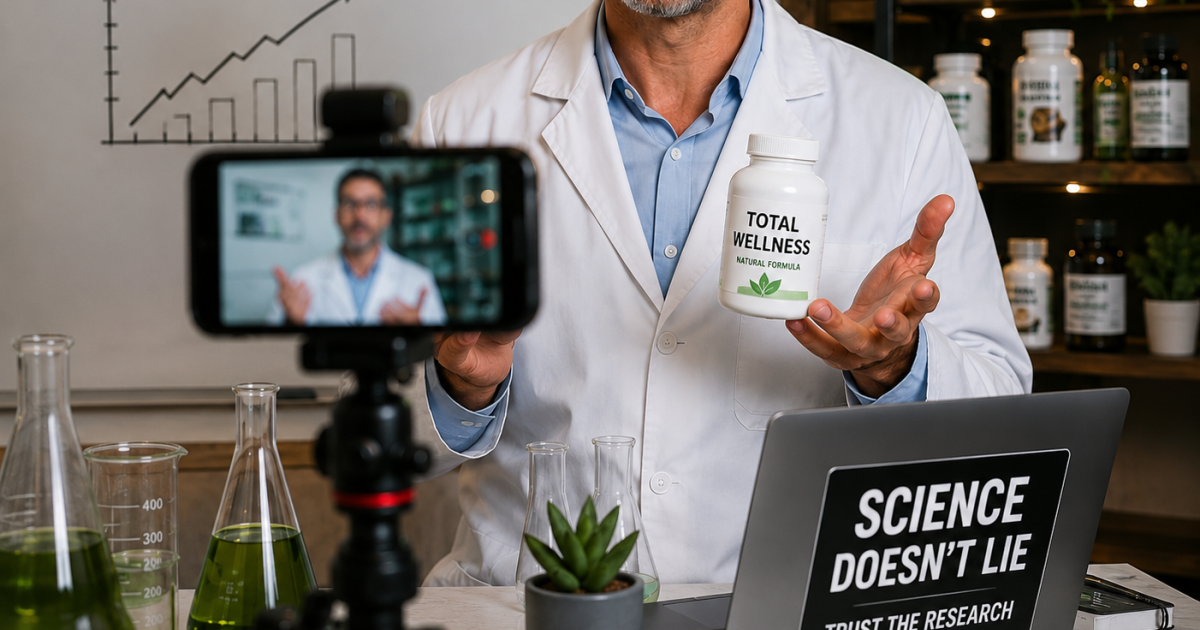
The core issue is not whether scientists should be free to criticize products—they absolutely should, as this is vital for public safety and informed consumer choices. The critical question is whether the perceived authority of a "lab coat" should serve as an impenetrable shield when scientific debate morphs into commercial influence. The principle of a functioning "marketplace of ideas" is most robust when accountability travels in tandem with authority. When individuals can wield scientific prestige to influence commercial outcomes without commensurate responsibility for the veracity of their public statements, the integrity of both scientific discourse and consumer protection is undermined.
n
The legal precedent set in cases like the Splenda lawsuit, while rooted in First Amendment principles, highlights a potential loophole where scientific pronouncements, even if later disputed or retracted, can have a significant impact on the market and public perception before any accountability is imposed. This creates a disquieting double standard, where manufacturers are strictly regulated while scientists acting as public critics enjoy a more permissive environment, even when their actions verge on commercial influence. Moving forward, a more nuanced legal and ethical framework may be necessary to ensure that scientific expertise, when applied to commercial matters, is accompanied by a comparable degree of responsibility and accountability.
n
[1] Johnson & Johnson v. Three Physician-Scientists: In a notable case, Johnson & Johnson sued three physician-scientists over a 2020 study linking cosmetic talc exposure to mesothelioma. J&J alleged false statements and data errors. A federal judge ruled in favor of the scientists, finding no defamation, partly because there was no evidence of malice. Johnson & Johnson has stated its intention to appeal this decision. This case further illustrates the legal challenges in holding scientists accountable for research with significant commercial implications.
n
[2] Historical Scientific Feuds: The intense rivalry between Ilya Metchnikoff and Paul Ehrlich is a classic example of scientific disagreement. Metchnikoff championed the role of phagocytes (cells that engulf and digest foreign particles) in immunity, a concept known as phagocytosis. Ehrlich, on the other hand, focused on humoral immunity, particularly through his studies of antitoxins, laying the groundwork for understanding antigens and antibodies. Their intellectual battles, though fierce, remained within the scientific community and ultimately contributed to a richer understanding of the immune system. Both scientists were recognized for their groundbreaking work, sharing the 1908 Nobel Prize in Physiology or Medicine.

