
Editorial Note: This report has been updated as of July 22, 2026, to reflect the most recent data on abortion statistics, legislative shifts, and federal regulatory changes.
n
Executive Summary: The Fragmentation of Reproductive Access
n
When the Supreme Court of the United States overturned Roe v. Wade in the summer of 2022 with its ruling in Dobbs v. Jackson Women’s Health Organization, the prevailing consensus among public health experts and policymakers was that the national abortion rate would experience a significant and sustained decline. The logic was straightforward: with 13 states rapidly implementing total bans and another six enacting severe gestational restrictions, the geographic "abortion deserts" would naturally suppress the volume of procedures.

n
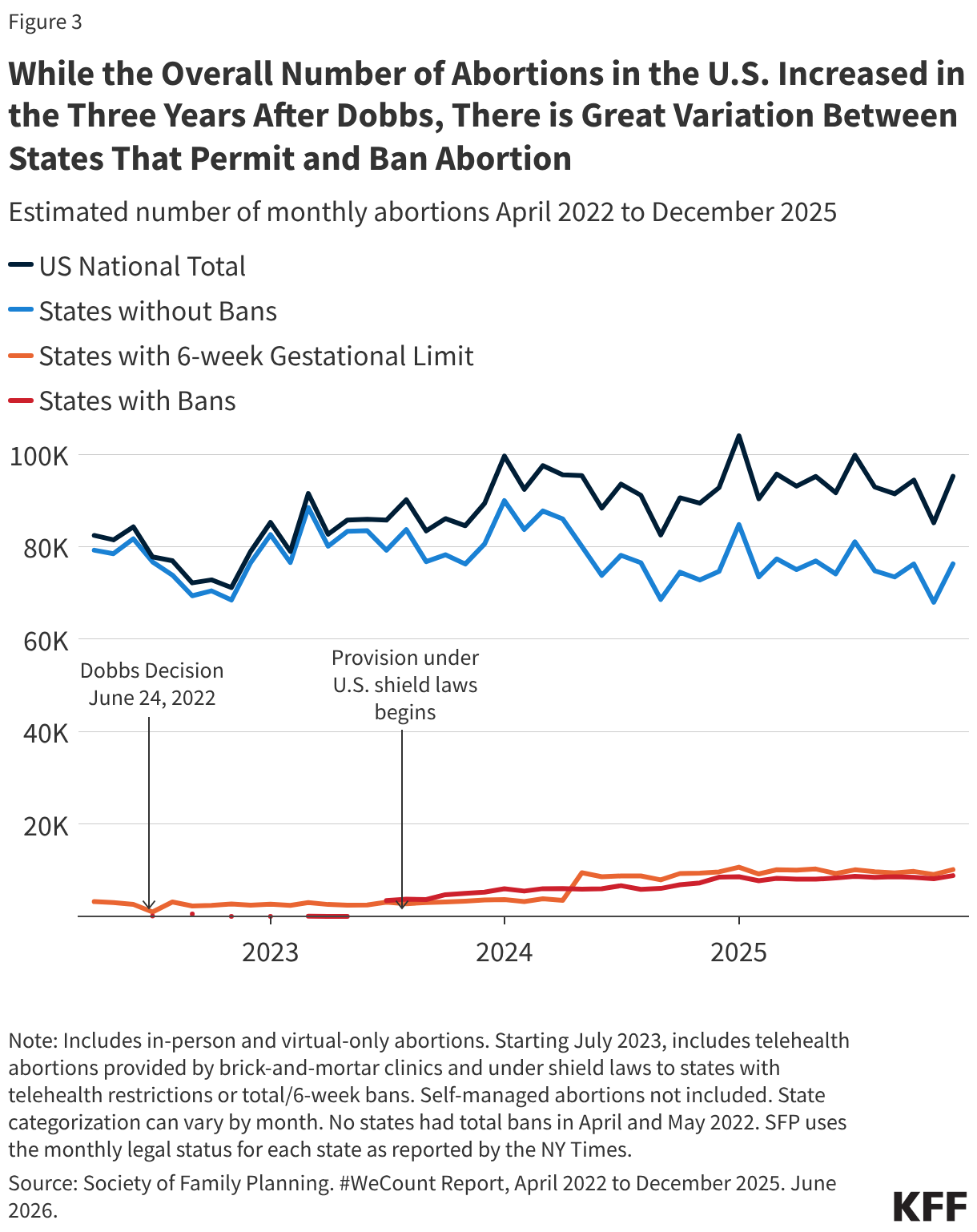
However, four years into the post-Roe era, data reveal a complex and paradoxical reality. Contrary to initial expectations, the total volume of abortions in the United States has not only remained stable but has slightly increased. By 2025, the national abortion volume reached an estimated 1.13 million, up from 1.05 million in 2023. This upward trajectory is the result of a revolutionary shift in the delivery of reproductive healthcare—specifically the explosion of telehealth, the implementation of state-level "shield laws," and a robust, well-funded network for interstate travel.
n
Despite this national increase, the surface-level numbers mask a deep and widening chasm. While residents of "access states" and those with the digital literacy to navigate telehealth have seen services expand, those in restrictive states—particularly low-income individuals and marginalized communities—face unprecedented barriers. This report analyzes the data sources, the chronological shifts in policy, and the emerging public health implications of this fragmented landscape.
n
Chronology of a Shifting Landscape: 2013 to 2026
n
The Pre-Dobbs Era (2013–2021)
n
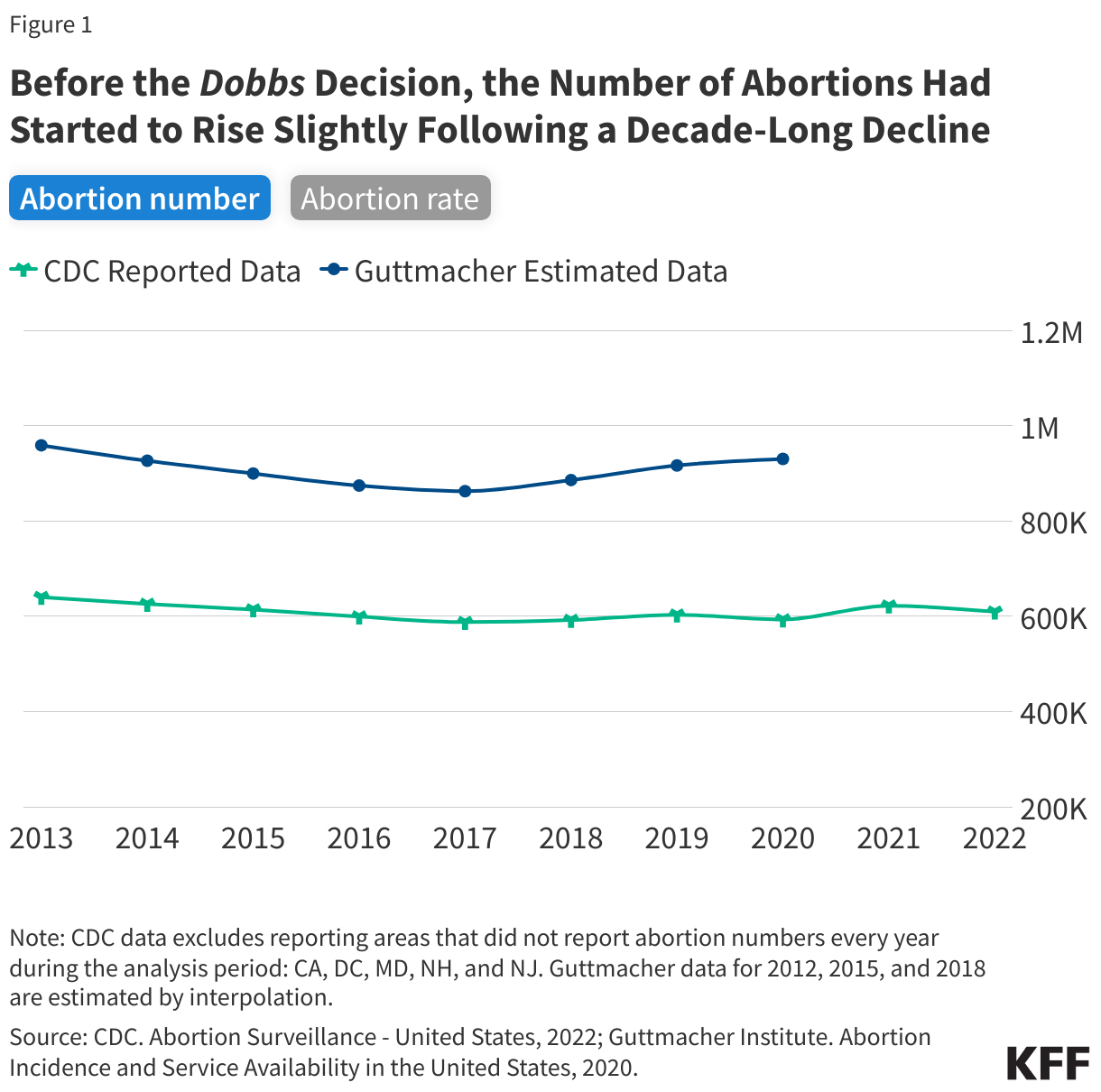
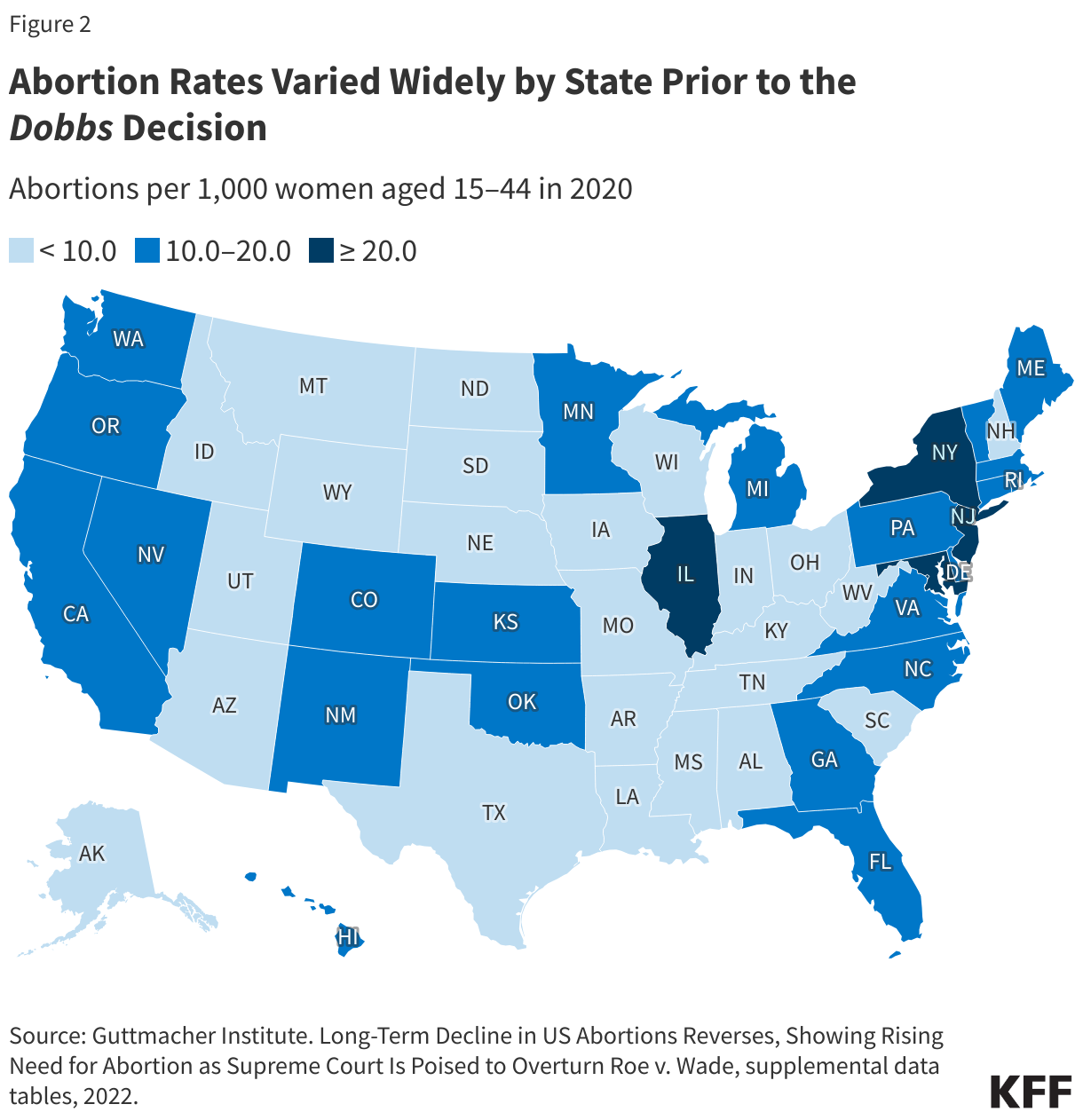
For much of the decade preceding the Dobbs ruling, the United States saw a steady decline in abortion rates. This was largely attributed to the increased availability and efficacy of long-acting reversible contraception (LARCs) and a broader decline in unintended pregnancies. However, around 2017, the trend began to plateau and then slightly tick upward. By 2020, the Guttmacher Institute reported 930,160 abortions, a rate of 14.4 per 1,000 women. Experts suggest this pre-ruling increase was driven by expanded Medicaid coverage in several states and the growing role of abortion funds, which lowered financial barriers for the most vulnerable.
n
The Seismic Shift (2022–2023)
n
The 2022 Dobbs decision immediately triggered "trigger laws" across the South and Midwest. The initial months saw a sharp, localized drop in abortion volume as clinics in ban states were forced to shutter. However, this period also marked the beginning of the "telehealth revolution." The FDA’s 2021 and 2023 revisions to the Risk Evaluation and Mitigation Strategy (REMS) for mifepristone—lifting the requirement for in-person dispensing—provided the legal framework for a new era of medication abortion.
n
The Era of Resistance and Shield Laws (2024–2026)
n
By 2024, pro-choice states began enacting aggressive "shield laws" to protect their clinicians who provided care to patients in restrictive states. This period saw the rise of virtual-only clinics and the normalization of mailing abortion pills across state lines. Despite ongoing legal challenges from the Trump administration and conservative judicial blocks, the infrastructure of the "underground" and virtual health network became sufficiently robust to drive national abortion numbers to their highest levels in over a decade by 2025.
n
Supporting Data: Quantifying the Telehealth Revolution
n
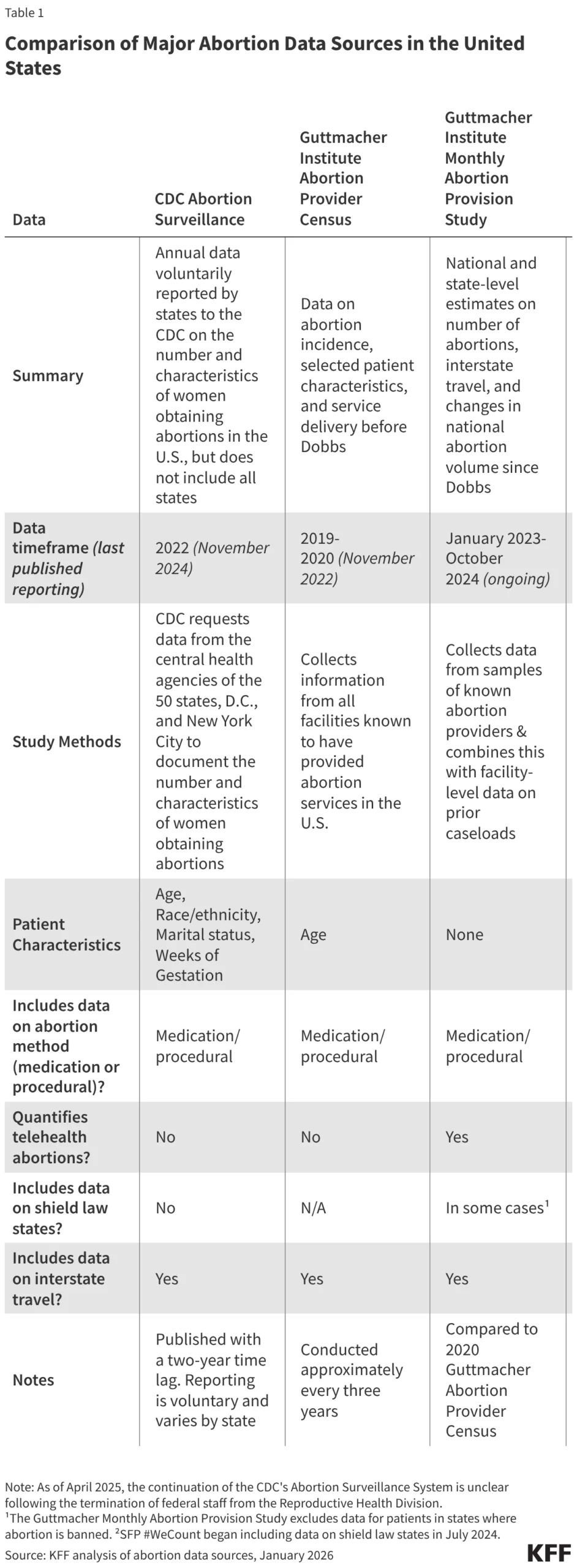
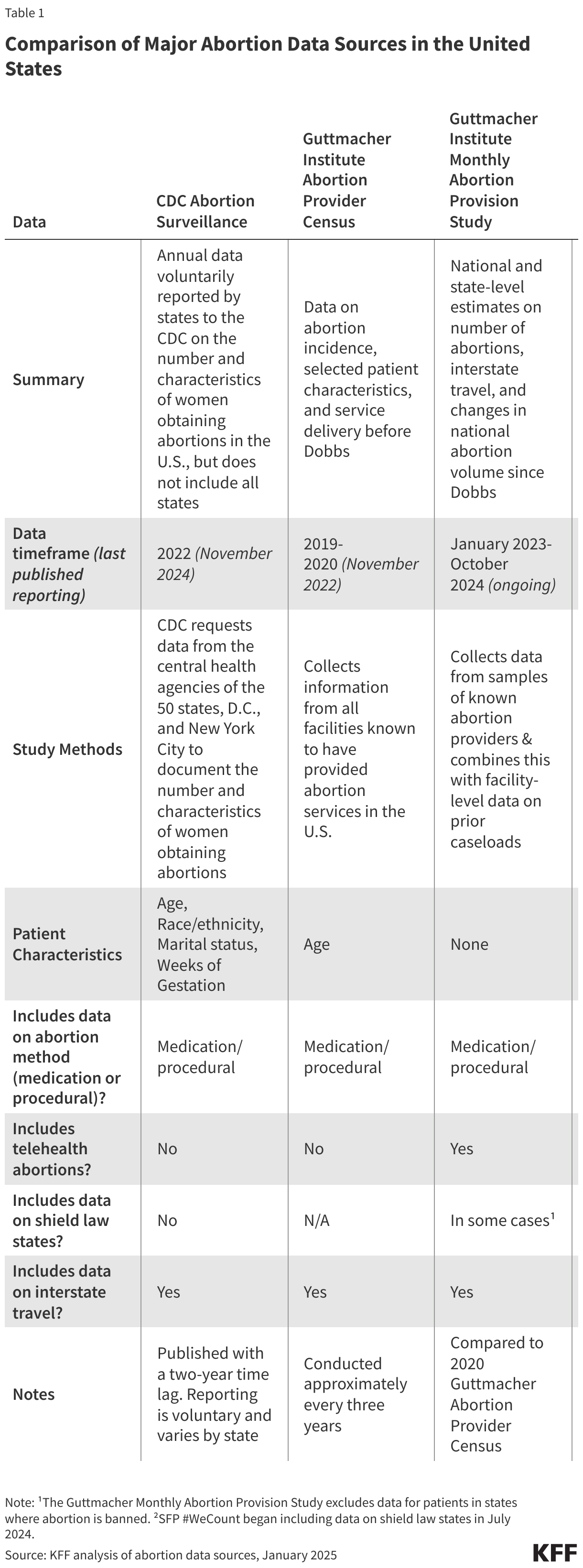
The current understanding of abortion volume relies on three primary pillars of data, each offering a different lens into the national landscape.
n
1. The Fragmentation of Federal Data
n
The Centers for Disease Control and Prevention (CDC) has historically been the gold standard for abortion surveillance. However, the system is currently facing a crisis of utility. Reporting is voluntary, and major states like California and Maryland have opted out for years. Furthermore, since the second Trump administration took office, the CDC’s Reproductive Health Division has seen significant staff terminations, leading to a freeze in new surveillance data. The most recent CDC report from 2022 reflects a two-year lag, making it largely irrelevant for real-time policy analysis in 2026.
n
2. The Rise of Medication and Virtual Care
n
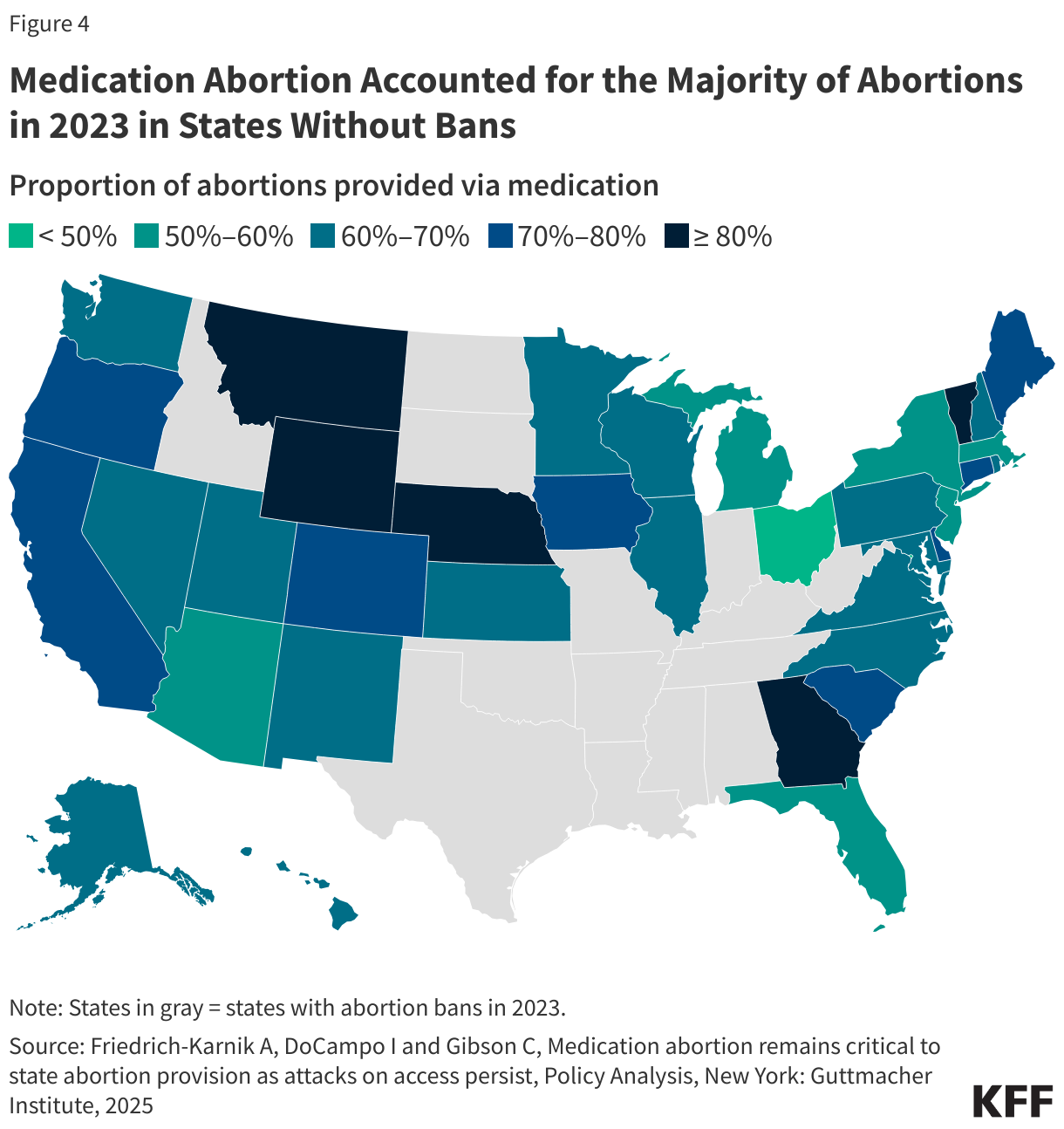
According to the Society of Family Planning’s #WeCount project, medication abortion now accounts for 65% of all abortions nationally. The efficiency of this method is the primary driver of the unexpected volume increase.
n
- n
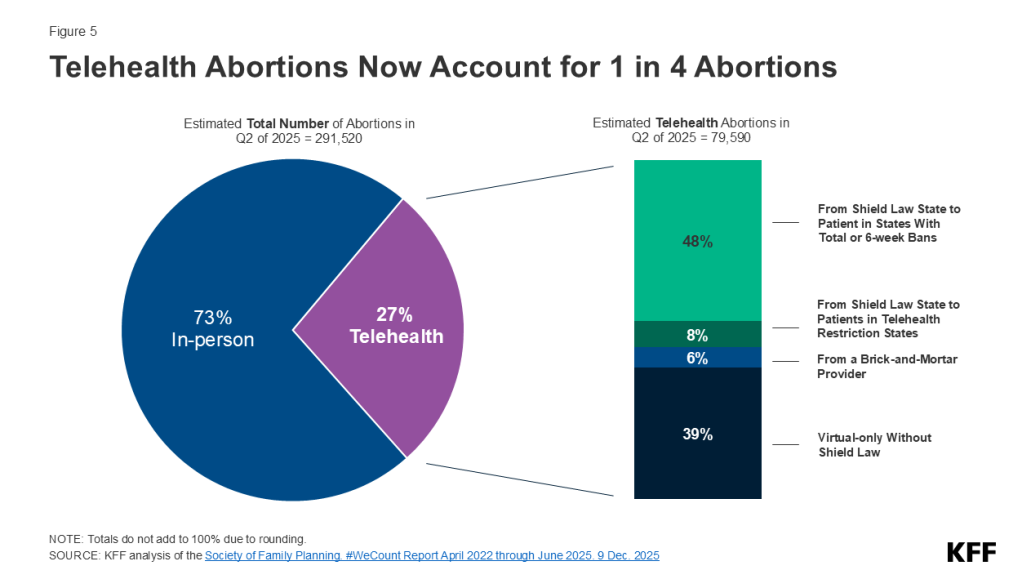
- Telehealth Dominance: By the end of 2025, telehealth abortions accounted for 28% of the national total.
- Virtual vs. Brick-and-Mortar: In 2025, 40% of telehealth abortions were provided by virtual-only clinics, while 56% were facilitated under shield laws by clinicians in protective states.
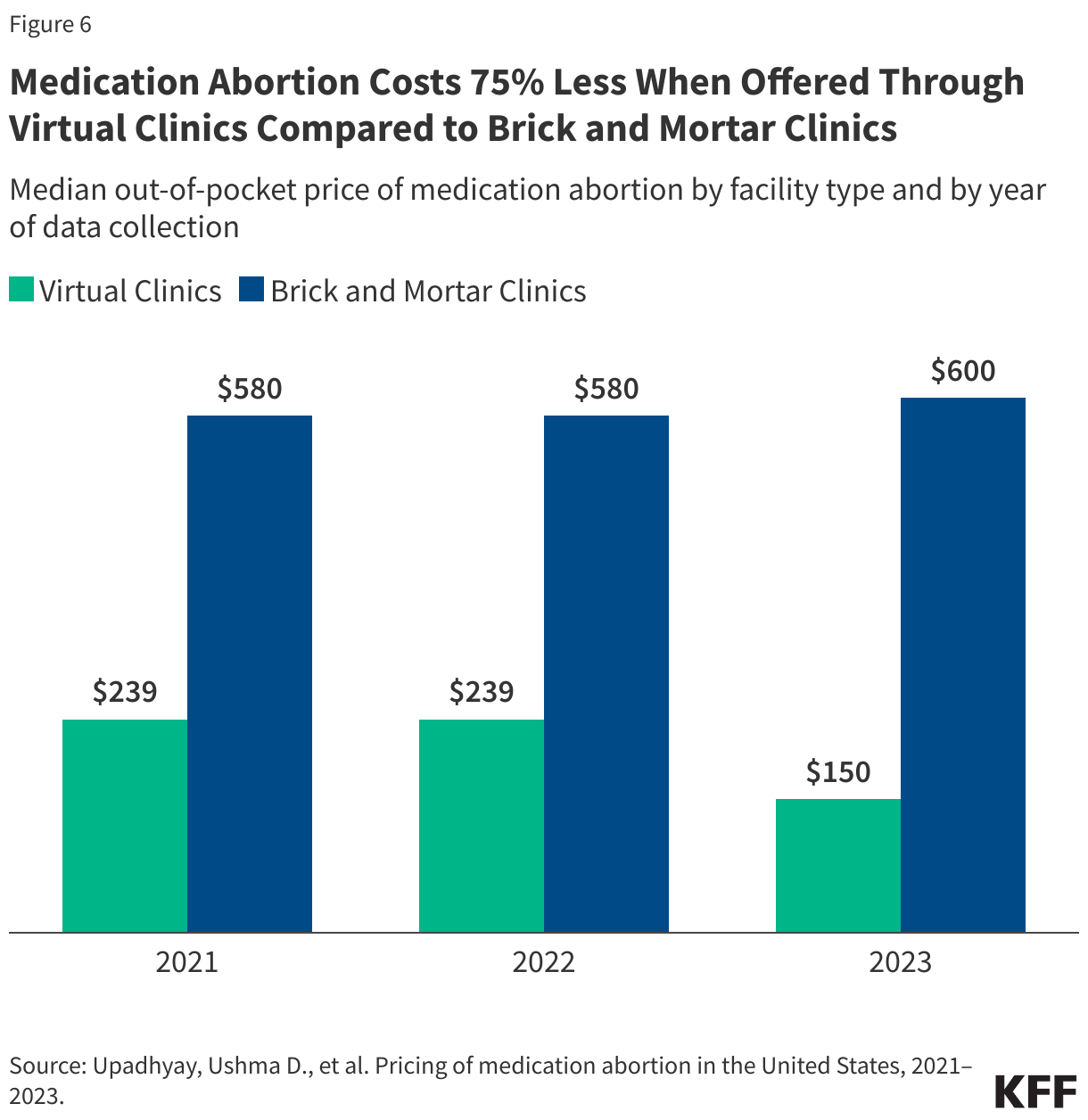
- Cost Efficiency: The economic data is stark. The median price for a medication abortion at a physical clinic rose to $600 in 2023. In contrast, virtual clinics have driven the price down to a median of $150—a 75% reduction that has significantly expanded access for those with limited financial means.
n
n
n
n
3. Interstate Travel Dynamics
n
The Guttmacher Institute’s Monthly Abortion Provision Study highlights a massive surge in interstate travel. In 2025, approximately 142,000 patients traveled out of state for care, compared to 81,000 in 2020. Illinois, North Carolina, Kansas, and New Mexico have become "hub states," bordering regions with total bans and absorbing tens of thousands of inbound patients.
n
Official Responses: A Conflict of Jurisdictions
n
The current landscape is defined by a fierce tug-of-war between federal executive action and state-level legislative protections.
n
Federal Regulatory Action
n
The Trump administration has signaled a multifaceted approach to restricting the current telehealth surge. Key strategies include:
n
- The Comstock Act: Legal scholars in the administration are exploring the use of this 19th-century statute to criminalize the mailing of "obscene" materials, including abortion pills, which could effectively bypass state shield laws.
- FDA Revisions: The administration has targeted the 2021/2023 FDA revisions, seeking to reinstate strict in-person dispensing requirements for mifepristone.
- Judicial Appointments: A continued focus on appointing conservative judges to the federal bench ensures that legal challenges to state shield laws will face a skeptical judiciary.
State-Level Protections
Conversely, 22 states and the District of Columbia have enacted shield laws. These laws are designed to:
- Prevent Professional Discipline: Protect doctors from losing their licenses for providing care that is legal in their home state but illegal in the patient’s state.
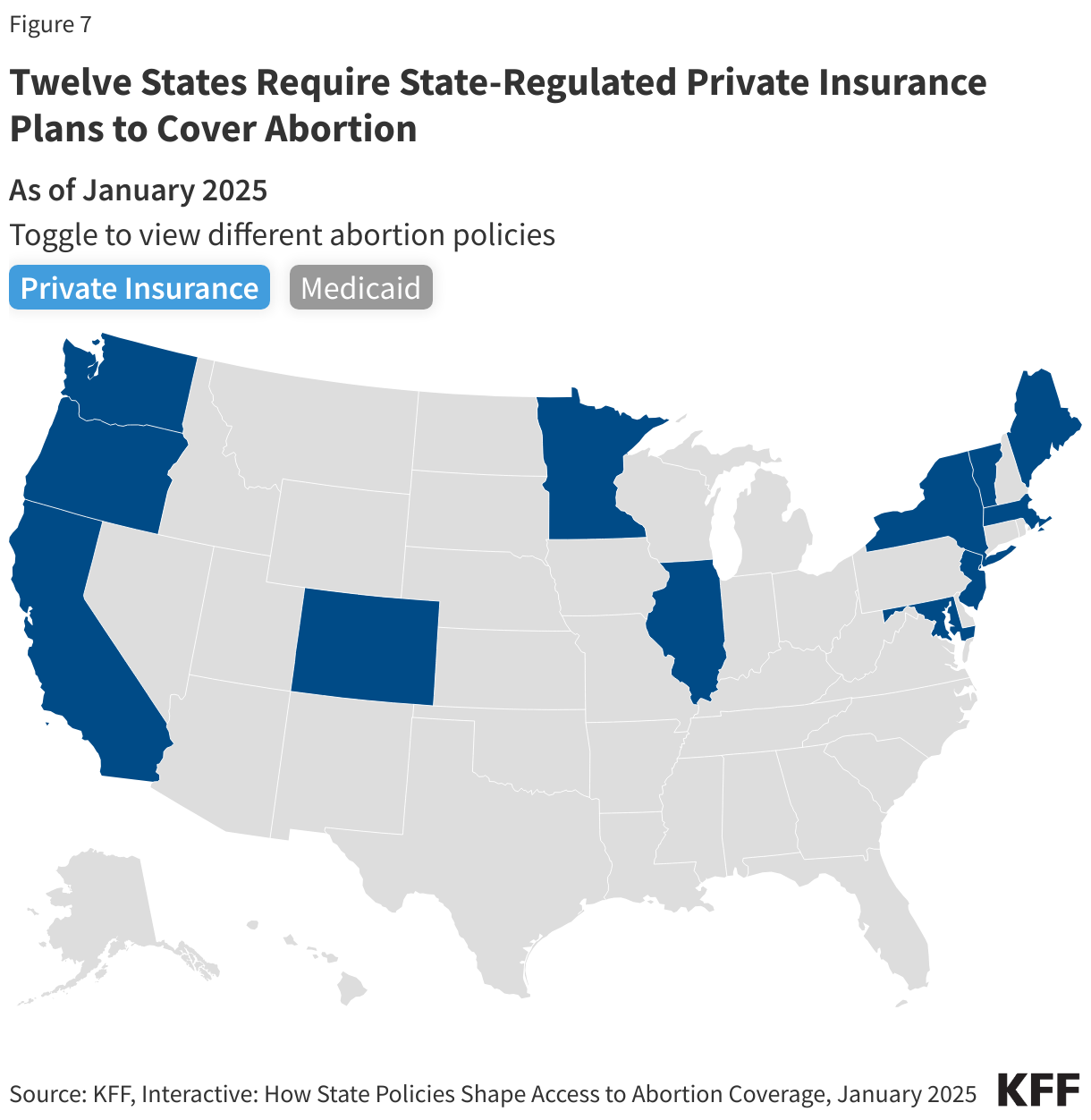
- Financial Mandates: Twelve states now require state-regulated private insurance plans to cover abortion, often with zero cost-sharing.
- Medicaid Expansion: Twenty states now use state-only funds to cover abortions for Medicaid enrollees, circumventing the federal Hyde Amendment.
Implications: The Human and Public Health Cost
While the national volume of abortions has increased, the public health implications of the Dobbs decision are becoming increasingly grim in restrictive states. The statistical "success" of the telehealth network does not mitigate the rising mortality and fertility rates among those who cannot access these systems.
Fertility and Infant Mortality
A recent study published in JAMA found that fertility rates have increased in states with total or 6-week bans, particularly among populations with the greatest structural disadvantages. More distressingly, infant mortality rates have risen in these same states. Many of these regions already suffered from the worst maternal and infant health outcomes in the country prior to 2022. The lack of prenatal care, combined with the forced carry of high-risk pregnancies, is creating a burgeoning public health crisis.
The Socioeconomic Divide
The current data suggests that the U.S. has moved toward a "two-tier" system of reproductive healthcare. Individuals with internet access, privacy, and $150 can navigate the virtual system. Those without those resources—or those who require procedural abortions due to gestational age or medical complications—are left to navigate a harrowing landscape of travel, lost wages, and legal risk.
Future Outlook
As we look toward 2027 and beyond, the stability of the current abortion rate is precarious. If the federal government successfully leverages the Comstock Act or if the Supreme Court further restricts the distribution of medication abortion, the "telehealth safety net" could collapse. In that scenario, the national abortion volume would likely plummet, not because the need has diminished, but because the avenues for safe care have been systematically dismantled.
The paradox of the post-Dobbs era is that while the "right" to abortion has been revoked for millions, the "practice" of abortion has proven remarkably resilient through technological innovation and state-level defiance. However, as the legal battle moves from the states to the federal mailbox, the future of this resilience remains deeply uncertain.

