
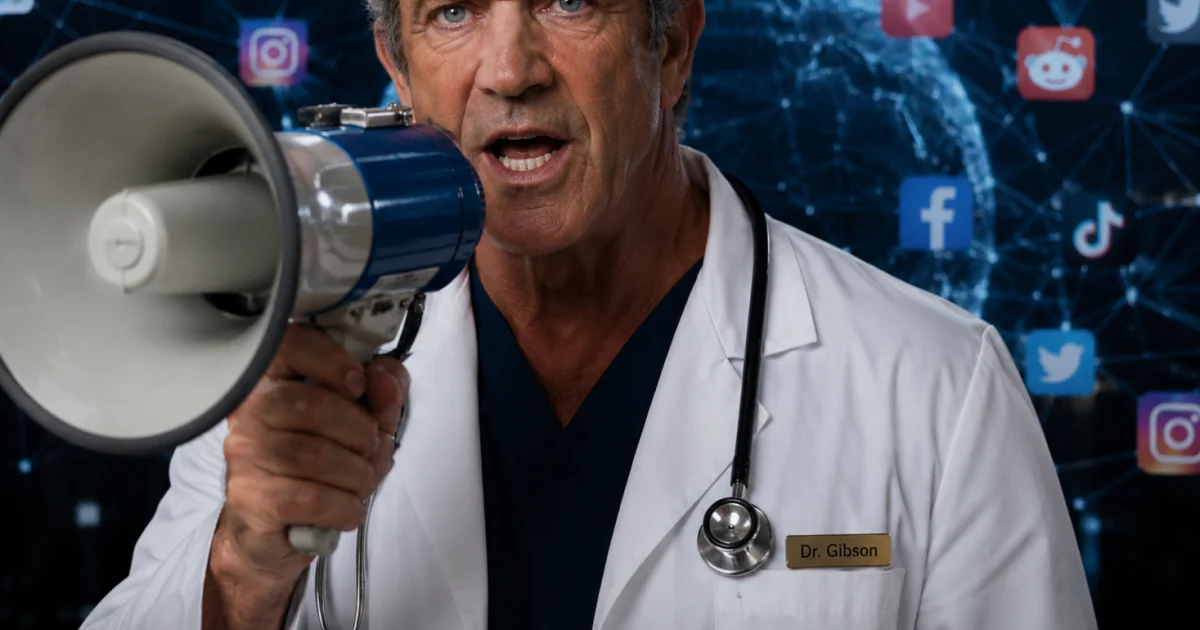
The allure of celebrity has long been a powerful force in shaping public opinion, extending far beyond product endorsements into the realm of personal health. While we like to believe our medical choices are guided by rigorous scientific evidence, history and the pervasive influence of modern social media reveal a disquieting truth: fame often commands a loyalty that rivals, and sometimes surpasses, empirical data. New research underscores the profound impact of celebrity endorsements on real-world medical decision-making, a phenomenon with potentially life-altering consequences.
n
The Echoes of Unproven Cures: A Historical Perspective
n
The notion that authority, even without expertise, can sway public health decisions is not a modern invention. Consider, for a moment, the jarring image of a physician in the 18th and 19th centuries recommending the insertion of tobacco smoke into the rectum to treat ailments ranging from stomach pain and gas to severe heartburn and even, astonishingly, drowning victims. This bizarre practice, advocated by European physicians and championed by figures like Thomas Cogan and William Hawes of the London Society for the Recovery of Persons Apparently Drowned, was based on the misguided belief that the smoke’s heat and stimulation could revive bodily functions.
n
While we now recognize this therapy as profoundly ineffective, its persistence highlights a critical dynamic: the persuasive power of perceived authority in the absence of robust scientific scrutiny. In an era before the systematic application of scientific methods to evaluate treatments, the pronouncements of physicians, combined with anecdotal success stories, held significant sway. As the fields of physiology and evidence-based medicine advanced, such practices were eventually relegated to the dusty annals of medical history. However, this extreme example serves as a potent illustration of a broader, enduring phenomenon: the capacity for unsubstantiated beliefs to gain traction when championed by figures perceived as authoritative.
n
From Revered Doctors to Digital Influencers: The Shifting Landscape of Authority
n
Historically, physicians occupied a near-sacred position of authority in matters of health. Their pronouncements, backed by perceived scientific understanding, were rarely questioned. However, the digital age has democratized information and, in doing so, has also blurred the lines of expertise. Today, the mantle of perceived authority has increasingly shifted from medical professionals to celebrities and social media influencers. While not every celebrity endorsement leads to dire outcomes, and some may simply result in wasted money or the adoption of habits with no proven benefits, others carry the potential for far more serious repercussions.
n
One such example is Paul Saladino, a physician and prominent proponent of a highly restrictive carnivore diet. He argues that "anti-nutrients" found in plant-based foods are detrimental to health. This diet, rich in saturated fats, has been linked to increased LDL cholesterol and cardiovascular risks. Similarly, actors and other public figures have historically promoted practices like geophagy – the consumption of clay or soil – despite a lack of scientific backing and the inherent risks of infection and parasitic diseases. Others have lent their platforms to the endorsement of energy-healing practices like Reiki or have propagated rhetoric critical of established psychiatric treatments and psychopharmacology. Fact-checking organizations have long documented these patterns, noting how the specific celebrities change with each news cycle, but the underlying dynamic remains consistent.
n
This influence is amplified by a psychological phenomenon known as the "halo effect." People tend to mistakenly attribute competence in one area – such as acting, music, or sports – to expertise in entirely unrelated fields, including medicine and nutrition. This cognitive shortcut allows celebrity opinions to exert a far greater influence than many individuals realize, often overshadowing the careful work of scientific research.
n
The Science Behind the Star Power: Why Celebrity Opinions Resonate
n
The question remains: what does scientific literature tell us about the specific mechanisms through which celebrity opinions influence health-related information and misinformation, and consequently, health decisions? The answer, it appears, is multifaceted and deeply rooted in human psychology and the dynamics of information dissemination.
n
The Joe Rogan Effect and Beyond: Anecdote Trumps Evidence
n
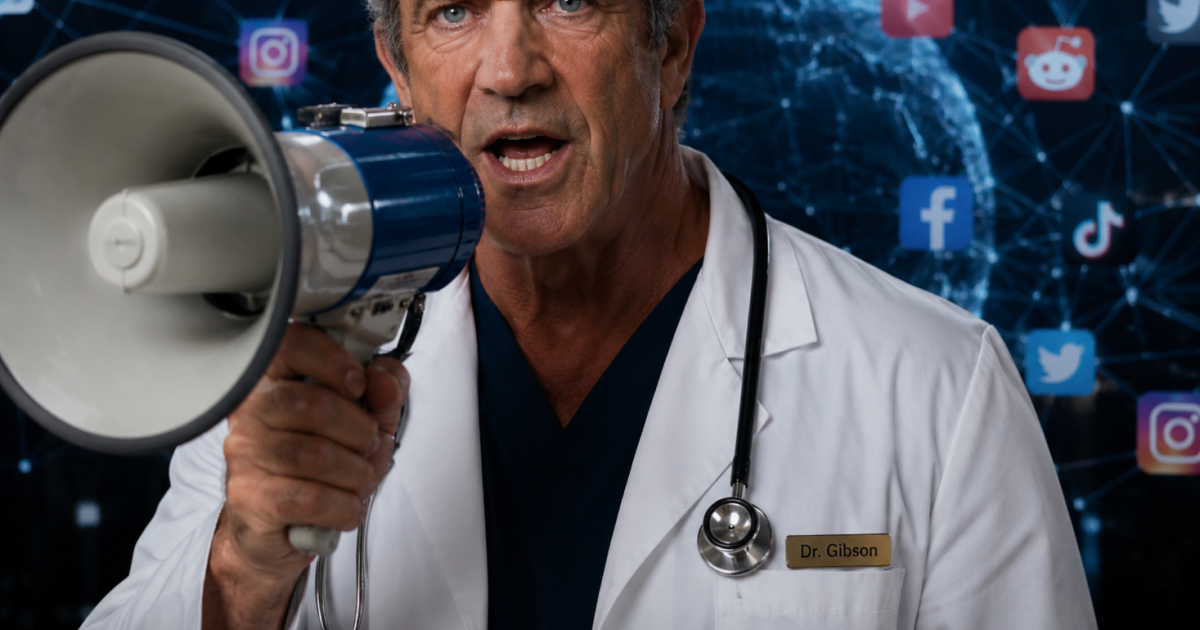
The power of celebrity to propagate unproven medical claims was starkly illustrated in January 2025. During an appearance on "The Joe Rogan Experience," actor Mel Gibson claimed that three friends with stage IV cancer were recovering after using ivermectin and fenbendazole, an antiparasitic drug typically used in veterinary medicine. Despite the absence of reliable clinical evidence demonstrating the safety or efficacy of these drugs for cancer treatment, Gibson’s remarks rapidly disseminated across social media and news outlets, reaching millions.
n
This incident is far from an isolated case. During the COVID-19 pandemic, President Donald Trump’s suggestion that disinfectants might combat the virus, followed by claims of joking, led to a reported surge in inquiries to poison control centers. In Brazil, then-President Jair Bolsonaro repeatedly promoted a "Covid kit" comprising hydroxychloroquine and ivermectin, even as evidence mounted that these drugs did not reduce hospitalizations or mortality. Millions of Brazilians, however, opted for these unproven treatments. These episodes consistently raise the same critical question: why do health claims from individuals lacking medical expertise wield such significant influence?
n
Marketing Insights and Health Advice: A Comparative Analysis
n
To address this, researchers have delved into the persuasive power of celebrity endorsements. A meta-analysis of 46 marketing studies sought to understand the effectiveness of celebrity endorsements. The findings indicated that while celebrity endorsements could be effective in marketing, their impact was most pronounced when the celebrity closely matched the product being promoted, with male actors showing the strongest effects in this specific context. However, across the broader dataset, celebrity endorsements generally underperformed simpler and less expensive alternatives like quality seals or awards. The researchers concluded that the persuasive advantage of celebrities was real but narrow and highly contingent on a strong celebrity-product fit.
n
A subsequent meta-narrative, a qualitative synthesis of 104 studies, identified over a dozen mechanisms explaining why people often perceive celebrities as trustworthy sources of health advice. While this study could not establish causal relationships or rank these mechanisms, it provided a plausible framework for understanding the phenomenon observed across diverse contexts. This leads to a crucial corollary: does admiration for celebrities correlate with distinct health beliefs?
n
The Interplay of Admiration and Belief: A Correlation with Concern
n
A study published in Psychology, Health & Medicine investigated the relationship between celebrity admiration and attitudes towards health, specifically vaccination. Among 320 American adults, greater admiration for celebrities was associated with more negative attitudes toward vaccination. Importantly, this correlation was not driven by lower confidence in vaccine effectiveness. Instead, individuals expressing higher celebrity admiration exhibited greater concern about adverse effects, emphasized perceived commercial interests behind vaccination, and displayed a stronger preference for "natural immunity" acquired through illness. These participants were also more likely to endorse conspiracy theories.
n
While this study cannot definitively establish causation, its findings align with existing research on the influence of public figures on health-related attitudes. Celebrities possess the potential to shape beliefs and, consequently, influence behavioral intentions. But can this influence translate into tangible, real-world behavioral change?
n
From Anecdote to Prescription: When Celebrity Influence Becomes Medical Practice
n
Highly publicized events, such as Mel Gibson’s podcast remarks, can serve as natural experiments, allowing researchers to observe the impact of a public figure’s medical claims on a vast audience within a short timeframe. A study published in JAMA Network Open set out to investigate precisely this.
n
The Ivermectin Surge: A Tangible Impact on Prescribing Patterns
n
The UCLA-led study analyzed prescription data for the combined use of ivermectin and benzimidazoles from January to July 2025, following Gibson’s appearance, comparing it with the same period in 2024. The analysis encompassed electronic health records from over 68 million patients across 67 healthcare organizations nationwide.
n
The results were striking. In the general population, prescriptions for the ivermectin-benzimidazole combination nearly doubled compared to the previous year. The most significant relative increases were observed among adults aged 18 to 64, White individuals, and residents of the Southern United States.
n
The impact was even more pronounced among patients with cancer. Prescription rates in this group more than doubled, predominantly driven by adult men aged 18 to 64, White patients, and residents of the South. This trend is particularly concerning, as it suggests that patients facing serious diagnoses might delay or abandon evidence-based treatments in favor of therapies with no proven benefits.
n
The podcast episode, which garnered over 60 million views across multiple platforms, appears to have had a direct correlation with these prescribing patterns. The geographic and demographic distribution of the increased prescriptions closely mirrored the known audience demographics for such content, suggesting that misinformation can spread through large audiences and manifest in observable prescribing trends, disproportionately affecting specific groups.
n
While this observational study has limitations, including its inability to establish causality and the fact that it reflects prescriptions rather than actual patient use, its findings contribute to a growing body of evidence demonstrating the tangible influence of celebrities on health-related behaviors. This influence is particularly potent in environments characterized by low institutional trust and the pervasive circulation of misinformation.
n
Confronting the Celebrity Advantage: Strategies for a Science-First Future
n
The current landscape offers little cause for immediate optimism. Mel Gibson’s promotion of unproven treatments based on anecdotal experiences is unlikely to be an isolated incident. The broader issue extends beyond individuals simply trusting celebrities or politicians more than experts. While that may be a component, the celebrity effect is also intricately woven with sophisticated persuasion techniques, the cultivation of trust, and the deliberate spread of misinformation.
n
A significant part of the problem lies in academia’s historical struggle to effectively communicate scientific findings beyond the confines of university walls. This void has been readily filled by influencers offering simplistic solutions to complex problems, often conflating legitimate scientific facts with overgeneralizations and outright conspiracy theories. The ongoing debates surrounding dietary supplements and artificial sweeteners, for instance, frequently highlight how animal studies, with limited relevance to human health, can generate alarmist headlines amplified by non-expert voices.
Furthermore, individual reasoning alone cannot explain the reach of platforms like podcasts. Social media algorithms, optimized to surface engaging, emotionally charged, and contrarian claims regardless of accuracy, play a crucial role in amplifying and redistributing such content.
Another contributing factor is the insufficient emphasis placed on critical thinking skills within educational systems. Teaching individuals to discern between anecdotes and scientific evidence, to understand that no single study provides a definitive answer, and to grasp the inherent limitations of research are among the most effective tools for mitigating the impact of health misinformation. This approach aligns with the concept of "pre-bunking," a strategy that equips individuals with the knowledge and critical faculties to resist misinformation before it takes root. The Mel Gibson case powerfully illustrates the stakes: a public armed with robust critical thinking skills might be far less likely to see a country’s prescribing rates for an unproven cancer treatment double based on a podcast anecdote.
Anti-scientific narratives and celebrity culture are unlikely to disappear. However, by fostering a culture that prioritizes asking "What is the evidence?" over "Who said it?", we can begin to diminish fame’s advantage over science. Equipping individuals with the tools to critically evaluate health claims, regardless of their source, is paramount to protecting public health from the seductive, yet often dangerous, lure of celebrity-driven misinformation.

